
Introduction
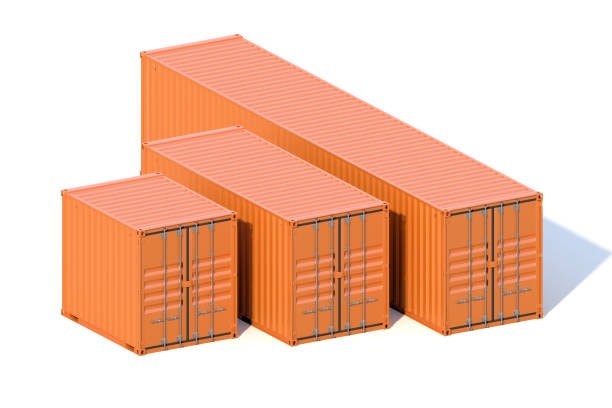
You are at the crossroads of international shipping and are looking at two types of containers: the small, 20-footer, and the big, 40-footer. This may appear to be a simple decision, but making the wrong decision on the size of the container will cost you thousands of dollars in unnecessary expenses, late shipment, and headaches in running the business, as larger containers can double the capacity. , especially when considering cubic meters.

The size of your container will affect not only the prices of shipping and ease of handling, but also the size of the storage space and the optimization of your cargo. Whether it be heavy machinery or large-scale furniture, a wrong decision might translate into millions of dollars of difference between lucrative logistics and those that prove costly, as the only difference often lies in the container size.
You will find the main differences between 20 ft and 40 ft containers, know how to select a type of container based on your particular cargo type, including the exact dimensions needed for optimal fit, comprehend the real cost requirements, and have access to the examples that may help you make a sure decision in shipping in the future.
What Are the Common Container Sizes?

The shipping containers are of different sizes, although the most popular all over the world are standard shipping containers, which include 20-foot and 40-foot shipping container options. These containers are made according to ISO (International Organization for Standardization) standards, meaning that they can be operated by ports, ships, and transport equipment worldwide.
The basic height model is known as the standard container, whereas high cube containers have an extra vertical space. The following are what the market has to offer, including various types of standard containers:
Most Common Container Types:
- 20ft Standard Container
- 40ft Standard Container
- 40ft High Cube Container
- 45ft High Cube Container (Less popular)
Key Dimensions Overview:
| Container Type | External Length | External Width | External Height | Internal Volume |
| 20ft Standard | 20ft (6.06m) | 8ft (2.44m) | 8.5ft (2.59m) | 1,172 cubic feet (33.2 m³) |
| 40ft Standard | 40ft (12.19m) | 8ft (2.44m) | 8.5ft (2.59m) | 2,390 cubic feet (67.7 m³) |
| 40ft High Cube | 40ft (12.19m) | 8ft (2.44m) | 9.5ft (2.89m) | 2,694 cubic feet (76.3 m³) |
Side-by-Side Comparison: 20ft vs 40ft Container Dimensions & Capacity
Understanding the precise specifications helps you calculate exactly how much cargo you can fit and at what weight limits, allowing for more cargo in a larger container.
Detailed Specifications Comparison:
| Specification | 20ft Container | 40ft Container | Difference |
| Internal Length | 19.4ft (5.90m) | 39.5ft (12.03m) | +20.1ft |
| Internal Width | 7.8ft (2.35m) | 7.8ft (2.35m) | Same |
| Internal Height | 7.8ft (2.39m) | 7.8ft (2.39m) | Same |
| Tare Weight | 4,850 lbs (2,200kg) | 8,380 lbs (3,800kg) | +3,530 lbs |
| Max Payload | 61,350 lbs (27,800kg) | 58,820 lbs (26,680kg) | -2,530 lbs |
| Max Gross Weight | 66,200 lbs (30,000kg) | 67,200 lbs (30,480kg) | +1,000 lbs |
| Cubic Capacity | 1,172 ft³ (33.2 m³) | 2,390 ft³ (67.7 m³) | +104% more space |
Key Insights:
- A 40ft container has a greater volume than compared to 20ft container.
- Nonetheless, the tare weight is lower in the 20ft container, and this vessel can support a bit more weight.
- The 40ft container is better in terms of volume for lighter goods that are bulky.
Cost Breakdown
To get the real cost difference between the two sizes of containers, it is not necessary to consider only the price of the container itself, as wasted space can significantly affect overall costs.
Consider the Purchase Costs, including the internal dimensions of the containers:
- New 20ft Container: $3,000 – $5,000
- New 40ft Container: $4,500 – $7,500
- Used 20ft Container: $1,200 – $3,000
- Used 40ft Container: $2,000 – $4,500
Cost Differences in shipping: The economies of sea freight shipping in 40ft containers are realized in shipping.
- Ocean Freight: 40ft containers are generally half the cost of the 20ft containers, even though they have twice the capacity.
- Inland Transport: Generally, 40ft containers cost 1.2-1.4x more in road transport.
- Port Handling: Terminal handling charges on 40ft containers are normally 1.3-1.5x times increased.

Operational Costs:
- Storage: Space in the warehouse increases twice, but the cost per cubic meter in storage is frequently reduced.
- Loading/Unloading: Cost of labor is raised by about 30-50 per cent on 40ft containers.
- Equipment: 40ft containers have the potential to need larger forklifts or cranes.
Cost Per Cubic Meter Comparison:
- 20ft shipping container: Ocean freight cost is between 45 and 65 per cubic meter.
- 40ft container: Ocean freight costs 25-40per cubic meter.
This renders 40ft containers much more cost-effective when it comes to cargo that is based on volume and maximum gross weight.
Use-Case Scenarios: When Each Container Type is Best

When to Choose a 20ft Container:
Dense, Heavy Goods:
- Machinery, steel products, automotive parts.
- Raw materials such as metals or chemicals.
- When volume limits are exceeded by the weight limits.
Example Case Study: A company that is transporting industrial machinery that weighs 25 tons. The equipment fits well in a container of 20 ft and also has a high weight capacity. A 40 ft container would be inefficient in terms of space and an unnecessary increment of costs.
When to Choose a 40ft Container:
Bulky, Lighter Goods:
- Furniture, domestic equipment, fabrics.
- Electronics of high packaging.
- Goods in which the volume is full, and then the weight limits.
Example Case Study: Successful example of an e-commerce selling company shipping mixed container furniture and home decor. The actual weight of goods is only 15 tons, but the volume of a 40ft container is required, especially when using a removable tarpaulin for added flexibility. It is 40 percent cheaper than two 20ft containers.

Mixed Cargo Considerations:
To calculate volume and weight, use where the shipment is diverse: compute the volume and weight used:
- When your cargo reaches the eight limit of 60-70 percent of volume capacity, 20ft should be used.
- When your cargo goes to 60-70% weight capacity and then to the volume limit, then select 40ft.
- To achieve balanced utilization, 40ft containers are usually more value-proposition.
Other Considerations That Affect the Choice

Weight Volume Constraints: Shipping lines and ports might also be restricted:
- There are also routes with weight restrictions on 40ft containers.
- Some of these ports impose fines for excessive weight.
- Regulations of road transport differ depending on the country and region.
Local Transport Restrictions:
- Weight limits on the roads: A significant number of nations restrict the total weight of trucks to 40-44 tons.
- Bridge and Tunnel Clearances: Height limits can apply to high-cube containers.
- Access to Urban Areas: There are certain urban centers that do not allow big container movements.

Warehouse and Storage Factors:
- Ceiling Height: The height of the ceilings of standard warehouses might not support high cube containers.
- Dock Space: 40ft containers have longer docks and maneuvering space.
- Equipment Needed-At larger forklifts required to load deep containers how many pallets?
Cargo-Specific Considerations:
- Fragile Goods: Reduced shipping and risk of damage: Smaller containers can minimize these.
- Perishable Items: 20ft containers could be beneficial in terms of faster loading/unloading.
- Hazardous Materials: Containers: The regulations can narrow the choices of containers.
Environmental Impact:
- Containers of 40ft size tend to have 25-30% higher fuel efficiency per cubic meter.
- Lower costs of empty container repositioning.
- Fewer carbon footprints per unit of cargo transported.
Pros & Cons Summary

20ft Container Advantages:
- Increased payload (weight capacity) (2,500+ lbs).
- Less difficult to handle and place.
- Lower initial investment
- Quickened loading and offloading.
- Better for dense, heavy cargo
- Less rigid to pure loads.
- Appropriate for the smaller warehouses.
20ft Container Disadvantages:
- Increased price per cubic meter of transport.
- Bulky goods are less efficient.
- May needs several containers when it comes to massive shipments.
- Increased unit volume handling costs.
40ft Container Advantages:
- Much less Cost per cubic meter (savings of 30-40)
- Double the storage capacity
- More effective when dealing with heavy and lightweight items.
- More suitable in terms of having numerous suppliers.
- Reduced environmental intensity per unit volume.
- Most shipping lines prefer (better rates).

40ft Container Disadvantages:
- Reduced weight-carrying capacity compared to size.
- Needs more manpower to handle.
- Higher upfront costs
- Higher positioning and storage.
- May is inaccessible by local transport.
- Potential of cargo transfer in half-filled containers.
How to Decide for Your Cargo: A Decision Framework

To select the appropriate size of the container, follow the following steps:
Step 1: Calculate Your Cargo Requirements
- Cargo weight of shipment.
- Total volume (length- width- height)
- Weights and sizes of individual pieces.
Step 2: Apply the Utilization Test
- Weight Utilization = (Cargo weight of the total container weight/Container payload limit) x 100%.
- Volume Utilization = (Total Cargo Volume/Container Capacity) x100%
Step 3: Use the Decision Matrix
Choose 20ft if:
- Weight utilization is more than 85% and volume utilization less than 70.
- Cargo density >800 kg/m³ (50 lbs/ft³)
- Total shipment weight >20 tons
- Individual pieces >5 tons each
Choose 40ft if:
- Volume use >85% and weight use <70%.
- Cargo density <400 kg/m³ (25 lbs/ft³)
- Several pick-up points or suppliers.
- Consistent shipping schedule (cost efficiency in the long-term)
Step 4: Verify Local Constraints, including the external dimensions of your containers.
- Origin and destination country check the road weight.
- Verify warehouse receiving and dispatching.
- Check port and terminal restrictions.
Step 5: Calculate Total Landed Cost
- Freight per container type in the ocean.
- Inland transport costs
- Handling and storage fees
- Compare the cost per cubic meter and per kilogram.
Frequently Asked Questions
At what time are 40ft High Cube containers superior to the usual containers? High cube containers are best in cases where you require the 12 inches of height:
- Huge machines or furniture.
- Efficient palletization (allows more stacking).
- Shipping with non-average shapes that have more vertical gaps. The incremental height can be 5-10 percent higher, although this can add 12-15 percent to the capacity.
Is there any difference in insurance cost or customs cost? The cost of insurance is normally determined not by container size, but by cargo value. However:
- Single 40ft containers could be faster than several 20ft containers in terms of customs processing.
- Other destinations have been known to levy their customs per container, which is less expensive in 40ft.
- Few containers make documentation easier for taller cargo.
Is it possible to divide deliveries under 20ft and 40ft containers? Yes, but take into consideration the following factors
- More documentation and complexity of tracking exterior dimensions.
- Possible differences in timings of delivery.
- Higher total handling costs
- More intricate customs clearance. Split shipments are efficient where the density profiles of types of cargo differ significantly.
What is the difference between the overall cost of used vs new containers? Containers used can be a big saving, but factor in:
- Worn containers: -40 60% reduced purchase price, possible maintenance expenses, reduced lifetime.
- New containers: Increased initial investment, a reliable state of containers, and increased service life.
- Occasional use: The used containers can be more profitable in many cases. New containers can be less expensive in the long run in the case of normal shipping.
Conclusion
The decision between 20 ft and 40 ft containers is not merely a matter of size but of how to make the most out of your whole supply chain in terms of cost competence, ease of operations, and security of cargo. The trick here is to ensure that the container capacity is aligned with the nature of your cargo: dense goods and heavy items should go in 20 ft containers that can carry their weight efficiently, whereas light items and volume should go in a 40 ft container.
Always remember the golden rule: always look at weight and volume utilization and then select which container will maximize whatever your limiting factor is and at the same time minimize cost per unit shipped. In their case, 40 ft containers will have better economies of scale and reduced per-unit cost of logistics in most businesses that frequently ship oversized cargo.
Want to make the most of your shipping strategy? The first technique would be to examine your three most recent shipments through the decision tree above and compute the possible savings and ponder how the appropriate choice of a container would enhance your bottom line on your next shipment.