What is a Fulfillment Center?
In this modern e-commerce environment, where e-commerce businesses want to automate their processes and engage effectively with their e-commerce store, at the same time responding to the customer demands of delivering their orders within the shortest time possible.
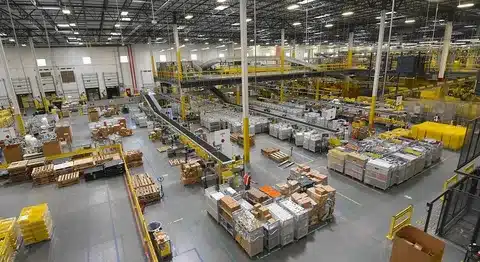
Although warehousing has always been the core of traditional inventory management, this article introduces the favorable elasticity of ecommerce fulfillment services and ecommerce fulfillment centers as effective response to contemporary requests for order processing. Realizing the difference between these two strategies is important in terms of the business aiming at streamlining its supply chain strategy and maximizing customer satisfaction.
What Does a Warehousing Solution Do?
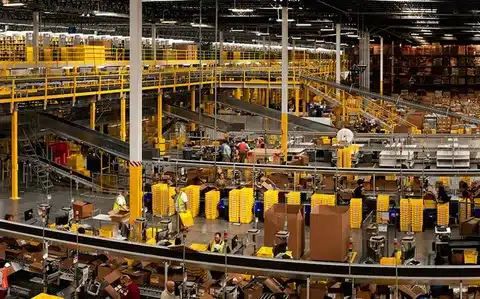
The traditional warehouse is a warehouse that is designed based on long-term storage of goods. Such facilities specialize in inventory storage and storing inventory which gives firms an avenue to store their products over long periods of time. The main functions of the warehouse are to serve as a buffer between manufacturing and distribution and act as a distribution center, enabling companies to have warehouses where they can store seasonal stock or bulk goods, or raw materials till they are needed.
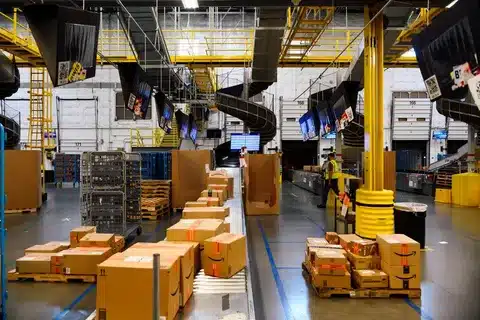
Warehouses generally take part in storage oriented activities and little handling of individual goods. The two primary alternatives available to businesses with respect to warehousing are either to own their own warehouse or Fulfillment Center vs. Warehouse and incur the substantial capital outlay involved coupled with the need to operate the warehouse facilities or to lease warehouse space in order to hold inventory in fulfillment centers which have less flexibility but often cheaper costs in the long run.
What is a Fulfillment Center?
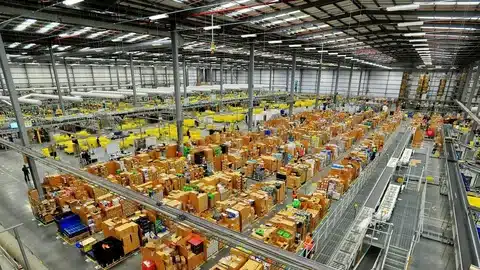
A fulfillment center or fulfillment warehouse is a more advanced form of fulfillment operations, services, an inventory management system, and order fulfillment. For a deeper comparison, see our guide on fulfillment center vs distribution center In contrast to the conventional warehouses, fulfillment centers also form dynamic nodes in the chain of fulfillment services whose specialty is the rapid order processing of customer orders starting with receiving and ending with shipping.
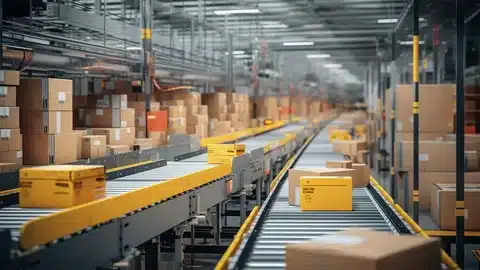
The purpose of these fulfillment solutions facilities is to facilitate the full order fulfillment cycle and improve the fulfillment process, which involves the reception of inventory, order picking, product packing to meet certain requirements, and even shipping to the customers. This is the core of ecommerce fulfillment.The fulfillment centers may be run in fulfillment in house operations or third-party providers who possess specifically in depth knowledge, technology and economies of scale in the operation.
How Do Fulfillment Centers Work?
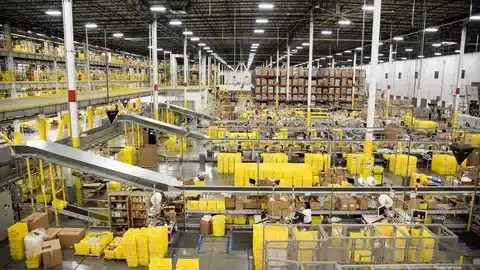
FCs use the scheme of quick turnover of the entire stock and quick response to orders. When stock is delivered to a fulfillment center, it is received, checked, and transiently stored in the strategically planned places so that they improve the efficiency of picking. The key here is the rapid inventory turnover term of brief storage, which is a critical element of effective inventory management; the stock in the fulfillment warehouses should not remain there long but experience rapid turnover.
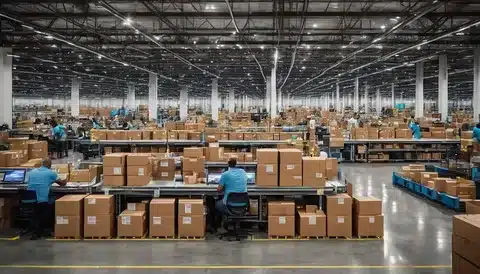
Integrated technology systems help to receive customer orders and launch the logistics services order fulfillment process and workflow that is linked directly with the ecommerce store and order management systems. To see the process in more detail, read how ecommerce fulfillment works.The integration allows processing of both direct-to-consumer (DTC) as well as business-to-business (B2B) orders automatically. Once the item has been ordered, the pick-pack-ship processes are then carried out by the fulfillment center staff where they select the item ordered in stocks, pack, and ship according to brand requirements.
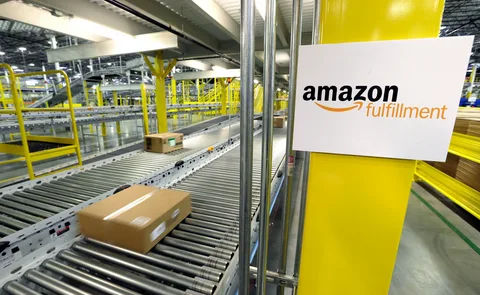
Other responsibilities are also included in the modern fulfillment centers, functions being the processing of returns, which involves the disposal of items of damage or unwanted goods effectively to keep the right amount of inventory, reduce shipping costs, and ultimately improve customer satisfaction. A strong returns management process helps support that goal.
Such facilities operate in conjunction with systems-integrated shipping carriers on fast-turn service and level agreement (SLAs) and make it so that orders may take hours, as opposed to days, to be processed and shipped, and support same-day or next-day delivery expectations.
What is a Fulfillment Warehouse?
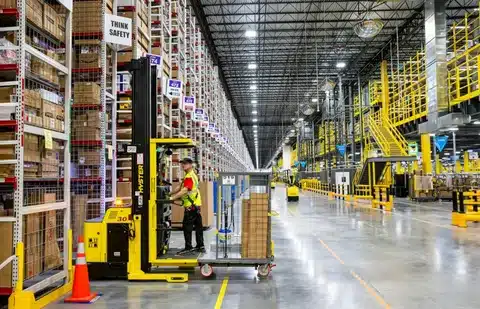
A fulfillment warehouse can be defined loosely as many fulfillment centers, which refer to the similar nature of a facility that is centered on speed in processing orders in the fulfillment center, versus logistics and shipping. Both parlance refer to the similar nature of a facility that is centered on speed in processing orders and shipping them. Its main difference is that we compare most fulfillment centers with stand-alone warehouses that are oriented just on storage without the entire order fulfillment capacity.
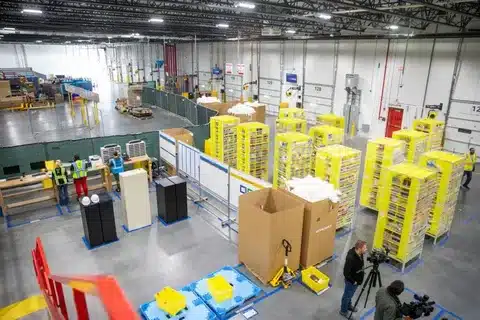
By saying fulfillment warehouse, the business is talking about a building that not only acts as a storage facility but also plays a role in outsourcing fulfillment and actively processes orders, hence the difference between a fulfillment warehouse and a regular storage warehouse business.
What are the Differences Between Warehousing and Fulfillment Centers?

Realizing the major distinctions between warehousing and inventory levels management at fulfillment centers. can assist companies in making correct decisions regarding the desired warehousing services solution. The differences may be studied along a few important dimensions:
Long-term vs. Short-term Storage

Traditional warehouses enable the storage of inventory in long term storage, usually, months or even seasons fulfillment providers. This ensures that they are suited to those businesses that have established demand patterns or those that require storage of large amounts of seasonal goods. Donning in contrast, fulfillment centers are designed to have a quick turnaround of inventories as it is envisioned that inventory should not lie within such facilities more than about 30 days. This model of rapid turnover promotes a faster cash flow and low shipping costs order fulfillment services.
Operational Complexity
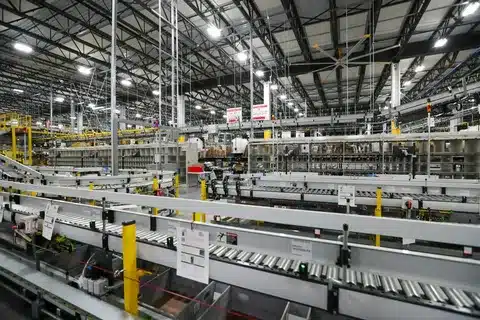
The operation of warehouses is more of the fixed nature where very little handling of the inventory is actually done between the movement point. The process is easy; one simply receives goods, stores and send them out when required. However, most fulfillment centers have large volumes of activity to include receiving stock, optimal storage to facilitate easy picking, creation and execution of pick lists, kitting (multiple items being packaged together), custom items packing, labeling, order fulfillment, returns processing, and storage space. This complexity needs a more advanced management to benefit ecommerce businesses that are providing fulfillment services. and provides higher value-added services fulfillment centers focus.
Shipping Frequency and Methods
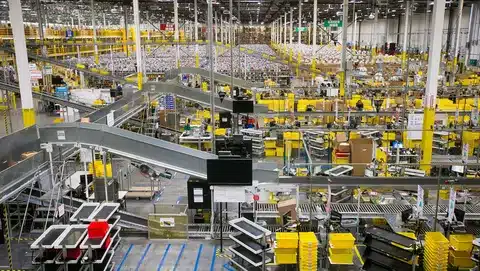
Fulfillment centers plan daily carrier pickups to help provide same-day or next-day shipping promises. This often allows for delivery in a short time because of the short order fulfilment schedule it offers, and this delivery in a reasonable time is what current customers expect excess inventory. Traditional warehouses are commonly based upon less frequent pick-ups in freight rates, partial truckload (PTL) or less-than-truckload (LTL), wherein shipment, which can be slow but may be cost-effective in bulk shipping, own fulfillment centers.
Technology Integration and Value-Added Services
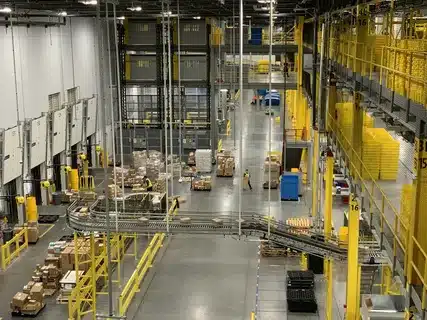
Fulfillment centers have made significant investments in the latest technology integration, such as complex order managing programs, direct interconnections to e-commerce stores, flexible and variable shipment negotiating rates with carriers, and consistent branded packaging programs amazon fulfillment centers. These IT features make it possible to monitor the inventories in real time, automate order processes, and be integrated with the current systems that customers have warehouse companies’ fulfillment method. The conventional warehouses, fulfillment centers, and warehouses are either being minimally automated with logistics processes and technology, and are majorly involved in the activity of providing space to rent rather than to provide a good customer experience, not all fulfillment centers.
Benefits of Using a Fulfillment Centers

Danby can collaborate with a fulfillment company that operates fulfillment center as a business that has many advantages of scaling its operations ecommerce platforms. Learn more about fulfillment for e-commerce and how it supports scalable growth. The first advantage of outsourcing fulfillment is that it will help in relieving the company of some of the difficult storage and packing processes, so that time and funds can be allocated to give way to strategic business approaches like product development, marketing, and customer acquisition professional fulfillment center.
The specialized logistics knowledge and efficiency economies made available by fulfillment centers would be hard to realize individually by companies as well ship orders. Such benefits consist in negotiated carrier pricing based on the high levels of shipped volume, more advanced automation technology in Amazon fulfillment centers, which is more accurate and quicker, and the harnessed experience of workers who know how to efficiently process orders, outsourcing order fulfillment.

Moreover, a third-party logistics company can have fulfillment centers that can be scaled according to the needs of the business. and seasonal demands without having to experience major capital expenditure in terms of facilities, equipment, and labor forces fulfilling customer orders.
Such flexibility enables businesses to extend its sphere of influence and make their customers more content with their operations while keeping costs down and operations running smoothly ecommerce supply chain.
Conclusion

Fulfillment centers present the transition of the conventional warehousing into the requirements of contemporary e-commerce and demands of the customers. Fulfillment centers offer the technology-driven, dynamic solution needed to process and get orders fast, whereas warehouses have a valuable long-term storage purpose. This is why many brands evaluate top third party logistics companies when choosing a long-term fulfillment partner.
With the awareness of these differences and advantages, e-commerce companies will be able to choose their supply chain strategy with rational decisions, and finally adopt the strategy that allows them to achieve their growth perspectives and customer satisfaction programs. Fulfillment centers provide both the efficiency and scalability to compete successfully in the current fast-moving marketplace regardless of whether being used in-house or outsourced through a 3PL provider.