Introduction
The Ever Given is a massive container ship that ran aground in the Suez Canal in March 2021, and it blocked one of the most important shipping routes in the world, significantly impacting world trade and taking six days to pass. This single accident stopped some $9.6 billion of trade each day, and some 400 vessels were lined up along the two ends of the canal. The oil prices shot to the moon, supply chains in several industries were shaken, and this incident highlighted the fragility of the global economy, giving a sharp wake-up call on the significance of how vulnerable our globalized world is to the failure of chokepoints.
More than 80% of international trade takes place through maritime shipping channels, which are the main routes for global trade. These paths are very important for international trade because they connect continents, economies, and billions of consumers through a complex system of canals, straits, waterways, and shipping lanes. There are certain passages in this network that are called chokepoints. These are important bottlenecks where the geography makes the maritime traffic go through narrow passages.
Every international business that moves goods, manages a supply chain, or does business with other countries needs to know about these shipping lanes and chokepoints. And whether you’re getting goods from Asia, planning the logistics routes, or just trying to figure out why your shipment might be delayed, knowing these important passages can help you make good choices and plan for any problems that might come up that could affect your business.
Global Shipping Route Basics
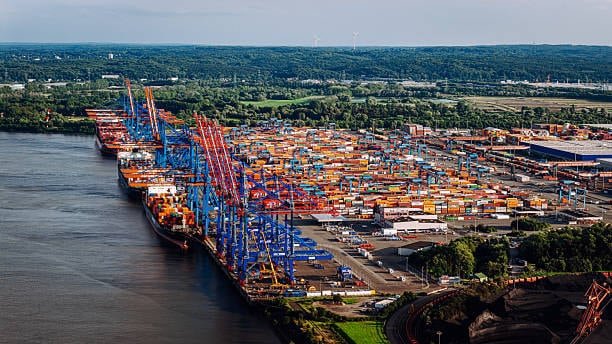
Sea shipping routes are categorized into two major categories that have varying uses in international trade. The primary routes take care of most international trade, linking major economic areas with large capacity passages accommodating gigantic container ships and bulk carriers, serving as a major route for global commerce. These routes are usually the shortest routes, which makes sense, and are within geographical limits and political boundaries.
Secondary routes are used to serve regional markets, link major routes to minor ports, or as alternative routes when major routes are interrupted. Although these secondary routes have lower volumes than primary routes, they can be vital to regional economies and may also help mitigate increasing shipping costs as a backup in the event of major shipping disruption.
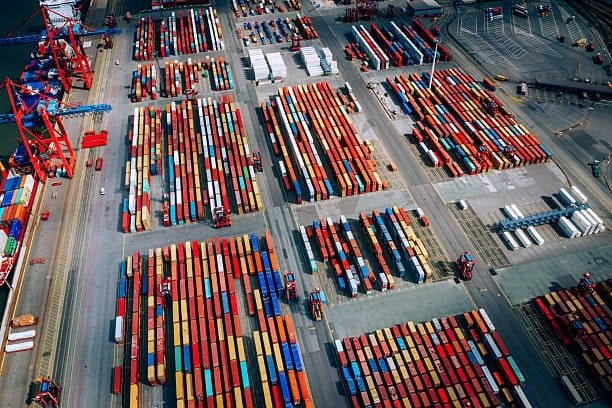
Geography is the most important factor in determining how efficient and useful shipping routes are. Great-circle routes are the shortest distance between two points on the Earth’s surface. However, real shipping routes have to take into account a lot of geographical factors. Depending on the coastal arrangements and the ocean currents, the ocean currents can help or hurt the movement of ships. Wind patterns change how much fuel is burned and how far a vehicle travels, especially for those who are changing their routes to save fuel.
Water depth sets strict limits on water. For example, channels need to be deep enough to handle bigger and bigger ships. A modern container ship needs at least 15 meters of depth. Some reefs are underwater, shallow, and narrow canals that make ships take certain routes even though the shortest route is the one that is supposed to be taken. This has a big effect on shipping operations in those areas. Political borders add another layer of complexity to the changing situation. International waters, territorial boundaries, and canal transit fees all affect the choice of route and cost.
Patterns of trade flow. The patterns of trade flow eventually decide which routes will be the main shipping routes. The Suez Canal route is now very important because it is one of the routes that carries about 25% of the world’s container traffic, the Asia-Europe trade lane. Asia-Pacific trade and transatlantic trade are the two main drivers of heavy transportation via Pacific shipping routes and historical significance, respectively. However, most of the modern container volumes come from transpacific trade.
Primary Chokepoints
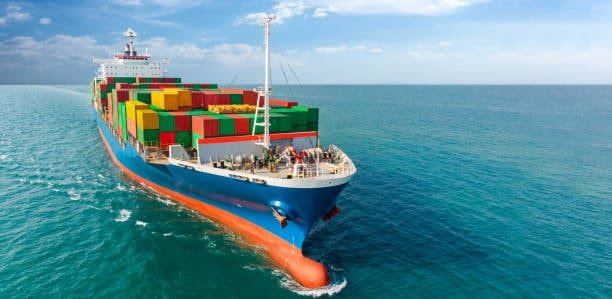
Primary chokepoints are maritime routes of entry or exit through geographically limited waterways where extensive amounts of international shipping traffic have to pass, and are therefore significant to international trade operations, especially as they are some of the busiest shipping routes.
Suez Canal
The Suez Canal connects the Mediterranean Sea and the Red Sea. It is also the shortest shipping route between Europe and Asia. This 120-mile-long man-made waterway handles about 12% of the world’s trade, including liquefied natural gas. More than 19,000 ships pass through it every year. The canal cuts off about 7,000 miles from a circuit that goes around Africa’s Cape of Good Hope. This saves the Asia-Europe trade about 10 to 15 days.
The recent events have shown how important the canal really is. The Ever Given blockage of 2021 showed how quickly the collapse of chokepoints can affect supply chains all over the world. During the six days it was closed, it lost almost $10 billion in cargo that was stuck each day. This included not only oil shipments but also shipments of consumer goods. It was very expensive and took a long time to reroute around Africa, which added a lot of time to the transport. It took months for the shipping industry to clear backup orders.
The strategic value of the canal is not just a matter of mere economics. The waterway forms an important source of revenue, since Egypt receives more than 6 billion dollars in transit every year. Recent expansion projects have increased and deepened parts of the canal to allow larger vessels, but the essence of a chokepoint is still there.
Panama Canal
The Panama Canal offers the only viable path of water between the Pacific and the Atlantic Oceans in the Americas. The use of this engineering marvel manages about 6 percent of the trade in the entire world, especially to the North American trade and the exchange of goods between Asia and the East Coast of the United States, making it the busiest trade route.
Lock system in the canal imposes special restrictions, which are not present in natural straits. Size restrictions of vessels -which are dictated by Panamax and New Panamax- identify the ships that are allowed to transit. The recent extension that was made in 2016 enables the large ships, but still limits the largest container ships and bulk vessels. Capacity can also be constrained by problems with water supply during dry seasons, which require ships to offload or find alternative routes.
The economic effect reaches across the Americas. U.S. agricultural exports into Asia, Asian manufactured goods into eastern U.S. markets, and energy shipments all rely heavily upon the capacity of the Panama Canal. Disruptions cause costly overland transportation or diversion through the Strait of Magellan, which adds weeks to the distance travelled.
Strait of Malacca
The Strait of Malacca, which joins the Indian and Pacific Oceans in the regions of Malaysia, Singapore, and Indonesia, is the busiest shipping chokepoint in the world. More than 25 percent of all the traded goods are transited by this 1.7-mile-wide passage, including 8 out of 10 crude oil imports in China.
It has strategic significance in that it is the main path between the Middle East, Africa, and East Asia. The Strait opens to the key ports such as Singapore, Kuala Lumpur, and finally reaches the Chinese, Japanese, and Korean markets. Other paths via the Sunda or Lombok Straits are extra long and time-consuming.
Security issues are complex factors beyond geographical limits. Piracy threat, maritime boundary issues between neighboring countries, and risk of maritime incidents in the highly populated waters make them a continuous management issue. The fact that the strait is very narrow renders it especially susceptible to accidents caused by blockages or intentional disturbance.
Other Critical Passages
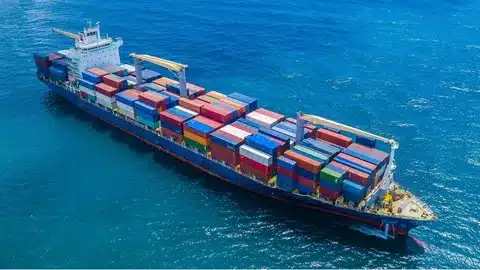
The Strait of Hormuz manages the exports of the Persian Gulf oil and is the route that facilitates about 20 percent of the world’s petroleum liquids. This strait is a major energy chokepoint, 21 miles across between Iran and Oman, that, in addition to oil, handles significant volumes of mineral ores and would have a devastating effect on world oil markets in the event of disruption.
Bab el-Mandeb, which links the Red Sea with the Gulf of Aden, is the southern route to the Suez Canal. This 18-mile-wide strait is just as critical as the Suez Canal itself, with a volume of the same magnitude to Europe-Asia trade flows.
The Turkish Straits, the only sea route between the Black Sea and the Mediterranean, are the Turkish Straits (Bosporus and Dardanelles). Such routes are specifically crucial to exports of grains in Ukraine and Russia and also to energy resources in the Caspian Sea area.
Secondary Chokepoints & Connectors
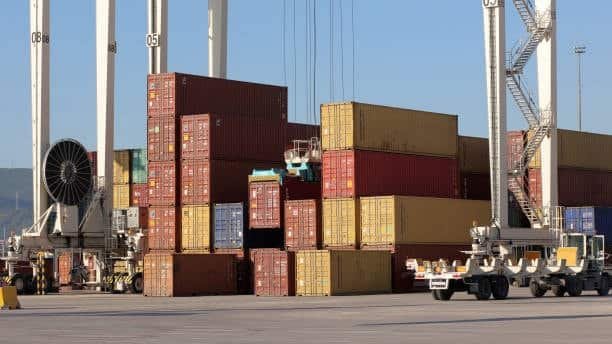
The secondary chokepoints have lower volumes of trade compared to the primary passages, but have strategic significance to regional trade and are alternative routes when major disruptions occur.
The Dover Strait, which lies between England and France, is the most heavily traversed shipping route in Europe in terms of the number of vessels, but the ships plying it usually bear smaller cargoes than ships that pass through major chokepoints. This 21 nautical mile wide route links the ports of the North Sea to Atlantic routes and also carries a lot of ferry traffic between the UK and continental Europe, making it essential for smaller markets.
The Sunda Strait and the Lombok Strait are alternative routes to the Strait of Malacca which ships pass between the Pacific and Indian Oceans. The Indonesian passages provide not only distance and time to journeys but great backup choice in case Malacca is congested or insecure. The Sunda Strait is not as wide as the Malacca Strait; it is more difficult to sail through, yet it is dealing with more traffic, as shipping companies aim to diversify the routes they rely on.
The Taiwan Strait is the main way for trade between Asian ports in China, Taiwan, Japan, and South Korea. Political conflicts also make this waterway more difficult because territorial disputes can make it hard to navigate freely. As China’s economy has grown and Taiwan has become a major supplier of semiconductors to the world, the Strait has become more important.
The Panama Canal has an alternative, the Magellan Strait, the southern end of South America, which offers a route to the ships that pass between the Pacific and Atlantic waters. Although weather conditions and distance factor complicate this route, it is used as a significant alternative route when the capacity of the Panama Canal is limited, or when ships are too large to navigate the Panama Canal.
These secondary passages have regional significance far greater than global significance. They play a vital role in availing the local economies with access to imports/exports as well as establishing vital links between the island countries and the continental markets, while also influencing shipping emissions.
Other Chokepoints of Note
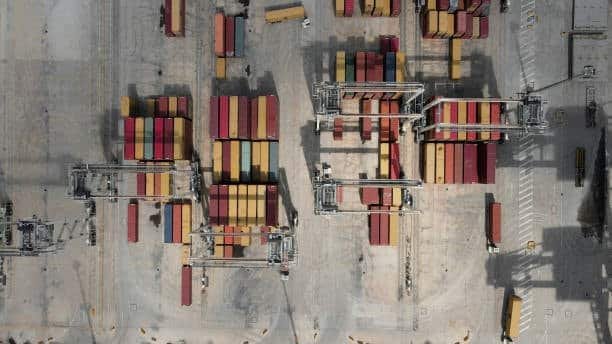
A number of other passages are worth mentioning as they play a specialized function or are becoming significant in the global shipping networks.
The river systems provide inland chokepoints through which ocean-going ships are linked to interior markets. The river Yangtze enables navigation to the manufacturing hub of China, allowing goods to reach their destination faster, and it transports large amounts of container traffic to such ports as Shanghai and Nanjing. The Mississippi River system is the linkage between the agricultural areas of America and the world markets via New Orleans, and the Rhine River is the busiest inland waterway of Europe, linking the industrial centers and the ports of the North Sea.
St. Lawrence Seaway facilitates the use of oceangoing vessels to access ports in the Great Lakes, which is of vital importance to bulk commodities such as grain, iron ore, and coal. Ice restricts the operations in the season, but this waterway is vital in the exports of North American commodities.
Arctic Passages. Climate change is making Arctic Passages more prominent since ice is covering less area. Northern Sea Route along the Arctic coast of Russia may ultimately offer a route of shorter route between Europe and Asia that may lead to a decrease in dependence on the Suez Canal. But commercial feasibility is now limited by seasonal factors, by extreme weather conditions, and by political factors.
Danube River economies are linked to the Black Sea through the Danube River, which is an important route for agricultural exports and energy imports. The reliability of the river depends on the political stability along the course of the river and the solvency of the channels of the riverways.
These special chokepoints usually cover local trade patterns or commodity flows. On the one hand, they might not be able to affect as much as primary maritime chokepoints, but on the other hand, such parasitic steps can have a devastating effect on specific industries or regions that rely on such specialized points of entry.
Impacts & Risks of Disruption
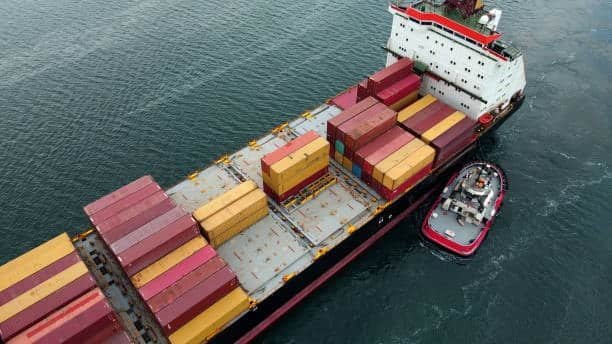
In disrupting shipping chokepoints, the impacts are magnified by the number of ripples in the global supply chains and economies.
Cost increases. Rerouting often involves much extra distance – ships which do not use the Suez Canal have to go the extra 3,500 miles round Africa, adding to the fuel bill by $300,000-500,000 a trip. These extra expenses are finally transferred to the consumers through the increased price of imported goods.
Supply chain delays. More complex issues than mere timeline extensions are indeed supply chain delays. The production processes rely on the deliveries of parts in real time and, thus, any minor delays can cause the production line to stop. The car business, whose global supply chains of parts are highly complex, turns out to be especially susceptible- a chokepoint blockage would cause car assembly facilities to close within days.
Commodity market volatility. When the Strait of Hormuz is threatened, oil prices usually rise by 3-5% and agricultural commodity prices can also soar when grain export routes are disrupted through the Black Sea or Great Lakes. All these price trends impact on the cost of gasoline and even the price of food around the world, which is often tied to the import of raw materials.
Port congestion multiplies chokepoint impacts. In cases of rerouting of vessels because of a closure of passages, ports that do not have enough capacity do not absorb abrupt volume changes. This secondary congestion may last many months following the first chokepoint reopening because shipping schedules need time to resume their normal distributions.
Examples of the harshness of possible effects are presented in history. In addition to the Suez Canal blockage in 2021, the Suez Canal had been closed in 1967 because of the Six-Day War, which lasted eight years and compelled permanent shifts in the world shipping trends and the establishment of a new generation of tankers that can travel economically around Africa.
Environmental risks. During disruptions, there are more environmental risks since more fuel is used as ships take up longer routes, and the risk of accidents is greater due to overcrowded areas. The rerouting can also lose vessels to sensitive places in the environment where they would have otherwise avoided.
Economic ripple effects: The impact of economic disturbances may linger on even after the physical disturbances have ceased. The supply chain can be permanently diversified by companies, the shipping lines can invest in the capabilities of another route, and the development of port infrastructure may switch to another location. These structural adjustments have the potential to impact years after major disruption events on the trade patterns.
Alternatives & Mitigation Strategies
Managing chokepoint risks involves knowledge of the available options, taking into account physical constraints and the development of holistic mitigation measures to deal with immediate mitigation and long-term resilience development.
Alternative routing. The main immediate reaction to a chokepoint attack is alternative routing. Vessels have the option of bypassing the Suez Canal by using the Cape of Good Hope, but this will incur 10-15 days and high fuel expenses. Alternatives to the Panama Canal would be the Strait of Magellan or surface transit across the mainland of the United States, which is both very costly and time-consuming. In the case of Asian trade, there are several straits around Indonesia that substitute Malacca, although with a higher number of pirates and increased transit time.
Overland transport: Certain routes are provided on an overland basis. The Trans-Siberian Railway will replace marine transport between Europe and Asia, albeit at low capacity and with increased costs of most products. Continent-wide road and rail systems offer options for regional trade, although there is a lack of capacity to fully replace those of maritime shipping.
Technological solutions, Risk management, and optimization of the routes are enhanced with the help of technological solutions. High-tech weather routing systems assist the ships to avoid the possible congestion at the chokepoints, and real-time tracking ensures that better coordination is in place in case of disruptions. Cargo handling in ports can be automated to improve throughput efficiency, lessening the effect of sudden increases in volume as a result of rerouted vessels.
Infrastructure investments. Long-term mitigation can be offered by infrastructure investments. Capacity is increased and the severity of a bottleneck is lessened in the case of canal expansion, such as the recent Panama Canal widening. Alternative locations of port development increase routing possibilities, and the existence of better transport infrastructure in the inland location increases overland substitutes to maritime chokepoints.
Supply chain diversification. Diversification of supply chains can be considered to be the best long-term strategy. To mitigate the risks of single-point-of-failure, to have strategic inventory reserves against the shocks of short-term disruptions, and to establish relationships with several logistics providers that can provide solutions to alternative routing situations, companies are progressively sourcing across multiple regions.
Financial risk management Tools of risk management of finance are used to absorb the cost of disruption. Delay losses can be covered under marine cargo insurance, and container shipping derivatives markets will enable firms to hedge their rates against the volatility during disruption times. Cash flow protection in terms of long delays is guaranteed by the use of letters of credit and flexible terms of payment to the suppliers.
Policy and governance improvements: Chokepoint security and management are improved by policy and governance. Piracy prevention, standardized navigation protocols, and coordinated emergency response procedures are enhanced through international cooperation, which minimizes risks of disruption. Capacity and reliability can be enhanced by investing in chokepoint infrastructure using international development programs.
Regional cooperation: Cooperation between chokepoint countries in the region can enhance management and minimize the political risks. Combined infrastructure projects, common security arrangements, and synergistic development policy assist in ensuring access even in the future andthe sharing of economic gains by stakeholders.
Future Trends & Considerations
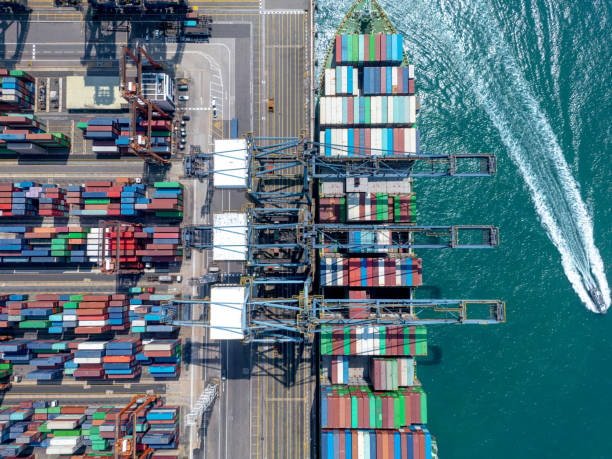
Several new trends will transform international shipping routes and the value of chokepoints in the next several decades, making businesses and governments alike change their strategies to adapt to the dry bulk carriers.
Climate change impacts. There are both challenges and opportunities in shipping routes in relation to climate change. Increased sea level can ultimately lead to the need to make changes to infrastructure at major chokepoints, and shifting weather patterns might influence the timing of the seasons for the world’s shipping routes. Nevertheless, the melting Arctic ice is creating new routes through the North that have the potential to radically change the global shipping trends.
The Northern Sea Route and the Suez Canal route would save Europe-Asia transportation 10-15 days relative to the Northern Sea Route, which would be along the coast of Russia in the Arctic. Although the existing constraints are seasonal ice, inadequate infrastructure, and political factors, this route could be commercially viable all year round in the next 20-30 years as ice melting persists. Likewise, alternative routing through the Northwest Passage between Canada and the Arctic archipelago is also possible, but concerns about infrastructure and sovereignty are also important obstacles.
Geopolitical developments are redefining the chokepoint significance and safety. The increase in tensions in the South China Sea will impact the use of the Strait of Malacca, and Middle East instability will impact security in the Suez Canal and Strait of Hormuz. The Russia-Ukraine war shows how easily geopolitical actions may affect the traditional patterns of shipping and introduce new chokepoints and weaknesses Baltic Sea.
Technological innovations have the potential to transform route optimization and management of chokepoints. Shipping systems with autonomy may allow them to navigate congested chokepoints with more accuracy and reduce the risk of accidents, and improve capacity utilization. Further weather prediction and route optimization software enables shipping to avoid possible delays and reduce the number of chokepoints through the transit time.
Green shipping initiatives should affect the selection of the routes because the environmental regulations might tighten for freight forwarders. Emission reduction requirements and carbon pricing may render some routes desirable even though they may be longer, especially when there is improvement in the weather or with lower fuel consumption rates. New routing preferences can be engineered by the installation of alternative fuel infrastructure at major ports along particular routes.
Vessel size trends: The trends in vessel size are moving to larger vessels, which exacerbates the situation in chokepoints and may lead to fewer transits. Container vessels with a capacity of 20,000 or more (referred to as Ultra Large Container Vessels (ULCVs)) are only operated in deeper channels and more complex port infrastructure, which may restrict the number of practical routes.
Trade pattern shifts. Changes in the trade patterns as a result of supply chain regionalization, reshoring trends, and evolving consumer markets will affect the significance of chokepoints and trade routes. Expanding South-South trade between the developing economies could enhance the significance of chokepoints among Asia, Africa, and Latin America, and the conventional North-South patterns of trade could lose their significance by comparison.
Infrastructure development: New considerations of chokepoints emerge in the development of infrastructure in emerging markets. The Belt and Road Initiative of China also involves the development of ports, which may establish new critical passes or offer alternatives to the chokepoints. Likewise, strategic canal constructions in other places would decrease the reliance on existing major routes Atlantic and Pacific oceans.
Conclusion
International shipping routes and their related chokepoints are the circulatory system of international commerce, which are quietly involved in the transportation of goods upon which contemporary economies and consumer lifestyles are based. Since the Suez Canal has helped to interconnect both the European and Asian markets, with the Strait of Malacca playing a vital role in energy security, these two passages indicate how geography still serves to influence the economic relations in the interconnected global arena.
Supply chain disruption, escalation of costs, and economic volatility are the main risks that need to be managed proactively and not reactively. Those companies that are aware of the vulnerability in chokepoints can come up with more resilient supply chains by diversifying routes to include the West Coast, alternative sourcing strategies, and extensive risk management programs Atlantic Ocean. In the meantime, governments and international organizations should strike a balance between investment in chokepoint infrastructure and development of alternative routes and mitigation capability indian ocean.
In the future, some key developments that stakeholders must watch include the viability of the Arctic Route due to climate change, geopolitical stability in the key areas, technological changes in transport and logistics, and trade trends that are likely to change the significance of chokepoints. Companies ought to periodically review their dependence on supply chains that are exposed to chokepoints, and governments ought to approach chokepoint security as an economic security policy.
Blockage of the Suez Canal by the Ever Given technologically made a splash, reminding the world that international trade is still at the mercy of critical points of failure. But it also showed the flexibility and strength of contemporary supply chains with the proper planning and choices. The knowledge of these key passages, their significance, weaknesses, and options is very critical to any individual who wishes to avoid the pitfalls of international trade.
Assess the level of exposure to chokepoints in your organization: What are the key points of passage of your supply chains? What are the back-ups in the event these routes are disrupted? How fast would you get used to significant chokepoint shutdowns? These questions will continue to gain significance as international trade continues to grow and the quantity of chokepoint traffic grows.