The United States and Mexico have never been closer in their trade relationship before, and this article will provide additional information on their economic collaborations. As of 2024, U.S. imports of goods from Mexico were valued at $505.9 billion, up 6.4 percent over 2023, and goods and services trade within North America reached an estimated value of 1.93 trillion, which firmly established Mexico as one of the key trading partners of the United States. As the USMCA trade agreement enhances the bilateral trade, and with Mexico being geographically close by, providing the U.S. with tremendous logistical benefits, it has never had such opportunities to import at such cheap rates that would benefit the U.S. business in sourcing.
In 2024, Mexico took over 15.5% of the U.S. import market and therefore became a crucial partner for importers in the supply chain in the various industries. Mexico has become a popular location for nearshoring due to the fact that its prices in manufacturing operations are competitive, tariffs under USMCA are reduced, and lead times are shorter than those of Asian suppliers, making it essential for Mexican customs brokers to navigate these advantages.
This will be the all-inclusive guide to importing goods in Mexico, detailing not only the best product types and regulatory controls but also the essential procedures to go about with the paperwork, logistics, and cost-saving principles, including the requirements listed for effective importation. You, whether an experienced importer or a newcomer to Mexico as a sourcing option, will find practical tips to simplify your importation business and achieve the most profitability.
Top Goods Mexico Exports to the U.S.
The export profile of Mexico to the United States covers various high-value industries, which depict the diversification in the production ability of the nation as well as its farming power. These major categories can be used to understand what opportunities exist in your industry.
Automotive Industry Leadership
Auto parts trade has dominated Mexico-U.S. trade, with the country importing 49.4 percent of all the auto parts into the United States and exporting 86.9 percent of its auto parts production to the United States. The country imported 38.5 percent of all auto parts into the United States in 2024. It is such a strong integration that automotive components and vehicles, and equipment tend to be goods of prime importance, which highlights the importance of accurate documents.
Electronics and Machinery are expected to play a significant role in trade.
Machinery such as computers recorded a robust growth of 38.9% with growth reaching 2023- 2024, and optical, technical, and medical apparatus recorded the third-best growth among top export categories. Electronics production has been on a rampage with the companies shifting the production towards the U.S. markets, along with the necessary documents to ensure compliance.
Agricultural Products, including various types of vegetables, play a crucial role in supply.
The industrious export was the fastest-growing category of fruits and nuts, which increased by 47.3 percent between 2023 and 2024 in the case of processed fruit categories. About 91 percent of the agricultural produce exported by Mexico is purchased by the United States, so this industry is a steady supplier of fresh and processed foodstuffs as well as exotic crops.
Industrial Goods and Materials
Mexico has been exporting electrical machinery, machinery, energy products, vehicles, and plastics as the main export to the United States, which are all indicators of the industrial manufacturing capacity in the country, often facilitated by a customs broker.
Growth Trends and Opportunities
According to recent statistics, there are a number of new trends that would be of interest to the potential importers. Telecommunications equipment such as phones and wireless equipment, is ever-increasing to suit the U.S. market demand. Production of machines such as farming tractors is in constant demand, and consumer goods such as beer and fresh products are in a good market position.
The current global developments in the area of nearshoring have facilitated the emergence of opportunities in new categories that were dominated by Asia in the past. Assemblies of electronics, textile productions, and precision components are also becoming more offshored to Mexican manufacturing plants to serve the U.S. markets.
Legal & Regulatory Framework
The regulatory environment of imports between Mexico and the United States has also been greatly influenced by the fact that the NAFTA agreement was replaced by the United States-Mexico-Canada Agreement (USMCA), which became effective on July 1, 2020, and is often discussed in both English and Spanish.
USMCA: Key Changes and Continuities
USMCA preserved the NAFTA advantages of tariff removal with some new demands. Some of the major changes are the tightened automotive content regulations, improved labor policies, and the new intellectual property regulations. In most of the goods, the preferential tariff treatment will not change, that is, the qualifying products made in Mexico can be imported in the United States with the help of a Mexican customs broker without paying duties or at a lower rate for goods imports.
Understanding Tariff Classifications and Rates
All the imported products should be categorized according to the system of the Harmonized Tariff Schedule (HTS). Under USMCA, Mexico has the advantage of preferential rates on qualifying goods, whereas non-qualifying goods are liable to Most Favored Nation (MFN) rates, making it crucial to understand the applicable regulations. The gap may be significant – USMCA-qualified automotive parts may enter the country without any duties, and non-qualified products may have to pay 2.5 to 2.5+ tariffs.
Rules of Origin Requirements
Goods to receive the USMCA benefits need to comply with certain rules of origin. These differ depending on the type of product, but as a rule, one must add a prescribed percentage to the product value in USMCA countries (U.S., Mexico, or Canada). Records to show compliance in terms of origin and a certificate re necessary to claim preferential treatment.
Import Controls and Restricted Products
Other categories of products have their own additional controls or restrictions. In the USDA, Animal and Plant Health Inspection Service (APHIS) usually issues permits for agricultural products. The imports of food and beverages should be in accordance with FDA laws. Mexican authorities may have to permit the export of textiles. Special licenses are required for controlled substances, some chemicals, and matters associated with defense.
Labeling and Packaging Requirements
The products should meet the American labeling regulations, including the country of origin labeling requirements. Food items should be labeled with nutritional labels complying with the standards of the FDA, and consumer goods might be labeled with safety warnings or certification marks. The packaging should comply with the requirements of transport safety as well as the protection of consumers.
Anti-Dumping and Countervailing Duties
Anti-dumping or countervailing duty orders are imposed on some of the Mexican products. These extra responsibilities are for certain products of certain manufacturers, in case the unfair price or government subsidies are to be set. Look at the CBP database to identify any open orders in your category of product.
Documentation & Compliance Checklist
Effective documentation is essential for hassle-free clearance and preventing unnecessary delays, which are associated with high costs. Here is your full importation checklist for Mexico.
Essential Commercial Documents
Each delivery must have a commercial invoice, which gives details about the deal, buyer, and seller, product description, quantities, unit prices, total value, and sales terms. The packing list is to indicate the contents, package, and the weight of each package. Both papers are supposed to be uniform and exact because any type of mismatch provokes customs inspections.
Certificates of Origin
A proper certificate of origin will be required in the case of USMCA benefits. In contrast to the particular format of NAFTA, USMCA does not restrict the format of the certification, yet the certificate should include the necessary data points, such as the information on the importers, exporters, and producers, product description, and origin requirements. The exporter, producer, or importer can complete certificates that can be used by several shipments during a blanket period.
Regulatory Compliance Certificates
There are specific certificates for products based on categories. Phytosanitary certificates of SENASICA (the plant health authority of Mexico) of animal products are generally needed to import agricultural products. The FDA can require food and beverage products to have facility registration numbers and process filing confirmations. FDA registration and listing information is needed for medical devices.
Transportation and Security Documentation
All shipments must have appropriate bills of lading (when it comes to sea freight) or airway bills (when it comes to air freight). To ship more than 2,500, you need to file an Importer Security Filing (ISF) 24 hours before the ship before its departure. Shipments of trucks require good manifests, driver/vehicle paperwork, and confirmations of arrival in order to be allowed across the borders.
Customs Broker Authorization
When engaging a customs broker, your company must ensure that a proper power of attorney is on hand. This legal form is the one that empowers your broker to represent you in U.S. Customs and Border Protection. Maintain this documentation and update in accordance with the lapse of time of authorization, as expired authorizations may slow clearance.
Record Keeping Requirements
Retain any import records for at least 5 years. CBP can audit your imports during this period, and you must maintain good record-keeping so that you can prove compliance. Online storage is fine; however, make sure that the documents are readable and easily accessible.
Supplier Compliance Verification
The closeness of Mexico to the U.S. also gives you several transportation methods, with their respective pros and cons depending on the type of cargo, time, and cost.
Logistics & Transportation Considerations
The closeness of Mexico to the U.S. also gives you several transportation methods, with their respective pros and cons depending on the type of cargo, time, and cost.
Trucking: The Dominant Mode
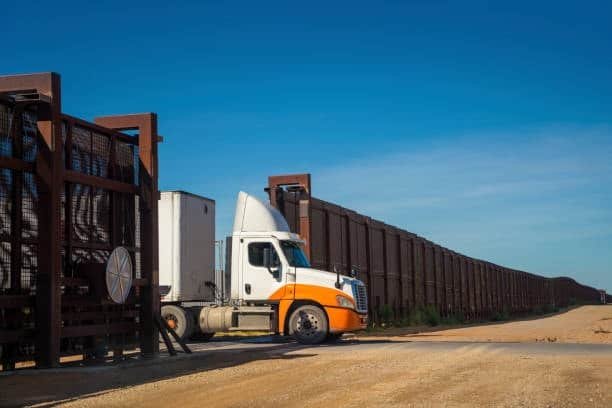
Most of the Mexico-U.S. trade is done through cross-border trucking because it is flexible and economical. Some of the major border crossings are Laredo-Nuevo Laredo (busiest), El Paso-Ciudad Juarez, and San Diego-Tijuana. The transit time will be between 1 and 5 days based on origin and destination, although border waiting time may increase by 2-8 hours during peak times.
The contemporary trucking services allow tracking in real-time and keep the sensitive cargo in the temperature-regulated conditions. When making shipments, factor into the plan the driver shortage and equipment availability, particularly in high seasons.
Rail Transportation
Rail is cost-effective for bulk commodities and containerized products, especially between central Mexico and interior U.S. destinations. Such major rail crossings are Laredo, Eagle Pass, and El Paso. Although rail is slower than trucking (3-7 days average transit time), it offers more reliable scheduling and reduced costs per unit of larger quantities.
Intermodal rail-truck combinations have been popular, which employ rail in long-distance transport with trucks in the final delivery. This will be a cost-speedy approach that will still have the door-to-door service.
Ocean Freight Options
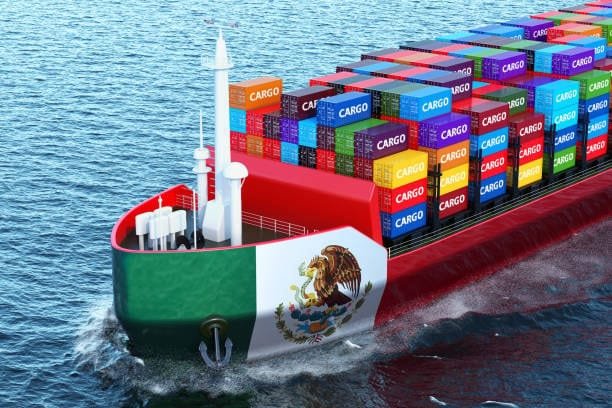
The ocean freight is economical in the case of shipments to the Pacific or Gulf Coast ports in Mexico, particularly when the volume would be large or when urgency is not a primary factor. In Mexico, some of the major ports that serve American trade are Manzanillo, Lázaro Cárdenas, and Veracruz. Delivery times of U.S. ports will be between 2 and 7 days and a higher figure because of inland transport.
Sea freight is convenient when dealing with large amounts of commodities, heavy machinery, or the consolidation of the contents of several suppliers into containers.
Air Freight for High-Value and Urgent Goods
Mexican air express is generally 3-5 times more expensive than the ground shipping service, yet it can deliver shipments within 1-2 days with high-value or urgent goods. Big international airports such as Mexico City, Guadalajara, and Tijuana have regular cargo service to U.S. destinations.
Look at airfreight when the goods are perishables, when the supply of medical supplies is short, and when it may be important to replenish the stock in an emergency.
Border Crossing and Inspection Considerations
The processing time at the borders is dependent on the crossing, time of the day, and type of cargo. PHIS requirements increase the time agricultural products take in the inspection. Introduce known trader schemes such as C-TPAT to minimize the level of inspections and quicken the process.
Anticipate peaks and slumps in border wait time, especially during times of agricultural product harvests or times of consumer goods shopping during holidays.
Incoterms and Cost Allocation
Well-established responsibility and risk transfer points with the help of correct Incoterms. Popular names of Mexico imports are:
- FOB (Free on Board): The goods are delivered, after which the buyer takes over at a particular point.
- CIF (Cost, Insurance, and Freight): Seller covers the transportation and insurance to the destination port.
- DDP (Delivered Duty Paid): Costs and liabilities up to delivery at the location of the buyer are treated by the seller.
Select words that work with your logistics resources and risk acceptance, and make sure those words are effectively communicated with your suppliers regarding duties.
Duties, Taxes, & Cost Optimization
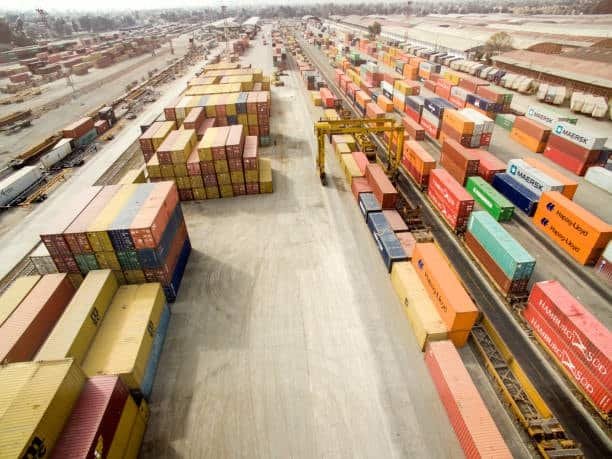
To properly price and have healthy profit margins, it is important to know the entire cost model of importing in Mexico.
Duty Calculation Fundamentals
The calculated duties are paid on the value of the transaction of imported goods, which is the price paid together with some additions such as assists (materials supplied to the foreign producer), packing costs, and selling commissions. The duty rate is determined by the HTS of a product and the country of origin.
Qualifying Mexican goods are frequently allowed to enter the US without any duties, whereas non-qualified goods are subject to MFNs. As an illustration, automotive parts that are eligible and qualify under USMCA come in without duties, whereas those that do not qualify may be subject to 2.5% duties.
Additional Taxes and Fees
In addition to responsibilities, imports can be subject to:
- Merchandise Processing Fee (MPF): 0.3464% of shipment value (minimum amounts $27.23, maximum amounts $528.33 in one shipment)
- Harbor Maintenance Fee: 0.125% on shipments brought by vessel.
- User charges: Depending on the port and services.
USMCA Optimization Strategies
The USMCA benefits should be maximized through collaboration with suppliers to comply with the rules of origin and to manage the volume of goods being imported. This may include the sourcing of raw materials in the USMCA countries or changing their production processes to be more regional. Supply chain changes are usually justified by the possible savings in the duty.
Properly document the origin and take into consideration the idea to get advanced determinations by CBP to ensure that products of a complex nature are eligible under the USMCA.
Tariff Classification Accuracy
A wrong HTS classification is an expensive error. Classifications define the duty rates, statistical reporting, as well as the regulatory requirements. Check around with the customs professionals or online sources of CBP to confirm classifications. In case of uncertainty, seek an adjudication decision by CBP to prevent any conflict in the future.
Types of common errors in classification are:
- Lack of understanding of product composition/main purpose.
- Ignoring certain provisions on product variants.
- Making a distinction between completed products and parts or sub-units.
Additional Import Costs
Allowance on miscellaneous costs other than duties and taxes:
- Customs broker fees: They usually range between 100 and 300 dollars per shipment and percentage charges.
- Handling and transportation: Mode and distance dependent.
- Insurance: This is typically 0.1-0.5% of the shipment value.
- Warehousing and distribution, in case consolidation or storage is required.
- Exchange rate fees: To pay in Mexican pesos.
Cost Reduction Strategies
Take into account foreign trade zones (FTZs) when it comes to duty deferral or even elimination of re-exports. FTZs permit the manipulation, production, or assembly of goods without payment of duties on the spot, which has the advantage of cash flow and possibly reduced duty.
Put in place duty drawback programs to reclaim duties paid on imported materials for the exported products. This is able to save manufacturers who re-export processed goods a lot.
On the areas of exploration: consolidation of fixed costs through greater shipments to decrease the unit transportation and handling costs.
Working with a Customs Broker
An experienced customs broker can come in really handy when it comes to the intricacies of importing into Mexico, particularly with novice importers or complicated games.
Understanding Broker Services
The entry filing and payment of duties and verification of compliance with CBP are done by licensed customs brokers. They categorize goods, calculate the duties that should be applied, and provide an adequate record. Several brokers also offer other services such as trade consulting, compliance monitoring, and transportation coordination.
Brokers are your agents with CBP, and through their knowledge and standing with them, they help in the easy clearance. They ensure that they are up to date with regulatory changes, and they may offer advice on compliance strategies.
Selecting the Right Broker
Select Mexican brokers who are experienced in your product category and trade lanes. The important selection criteria are:
- Licensing and credentials: Check up-to-date CBP license and professional certifications.
- Experience: Find special experiences with your product types and Mexican suppliers.
- Technology: There are advanced brokers who provide online monitoring, document management, and reporting.
- Communication: Chat back and frequent reporting on shipment status.
- Financial stability: Check the capacity of the broker to pay duties and hold bonds that are needed.
Broker Fee Structures
Typical broker fees include:
- Basic entry fee: The standard entry fees per shipment are $100-300.
- Value-based fees: 0.25-0.5 per cent of the shipment value on the high-value goods.
- Additional services: Separate fee for complex classifications, requests for ruling, or special treatment.
- Monthly fees: There are brokers who impose maintenance or minimum fees on the account on a monthly basis.
Look at the overall costs and not merely the basic fees because the level of services and other related fees differ greatly among brokers.
Building Effective Broker Relationships
Give full and proper information to brokers to prevent delays and other charges. Create communication patterns and reaction time requirements. Regular performance reviews are used to make sure that the service levels are as per your requirements.
Look into long-term relationships and collaboration with brokers whose performance and support in compliance can be reliable. Competitive advantages can be enjoyed by great broker relationships in the form of priority handling and strategic advice.
Common Pitfalls & How to Avoid Them
It would be a big time and money-saver and would prevent a lot of regulatory pain that can result from picking up on the mistakes of typical imports.
Documentation Deficiencies
Most of the customs delays occur due to incomplete or inaccurate documentation. Some of the most frequent are the absence of commercial invoices, wrong product descriptions, or discrepancies between documents. You need to have documentation checklists and check-up processes with your suppliers in Mexico so that they are complete and accurate.
Valuation Errors
It is also a punishable offence of under-reporting shipment values to evade duties, and this attracts harsh consequences. CBP checks reported values against market data and the history of transactions in order to detect irregularities. Make sure that invoices are based on real values of transactions with all the necessary additions such as assists, royalties, or packing expenses.
Classification Mistakes
Misclassification of tariffs will impact the calculation of duties and regulatory obligations. Wrong classification of products can lead to unforeseen duties, quota limitations, or requirements of regulatory obligations. Utilize CBP materials, seek advice, and refer to binding decisions on problematic products to make a correct classification.
Origin Documentation Problems
Making claims of the USMCA benefits without supporting their origin appropriately results in duty payments and fines. Make sure that the certificates of origin are filled out well and have the necessary records. Make regular checks on the suppliers to ensure adherence.
Regulatory Non-Compliance
Ignorance of product-specific laws leads to shipment detainments and possible confiscation. Farm produce must be under APHIS authorization, food must comply with FDA standards, and consumer goods may need certification of safety. Enquire about all the relevant regulations before the importation of new products.
Cash Flow Management Issues
Cash flow can be stretched by unforeseen expenses due to delays or extra responsibilities, or compliance needs. Have sufficient buffers in case of contingency, and think of trade finance in case of bigger shipments. Have your broker estimate the total landed costs.
Supplier Communication Breakdowns
The lack of communication with Mexican suppliers poses problems with documents and compliance. define definite standards of documentation requirements, delivery timeframes, and quality. Frequent audits of suppliers are useful in ensuring performance and compliance standards.
Case Study: Successful Agricultural Import Operation
A U.S specialty food distributor wanted to receive organic avocados and vegetables grown in Michoacan, Mexico, to supply an increasing demand among importers in high-end grocery chain outlets in the Southwest.
Initial Challenges
The company had many challenges: it had to know how to import fresh avocados when required by APHIS, it had to be compliant with the USDA organic certification standards, it had to deal with seasonal price fluctuations, and it had to organize cold-chain logistics to keep the products within its quality range across the borders.
Strategic Approach
The distributor collaborated with an established Mexican grower cooperative that was already USDA organic certified and had experience with export procedures in the US. They partnered with a customs broker who did agricultural imports and also, and they also formed relationships with temperature-controlled trucking companies serving big border crossings.
Implementation Steps
To begin with, they received the needed APHIS import permits and had their Mexican suppliers registered with the respective Mexican export authorities. They have put up quality control measures such as pre-shipment checks and temperature checks along the supply chain.
The company also adopted an inventory management system, which is synchronized to the harvest schedules, so that when the company orders, it can be at the right time and reduce the cost of storage. They also made contingency plans to delay the borders during the peak season of avocados.
Results and Lessons Learned
The operation became able to import 50 containers each month within 18 months with 98% on-time delivery rates and a low number of customs delays. The main success factors were critical preparation of the regulatory requirements, good relations with suppliers, and active communication with the customs brokers and transportation providers.
The company came to understand that the initial investments in the right systems and relationships saved a lot of challenges in running the operation and allowed scaling the operation fast.
Tips & Best Practices
Preparation and Planning
Planning of imports should begin long before your initial delivery. Investigate all the required regulations and get the relevant permits, and build connections with the service providers. Develop a documentation, compliance, and logistics checklist that is detailed to maintain consistency in shipments.
Carry out a comprehensive due diligence of Mexican suppliers, such as site visits, financial check,s and compliance audits. Import success is based on strong supplier relationships.
Compliance Management
Keep up to date with regulatory developments with regard to your products. Receive updates of CBP, industry publications, and trade associations. Think of enrolling in some of the trusted trader schemes, such as C-TPA, to lessen the level of inspection and speed up the border processing.
Maintain accurate records of the entire import process, correspondence, records, and compliance certification. Good faith compliance efforts are easy through proper record-keeping and are facilitative of audits.
Technology and Automation
Use technology to manage and track documentation and shipment, and compliance. Trade management systems in the modern world can automate routine functions, minimize errors, and offer superior visibility of your supply chain.
Incorporate the systems of your custom broker and transportation partners to facilitate a free flow of information and minimize technical mistakes in data entry.
Continuous Improvement
Periodically examine import performance indicators such as cost, transit time, and compliance indicators. Find areas of improvement and take corrective measures in time.
You need to be flexible in your supply chain so that you can adapt to new regulations, market conditions, or disruptions. Risk can be minimized with the diversity of suppliers and transportation methodologies in order to sustain the level of service.
Professional Development
Keep abreast of trade laws by continuing education and industry training, and professional certification. Think about the possibility of being part of trade associations to network both with exporters and importers and gain some understanding of the industry.
Develop in-house knowledge or retain contacts with trade contacts that can offer advice on tricky matters or new legislation.
Conclusion
The imports of Mexico have significant benefits to the U.S. companies that want to find solid, economical sourcing practices. The overall USMCA benefits, the location factor, and the variety of manufacturing operations in Mexico pose immense opportunities in various industries. To be successful, one has to prepare extensively, document well, and develop good relationships with qualified service providers. With the knowledge of the regulatory structure, supply chain optimization, and compliance and logistics best practices, you can establish a profitable and sustainable import activity. Act by evaluating your own product needs, studying the relevant regulations, and contacting established customs brokers and Mexican suppliers. The divided efforts will lead to profits in terms of the ease of business, lowering expenses, and decreasing compliance risks through investments in proper planning and professional advice.