
Introduction
The shipping process of Alibaba, which includes various Alibaba shipping costs, is like a minefield with a blindfold on. A single misstep and you end up with some unanticipated expenses that are eating up your profits, time wastages that are making your customers angry, or spoiled products that will see you redo everything. Most entrepreneurs jump into Alibaba sourcing with a sparkle in their eyes of cheap wholesale prices, only to realize that the logistics of shipping can make or break their business endeavor.
This ultimate guide will unravel the mystery of shipping from Alibaba by addressing all the shipping options that exist, how to select the most appropriate shipping strategy to use, cost and time expectations, cost-saving measures, how to identify the right shipping agent, and the most common traps that beginners fail to avoid. You might be a small business owner just trying your first product, you might be a dropshipper trying to maximize your margins, you might be a bulk importer trying to scale, or you might be an entrepreneur trying to launch your next venture. One thing this post will do is give you the knowledge you need to ship smart at Alibaba.
What is Alibaba (in terms of shipping)
Understanding Alibaba as a Global Sourcing Platform
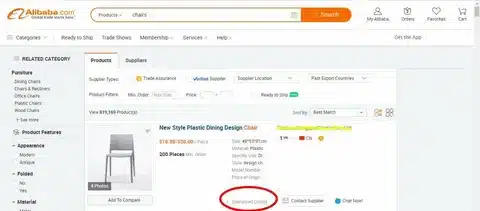
Alibaba is the largest wholesale marketplace globally, which offers various shipping methods and functions between global buyers and Chinese manufacturers and suppliers. In contrast to other retail platforms, Alibaba handles bulk purchases, tailor-made production, and B2B commerce. The platform accommodates the various types of buyers, such as small businesses that order samples, medium-sized importers that buy pallets, and large companies that operate container loads.
Why Shipping Dominates Alibaba Transactions
Shipping means much more than merely moving the products between point A and point B when it comes to Alibaba, as various shipping fees can significantly affect your overall costs. It can be up to 20-40 percent of your overall product cost, significantly affects the delivery schedule, and presents numerous risk factors such as customs issues, document mistakes, and product loss. Shipping knowledge is important since it has a direct impact on your profit margins and business growth, as well as customer satisfaction levels.
Essential Shipping Terminology for Alibaba Buyers
FOB (Free on Board) implies that the supplier transports goods to the departure point with no additional shipping fee included, and that you bear external shipping expenses and risks thereafter. EXW (Ex Works) puts the highest risk on you as a buyer by making you responsible for picking up the goods at the supplier’s premises and taking care of the transportation.
The trade terms are internationally accepted, known as incoterms, that outline the responsibilities of buyers and sellers in the sale, who will pay the shipping, insurance, and customs duties. A freight forwarder, especially for shipping from China, is your shipping agent, and he organizes transportation, documentation, and clearance by the government.
LCL (Less than Container Load), which can affect your Alibaba shipping cost, is the option of sharing the container space with other deliveries, which is the best choice when the order is small. FCL (Full Container Load) offers you the capability to utilize a complete container, which would be very economical in bulk. Dimensional weight charges shipping based on package size and not the actual weight, and this usually surprises purchasers with extremely high charges.
Alibaba Shipping Options Compared

Regular Post Services
China Post and Hong Kong Post Overview
Postal services such as China Post and Hong Kong Post are often considered the cheapest shipping method for small packages less than 2 kilograms. They are usually offered at a price of between 5-15 dollars, depending on the weight of the item, 0.5-1 kg, which is appealing to sample orders, small accessories, or products that can be delivered at a flexible time.
Advantages and Limitations
The main benefit is low-rock-bottom prices and all-over-the-globe coverage, contributing to the total shipping costs. to practically all addresses across the globe. Nevertheless, delivery periods are 15-45 days long, data on their tracking is scarce or absent, and the safety of packages is weak. There is often the loss, damage, and delay of items without a remedy.
Optimal Use Cases for Postal Services
Regular is ideal with cheap samples/non urgent small orders, lightweight, high damage tolerance, as well as where cost is more important than speed. Do not use postal services when the shipment is time-sensitive, a valuable product, a fragile product, or one that must be confirmed upon delivery.
Sea Freight Solutions
FCL vs LCL Decision Framework
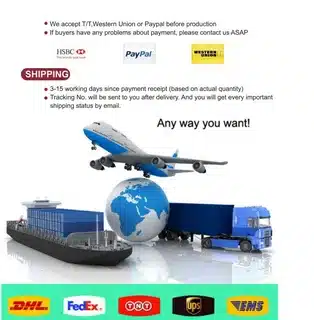
Full Container Load (FCL) is economical when your shipment is 15 m 3 or more cubic meters, or 10,000 kg or more. You’ll spend between 2,000-6,000 on having the exclusive conduction, but the lowest shipping charges per unit. Less than Container Load (LCL) applies to smaller loads in the range of 1-15 cubic meters, which costs between 100-300 per cubic meter, sharing container space with other shippers.
Sea Freight Cost and Timeline Expectations
Sea transport is normally priced between 0.50 and 3.00 per kilogram based on the volume, destination, and the level of service. The transit time is 15-45 days, inclusive of port handling, customs clearance, and final delivery. The 20-25-day China to the US West Coasts and 25- 35 days China to Europe are typical of the popular routes.
Sea Freight Challenges and Considerations
Sea freight presents challenges such as congestion delays at ports, customs inspection delays, possible damage to the containers during rough handling, and extra costs on inland transportation due to transporting containers to their final locations. Unpredictable weather conditions, labor strikes, and seasonal capacity limitations may prolong schedules.
Air Freight Characteristics
When Air Freight Makes Strategic Sense
Air transport is feasible in the range of weight between 50 and 1000 kg, where time is a factor to incur more expense, urgent stock replenishment, the high-value products need secure handling, or time-sensitive products. The break-even point is usually where the delays caused by sea freight would be more expensive than the premiums of air freight.
Air Freight Pricing and Speed
The cost of air freight is 3-8 per kilogram in regular service, and the delivery timeline is 5-15 days, including clearance at customs. Express air services are already more expensive (between 8-15 per kilogram) and arrive in 3-7 days. Prices are variable depending on the cost of fuel, the time of the season, and the cargo space.
Air Freight Considerations and Limitations
The calculation of volumetric weight can significantly increase expenses where the package is large and light by use of the formula: length x width x height/5000. Airlines also have size limits, hazardous material limits, and seasonal capacity limits in peak seasons such as the Chinese New Year.
Express Courier Services
Premium Speed and Service Features
The quickest, most efficient delivery is provided by DHL, UPS, and FedEx with a 2-7 delivery time, full tracking, signature delivery, and customer care. These services implement customs clearance, offer insurance services, and also have a vast network all over the globe.
Express Service Cost Structure
Express delivery costs in general are 15-50 USD per kilogram with a minimum fee of 50-100 USD an order. Remote destinations, oversized packages, and other services such as insurance or delivery confirmation are charged more. Express services can be costly, but can be economical on samples, small high-value orders, and urgent restocking.
Optimal Express Shipping Scenarios
For product samples less than 5 kg, urgent replenishment of inventory, high-value small shipments, time-sensitive product launches, and where tracking and reliability are more important than cost considerations, use express services. Do not use express delivery when making large bulk orders, when the product has low value, and when the shipment is not urgent.
Alternative and Hybrid Shipping Methods
Railway Transportation Options
The China-Europe rail line provides an intermediate between air freight and sea freight, with delivery within 15-20 days at rates approximately half that of sea freight and a third that of air freight. This alternative would be appropriate in delivering shipments to European destinations where fast delivery is needed as compared to sea freight.
Multimodal Transportation Strategies
Sea transportation to major ports, plus truck or rail transportation to inland routes, may be the best alternative to reduce costs and delivery time. Sea-truck combinations are efficient with North American destinations, whereas sea-rail is efficient with European markets.
Consolidated Shipping Benefits
Freight consolidators gather a number of small packages into large packages, get a better rate, and have reasonable delivery times. This method is especially effective with common importers who are able to coordinate the shipment timing with other business enterprises.
Cost and Time Breakdown Analysis
Primary Cost Factors in Alibaba Shipping
The calculations of weight and volume are used to determine the base shipping rates, and the carriers charge the one that generates the most revenue. Distance and routing have an impact on pricing in terms of fuel usage, handling needs, and infrastructure expenditure. The seasonal fuel surcharges vary every month according to the oil prices and demand trends.
Fees are handling, loading, warehouse storage, and documentation processing. The customs duties and tariffs differ according to the product category, country of origin, and destination regulations. Basic coverage is available at an insurance premium of 0.1-0.3% of shipment value.
Timeline Variables and Delays
Transportation mode for base delivery times essentially relies on the mode of transportation, with 2-7 days required in express and 15-45 days in sea transportation. Origin-to-port time contributes to the inland transportation time in China, especially for suppliers that are distant from big shipping ports.
Handling and processing delays are experienced at various points, such as the warehouses of the suppliers, the freight forwarders, the departure ports, the arrival ports, and the customs offices. The customs clearance takes 1-10 days based on the complexity of the product, the accuracy of the documentation, and the requirement of inspection.
Final mile delivery is an additional 1-5 days needed in delivering goods to final destinations once they have arrived at arrival ports, depending on the remoteness of the location and the local transportation infrastructure.
Comparative Cost and Time Analysis
Regular post varies between 5-15 with 15-45 days delivery on packages less than 2 kg. The cost of sea freight LCL is 100-300 per cubic meter, delivering in 20-40 days. FCL with a 15-35 day transit time costs $2,000-6,000 per container by sea freight.
Air freight between $3-8 per kg delivered in 5-15 days. Express courier costs 15-50 kg/2- 7 days. Such comparisons are made on the basis of normal service levels without expediency and extra services.
Money-Saving and Risk-Reduction Strategies
Supplier vs Independent Freight Forwarder Negotiations
Shipping costs are frequently increased 20-50 percent by the suppliers, leading to high shipping costs with minimal service opportunities and responsibility. The freight forwarders operate independently and offer competitive prices, flexibility of service, and direct channels of communication. Nevertheless, suppliers can also provide product shipping packages that ultimately can save money.
Make suppliers give separate product and shipping quotes, and make comparisons with independent freight forwarder rates. When making decisions, take into account order consolidation timing, terms of payment, and service level needs.
Incoterms Strategy and Responsibility Allocation
FOB terms allow you to control the cost of shipping and choice of carriers, but it puts foreign transportation risks on your shoulders. CIF terms put shipping on suppliers, which tend to have excessive shipping prices and no choice of carrier.
DDP terms offer the greatest amount of convenience since all shipping and customs duties are done by the supplier; however, they generally include the highest markups. Select incoterms depending on the field of shipping knowledge, the degree of risk, and the quantity needed.
Smart Packaging and Dimensional Weight Optimization
In the case when the volume weight is greater than the physical weight, dimensional weight calculations are performed based on the package volume instead of physical weight. Maximize packaging by removing space, utilising lightweight material, and communicating with suppliers on effective packing techniques.
Think of repacketing services in the freight forwarder’s premise to lower the dimensional weight fees. Ask the suppliers to provide detailed packing specifications to prevent the occurrence of unanticipated volumetric weight surprises when finalizing orders.
Quality Control Before Shipping
Enact pre-shipment checks in the form of photos, video-conferencing, or contracted inspection firms for $200-500 per visit. Such inspections identify quality problems, wrong quantities, and packaging problems before costly shipping expenses are incurred.
Ask suppliers to provide detailed packing lists, product photographs, and packaging photographs in order to approve shipments. Minor inspection investments avoid major losses because of the shipment of defective goods.
Customs Preparation and Duty Planning
Do your own research on the import duties, taxes, and regulations of your particular products and country of destination before making orders. A lot of nations offer online calculators of duties and importation requirements.
Write valid commercial invoices, packing lists, and certificates or permits where necessary. Improper documentation leads to delays, extra charges, and even confiscation of shipments.
Strategic Insurance Decisions
To reduce Alibaba shipping costs, basic shipping insurance is normally 2-3 per kilogram of shipment loss or damage, and full coverage is 0.1-0.3 of % shipment value. Assess insurance requirements, depending on the product’s worth, the level of risk incurred during shipping, as well as your capacity to take a loss.
Perishable goods, high-value goods, and delivery by a less secure carrier are products that should have extensive insurance coverage. Durability of low-value goods that are shipped using trusted carriers might not be worth insurance coverage.
Selecting Reliable Shipping Partners
Essential Freight Forwarder Qualifications
The indicators of reliability are registration in business, industry certification, insurance, and favorable reviews on customers over the years, especially concerning the handling of shipping containers. Cost transparency relates to elaborate quotes that disaggregate all the expenses without revealing increased charges that are revealed at a later time.
Services capabilities must incorporate various shipping, customs brokerage, insurance, packaging, and destination country knowledge. The communicational norms demand English-speaking employees, frequent updates, and customer-responsive services.
Critical Questions for Freight Forwarder Evaluation
Inquire about the overall transit times (including the customs clearance), all-inclusive costs including fee quotes, insurance and claim facilities, tracking system availability, and expertise in your particular product categories and markets.
Ask about delay backup plans, damage claim policies, payment policy and methods, minimum shipping, and other services such as packaging, labeling, or quality checks.
Multi-Vendor Quote Comparison Process
Ask 3-5 freight forwarders to provide detailed quotes in the form of all charges, estimated delivery times, insurance, and service additions. Do not only compare bottom-line prices but also the level of services and the quality of communications, as well as the company’s reputation.
Assess the completeness of the quote, the turnaround time, the comprehensive response to questions, and professionalism in the quotation process. During actual shipments, these factors tend to foretell the quality of the services.
Real-World Performance Indicators
Find freight forwarders who have demonstrated a record in your trade lane, experience in the line of products, and positive recommendations by other related companies. The reviews made online, industry forums, and membership in trade associations are good sources of information.
You should consider making smaller initial test shipments to test the quality of their service before making commitments to large orders or to exclusive relationships.
Common Pitfalls and Prevention Strategies
Hidden Fee Identification and Avoidance
Port handling charges may come as a surprise, with prices of $100-500 per shipment. The costs of documentation of customs clearance may increase by $50-200. Storage charges are charged when deliveries are delayed in ports or customs.
Fuel surcharges are monthly, and they might not be specified in preliminary quotes. There are Remote area delivery charges that are associated with destinations that are beyond major metropolitan areas. Demand detailed estimates of all the possible charges beforehand.
Incoterms Misunderstanding Prevention
Clearly stating the roles in shipping charges, insurance, and customs duties, and the location of risk transfer, before approving the orders. Put in writing and make sure that both parties are aware of contractual requirements under the agreed terms.
Some of the common errors involve assuming that suppliers will take care of importing/customs duties on FOB terms or assuming that suppliers are going to provide full service to an EXW agreement. Understand the meaning and connotations and agree on particular terms.
Packaging-Related Damage Prevention
30-50 percent of shipping loss claims are due to poor packaging. The requirements of the packaging, such as protective materials, moisture barriers, and directions of handling, must be specified. Look into paying a professional to package the products instead of using the simplest supplier packaging.
The delicate goods should be packaged using unique packaging materials such as foam cushions, shock-absorbing material, and fragile labels. Electronics should have anti-static and anti-moisture protection.
Documentation and Customs Delay Prevention
70 percent of customs delays are caused by incomplete, inaccurate, or missing documentation. Assure that commercial invoices are matched with packing lists, that they have appropriate product descriptions, HS codes, and that they have correct values and quantities.
Documents required will depend on the destination country and type of product. Prepare all research requirements early to obtain additional time to prepare documents and verify them.
Communication Breakdown Solutions
Develop effective communication standards such as frequency of updates, mode of communication, and the process of escalation. Language differences result in miscommunication, which can result in mistakes in shipments or shipment delays.
Important instructions and confirmations should be done using written communication. Ask to be confirmed as understanding of the complicated arrangements or special needs.
Pre-Shipping and Follow-Up Best Practices
Comprehensive Pre-Shipping Checklist
Supplier agreements must include product specifications, quantities, packing, delivery schedules, and quality. The terms of payment should be clearly spelled out in terms of amounts, timing, and modes.
Shipping arrangements need to have confirmed incoterms, choice of carriers, delivery addresses, and special handling instructions. The preparation of documentation consists of commercial invoices, packing lists, and any necessary certificates or permits..
Insurance coverage, Shipment value, and risk take points should be taken to have insurance coverage. Quality control can be in the form of pre-shipment inspection or sample approvals.
Active Shipment Monitoring
Regular shipment location, customs status, and estimated delivery dates should be updated on the tracking systems. Freight forwarders’ communication. Proactive communication with freight forwarders is used to detect and resolve problems before they develop into significant problems.
Delay contingency planning involves backup suppliers, alternative means of shipping, and customer communication. Monitoring of documentation facilitates the process of clearing customs without any problems.
Post-Delivery Procedures
On-the-spot inspection at the time of delivery can be used to detect damage or inconsistency at a time when claims can still be made. Quality checking leads to the receipt of products that are in line with specifications and expectations.
Feedback documentation can be used to benefit subsequent shipments and also gives useful supplier performance information. Any issue that is identified should be addressed through dispute resolution procedures in a timely fashion.
Supplier and freight forwarder performance are assessed to inform future sourcing and shipping decisions.
Conclusion
Success in shipping out of Alibaba requires knowing the whole world of opportunities, costs, timeframes, and risks of international shipping shipping price. You have to choose the shipping mode that suits your business needs, either cost minimization, maximizing speed, reliability, or a mix of all the above save on Alibaba shipping costs.
You should remember that the cheapest shipping rates may not necessarily be the best when delays, damages, or poor quality services compromise your business operations. Similarly, premium shipping may not be worth a sufficient return on investment to the low items that are not urgent alibaba shipping.
Start by knowing what you want to accomplish, do a lot of research on what you want to do, and form a relationship with honest partners. Small shipments always give you a chance to test different strategies and then increase them and contingency plans in case everything fails.
The key to Alibaba’s shipping success is preparation and continuous learning from each experience. Early in the sourcing process, you need to plan how you will ship, request specific quotes from several different providers, and work with qualified and quality agents with whom you will have a clear understanding of your specific needs and market expectations of higher shipping costs.
With the appropriate knowledge and preparation, shipping of goods at Alibaba can be a competitive advantage rather than a source of panic and unanticipated costs. The hours you take to understand these processes will be compensated in the process of importing a whole shipping container.