
Hook / Intro — Why TEU Matters
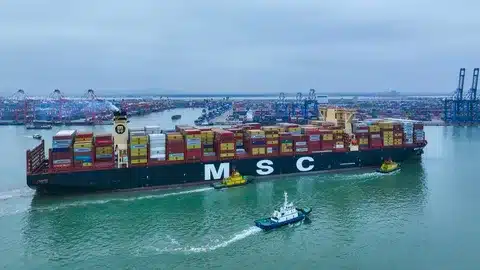
Imagine the next one: one ultra-large container ship is floating into port, and it is carrying more than 24,000 standardized containers piled many levels high above deck—enough cargo to load a freight train over 70 miles in length. In the background of this logistical wonder is a basic unit of measurement (that has changed the world of international commerce): the TEU, or twenty-foot equivalent unit, has changed the way we gauge shipping capacity and compute freight costs and the movement of goods over oceans. This standard measure has changed the way we gauge shipping capacity and compute freight costs and the movement of goods over oceans. As a business owner who has to ship goods abroad, a supply chain expert working on the optimization of logistics, or just a person interested in the way global trade functions, it is important to know the TEU. It influences the prices you pay on imported goods, the efficiency of ports, and also determines the route taken by shipping companies. In this all-encompassing guide, we are going to examine what TEU is, why it became the new industrial standard, how it affects the supply chains across the globe, and what the future of this basic shipping measure will become.
What Is a TEU?
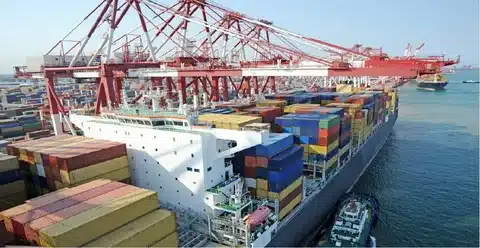
A TEU -Twenty-Foot Equivalent Unit is the unit of measure that the shipping industry uses to calculate the capacity of container ships and cargo containers. The name originated in the 1960s when containerization was becoming more normalized around the globe, and the 20-foot container was the new standard of yardage. A TEU is essentially the area of a typical 20-foot shipping container, and forty-foot equivalent units, which is the denominator of all measures of ship size, or port throughput.
It is so appealing due to its simplicity: rather than calculating cubic meters or square feet in other nations, the industry has reached this common denominator. Related to the TEU is the FEU, or Forty-Foot Equivalent Unit, a 40-foot container, and the equivalent of two TEUs. You will also encounter terminology such as TEU capacity, explaining the number of standard containers a ship can carry, and cargo capacity. However, the fact is that TEU is a volume-type measurement that has no direct correlation with weight or mass. A TEU container can carry lightweight electronics or heavy machinery, which have exponentially different real weights but are the same size. This distinction is relevant insofar as planning deliveries and computing transportation costs is concerned.
Dimensions, Specs & Variants
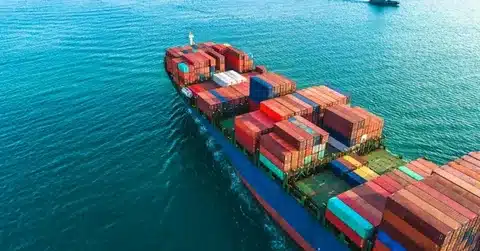
The common 20-foot container, which is used to characterize a TEU, has a length of about 20 feet, a width of 8 feet, and a height of 8 feet 6 inches on the external side. Internal dimensions are usually approximately 19 feet 4 inches long, 7 feet 8 inches wide, and 7 feet 10 inches high, offering 1,172 cubic feet of cargo space, and the internal dimensions are crucial for fitting cargo. These are accurate measurements that make containers fit on ships, trains, and trucks, and at the same time hold structural integrity throughout the transportation.
There are a number of variations to the container ecosystem on top of the common type. These containers are high cube containers whose height is 9 feet 6 inches (a foot taller than conventional containers) and give the containers vertical space by allowing lightweight yet bulky cargo to be carried or conventional pallets to be placed, but they are calculated as one TEU. These half-height containers have a height of 4 feet 3 inches and are used to carry heavy freight like coal or ore, and they are rated as 0.5 TEU. Meanwhile, a 40-foot box is considered 2 TEUs, and a 40-foot high cube box is also 2 TEUs, although it has greater actual capacity.
The system is also restricted to nonstandard containers. Newer containers, including refrigerated containers (reefers), open-top containers, or flat racks, may have the same number of TEUs but have different needs in handling, power, or deck location. Liquid tank containers. Despite being typically 20 feet in length, liquid tank containers possess vastly different cargo characteristics than dry goods containers. It is these extreme cases that remind us that TEU is an approximation of the value of all shipping situations rather than an accurate one.
Why TEU Is Widely Used in Shipping & Logistics
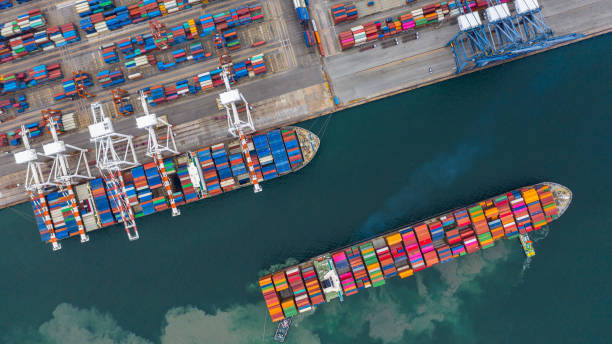
TEU has become the standard in the industry since it addresses a major issue, which is to compare capacity between thousands of ships, ports, and terminals in the ocean freight industry. with various systems and languages. Prior to containerization, ship capacity calculations involved different types of cargo, packing, and measurement systems—a logistical nightmare. TEU simplified this process by providing a universal measure, allowing everyone from Shanghai to Los Angeles to easily understand shipping capacities.
This standardization provides direct comparisons that are the impetus for making business decisions. Shipping lines immediately inform port operators when they declare a new vessel with a capacity of 18,000 TEU. Terminal managers use TEU measures to plan their storage space, crane movements, and truck movements. Supply chain analysts will compare port throughput in terms of TEU volume to also determine bottlenecks or areas of growth. This standard language enables unprecedented international logistics coordination.
TEU is also vital in pricing structure and financial planning. Shippers can easily compare the cost in the logistics industry because the freight rates are usually quoted on a per TEU basis. The port authorities charge on volumes of TEUs, and this establishes a transparent pricing model. Shipping lines work out vessel utilization rates on a TEU basis in order to enable them to optimize routes and schedules. TEU capacity additions are analyzed by the investors to determine the growth patterns in the industry and the volumes shipped regularly. The modern shipping industry’s complexity would become virtually uncontrollable without such a standard measure.
How TEU Affects Supply Chain and Trade
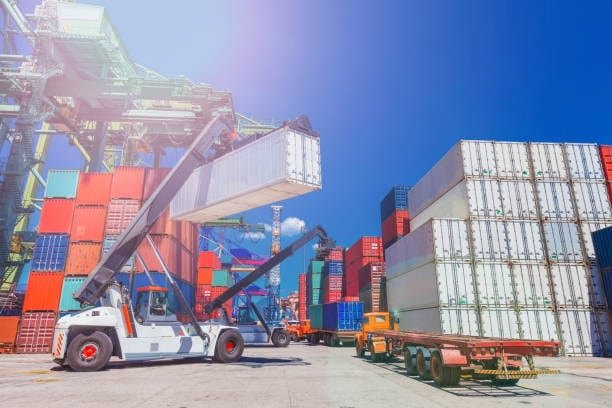
The TEU measure has a direct impact on the cost of freight due to the supply and demand factors. Rates are high when vessel size and capacity (measured in TEU) are limited compared to the demand for shipping containers.: We experienced rates spiking by five times higher in particular lanes during the shipping crisis in 2020. In contrast, many larger ships of 20,000 or more TEU can be introduced by carriers, and with the supply elasticity of the rates, they can be reduced. The knowledge of such capacity dynamics on TEU also enables firms to predict the changes in costs and strategize their procurement strategies around such changes.
TEU metrics are very important in port congestion and throughput measurements. When you read that the Port of Los Angeles has passed 9.3 million TEUs within a year, including Panamax vessels, then the number makes you understand the exact volume of moving cargo using containerized transportation in that gateway. Then the number makes you understand the exact volume of moving cargo using containerized transportation in that gateway. When the throughput decreases by 15 percent, in terms of TEU, then it is an indicator of economic deceleration or a supply chain break. Historical TEU data are used by port planners in making justified infrastructure investments- constructing new berths, cranes, or increasing storage yard area depending on how the TEU is expected to grow.
Trade volume analysis relies on TEU in order to monitor the global trade trends. Economists will be able to measure the increase in goods traffic across Asia and North America when trans-Pacific trade is reported to have increased by 2 million TEUs per annum. U.S. seaborne containerized importation, according to industry statistics, has ranged between 20-30 million TEUs in annual trade in the past few years, which offers specific numbers in terms of trade relationships. These statistics are based on TEU, which assists governments, businesses, and researchers to comprehend economic trends, predict demand, and identifying trade routes that determine international trade.
Challenges & Limitations of TEU
Although TEU is widely used, it has some major limitations that a user has to know about. TEU is, above all, a measure of volume capacity, not weight, which is an important distinction that generates some practical challenges. A container holding feather pillows weighing 20 feet weighs much less than its tare weight than that holding industrial machinery, but they are both considered as one TEU. The maximum weight limits of vessels are not based on the TEU ratings, implying that a ship with a rating of 15000 TEU may be able to safely carry 13000 TEU when loaded with heavy cargoes. This weight-volume disconnection involves planning of loads other than counting of TEU.
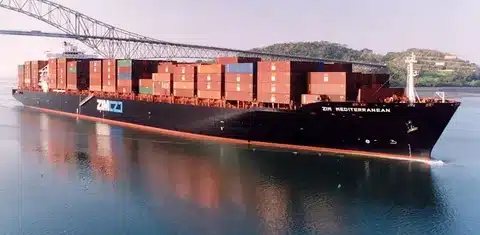
TEU is further complicated by mixed container sizes and non-standard loads. As a 20-foot, 40-foot, and 45-foot combo with some refrigerated units in need of deck space and power hookups is loaded onto a ship, the real working capacity would be different than the theoretical capacity of the TEU. Abnormal cargo, e.g., boats, vehicles, or industrial equipment, can take up several TEU slots and demand special attention, which is not measured by standard measurements. These practical limitations do not frequently allow loading efficiency to approach 100 percent of the rated TEU capacity.
Other metrics are used to supplement TEU in an attempt to give a comprehensive image of shipping activity. In the industry, there are some who follow TEU per tonne ratios for intermodal containers. to gain insight into the density trends of cargo. Mass-related scales, such as deadweight tonnage (DWT) are those that consider the overall carrying capacity of the vessel in terms of cargo, fuel, and provisions, which are paramount when analysing vessel performance. Financial, not purely physical, dimensions are reflected in such revenue gauges as slot costs or TEU-miles. TEU and these supplementary measurements are complementary measurements used by smart supply chain managers as opposed to using volume measurements alone.
TEU in Practice: Case Studies & Trends
Contemporary ultra-large container vessels (ULCV) somewhat literally illustrate the scale of TEU. New container ships have a capacity of over 24,000 TEU, and larger vessels such as the MSC Irina and her sisters are pushing the limits of marine engineering. These megaships are able to transport a cargo capacity to serve more than 400 Olympic-sized swimming pools, yet it is universally recognized through the basic metric of TEU. The shift toward bigger ships represents economies of scale – transporting 20,000 TEUs simultaneously is much cheaper per container than four 5,000-TEU ships – but it, in turn, poses a problem of ports with deeper channels and larger cranes.
Comparison of port throughputs gives interesting trends when compared in TEU. Port of Shanghai is always in the top position worldwide, with more than 47 million TEUs each year, compared to Singapore and other Asian gateways. European ports such as Rotterdam handle approximately 15 million TEUs every year, and the busiest ports in the North American regions have 8-10 million TEUs. Such rankings change according to the economic state, trade policies, as well as the investments in infrastructures, and TEU statistics offer the scoreboard of the world-port competition.
The changes in TEU volumes in recent years have compelling stories to tell regarding the stress on supply chains. In 2020-2021, the volumes of TEUs increased when e-commerce, with its pandemic boosts, overwhelmed port capacity and caused record-breaking congestion. Existing shortages of containers implied that empty TEU slots, instead of being occupied by export, went back to Asia and affected normal patterns of trade. TEU volumes returned to normal in 2023 when consumers started to spend on services again, and carriers had surplus capacity. The boom-bust cycles calculated in TEU terms are evidence of the responsiveness of global supply chains to economic shocks and changing consumer behavior.
TEU and the Future of Containerized Trade
Innovation keeps the TEU pushing forward, with shipbuilders coming up with larger ships, with some coming to nearly 30,000 TEU in capacity, which is almost twice the size of standard containers. But practical constraints of growth in terms of port facilities and canal size may push this to the limit within the near future. New container sizes are also being generated, such as 45-foot and 48-foot containers being used more often in particular trade routes, which are still counted in TEU equivalents. It is yet to be seen whether TEU will continue to be the leading measure or develop into new practices as containers become diversified beyond the standard 20- and 40-foot systems that had defined the system.
The use of digitalization is changing the mode of TEU capacity exploitation with smart containers and IoT tracking. Real-time location of containers, conditions, and contents allows for better utilization of TEUs by minimizing repositioning of empty shipping containers, loading sequences, and delays. The software documentation using blockchains has the potential to accelerate the cargo processing speed and potentially gain effective TEU without physically expanding the system. These technologies do not alter the TEU measurement itself; however, they radically enhance the way that that capacity is being deployed within supply chains.
Sustainability items are introducing new levels of TEU discussions, especially emissions per TEU as a key performance indicator. Big ships are more fuel-efficient in terms of TEU transported, resulting in fewer emissions of carbon per container ship. As slow steaming (reducing the ship speed to conserve fuel) impacts the TEU capacity utilization, it increases the transit time. Other potential sources of fuel for the exact unit, such as LNG or hydrogen power of the future, will also be considered based on their cost per TEU transported. Due to environmental regulation and increasing demands, we will see the development of metrics of environmental impact in addition to the conventional capacity used to define TEU, which may necessitate changes in container architecture in order to achieve both business and climate objectives.
Practical Tips for Readers (Shippers, Businesses, Students)
TEU is the starting point in thinking about how to optimize logistics or estimate costs, but it is not the ending point, especially when thinking about sizing EUR pallets. To find the size of your cargo within the limits of the volume of the TEU, and above all, to determine the weight of your cargo in relation to the weight limit of the TEU, which determines the possibility of your cargo shipment, and which is approximately 20- 28 metric tons, and is calculated by the route and the ship. Get a quote in TEU and FEU to determine the size of the container that is cheaper when using the quantity of shipment. TEU is the abbreviation used to represent a twenty-foot equivalent unit.
One should keep in mind that the partial loads could be consolidated with the cargo of other shippers using the LTL (less-than-container-load) and thereby share the costs of TEUs. Other ports cannot deal with ultra-large vessels that require 15 meters or a greater amount of water, which limits access to smaller vessels that are less efficient with price per TEU. Although overall capacity is enough, a busy port can add weeks to your TEU, and in this situation, you will have to consider other gateways, but they may be slightly farther.
The TEU congestion on main routes (seasons like the pre-holiday increase) and the higher price (shipment during shoulder times can save lots of money per FEU container) allow identifying the areas of work improvement. Keep track of your annual TEUs and the cost per TEU of the goods shipped wide and 8 feet to see where there is inefficiency and compare that with the industry average.
Use containers – are you filling up 95 percent of every TEU volume, or are you not using up billions of spaces? Monitor TEU dwell time at the ports and warehouses since each day of storage costs money, but it does not add value. Databases on ships (e.g., Alphaliner) include data on ship capacity and fleet size (in TEU) TEU containers. Port authorities have throughput statistics that break down the TEU volumes by origin, destination, and type of cargo.
TEU freight rates are tracked at freight rate platforms like Freightos or Xeneta in major trade lanes. It is possible to point out a lot of shipping lines that can offer APIs, and, therefore, this business can add the real-time TEU availability and price to their enterprise systems. Students and academic researchers can access World Bank trade databases containing historic TEU statistics to analyze and make use of in their forecasting models, like the knowledge presented in a blog post.
Conclusion
Twenty-foot equivalent unit is one of the most attractive innovations in the contemporary business- the introduction of a straightforward measure has unveiled to us the fullness of international trade, the applicability of the standard container size. and it has a number of strengths for shippers through the standardization of containerized freight capacity. The metric has enabled the international trade to expand exponentially since its introduction in the containerization revolution, up to the 24,000-TEU maximally sized vessels in the shipping industry today, and has also been used as a universal unit of shippers, carriers, ports, and logistics practitioners in the world shipping business of loaded containers. Still, TEU is merely a rough estimate that also has real-world limitations, particularly in the context of concerns of weight and nonstandard cargo, a fact that reminds us that effective supply chain management must be conscious of the strengths and weaknesses of the measure. Whatever the part of the shipping industry you happen to be in, be it shipping your first container to a foreign land, deciphering the trade statistics, or simply understanding how the stuff on your doorstep gets there, it makes you realize what the TEU does as it takes one container at a time to connect manufacturers and markets, making the global economy.