Hook / Lead — Why Importing Toys to the U.S. Is Both Opportunity and Risk
An example of an e-commerce company in the state of California ordered 5,000 units of wooden building blocks in different colors, which had been manufactured abroad by a supplier, including China-made toys, in the year 2019. They got the products in the port of Los Angeles, cleared through customs, and were sold on Amazon within a few weeks. Two months later, the CPSC recalled of the blocks: the quantity of lead in toy imports was excessive. Not only did it sink the seller into financial misery thanks to the sense of financial loss and legal suits, but it was also impacted by a negative image that the seller had to mend in several years. This cautionary tale portrays the two-sidedness of the U.S. toy import market, a terrain that is awash with opportunity but with regulatory landmines for wholesale toys.
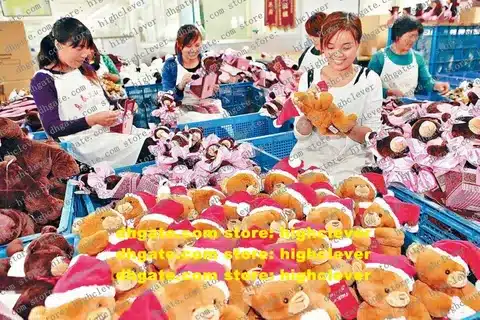
The toy business within the U.S. is enormous because it is known to generate over 28 billion of total sales per annually and it ranks among the most lucrative consumer markets in the world, thereby drawing numerous that will import toys. The American market of high-tech, informative, and entertaining toys is a business opportunity that can not be ignored by the global producers and distributors of toys. New products are in constant demand by gift-givers, schools, and parents and this makes it a demand throughout the year, with the peaks occurring during the holiday seasons when stuffed toys are popular.
Whether the margins of profit are good will depend on whether one has access to good quality products at low prices in manufacturing hubs in foreign countries; the caveat will be of huge proportions. The United States has one of the highest quality safety and regulation standards on imported toys and children’s products in the world. Consumer Product Safety Commission (CPSC) applies extensive testing, product certification, and labelling to protect the youngest American consumers.
In case of non-compliance, products may be seized at the border, costly recalls, civil penalties of hundreds of thousands of dollars, and even criminal prosecution in the most serious instances. To the importers, it is not a decision of whether to learn how to negotiate and to operate in this regime of regulation, but rather the kick start to all the successful import-toy businesses of inflatable toys.
What Qualifies as a “Toy” or “Children’s Product” in U.S. Import Rules
The initial problematic decision when it comes to importing toys is to know what is meant by a children’s product. According to the law of the U.S. CPSIA and CPSC regulations define children’s toys as any consumer product that is designed or marketed primarily to children age 12 years or less. This definition may sound simple, yet using it, can be quite complex and go way beyond the conventional toy ships.
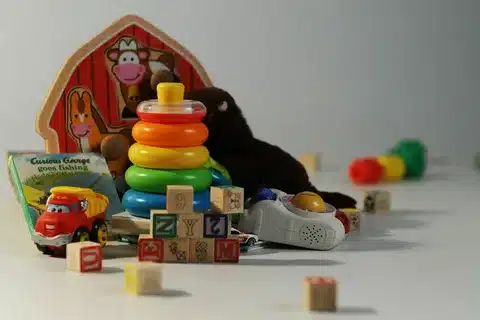
The CPSC uses a number of factors to define whether a product is a children’s product or not. The intent of the manufacturer is also of interest—how is the product marketed, advertised, and described by the company? Labeling and packaging is very important; should the box contain cartoon characters, high primary colors, or even direct age guidance, regulators will notice quality toys. The consumer perception is just as significant: although a manufacturer might state that a product is aimed at adults, in case it is likely to be bought by reasonable consumers as a product aimed at children, it might be controlled correspondingly. This determination comes in the form of decorative elements, size, functionality, and price point.
What is the significance of this with regard to borderline or novelty items? The case of fidget spinners, which were the rage among kids and adults, can be considered sea freight. Although some manufacturers are offering them to adults as stress relief, many of them fell under the jurisdiction of the CPSC, as they clearly appealed to children. Likewise, collectible figurines, novelty keychains containing tiny components, or even some electronic devices can accidentally instigate children’s product rules. Smart importers of educational toys will thoroughly analyze prior to assuming that their product gets out of such rules; the repercussions of being wrong are high. It is always better to treat the product as a children’s good and comply with all the regulations in place when you are in doubt.
Safety Standards, Testing & Third-Party Labs
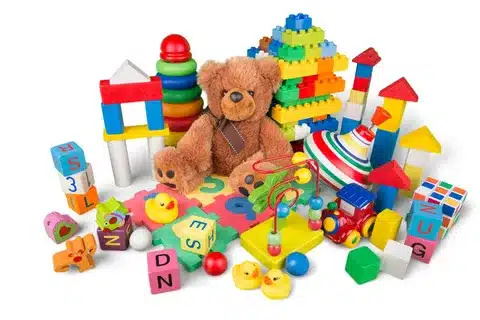
After you have determined that your product is a children toy, it is important to test against relevant U.S. safety standards by subjecting it to the scrutiny of a third party. ASTM F963, Standard Consumer Safety Specification of Toy Safety is the cornerstone of the toy safety compliance. This standard is inclusive of mechanical and physical properties, flammability and toxicological hazards. Your products should also meet federal lead content (100 ppm in accessible substrate materials) and phthalates requirements in plasticized parts that are intended to be used by children under the age of three.
Various tests are used depending on the target group and product attributes. Infant toys (aimed at children under eighteen months old) are subjected to the most scrutinous examination, including small parts testing to ascertain whether they can be choked on, sharp edges or points, and strength to ensure that the components will not become detached during regular use. Small-parts testing (eighteen months to three years) Tester Toys in the toddler age group (eighteen months to three years) may have slightly varying mechanical test requirements. Older child products (three to twelve years) still need to be thoroughly tested, but not necessarily as much choking hazard evaluation as what occurs with their design and intended use rc toys.
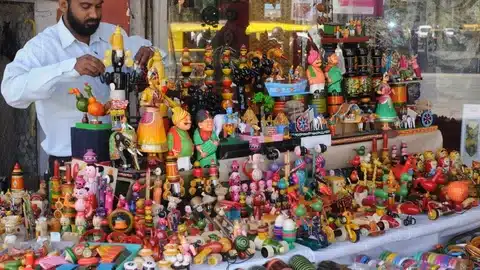
The CPSC has a list of certified third-party laboratories that can be used to carry out the testing of children’s products. These are the CPSC-approved laboratories that have been proven to be competent and able to test in accordance with stipulated rules. Working with a non-accredited lab or a Chinese supplier nullifies your testing and renders your products illegal to both import and sell in the United States, a rather expensive lesson that only some importers figure out once their shipment is held up at the border.
The selection of appropriate laboratories is a matter of many considerations other than accreditation status. Determine their experience with the type of product that you can offer to them, because in that way, they may know better how to test and be guided. Check their turnaround times; it may be one to four weeks, and it will rely on the workload of the lab and the complexity of your product toys manufactured. Know their sample specifications- most laboratories will require several samples of each type of product to do destructive testing. Lastly, compare prices; however, bear in mind that the lowest priced might not offer the rigor and documentation standards that you will require over time in compliance.
Certification: Children’s Product Certificate (CPC) & Required Documentation
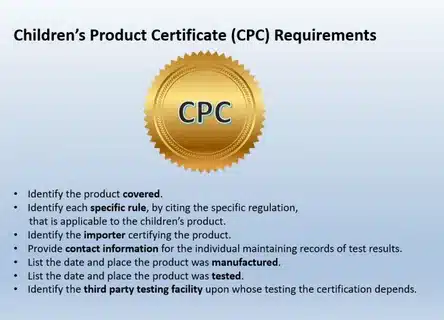
The Children’s Product Certificate (CPC) for plush toys is a passport for your product to the U.S. market. All importers or domestic manufacturers of children’s products are required to provide a CPC, which certifies their children’s products as adhering to all the relevant children’s product safety regulations. This certificate needs to be anchored on third-party testing, and it has to be accompanied with your products in the supply chain. CPCs are regularly sought by retailers, distributors, and e-commerce platforms such as Amazon and may be called on during an investigation or a routine inspection by CPSC inspectors.
A compliant CPC should include certain information that is in a clear, legible format. You should specify the product that is under certification in enough detail so that no confusion arises about the type of product the certificate is protecting. The certificate should include all the consumer product safety regulations that cover your product to import toys from China, which usually are ASTM F963, phthalates limits, lead content, and label tracking. Your information as the importer or manufacturer of the company must be attached with contact details. The laboratory test information, such as name, address, and CPSC acceptance number, should be visible. Lastly, you need to state the date and place where the product was manufactured and the date(s) of testing.
Backup documentation is an essential compliance file that you ought to keep for at least 5 years. The technical foundation of your CPC is test reports by your accredited laboratory, which should include the type of test done, procedures, and pass/fail test results. The chain of custody is created with purchase orders, invoices, and shipping documentation connecting your certificate with particular batches of products. The records of production and quality control data are used to show that there is consistency in manufacturing runs. In case your supplier changes anything in materials, components, or manufacturing processes, you will have to get new testing and new documentation—your old CPC does not apply to the new product.
The tracking label requirement usually disorients first-time importers, but it has a critical safety role to play. All children’s products (along with their packaging, where practicable) should be labeled with tracking details, identifying the product, the manufacturer, where and when it was produced, and cohort details such as batch or run number. This tag allows fast, responsible recalls in the event safety concerns arise. The tracking label has to be permanent and readable, and has to be on the product or a label attached onto the product in a way that cannot be easily detached during ordinary circumstances. In cases of small things where direct marking is not feasible, other alternatives such as hang tags or packaging labels would work well provided they satisfy certain.
Additional Rules for Infant / Toddler Toys
The regulatory requirements of products aimed at baby toys and children under the age of three are much stricter, as the age group becomes very vulnerable. Infants and toddlers learn by touching and tasting everything around them, and hence they are more vulnerable to choking, toxic exposures, and physical damages caused by inappropriately designed toys. When your product is aimed at this population, be ready to have more levels of testing, documentation, and compliance requirements.
The most important supplementary requirement of toys for young children is perhaps the small parts regulation. Any item or piece that fits completely in a specially made test cylinder (approximately 1.25 inches in diameter and 2.25 inches deep) is a small part and a choking hazard. Small parts should not be present in toys that are designed to be used by children less than three years old or after such toys have been reasonably tested in the predetermined use and abuse conditions, which will be an imitation of the actual use of the toys by children, specifically, pulling, twisting, compressing, and hitting. Products for older children should also display warning signs about potential choking hazards if they contain small parts.
Another requirement that is specific to both durable infant and toddler products is product registration cards. These post-maintained registration cards should be attached to some products, such as high chairs, strollers, and so on, so that the consumer can register with the manufacturer on the purchase. In case of a recall, the manufacturer will be able to get in touch with registered owners directly, which greatly enhances the effectiveness of the recall. Although this is not a requirement of all the toys, certain types of infant products that can also serve as toys (play yards, activity centers) may fall under such a requirement.
Other testing measures that infant and toddler products undergo are more stringent mechanical tests that consider their strength and durability, as they have to be able to endure more aggressive handling. Bite tests and oral contact requirements acknowledge the fact that young children will mouth almost anything that they come in contact with. Sound level testing is a measure that safeguards the developing hearing against overly loud toys. Battery accessibility criteria deny children the chance to access the button cell batteries, which are dangerous ingestion hazards. Plan sufficient time and resources for this extensive testing—it is longer and costlier than typical toy testing but a necessity that is not negotiable for this age group.
Classification, Tariffs & U.S. Customs Treatment
It is important to classify your toys within the toy industry according to the Harmonized Tariff Schedule (HTS) to have an effortless time clearing customs and managing the costs. Most conventional toys would be included in heading 9503, corresponding to tricycles, scooters, pedal cars, and other wheeled toys; doll carriages; dolls; other toys; reduced-size models and similar models of recreation, working or not; and puzzles of any type. Nevertheless, the HTS has many subheadings with various duty rates, special provisions, and requirements depending on the type of toys, the materials used, and the functionality.
A lot of toys are duty-free into the United States, which does not imply that they do not pay any tax. Importers continue to pay the Merchandise Processing Fee (MPF) as 0.3464 percent of the entry value with a minimum and maximum amount and the Harbor Maintenance Fee (HMF) as 0.125 percent of the value of cargo on ocean ships. These charges are irrespective of whether duty is free or not. Also, some materials or types of products could be subject to different treatment—toys with electronic features may be treated differently than those with only mechanical features; this may influence duty rates.
Misclassification causes more than paying the wrong duty rate, and that too on a serious note. CBP has the power to impose fines on negligent or fraudulent misclassification, reclassify your merchandise and collect the right duties along with interest, and hold back your shipments and investigate. Frequent misclassification can lead to heightened examination of all of your subsequent toy exports, bonding of tariffs, or even an absence of import privileges. Where classification is not clear, the request of a binding decision by CBP should be considered prior to importing large amounts of the same—the benefit of this is that it offers a degree of certainty to the classification and safeguards against fines.
The enforcement of intellectual property would further complicate the treatment of toys by the customs. The U.S. takes the protection of trademarks, copyrights, and patents very seriously, and CBP actively stops the suspected counterfeit or infringing products inside the country. In the case of toys with licensed characters, branded elements, or patented technologies, make sure you have appropriate licensing agreements in place with those. Be ready to show documents that indicate that you have the right to import such goods, and such documents could be licensing agreements, letters of permission by owners of rights, or other documents to show that you got the goods legitimately. Any efforts to bring in fake or illegally obtained goods lead to confiscation of the goods, huge fines, and even criminal prosecution.
Import Process & Logistics Considerations
The path from the toy idea to the U.S. warehouse is accomplished with several consecutive stages, and all of them need to be properly coordinated and documented. Upon final product design and supplier selection, you should immediately forward pre-production samples to the lab of your selected CPSC-accredited lab to be tested. This concurrent timing avoids time wastage in the process of shipping toys—you do not want to wait until your thousands of units are shipped before you realize you have a compliance problem. When the test is passed and results are positive, full production should be granted, and at the same time you need to prepare your CPC and make sure that tracking labels are correctly placed during the manufacturing process.
The choice of shipping mode is a compromise between the cost, speed, and product characteristics. Most toy shipments use ocean freight, which has the cheapest cost per-unit container or consolidated shipment. The transit times usually take between two and six weeks based on the origin and the destination ports as well as extra time to clear through customs and during transportation within the country. Air freight would be reasonable with small, high-value items, time-sensitive items, or urgent replenishment demands, although the cost of air freight can be 5-10 times more than ocean freight. Other importers employ a hybrid method, where they ship in a small quantity initially by air to get preliminary sales when the large shipment comes in by sea.
Using a reputable customs broker and freight forwarder makes the import procedure much easier, particularly forbeginners. Brokers Customs brokers deal with the complicated paperwork involved in clearing customs, such as filing entry forms, computing customs duties, and verifying regulatory compliance. They liaise with CBP on your behalf, solve problems that occur during clearance, and make sure that your shipment is transported effectively through the port. Freight forwarders help to organize the physical transfer of the products, organizing the work of transportation between the factory and the final destination, consolidating loads when it is useful, and, in many cases, providing warehousing services. Choosing these partners, specifically considering their experience in the world of children’s products, knowledge of CPC requirements, CPSC regulations, and the specifics of the customs of the toys will save time and help avoid an expensive error.
Timing and buffer planning are what help to distinguish successful importers from those who experience stockouts and unhappy customers. Extensive timelines to consider lead times (production, thirty to ninety days), testing and certification (two to four weeks), shipping transit (two to six weeks for ocean), customs clearance (two to seven days with normal shipments), and domestic transportation (one to five days based on destination). Establish 20% or more contingency buffers to cover the unavoidable delays—factory delays, port delays, customs delays, weather delays, or document delays. Most of the longtimeimporters hold safety stock of one to two months of sales in anticipation of hiccups in the supply chain.
When your toys get to the United States, warehousing and distribution logistics kick in. Other importers make direct deliveries to their facilities or third party logistics (3PL) providers who store and-party manage inventory and fulfill orders. Some of them employ Amazon FBA or other e-commerce fulfillment providers, where they must meet platform-specific labeling and packaging standards. The location of the warehouse is a strategic consideration—a warehouse on either side of the coast will enable the company to deliver faster to the majority of customers in the U.S., and having a central location would reduce the average shipping distances. Think about value-added services such as the assembly of products, custom packaging, or retail-ready preparation, and choose warehousing providers capable of offering such services effectively.
Common Pitfalls & How to Avoid Them
Among the most terrible mistakes in imports of toys, there can be the use of non-accredited labs or receipt of counterfeited test certificates. The other unscrupulous suppliers will be willing to offer tests and reports at a low cost but that document will not be accepted in a court unless it was done at the laboratory approved by CPSC. CBP and CPSC easily perform accreditation checks of the laboratory at their CPSC site, and the forgeries are easily discovered after an examination or investigation. The solution is in the fact that the check of the accreditation of the laboratories should always be made by yourself with the assistance of the official CPSC database before the use of the testing facilities and the certificates of the laboratories, which have not been checked personally by you, should be rejected.
The most experienced importers are also caught off guard when they fail to retest after coming up with changes in design. Any CPC and test reports you possess can only be applied to that exact product configuration which was tested. When your supplier modifies materials (recycling one kind of plastic with another), modifications in construction methods (gluing, stitching, etc.), addition or removal of parts or meets (color shift to another pigment may use different chemicals), then your previous checking is not valid. Your modified product has to undergo new testing before you can import it. Establish good communication policy with its suppliers who will notify you instantly about any change that they introduce, no matter how minor it may be.
Some compliance violations that are easily prevented through details attention are the missing or incorrect tracking labels. Other importers omit some of the crucial data that contain product identification, manufacturer, location and date of production, and lot/batch information. Others label a place, which they will remove before being used (when it is necessary to mark a product) or using methods of part labels. Verify the specification of CPSC tracking labels, work with your supplier in developing supporting systems of marking and sample test to make sure that everything is right, then authorize full production.
The most common are the label and online listing variations whereby the importers are posting the products online and paying less attention to the actual packaging and labeling. When you have listed on Amazon as 3 or older, but the product packaging as 5 or older, you have created a compliance issue, and people can purchase based on the age of the product online and get the products that have not been tested on children in their age group. Meanwhile, it is regarded as a liability to place online product attributes that are not consistent with reality (different materials, components, or functionality). Maintain consistency in product descriptions, online listing and packaging as well as advertisement contents.
Intellectual property theft and counterfeit goods issue is growing very quickly in the toy market where highly recognized characters and brands have high retail prices. Other importers knowingly or unknowingly know that they are bringing in toys containing trademarked characters without a license and are most likely to pass without being detected by the customs. They are purchased by other individuals at the cost of the suppliers who claim to be licensed but end up producing fake products. The aggressive approach to IP enforcement by CBP frequently entails the seizure of the suspected infringing merchandise and the result is the seizure of a good, loss of money and a lawsuit by the rights holder. One should always be cautious of the suppliers who can provide decent licensing documentation and when the offer seems to be too good to be true (off-the-scale-priced branded merchandise), the offer is nearly always as good as it sounds.
Such underclassification or underestimation can be quite tempting to pay smaller duties, yet this one is referred to as customs fraud, the effects of which are staggering. Importers also misclassify the toys in the duty-free category in which they are not expected to be charged, or they state the artificially low value to pay lower duty. CBP uses cutting-edge data intelligence and risk-analytics to identify changes and measures the reported values against the market prices and history. The deliberate misclassification or underestimation can be punished with several times the amount to be paid, interest, legal costs, and even with criminal charges. You should always report the right HTS codes and values of the actual transaction. The minimal saved duty compares nothing to the disadvantage risk of the disaster.
Despite the properly organized importation procedures, the unforeseen occurrences such as delays by freight, port congestions, and hold ups in the custom are enough to derail our plans. The West Coast ports have sometimes been overridden by overwhelming congestion and this adds weeks to the clearance. CBP has the right to inspect your shipment intensively which may include x-ray inspection, physical inspection or sample test of the product. CPSC can also issue import advisories on items supplied by a certain supplier or region and this leads to automatic documentation freezes. Minimise them with big time buffers, safety stock, diversification of ports of entry where possible and working with brokers who are fast at correcting any arising issues.
Case Study or Hypothetical Example
Consider the example of a hypothetical importer, viz. PlayTime Innovations, which would desire to import a teaching and learning robot toy that would be utilized by kids aged between five and twelve. The robot can be 10 inches tall and is primarily made of ABS plastic material with electronic materials, LED lights, and moves on small wheels, bringing the concept of basic code with the help of the app interface. We shall trace their importing process in stages, beginning with the concept of the item to be imported to the warehouse in the U.S., through the key decision-making processes and the pitfalls.
PlayTime Innovations begins with the definite position of the regulatory status of the product. Since the robot is evidently aimed at children aged twelve years or less, it is definitely a children’s product and is subject to the entire CPSC regulations. They also have in place the obligation to comply with ASTM F963, phthalate limits (however, not so much so because it is targeted at the age of 5+), and labeling tracking. The devices of electric components used provide electrical safety standards of ASTM F963, although the toy is not subject to individual electronic product standards, since it is powered by a battery, and is not intended to be wired to household mains.
To check it, PlayTime picks a laboratory, which has the CPSC certification and experience in the field of electronic toys, and sends a quote. The lab will require 3 samples in a destructive test, and one in retention. The tests will include mechanical and physical tests (impact tests, tension tests, torque tests on small components like wheels), flammability tests of plastic components, phthalates testing of any flexible plastic components, and some electronic toy tests offered by ASTM 963 (battery compartment security test, temperature rise test, and others). The latter quote is approximately 2,800 and 3 weeks turnaround. PlayTime sends samples of pre-production to the laboratory by having them shipped directly to their Chinese manufacturer.
During this period of testing, PlayTime has the task of in-classifying and making plans for the customs. The robot is not a transportation device, but rather an educational/entertaining one, and that is why it is a HTS heading 9503.00.80 (toys in the form of animals, or non-human creatures) at a duty-free level. They present this category to the customs broker, who agrees with the decision. They will contribute to MPF and HMF charges, even though they are duty-free. PlayTime provides a complete commercial invoice, packing list, and advance of the CPC they will issue upon passing the test to their broker.
The test results are received after three weeks, and the robot passes all the required tests except one that the battery compartments are opened only with fingers, which is opposite to the requirements of ASTM F963 standards, according to which battery compartments require a tool or two independent movements. PlayTime contacts their supplier on the spot, who reinvents the battery door with a screw kind of closure. Only the battery compartment change is confirmed at a cost of 450 dollars, and a one-week turnaround is received at a new sample is sent to the laboratory. The revised design passes.
PlayTime has now drawn up its CPC. The name of the product mentioned in the certificate will be Robo-Learn Educational Robot, Model RL-2025, SKU 8675309. It offers the corresponding regulations: ASTM F963-17, 15 USC 1278a (limit of lead content), and 16 CFR Part 1500 (tracking label). The importer details include full legal name, address, phone, and email of PlayTime Innovations. The information on the laboratory is the name of the laboratory facility, the address, and the CPSC accreditation number. The certificate also shows the manufacturing date range and place of manufacture at Shenzhen, China with the testing dates as shown by the lab reports.
PlayTime would cooperate with their supplier in the case of tracking labels, wherein permanent labeling is done on the bottom of each robot and it would include the following details: name of the product and the model, name and address of the manufacturer, manufacture date, and batch number. In the outer packaging, the same label can be found. They verify the location of labels and legibility with the help of photos and then proceed to print 5,000.
The shipment is made by ocean to Long Beach, California to Shenzhen, a twenty-three-day voyage. The customs broker of PlayTime makes the entry as an electronic filing before arrival and encloses all the documents. Shipment is selected by CBP as document verification and not physical examination. The shipment releases issued by the customs and the CPC, and supporting test reports are issued within three days of vessel arrival by the broker. The end product will be a total landed cost combined with the products, testing and freight charges, fees, custom broker fee and domestic trucking fees of approximately 58,000 at 5,000 units or 11.60/unit.
During the process PlayTime has two potential trouble spots, which they are able to prevent. First of all, their supplier had previously informed them that they could use their standard laboratory in China that would provide faster and more affordable testing. PlayTime required a lab to be certified by CPSC, and discovered, subsequently, that the laboratory they were referred to was not certified, which would have made their entire compliance program illegal. Second, the supplier had also reported a few days to shipping that they were short of the original plastic resin and they would want to know whether they could use the same material. PlayTime felt the necessity to test this new one and rejected the modification, fearing that their CPC would no longer work with the actual product.
10. Best Practices & Pro Tips
Early compliance and documentation in the product development block, not even after the final designs are made, will save costly surprises and delays in the future. Incorporate compliance into early product design reviews, finding out possible safety concerns when they are still quite simple to fix. Develop contacts with testing laboratories at the concept stage, to get an initial advice on probable test conditions and problem areas. This preventative measure will incur minimal additional effort in the short term but removes the nightmare of finding out about non-compliance problems after placing an order of thousands of units.
By having a complete compliance file or dossier of every variation of a product, an invaluable reference and audit trail is formed. Add any test reports, CPCs, and communication with suppliers regarding materials and manufacturing operations, tracking label photos, customs entry paperwork, and the regulatory advice that you have obtained. Keep these files in good order- most importers have both digital and paper based file systems to ensure redundancy. Questions coming up months or years after (conducted by customers, retailers, or regulators) become easily resolved when every piece of documentation is at hand and it illustrates good faith compliance efforts.
The collaboration with many chinese toy manufacturers and well qualified laboratories, customs brokers and freight forwarders that are well aware of the regulations on the products of children pays off in efficiency and reducing risks. These experts have faced literally any situation and can lead you through the complicated world that would otherwise take a lot of reading and trial and error. They are informed of the changes in regulations, they are at the behest of the regulatory authorities and they can most of the time iron out matters in just a phone call taking you weeks to do the same. Admittedly, the services of experienced experts are more expensive, yet the time saved, the mitigation of risk, and the high quality of the results will easily pay back many folds.
Supplier quality and consistency auditing should not cease at the onset of production, stay on your toes during the duration of your business relationship. Periodically inspect the factory to check materials, processes and the quality control systems are up to your specifications and with the products you tested. To ensure that compliance is maintained, particularly when you are importing on a regular basis, random testing of the production batches should be conducted. Track customer complaints and customer reviews with regards to any pattern that could imply that there is something wrong with the quality or safety of the product. Sometimes suppliers make cost reductions uninformed of customers, and catching them early is a way to avoid considerable issues.
Regulatory changes should be constantly monitored as CPSC regularly changes requirements, provides new definitions, or introduces new types of products to be regulated by the same regulations. Get updates and newsletters that inform about proposed regulations, recalls, and enforcement activities sent to your inbox by subscribing to email updates and newsletters at CPSC. Become members of trade organizations such as the Toy Association which offers regulatory surveillance services and member advocate. Bookmark the CPSC Business Education web site and review it every quarter with respect to your products. When huge changes in the regulations are put forward, make sure that you take part in the public commentary so that your business views are taken into account.
Insurance, batch testing and traceability systems can be used as add-on layers of risk management to simple compliance. Product liability insurance insures your business against financial ruin in the event that a product injures someone, despite your best efforts at compliance- accidents occur even with compliant products, and a legal defense would bankrupt small businesses. A batch testing (testing of the same samples as those used in the real production run, not of pre-production samples) identifies variability in manufacturing which could create compliance problems. Targeted recalls are possible in the event of any problems by having strong traceability systems that allow quick identification of what customers have received products of certain production batches, reducing the overall financial and reputation losses.
Conclusion
The US importation of toys is a profitable business venture that requires careful consideration of safety standards, testing procedures, certification, as well as customs regulations. Success necessitates the shift of the attitude towards compliance as a bureaucratic hurdle to a perception of compliance as business infrastructure that safeguards your customers, your reputation, and your financial investment. The importers that survive in this arena are those who have invested in doing appropriate testing in CPSC-certified labs, have good documentation, have a good logistics partner and are alert on quality of suppliers and regulatory change. Although the learning curve might appear to be steep at first, consistent compliance to these needs can turn toy importing into a long-term, scalable business strategy that would benefit the safety and quality of products to children in America, besides earning your business good returns.