Hook / Introduction
Though suppose this: There is a worldwide shipping crisis, the cost of a shipping container is up 500 percent, and now you are competing against thousands of other companies to find a place on the next ship to leave Shanghai. Sound familiar? The so-called shipping crisis of 2020-2021 turned out to be an excruciatingly obvious truth the fact that when you book the containers controlled by the carrier to the full extent, you are becoming a slave to the problems with capacity, fluctuations of the rates, and supplies. It is a nasty fact that has led many shippers to a third alternative, which is gradually becoming more popular: shipper-owned containers (SOC) or own containers.
Even though the default has to be carrier-equipped equipment with most businesses, increasingly more mid-sized and large shippers are discovering that owning their containers can save them dearly, give them the option of more flexibility to manage their operations, and they can also achieve a large amount of strategic control over their supply chains. But the ownership of containers by SOC is not a panacea; it is also linked to its risks, capital requirements, complexities, and even detention expenses.
In the course of the further elaborate manual, we will dismantle all that you are supposed to know about the shipper-owned containers and carrier-owned containers (COC). You will know what SOCs entail, how they work in the shipping business, when it is economically healthy, and lastly, how to know whether this strategy is good with your business model. You may be shipping 10 containers a month or 1000, this article will get you the model to make an informed decision.
What Is a Shipper-Owned Container?
A container owned by a shipper (SOC) is just as the name implies: an owned container that you purchase and then own freely. In contrast to the conventional approach, where ocean carriers can offer containers as a component of the freight shipment, in SOC, the physical asset is obtained, and carriers are paid to move it to the destination without actually owning the asset.
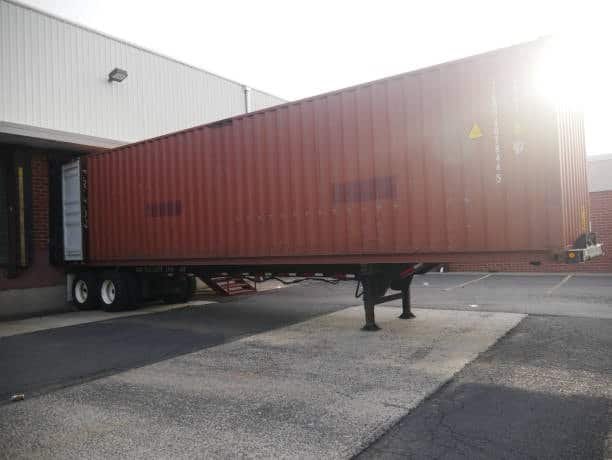
The way this operates is as follows: You purchase a container (new or used), put your cargo in it, and book with a shipping line. The freighter transports your box, but does not own it. You control that container in its life cycle- when to use it, how to keep it, and what to do with it when not in use.
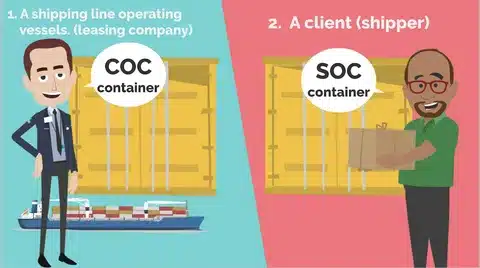
This is very different from carrier-owned containers (COC), in which shipping lines own and operate the container fleet that is the industry norm. Under COC, you rent out a shipment that is then loaded in a blank container supplied by the carrier, you retrieve it when you make a delivery, and the carrier is in charge of the placement and handling of the equipment. Container rental will be included in your freight rate, and in most cases, detention and demurrage charges will be incurred when you keep the container beyond free time.
The basic difference is that in SOC, ownership and responsibility move out of the carrier’s container fleet and into the shipper’s, radically altering the economics and operational dynamics of your shipping program.
Where and How SOCs Are Used
Shipper-owned containers are the most commonly used in international maritime transport, and they were developed and remain the most common. Ocean freight has its natural habitat at SOC by the volumes, the duration of transit, which is longer, and the high cost, which might be achieved on a large scale.
However, SOCS don’t need to come in sea freight; they can also be used in rail freight. They are even intruding into intermodal transportation- a movement of ocean ships to trucks to rail. This can be particularly helpful to shippers who export goods via the Asian ports to the North American or European railways to intercontinental destinations. Move your same by truck, the ship, truck, then rail.
The trucking and rail applications should be used when it comes to the dedicated lanes or the shuttle service of the fixed locations. Indicatively, the application of SOCs can be used in a round-trip continuous move where a manufacturer transfers components in a port warehouse to an inland manufacturing facility to have a seamless flow of the cargo.
The geographical feature of SOCs would suit trade routes that have high volume, like Asia-North America, Asia-Europe, and intra-Asia. They are particularly attractive on routes with low capacity for containers or when carriers charge high prices. The carriers will be less likely to install empty equipment in the emerging markets and other secondary ports, which in some cases offer better SOC economics.
Real-world usages are agricultural exporters who make shipments of perishable goods and want assurances that they will have their containers when needed during harvest time, e-commerce businesses who need to balance regular shipments between manufacturing facilities and fulfillment facilities, and auto parts suppliers who need to coordinate deliveries across continents on a just in time basis.
SOC vs COC: Key Differences & Tradeoffs
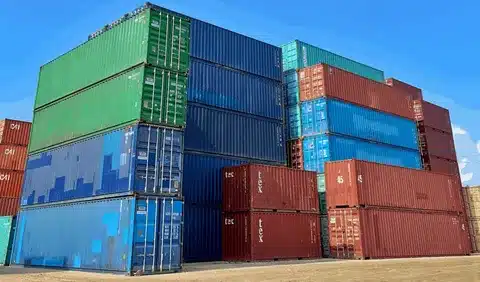
To choose properly to operate in SOC or COC, it is important to know the key distinctions between the two approaches, including customs clearance requirements.
Ownership and Control: In SOC, you are the owner of the asset, and you have full control of how it is used, maintained, and has a life cycle. COC means that the carrier is the owner of all things and determines the availability, condition, and terms of use. This control will equate to flexibility- an SOC container can be stored until required, at your facility, so that you do not pay detention fees, can be customised to meet certain requirements, or can be dedicated to certain lanes.
Cost Structure: SOC needs an initial capital investment (usually 2,000-5,000 per own container based on type and condition) and maintenance and storage, and insurance expenses. COC packages container expenses into freight charges with no upfront expenditure–you pay as you drive. SOC will be capable of providing reduced per-trip fares on high-volume lanes after you have amortized the purchase price, and COC will offer predictable, variable costs.
Responsibility: As an SOC owner, you perform maintenance, repairs, place the empty containers, and ensure that the unit complies with safety and regulatory requirements. All these headaches are dealt with by carriers using COC. This operational cost is enormous-damaged containers require repairs, empty containers require repositioning, and inspections are to be recorded.
Availability and Flexibility: SOC ensures that equipment is available when you require it–important in times of capacity crunches. COC puts you at the mercy of the supplier of carrier equipment, which is not always reliable during peak seasons or in markets that are not served. Nevertheless, COC allows scalability down or up without any limit to asset ownership.
Advantages of shipper-owned containers: Reduced long-term expenses incurred on regular lanes, equipment availability, no detention/demurrage at your own pace, container customization, control over quality and maintenance, and shield against carrier equipment shortages.
Disadvantages of SOC: Capital-intensive upfront, maintenance and repair duties, difficulty of empty container logistics, storage expenses during periods of no use, not all carriers accept SOC (some object to it), and depreciation of assets.
COC Advantages: no capital investment, all equipment maintenance is done by the carrier, volumes can be easily scaled up or down, is generally accepted in all carriers, no maintenance or positioning issues, but may incur demurrage and detention costs.
Disadvantages of COC: Costs of detention and demurrage may be high, equipment may not be available when needed in tight markets, less control over the status of containers, bundled prices are not as transparent, and subject to market volatility.
When to Select Both: SOC is useful when the timings of operations of specific lanes are predictable and have constant, large shipments. COC is more suitable to use in case of occasional shipments, variable volumes, routing variability, or when capital preservation is important.
When Does It Make Sense to Use SOC?
To find out whether SOC fits your business, you have to be honest in the assessment on several fronts.
Volume Thresholds: SOC is generally financially viable when you are shipping at least 50-100 containers each year on routes similar to routes. Beyond this point, the savings per trip are hardly worth the capital cost and management overhead incurred. Companies with high-volume shippers (500 or more containers per year) typically experience 15-30 percent cost savings that help to reduce freight costs in comparison to COC initiatives, demurrage, and detention charges.
Frequency and Consistency: In case you ship once per week or more than once per week on the same lanes, SOC economics are enhanced significantly. Infrequent deliveries that arrive at any time are not easy to effectively use owned containers, which remain idly in storage, ruining your ROI, especially compared to stable shipping.
Route Features: SOC is remarkably suitable when routes are remote or lightly visited, and the carriers have a high premium price or often have shortages in equipment. Inland destinations or distant or remote locations can be the best SOC business cases since carriers will not be willing to place empty containers in secondary ports.
Analysis of Long-term Cost: Do the numbers. Divide the total cost of ownership in 3-5 years by purchase price plus maintenance (budget 5-10% of container value per year), storage (empty, incur costs of $50-200/month), insurance, and positioning expenses. This is in comparison to COC costs such as freight rates, detention (easy $75-150/day), demurrage, and equipment shortage surcharge. Include your cost of capital and opportunity cost of tying up resources in containers and other investments.
Financial Aspects: Are you well capitalized, or can you get equipment funding? Would you get improved returns to use that capital in other places? Other shippers lease, rather than purchase, containers, which saves money initially at the expense of higher costs per-month-lease. Buy situations need to be considered.
Operational Capabilities: Do you have container tracking systems, maintenance systems, empty repositioning coordination, and documentation systems? Is there bandwidth capacity in your staff to manage a container fleet? Such realities of operation tend to dictate success rather than pure economics, as containers belong.
Strategic Value: In addition to direct cost savings, think of strategic benefits such as ensured capacity in case of supply chain disruption, just-in-time manufacturing possible, better customer service due to dependable delivery times, and a competitive advantage due to supply chain resilience.
Costs, Risks & Hidden Considerations
Although SOC can provide huge savings, many costs and risks lurk hidden under the surface that can make a good strategy a financial disaster unless it is anticipated appropriately.
Capital Costs: New containers will range between 3,000 -5,000 based on average and high-cube types (20ft vs 40ft), special equipment (extra equipment). Used containers cost between $1,500 and 3,000, but they might need urgent repair. Import duties, delivery costs, and inspection expenses are not to be forgotten when obtaining containers, SOC, and coc containers.
Maintenance and Repairs: Containers are beaten. Allotment on structural repair, door, floor, and paint/rust. The average annual maintenance is 5-10 percent of the container value. A significant post-accident or damage repair can cost between $500 and 2000. You will require contacts with container depots and repair facilities in strategic locations, SOC, and COC.
Storage Costs: Empty containers will occupy good space. The cost of port storage ranges between 75-200 per container per month. Inland depot storage is between 50-150 a month. Storage may cost more than the purchase price of a container over a period of more than a year unless it is managed efficiently. You must have plans on how to use or repackage empties in a fast manner.
Insurance: The full coverage, which includes any damage, theft, and liability, usually costs around 50-150 per container a year. Consider deductibles and inclusion of container-related incidents in your general liability.
Detention and Demurrage Wait–isn’t it part of owning the container that I pay no more? Not entirely. Although you are not charged with detention in holding your own container at your facility, demurrage still may be charged to carriers when your SOC uses terminal space that exceeds free time. Moreover, in case you send an empty SOC to a carrier depot and it lies there, certain carriers charge storage fees.
Carrier Acceptance: Not all carriers easily accept SOC, some like COC better, as it provides them with a bigger degree of influence and revenue prospects, and may prefer the container leasing option. You might have a low number of carriers, less bargaining power, or the carriers may deny you SOC in some routes. Other shipping lines charge either haulage fees or slot charter premiums to transport SOC that compensate for your savings.
Empty Repositioning: It is the silent murderer of SOC programs. When your trade route is skewed (you have more exports than imports, or the opposite), you will end up with empty pockets on one side. Relocating empty containers to the required point again can cost between $300 and 1,500 per relocation move; totally ruin your economics. The container world always faces the problem of empty repositioning, and this is where you, as an SOC operator, have entered that problem.
Regulatory and Customs Problems: Containers should be of the International Convention for Safe Containers (CSC) and have authentic inspection plates. The container registration and documentation requirements of different countries vary among customs agencies. The lack of correct documentation may lead to the detention of shipments, a fine, or re-export.
Liability Exposure: You are liable as the owner of the container to liability exposure injury–to cargo, to other containers, to vessels, or to individuals. It is your duty to make sure it is roadworthy, does not leak any dangerous substances, and is not overweight. A single serious incident will impose legal costs and damages that are much greater than any savings the shipping company.
Situations SOC Backfires: Businesses that had calculated excessively the amount of shipping and have idle containers that are depreciating in storage. Companies that had not considered the empty repositioning price and made payments above the COC. Shippers that had no maintenance facilities and had accumulated backlogs of repairs. Companies are unable to incorporate container tracking in IT systems, which has fallen out of sight.
How to Implement SOC Strategy (Step by Step / Best Practices)
The deployment of an SOC program may also require coordination with external container providers to ensure a good plan and organized implementation to be successful.
Step 1: Business Case: Proving the Business Case. It begins with intensive financial modeling. Trace your shipping routes, tonnages, frequency, and existing COC prices. Project SOC covers costs such as capital, maintenance, storage, and positioning. Figure out break-even levels and ROI schedules. Assumptions of pressure-test in 10-20% volume to guarantee viability.
Step 2: Source Containers: Determine the choice of new or used equipment depending on the budget and quality needs. Buy new containers from manufacturers or depot suppliers- lead time is 4-8 weeks. Used containers are more readily available and cheaper, but they should be inspected well regarding structural integrity, floor and door seals, as well as the CSC plate values container arrives. You can begin by having 10-20 containers to make initial tests before you expand.
Step 3: Develop Maintenance and Inspection Systems: Develop relations with container depots and repair facilities within your main shipping areas. Introduce regular inspection (at least 6-12 months) schedules. Establish damage reaction strategies and budgets. Make sure that all containers are valid CSC-certified.
Step 4: Negotiations with Carriers: Present SOC proposals to several carriers. negotiate slot charter rates (this is the price carriers charge, only to move your container, usually 20-40 percent less than COC rates). Spell out acceptance policies, owned freight containers, terminal handling procedures, and any special documentation requirements. Sign agreements with backup carriers as security on capacity.
Step 5: Adopt Tracking Systems: Introduce container tracking technology- GPS trackers, IoT sensors, or at least, powerful spreadsheet systems to enhance coordination with cargo ships shipping containers. Connect with your TMS (Transportation Management System), should you have one. Position, condition (loaded/empty), history of its maintenance, and rates of use. Install monitoring of containers that spend too much time idle.
Step 6: Documentation and Compliance: Document Containers properly, keep CSC inspection records, obtain insurance, develop custom paperwork processes in each country you will be operating, and develop explicit handoff rules with carriers and depots, eliminating container rental fees.
Step 7: Empty Container Management: This is important. Find ways of reducing empties by using backhaul opportunities (finding return loads), strategic positioning (storing empties in the place you will next need them), or depot networks to trade empties. Create partnerships with other shippers with whom you share containers on dues supplemental lanes.
Step 8: Never stop refinements: Measure utilization rates (at least 70 to allow justification of ownership), measure cost-per-move against COC options, see which containers/pathways are underperforming, change the fleet size to reflect real volumes, and update data-driven empty positioning strategies.
Best Practices: Do not go big, but keep it small. Have buffer capacity against volume spikes. Use common containers to be maintenance efficient. Establish contacts with several carriers. Invest in technology to be seen. Establish step-by-step operations escalation procedures. Evaluate performance in quarterly intervals and change strategy.
Tools, Partners & Alternatives
You do not need to go it alone- many other partners, technologies, and integrative approaches can make SOC easier to manage.
Third-Party Logistics Providers (3PLs): Painful 3PLs can implement your SOC program on an end-to-end basis, including procurement, maintenance, tracking, carrier negotiations, and empty repositioning. They utilize economies of scale and experience you might not have in-house. It is expensive but will save huge amounts of operational load and port congestion.
Freight Forwarders: SOC-certified Forwarders can incorporate your owned containers into larger logistics initiatives, route optimization, shipment consolidation, and documentation. They give you good market intelligence as to where SOC is advisable and carrier acceptance.
Container Leasing Companies: They lease containers instead of purchasing them by contracting the services of such specialists as Triton, Textainer, or CAI. Leasing saves capital (however, at a higher monthly expense) and can also provide maintenance. Master lease arrangements provide the option of increasing fleet size with demand.
Technology Platforms: Container management software aids in tracking assets, maintenance timing, position optimization, and utilization analysis of cargo containers. Containers sharing and trading platforms, such as Container xChange, are also used to share containers between shippers and carrier-owned containers. IoT trackers give real-time visibility.
Hybrid SOC/COC Models: The majority of advanced shippers apply a hybrid model of managing those core and high-volume lanes and applying COC vs COC containers to variable volumes, seasonal peaks, or trial routes. This is capital deployment, which is optimized and yet flexible. Normally, commit 60-80 percent of your foundation volume to SOC and deal with variability through the COC container leasing company.
Container Pooling: Share container pools in which several shippers own and share the use. This shares capital expenses, better utilization due to shared access, and offers geographic access beyond your personal network. With less management load, SOG SOC benefits can be provided by neutral containers (owned by pooling organizations).
Alternative Strategies: If SOC is not possible, sign long-term COC agreements with assured capacity and fixed rates to acquire somewhat of the advantages of control even in the absence of ownership of the assets. Pay attention to the avoidance of detention/demurrage by means of effective cargo processing. Use area carriers on particular lanes where they provide superior equipment. Consider direct shipper-carrier contracts of dedicated equipment programs with no ownership soc containers.
Case Studies / Success Stories
The practice of SOC strategies is exemplified by real-world cases of success–and failure.
Case Study 1: Agricultural Exporter: A Chilean fruit exporter who transported 300 refrigerated containers of fruits to Asia every year had persistent equipment shortages during the harvest period and paid high rates. They invested in 40 reefer containers at 1.2million. At the run-up to SOC, their average freight cost per container was 6,500 US with constant detention and capacity premiums. Their per-shipment cost after introducing SOC was reduced to 4200 dollars (slot charter rate as well as amortized container expenses). In the course of three years, they saved 2.4 million dollars and ensured that equipment is available when harvest is in season and it is needed the most. Predictable volumes on a regular route and the availability of good maintenance contracts at the origin and destination ports were the key to success.
Case Study 2: E-commerce Retailer: A furniture retailing online company that ships 150 containers per month between Vietnam and the West Coast of US ports had bought 200 40-foot containers. The first indications were encouraging, with 25 percent savings. They, however, underestimated empty repositioning challenges. Their inbound trade route had few export prospects, and they were left with empty vessels accumulating at US ports. The repositioning to empty back to Vietnam incurs $800 to 1200 per container, cancelling 60% of their projected savings. They later moved to a hybrid, with only 60 percent of volumes being done with SOC and the rest with COC, and creating backhaul opportunities with exporters to Asia.
Case Study 3: Auto Parts manufacturer: A company in Europe, which supplies auto parts to other companies, has deployed SOC in its regular shipments between three manufacturing facilities and two assembly facilities to establish a closed-loop shuttle system. They bought 50 containers with routes specific to these routes, with an 85 percent usage rate. Since the containers kept moving on one network, there was minimal empty positioning. Together with no detention fees (containers frequently spent 5-7 days at the manufacturing plant during assembly times), they obtained 35 percent cost savings with complete payback in 22 months. Controlled network geography, high-frequency shipments, and balanced flows were critical success factors.
Lessons Learned: Best practices in success are devoted to high-volume and consistent lanes, addressing empty positioning issues initially, initiating small and growing according to outcomes, investing in tracking and maintenance early, and establishing good relationships with carriers. Some of the traps include the underestimation of empty repositioning costs, insufficiency of the maintenance infrastructure, not properly forecasting the volume consistency, lack of adequate capital reserves to repair and store, and not being able to negotiate terms of carrier acceptance.
Frequently Asked Questions / Myths & Misconceptions
Is SOC only for big companies? Not necessarily. Mid-sized businesses that ship 50 or more containers in the same lane on regular routes can take advantage, although larger shippers have access to capital and operational infrastructure with less effort. Consistency of volume and predictability of routes is the key, and not the size of the company, absolutely.
Where do empty container returns go? It is a million-dollar question–literally. It is your job to get empties back to where they are required. Strategies could be to locate backhaul cargo, store at strategic depot points, share containers with other shippers on complementary routes, or incur empty repositioning. This is the only basis of SOC being thriving or not.
Do all carriers accept SOC? No. The acceptance of the carriers is not homogeneous. Key trade routes. Major international airlines tend to accommodate SOC and freight container usage, but with limitations. Regional carriers, at times, turn down SOC altogether or offer high haulage rates. Never invest in containers to be used on a certain route before verifying their use.
Am I able to label or customize my containers? Yes, customization freedom is one of the SOC benefits. You can brand containers with company logos, install specific racking, provide security, or set up to accommodate certain cargo. Simply make sure that the changes will not lead to a violation of the safety rules or structural integrity.
Container tracking? It is your job to monitor your resources. Consider investing in GPS trackers (50-150 per container) or Internet of Things (IoT) sensors (temperature/humidity) to monitor reefers. The minimum requirement is good manual tracking and check-in at every hand-off point.
Does SOC make sense when shipping a one-time or occasional shipment? Seldom. The volume needed in SOC is constant to amortize the costs of purchases. COC or container leasing is much more reasonable when the shipment is only occasional.
What will be the case in case my container is spoiled? You incur the cost of repair and possible liability. This is the reason why insurance is essential. It will require you to get repairs done at depot centers and meet expenses until the container can be utilized again. There can be serious damage to the point that the container is replaced.
Am I permitted to sell my containers in the future? Yes, there is a secondary market kind of market. The prices at which containers are resold are determined using the age, condition, and market demand. Depreciation of well-maintained units should be expected to be 30-50 percent in the first 5 years. In equipment shortages, used containers may even appreciate–but do not count on this to make any plans.
Conclusion
Shipper-owned containers are a very efficient strategic option used when the companies have sufficient volume and homogeneity of operations to make them effective. The possible rewards are tremendous: it will ensure the reduction of costs (15-30% on right lanes), easy access to proper equipment when you need it the most, and you will be able not be detained or pay demurrage when you need it the most, and have more control over your supply chain. Such benefits are not met without heavy capital costs, upkeep, vacant positioning, and complex working, which could easily transform what otherwise could be an excellent economics, into a money-wasting undertaking.
The most appropriate to follow is SOC, high-volume shippers whose overage exceeds 100 containers over annual routes with equal trade patterns or those with high backhaul probabilities, and the less frequent shippers, highly variable volumes, or businesses without operational infrastructure should be left to remain with COC, or seek some compromise. Before the SOC activity, do a financial estimation where you envisage the worst-case-scenarios and set off on small scale with pilot project on the lane you know best, put in place an adequate tracking and maintenance support facilities and keep track of your performance relative to the alternative of using other COC options, and when it comes to doubt, ask a more accomplished logistical expert that can help you to evaluate whether your special case can be justified to go to the ownership of containers.