

Introduction: Why the Top 50 3PL Rankings Matter More Than Ever
The third-party logistics providers in the modern globalized economy are no longer mere freight forwarders but rather a key component that can either raise or lower the competitive edge of a company, impacting overall supply chain efficiency. Be it a shipper looking at potential logistics partners, the supply chain professional monitoring the industry consolidation, or an investor scouting market opportunities, it is not only beneficial but also necessary to know who holds the 3PL market.
The Top 50 Third Party Logistics Companies list, as presented each year by Armstrong and Associates (A&A), is the gold standard of benchmarking the logistics industry giants. It is not just a vanity list, but a fact-based report on the companies that are most effectively, efficiently, and at the largest scale, engaging in freight transportation and transporting the goods of the world. At a time when any disruption in the supply chain has the potential of shutting down whole industries in a single night, the importance of understanding who the best, most innovative, and financially steady logistics partners are has never been more important.

This comprehensive guide will also bring you through the latest Top 50 lists, not just explaining to you who has been listed on them, but explaining to you why you are interested in these lists in your business. You will find out the methodology of such rankings, the key trends that are changing the supply chain logistics field, what makes elite 3PLs rise above the rest of the pack, and have real life concepts of finding an appropriate fulfillment service logistics firm to suit your needs. We shall observe how technology is changing the long-established logistics, we shall also touch upon some of the case studies of companies that are doing things differently, and what the upheaval could be. At the end of it all you shall have a strategic map on the way to utilize such rankings to make the best supply chain decisions to advantage your own supply chain.
Understanding the Methodology: How the Top 50 Rankings Are Determined
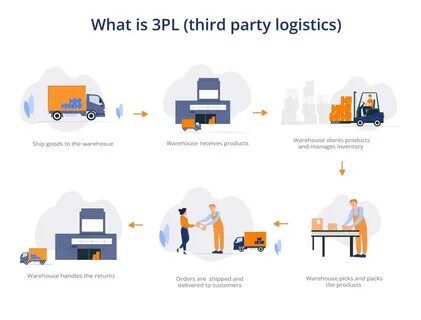
Any ranking system is only as credible as the rigor of the methodology, and Armstrong and Associates have developed over decades to perfect their process of identifying and vetting the largest third-party logistics providers in the world. Primarily, the Top 50 list is a list of companies ranked according to their gross logistics revenue, which is an indicator that shows the total value of the logistics services that any given provider handles, irrespective of whether they own the underlying transportation assets.
This revenue approach provides a playing field of equality between asset-based carriers who own trucks, planes and warehouses, and those asset-light orchestrators who use technology and relationships as their primary means of coordinating complex supply chain movements. The measurement is limited to the activities of the third-party logistics, i.e., the revenues obtained when a company transfers its own manufactured products are not counted and the revenues obtained when a company controls only an in-house supply chain are not counted as well, which could affect overall transportation costs .
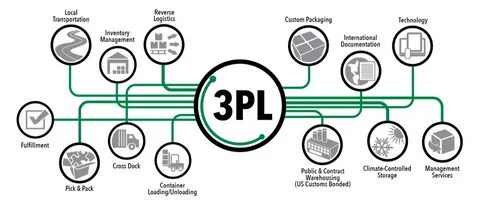
Armstrong and Associates classify the 3PL industry into quite a number of unique categories which depict the various logistics services these companies offer. Domestic Transportation Management (DTM) encompasses freight brokerage, the 3PLs organize trucking, but without their own fleets, dedicated contract carriage, and the other managed transportation services within one country. International Transportation Management (ITM) involves freight forwarding, custom brokerage and cross border logistics coordination. Dedicated Contract Carriage (DCC) refers to a case whereby 3PLs serve individual customers with dedicated fleets on long term contracts. Value-Added Warehousing and Distribution (VAWD) include more than storage as it involves kitting, assembling packaging and other activities that alter products in distribution centers.

The actual data collection exercise is also a major challenge since most 3PL firms and particularly those that are privately held do not publish comprehensive financial data in line-by-line form. Armstrong & Associates utilizes a multi-source verification methodology, which relies on public financial reports where they exist, with supplements in the form of industry surveys, interviews with individual companies, and proprietary estimation models in the case of privately held companies. The estimates are measured in terms of the volume of shipments that are settled, the square feet of the warehouse area, the number of employees, and the comparison with such public companies.
International comparisons become even more complicated due to currency conversions. In the case of multinational 3PLs that report in euros, yen, yuan or other currencies, Armstrong and Associates uses standard exchange rates that reflect the fiscal measurement year in which the company is being measured, normally using average annual rates instead of the spot rates as a method of leveling volatility. This is to make sure that ranking changes capture the real business performance and not supply chain disruptions or currency changes.

The last date of data is usually the last fiscal year, in which in-depth data is available in most companies. This normally implies that the published Top 50 list is an expression of financial performance about 12 to 18 months before publication, which is a requisite lag, given the time needed to compile, verify and analyze data on dozens of worldwide firms with different fiscal year cycles.
There are some important constraints that should be recognized. The rankings include size, but not quality, customer satisfaction, technological sophistication, or operational efficiency. One company may be ranked number 20 in terms of revenue yet offer better service in certain niche to levies compared to five giants. Also, acquisitions and mergers may result in year on year discontinuities in that a company ranked higher in a year because of a significant acquisition and not because of organic growth. Changes in years can also be influenced by divestitures, segment reclassifications, accounting changes, etc.
Irrespective of these shortcomings, the methodology offers the most thorough and consistent set of guidelines with which to think about the relative size and position of large logistics providers in the industry. It provides shippers and shipping services , investors, and industry analysts with a set of language to engage in a market leadership discussion and monitor the way competitive dynamics change over time.
The Elite Circle: Examining the Top Performers
This top layer of the Top 50 list provides an interesting disparation between old logistics companies, diversified conglomerates, and those that are comparatively new and have grown quickly by acquisition and adoption of technology. These premium players not only carry more freight than their peers, they determine how global supply chains will operate, how prices are determined in the whole market, and what technological levels will be implemented in the market that will allow small-time providers to stay afloat.
At the top of the scale is DHL Supply Chain & Global Forwarding which has always claimed to have gross logistics revenue of more than 28 billion yearly. Being the logistics branch of Deutsche Post DHL Group, this division has unmatched international infrastructure in more than 220 countries and territories. The difference that puts DHL on top, however, is not just size but integration, in which the company has integrated contract logistics and freight forwarding and value added services with the express delivery network of the parent company to provide end to end visibility and serve customers efficiently , something few other competitors can. Their automation, such as more than 1,300 robotic deployments throughout their warehouse network, reveal that leading 3PLs are not only applying technology to drive efficiency but also as a differentiator.

Next in line is the Swiss-based freight forwarder and a contract logistics firm Kuehne + Nagel which produces about $24billion in gross logistics revenue. Kuehne + Nagel, in contrast to DHL, is nearly asset-light in its operations, with little or no transportation equipment of its own, but with huge networks of carrier relationships. This model gives an extraordinary flexibility and capital efficiency to the company, which is able to scale capacity out or in without incurring the fixed cost of owning the assets. Their specific advantage is industry-focused knowledge such as pharmaceuticals, aerospace, automotive where they have acquired high-level handling skills, regulatory expertise, and quality assurance to give customers high switching costs.
The logistics department of German rail operator Deutsche Bahn, DB Schenker, completes the top three with revenues of nearly $23 billion. The strength of Schenker lies in the specialization of its parent company, which has a vast rail network across Europe and therefore offers inland transportation, which would be difficult to duplicate by competitors that only rely on trucks. With more environmental regulations becoming stricter, and the growing more popular pricing of carbon, this rail access will put Schenker in a better position to shift towards more sustainable freight modes. Digitalization has also seen the company make great efforts by rolling out platforms that give customers real-time shipment tracking, dynamic shipment routing optimization, and predictive analytics to forecast any potential disruptions.
American companies C.H. Robinson and XPO Logistics are ranked in the top list, each close to 20 billion of gross logistics revenue, but via vastly different approaches. C.H. Robinson developed its reputation after establishing a tremendous carrier network and one of the biggest freight brokerage operations in the world, with more than 20 million shipments every year. Their Navisphere platform manages a humongous amount of transactions and learns with every interaction, to optimize load matching and price optimization. XPO, in turn, has expanded exponentially via acquisitions prior to its recent reorganisation and spin-offs of integrating technology-based brokerage with high levels of less-than-truckload carrier volumes and niche last-mile logistics of heavy goods.
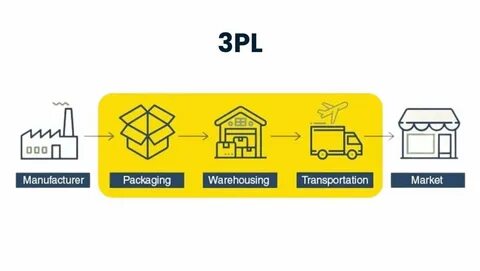
Since its creation in 2019 out of a merger between Danish logistics firm DSV and Swiss freight forwarder Panalpina, DSV Panalpina has now quickly climbed up the ladder, emerging as a rightful member of the top five companies in the field with over $17-billion revenues. Such a merger formed massive synergies between the formidable road and contract logistics of DSV in Europe and the complex airfreight and intercontinental freight forwarding of Panalpina. The integration, which took less time than many analysts projected, is a prime example of how strategic M&A can provide value in the 3PL industry when firms have complementary service portfolios and geographic footprints.
The Nippon Express and Kintetsu World Express are Japanese giants that have been able to hold their positions, which reflects the critical role of Asia in manufacturing and trade around the world. The 16 billion dollar Nippon Express, which controls domestic Japanese logistics, is aggressively expanding international freight forwarding and contract logistics into Asia. Their recent rebranding to NX Group is an indicator of their desire to transform beyond being a classical Japanese freight forwarder, to become a global integrated logistics company. Kintetsu World express is a smaller company specializing more in international forwarding especially air cargo where their established relationships with Asian manufacturers and their skills in delivering high value electronic and automotive parts are priced at high rates.
One of the most unique business models in the upper category is Expeditors International, a Seattle based freight forwarder with about 11 billion as gross revenue. The company is adamant in holding onto transportation assets or warehouses, and positions itself as a pure information and coordination business. The combination of this extreme asset-light strategy and a highly decentralized organizational structure, where local offices are empowered, has resulted in very steady profitability even in the low periods of the industry. Expeditors has long been averse to big technology platform investment, opting to make enhancements to their own systems rather than making more customer-facing digital capabilities, but competitive forces are slowly forcing it to do so.

GEODIS is a French 3PL that is owned by state railway operator SNCF and makes it to the top ten with revenues close to 11 billion. The firm has a high level of competence, especially in customs brokerage, contract logistics and distribution, which operates millions of square feet of warehouse space worldwide. Their rail infrastructure network gives them the same benefits as Schenker in European markets, and GEODIS has diversified by industry focus, developing vertically integrated solutions in industries such as healthcare, retail, and industrial manufacturing.
There are a number of other characteristics that these elite players have in common with their size. To begin with, they have reached a genuine global scale where they have meaningful operations in various continents rather than mere regions strongholds. Second, they have multimodal capabilities across air, ocean, road and in certain instances rail, which enable them to coordinate end-to-end supply chains, and not just single transportation legs. Third, they have invested heavily in technologies, whether owning their own or buying technology-enabled companies, understanding that there is a growing competition in logistics on a data and visibility basis as much as on physical capacity. Fourth, they are financially stable to survive industry cycles, make counter-cyclical investments during recessions and provide the stability that enterprise clients require.
The difference between the top spot and the rest of the Top 50 is very large–typically the companies ranked 20th or lower only make 50 percent as much gross revenue as the leaders. This scale benefit means bargaining power with carriers, technology development capabilities and capability to absorb big multi-faceted clients with transnational presence. Nevertheless, as we will discuss later, larger is not necessarily better with all shipping requirements and numerous mid-sized 3PLs cut highly profitable niches as they provide high-quality services to certain geographies, industries, or types of services.
Industry Trends: What the Rankings Reveal About 3PL Evolution
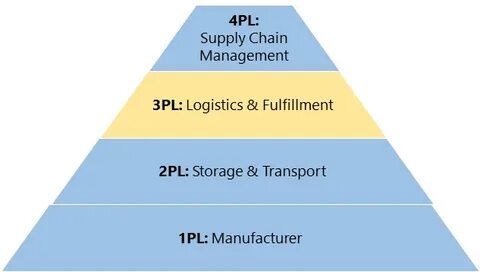
Comparing the Top 50 lists of various years, one can see some strong currents transforming the third-party logistics market, including the technological revolution, the expectations of customers, and the shift in the world trade trends. These trends are relevant as they indicate the direction in which the industry is progressing and what efforts will make success in the coming decade.
The continuing consolidation which has led to an accumulation of the market share in fewer mega-providers is perhaps the most remarkable trend. The total revenue of the top ten 3PLs has increased at a higher rate than the total volume of the logistics market in the last decade, indicating significant growth which means that they are taking some market share out of smaller competitors. This merger is achieved by means of organic growth and intensive merger and acquisition. The acquisition of Panalpina by DSV, the prior acquisition spree of XPO, the acquisition of CEVA Logistics by CMA CGM and a thousand other small acquisitions shows that size is becoming a crucial factor in a business where the investments in technology, carrier deals, and global infrastructure need a lot of capital.
Nevertheless, this consolidation does not mean the end of opportunities of middle and small 3PLs – it only altered the competition. The rankings demonstrate further diversification over the first tier, where the specialists in specific geographies, industry, or the type of service remained highly ranked. The examples of Burris Logistics (temperature-controlled), Schneider (dedicated contract carriage) and NFI Industries (integrated logistics) show that extensive knowledge in the narrow specialties is able to shield such providers against the same competitive pressures encountered by generalist freight brokers.

The asset-light model is steadily rising in the rankings. A larger proportion of the Top 50 companies make most of their income on a brokerage, freight forwarding, and contract logistics basis where the company does not own the underlying transportation equipment, instead of dedicated fleets. This turn indicates the preference of customers towards this flexibility and breadth rather than ownership of assets and the cost-efficiency of not owning a fleet in a high-vehicle-cost and driver-scarcity period. Even more asset-based firms are growing their non-asset brokerages (Schneider, Ryder and Penske are all currently growing non-asset space to supplement their fleet services).
The pace of technology adoption has increased threefold, and all large 3PLs are now focusing on their digital environments, automation and data analytics solutions. The rankings are getting more and more in support of businesses that have successfully computerized key processes such as automated quote generator, real-time shipment tracking, predictive analytics to handle exceptions, and computerized freight matching 3pl companies. Companies reluctant to implement these fulfillment services technologies are at a disadvantage of their competitors, especially in terms of competition over enterprise customers who consider the visibility of supply chains as a table stake. This trend was further amplified by the COVID-19 pandemic, which has made not only remote work necessities but also forced supply chains, further increased the desire to have digital connectivity shipping costs hunt transport services.

The level of e-commerce fulfillment is now widely available among the leading 3PL providers, testament to just how dramatically the online retail process has transformed the logistics demand. Previously, companies with B2B distribution did not create such opportunities as omnichannel fulfillment, direct-to-consumer shipping, returns management, and last-mile delivery. The rankings indicate that classic contract logistics providers such as DHL Supply Chain and GEODIS are heavily investing in the infrastructure of e-commerce, with freight forwarders providing warehousing and distribution services to gain a higher portion of their customers supply chain dollars annual average exchange rate.
Vertical industries specialization has come out as a major differentiation factor in the rankings. Most successful 3PLs have not sought to go at the sheer scale level but have instead developed strong experience in particular industries, such as healthcare and pharmaceuticals, automotive, aerospace, chemicals, fashion retail, where regulatory restrictions, handling features, or complexity of the supply chain present natural barriers to entry. These experts frequently reach a greater margin than commoditized freight movement than that of generalist competitors because they offer real value-added expertise instead of a commodity. This is reflected in the rankings with the continued use of such companies as Coyote Logistics (strong in food and beverage), Expeditors (electronics and aerospace), and Kuehne + Nagel (pharmaceuticals).
The rankings show geographic expansion trends, indicating the increase in the significance of new markets, ecommerce platforms, and the regional trade corridors logistics operations. Although European and North American 3PLs continue to hold leading positions, Asian logistics firms have become even stronger, which can be attributed to the manufacturing concentration of China, Vietnam, India, and other Asian countries. Those companies that have strong Asia-Pacific foot prints have been more rapid than the purely Western oriented competitors third party logistics provider. The Latin American and African markets, similarly, though with lower shares of revenue, are experiencing faster growth rates and are receiving more investment on the part of the top-tier 3PLs in pursuit of first-mover advantages in the growing economies inventory management.

The rankings also shed light on the overlapping nature of the boundaries between 3PLs and other participants of the supply chain. Ocean carriers have intensively ventured into the logistics sector using their traditional freight operations to provide end to end supply chain services. The acquisition of Performance Team and other logistics companies by Maersk, the purchase of CEVA Logistics by CMA CGM, and other efforts by other airline companies can be seen as vertical integration, which establishes new competitive forces. These carrier owned 3PLs show up in the rankings but bring in conflict of interest when they compete with independent freight forwarders yet provide them their underlying capacity.
The financial performance profiles in the rankings indicate the growing pressure of margins, especially in case of pure freight brokers. The gap between the money brokers charge shippers and the money they pay carriers known as the net revenue margin has narrowed in most parts of the market thanks to technology-driven price transparency and the advent of digital freight platforms supply chain management. This has compelled the old style brokers to ascend the value chain and to provide more consultative services and to assume the care of inventory management as well as to invent proprietary technology that generates switching costs and distinguishes between the old style brokers and the new breed that are transactional load boards.
Sustainability has come in a few years out of the niche issue to mainstream imperative. The leading 3PLs currently evenly report sustainability, have carbon reduction goals, and present customers with carbon accounting and optimization services. This is not just PR, enterprise buyers are starting to incorporate sustainability requirements into RFPs, and carbon transparency is becoming a mandatory requirement on supply chains both in European regulations and by enterprise customers. Firms that have taken an early lead in quantifying and mitigating their environmental impact, using modes that minimise emissions, and building green logistics competence are in a better position to face an internalised carbon price in future.
The last significant trend identified in the ranking of movements is the divergent fortunes of pure-play trucking brokers and integrated logistics providers. The firms that provide transportation management exclusively based on domestic transportation have the highest level of competition and margin pressure, whereas the firms that provide transportation together with warehousing, packaging, and other value-added solutions show more revenue stability and growth. This is the reason why numerous conventional freight brokers are obtaining warehousing businesses, constructing technology systems which cover more supply chain operations and rebranding themselves as whole logistics coordinators instead of mere capacity dealers, in order to manage fulfillment costs better supply chain solutions.
The Forces Reshaping Third-Party Logistics
It is important to know who is the leader in the 3PL industry, but more important is to know why the industry is changing so fast. Several gigantic forces are coming together to transform the world of logistics in ways such that would have been unthinkable only ten years ago that poses a literal existential danger to those companies that lag in the innovation curve and is a literal game changer to companies that reside in the frontier of innovation.
Technology is the most prominent and arguably most significant force behind the change of the industry. The artificial intelligence and machine-learning have now automated all processes of logistics: to place inventory in the most advantageous location, match freight with available carriers in real-time, anticipate any disruptive event and constantly study the data of the billions of data points to increase the quality of decisions. The 3PLs who have developed or purchased these features receive compounding benefits as their algorithms become more valuable with larger amounts of data, forming data network effects where more shipments make their platform more valuable.
Automation in warehouses has gone beyond the simple conveyor systems to elaborate robotic applications with autonomous mobile robots, collaborative picking systems, automated storage and retrieval, and even new experiments with autonomous vehicles to do yard tasks. The leading 3PLs have already implemented thousands of robots in their distribution systems, which significantly enhanced the labor productivity, precision, and working hours. All of these implementations entailed huge capital outlays that benefit large, well-capitalized providers at the expense of smaller players unable to afford the like outlays.
Sensors and connected devices over the Internet of Things have enabled real-time visibility in the world supply chains. Devices such as GPS trackers, temperature sensors, shock sensors and others are capable of sending continuous streams of data that allow 3PLs and the company they serve to track the status and location of shipments with more precision than ever before. This visibility produces both accountability, when issues arise, clear data trails show precisely when and why, but also allows proactive intervention to be made before delays become an issue and warehouse operations reshaped to respond to the status of inbound freight.
Still in its infancy, blockchain and distributed ledger technologies have the potential to transform the manner in which supply chain information is shared and verified by multiple parties. The leading 3PLs are exploring the use of blockchain to manage documentation, trade finance, and provenance specifically of high-value goods or highly regulated goods. The potential of the technology to generate immutable and shared records that are impossible to control by a centralized authority may cut down on paperwork, eradicate fraud, and speed up cross-border flows, but it is not yet widely used.
Transportation Management Systems and Warehouse Management Systems are no longer simple record-keeping tools in the back office, but strategic platforms that are becoming more and more integrated with artificial intelligence, predictive analytics, and access to external data. These platforms are now available as cloud-based Software-as-a-Service to the customers as solutions provided by the leading 3PLs making transparency and collaboration and also retrieving valuable data that enhance operations of the 3PL. The sites are emerging to be the means of competitive differentiation and customer lock-in as the companies develop processes around the sites.
E-commerce expansion is another key factor that has changed the industry in a manner that is so far-reaching than just in terms of delivery volume addition. Online retailing has reduced the time schedules of customers linked to the speed of delivery through weeks to days to same-day delivery or even hours, compelling 3PLs to restructure networks around fulfillment centers in high population areas. The number of individual deliveries has been soaring and the average size of shipment has been decreasing, and must be handled totally differently than in the old bulk distribution. Reverse logistics and returns have been a huge burden on operations with some product lines recording more than thirty percent returns.
The demands of the omnichannel retail model, in which customers increasingly demand to purchase online, collect in stores, purchase in stores and have items shipped, or move freely between channels, have made fulfillment requirements fiendishly complex. 3PLs serving retail customers must connect with dozens of various sales channels, manage inventory in real time across multiple locations, and coordinate last-mile delivery with time windows to ensure on time delivery . This complexity is biased to complex providers of logistics with advanced technology rather than basic warehousing and trucking companies.
The last-mile delivery, which entails the delivery of goods on the last leg between the distribution centre and the doorway of the customer, has become the most expensive, the most challenging, and the most critical aspect of e-commerce logistics. The legacy LTL carriers did not focus on residential delivery in low volumes, which meant that new last-mile experts had a chance, and existing 3PLs had to create or acquire such features. The last-mile economics is also going to change one day with innovations such as crowdsourced delivery, autonomous vehicles, and even drones, but most of them are in pilot test or limited deployment.
Resilience in supply chains is no longer on the theoretical issue list but has become urgent after a series of disruptions; trade wars, imposition of tariff quotas, COVID-19 pandemic, the Suez Canal blockage, shortages of semiconductors, port congestions, and geopolitical tensions. Firms once focused solely on optimizing the supply chain in terms of costs are now focused on efficiency and resilience, aiming at redundancy, nearshoring manufacturing, diversifying suppliers, and having inventory at strategic points third party logistics company. Those changes present opportunities to 3PLs who are capable of delivering flexible networks, rapidly deploying their operations into new geographies and expertise in contingency planning.
The global trade flows are re-written by reshorcing and nearshoring trends, both motivated by the issues of resilience and evolving economics. With the increasing labor costs in China and other classical offshore manufacturing locations, and the declining role of labor in the production costs of products through automation, global outsourcing economics have changed. Companies are also shifting production nearer to final markets, shifting manufacturing out of Asia to Mexico or Eastern Europe, and even to North America and Western Europe. In the case of 3PLs, this implies that network formats, service needs and the possible revenue effects are altered with less-value domestic traffic replacing higher-value international operations.
Sustainability and environmental laws are not only becoming voluntary, but also legal and they are fundamentally changing the economics of logistics. The overall emissions standards, possible carbon border adjustments, and other national policies on climate by the European Union impose compliance costs that 3PLs must bear in assisting their customers to fulfill their own sustainability smallpox. Companies that have invested in measurement equipment, fuel efficiency through optimizing routes, alternative fuel vehicles, and carbon credits are in a better position to make this transition, whereas those who have not considered the environment are increasingly under pressure by regulations and the market.
The customer expectations have changed in a manner that increases all these other trends. Enterprise shippers are moving logistics beyond a cost center to reduce, and more to a strategic capability that can be used to distinguish the customer experience. They would want their 3PL suppliers to be consultative, actively seek ways of improvement, be innovative, and be actual partners in the supply chain as opposed to mere service providers, especially for small businesses . This has gone in favor of advanced well-capitalized providers, capable of investing in customer-facing technology, hiring supply chain specialists, and tailoring solutions rather than simple price-cutting freight movers.
The issue of labor shortages, especially truck drivers and warehouse workers, poses a long-term operational problem throughout the industry. Chronic driver shortages of tens of thousands of unfilled positions are experienced by the United States alone, increasing labor costs and reducing capacity. Automation can only provide partial solutions and cannot entirely rid labor intensive services of wage pressures, whereas labor intensive services with good employer brands, good working conditions, and career development opportunities can more easily attract and retain talent offering operational advantages over competitors with high turnover.
Challenges and opportunities in international trade are the result of regulatory complexity. The customs regulations, trade agreements, approved parties lists, product safety regulations and other requirements are constantly evolving and they differ depending on the jurisdiction. Compliance entails expertise and technology that small players cannot afford and large 3PLs have the advantage of having a team of dedicated trade compliance staff and advanced screening systems. The advent of Brexit, the USMCA, and the advent of other significant trade policy transformations have caused massive complexity that shippers readily pay to outsource.
It is the combination of these forces that accounts for the simultaneous convergence of the 3PL industry around large players who have the resources to navigate complexity and split as smaller players emerge to provide services to a specific niche more effectively. It is a sector in its early infancy, with those companies that effectively embrace technology, evolve to meet new demands by customers, and create strong, sustainable, organizations being successful and those that undergo stuck thinking old-fashioned struggling to keep pace.
Strategic Implications for Shippers and Supply Chain Decision-Makers
The Top 50 rankings are a source of great market intelligence, but in order to convert the intelligence into actionable decisions, it is necessary to understand what the rankings tell, what they hide, and how to overlay the rankings with other assessment criteria to select logistics partners. The rankings are a guideline to supply chain professionals reviewing the possibilities of third-party logistics relations but not a conclusive answer.
The size is important, though the context is what can define the extent to which that size is important to your specific requirements. The benefits of the biggest 3PLs are undoubtedly financial strength guaranteeing the absence of going out of business in the middle of the contract, worldwide networks that cater to multinational companies with business on several continents, bargaining power with a carrier that can be translated into access to capacity in tight markets, and investments in technologies that smaller players cannot afford. When your firm has a high volume of shipping on an international or global basis, needs extremely sophisticated visibility systems, or must have assurance of capacity on volatile market cycles, it would be prudent to concentrate on a provider of the highest caliber.
Nevertheless, size also comes along with the possible drawbacks which the rankings fail to represent. Large 3PLs have thousands of clients and you will not get as much attention, responsiveness and customized solutions as you would receive with a mid-sized provider when your business is a key client. The biggest businesses tend to use strict procedures and systems giving minimal customization, and this can be undesirable when your business has different needs. Corporate bureaucracy has the potential to slack decision-making and innovation than small, more nimble competitors.
Specialization in the industry has an equal or even higher weight than the overall size of the company when your business has a logistics need that is distinct to the industry. The 3PL that has strong expertise and industry experience in healthcare, certified temperature controlled shipping, and that has traversed FDA regulations is almost certainly more likely to benefit a pharmaceutical company than a larger competitor of generalist expertise without the domain experience. Likewise, automotive companies have the advantage of 3PLs who have experience in delivering on-site, sequencing, and multifaceted reverse logistics to deliver parts back and warranty coverage. The rankings do not differentiate the generalists and specialists hence additional research is necessary.
The alignment of the geographic footprint is very vital to the efficiency of the operations and the quality of the service. A 3PL may be among the 20 best in the world, but have little presence in your region(s) of manufacture or distribution. On the other hand, an outside company that is not in the Top 50 may control your specific geography with wide local knowledge, carrier relationships and infrastructure. Determine the existence of owned facilities versus sales offices of your major markets, whether the provider has direct or agent and partner operation, and informality of their coverage of your current and planned distribution patterns.
Technology capabilities involve practical examination more than marketing assertions. Ask about customer-facing systems, see how easily they are integrated with your ERP and order management systems, the quality of visibility and reporting tools, and how much data you get and how much stays with the 3PL. The biggest 3PLs tend to provide more advanced technology, though some smaller providers have overinvested in certain technologies that are their strength. Enquire about API availability, frequency of data refresh, alerting, and whether the systems can support the workflows that your team requires.
The analysis of financial stability is the safeguard against disruption of partnerships. Although the rankings show the size of revenues, they do not show profitability, debt, or financial health. Especially in the case of private companies, demand auditing financial statements or at least credit references. The financial health of a provider is important since 3PL relationships are highly integrated operationally- once they are embedded in your processes, it is difficult to move them out. The financial trouble that a provider may find himself in may cause you to run around seeking other options at the most inopportune moment.
The quality of service measures offer important background that revenue rankings cannot at all consider. Ask the customers to provide references, especially those companies operating in your industry or of comparable supply chain profiles. Inquire about timely performance, damage, responsiveness of customer service, billing precision, exception and problem management by the provider. Others 3PLs have comprehensive quality-related certifications, such as ISO 9001, C-TPAT, and industry-specific ones, and these offer some insurance, but not a guarantee. Quantitative benchmarks are provided by Net Promoter Scores and customer satisfaction ratings where they are available.
The transparency and structure of pricing differs radically among providers in a way that the rankings do not reflect. Other 3PLs run on transparent cost-plus models in which they display to clients what they pay carriers and charge them a visible markup. Other people adopt opaque black-box pricing in which the difference between their cost and your price is not disclosed. It seems like neither is necessarily the best model, as cost-plus gives you transparency but does not necessarily incentivise optimization, and black-box pricing can result in lower total costs in case the 3PL is highly efficient, but it doesn’t give you insights into how proposals compare. Watch out on pricing that appears to be vastly lower than the competition as it may reflect a loss-leader to gain business and then a later rise or concealed costs that arise during the operation processes.
The relationship success due to cultural compatibility is revealed in such a manner that it is only realised in the long run. The most successful 3PL relationships are those that are reciprocal relationships and both partners invest in ongoing improvement, share openly whenever difficulties emerge, and work towards the same objectives. In the process of evaluation, you can gauge if the team of the provider appears to really take an interest in learning about your business, poses pertinent questions, and suggests innovative solutions, or they are merely selling canned stuff. The employment relationship is very crucial to the success of operations.
Scalability and flexibility are key to the degree to which a 3PL partnership can respond to changes in your business. Are they able to add capacity in new geographies easily in terms of the warehouse? Are there contracts where there is no penalty in case of fluctuation of the volume? Will they make investments in customization in the event of your changing needs? How fast are they able to introduce new services or technology? Flexible companies with fixed and standardized operations can provide efficiency at present level but become barriers to growth, or strategy turns. The rankings are biased towards larger, established providers, whereas small and 3PLs can be more flexible in that they are more flexible precisely due to the willingness to do customization.
Innovation track records tell you if your providers will assist you keep abreast of the industry changes or if they continue with status quo operations only. Check their technology road map, inquire about their pilot programs and implementations, learn what percentage of their revenue they are investing in innovation and whether they have actually embraced new methods or simply repackaged old services with new trendy names. The best 3PLs are those that take the initiative to provide new ideas, compare you with other industries to best practices, and challenge you to approaches you had not thought about before.
Regardless of the ranking of a provider, contract terms have to be reviewed carefully both in legal and commercial terms. Of specific interest are liability capping, which usually restricts damages significantly lower than the feasible losses as a result of failings of services. Know termination provisions, notice periods and wind-down procedures. Check the method of litigation, arbitration or any other dispute resolution techniques. The 3PL contracts are often very pro-provider and even the large shippers who have bargaining power must make the terms of the contract match the real risks.
The benchmarking worth of rankings is not limited to the initial provider choice and is expanded to the continuous performance management. After choosing a 3PL, you can monitor the performance of your partner against competitors with the help of the annual ranking updates. Are they increasing at an above-average rate in the industry implying that they are taking share due to superiority in service? Are they being sold or bought meaning that they may upset? Have their leaders changed in a way that could impact on their strategic direction? Being aware of such dynamics will allow you to anticipate the problems of a partnership and then prevent a crisis.
An organized evaluation model assists in integrating all these into decisions that are logical. Criteria based on your own priorities: in certain companies, cost issues are most important; in others, service quality, technology or geographic coverage is more important. Potentiate potential vendors on a case-by-case basis, run controlled experiments on small engine sizes prior to making full commitments and develop relations with another group of 3PLs to provide competitive options even after establishing a primary partner. The complexity of your assessment process should be equal to the strategic value of logistics to your business model.
Finally, the Top 50 rankings are most useful to shippers as a market mapping tool to conceptualize which providers have met enough scale to be worth considering, along with market intelligence about industry trends and competitive forces. They are not to be the main or only criterion of choice but part of a complex of considerations that takes into account your particular needs, evaluates claims by pilots and references and develops relationships with suppliers whose capabilities, culture and commitment can fit your supply chain strategy.
Regional Perspectives: What Global Rankings Mean for Local Markets
Although the top 50 rankings are more concentrated on companies that have significant operations or business presence in North America, or internationally, their competitive dynamics are played out differently in different geographical markets. Knowing these regional peculiarities will assist supply chain experts with the background to place the rankings in perspective and therefore know the most applicable suppliers with respect to their respective operational footprints.
The 3PL market in North America is highly competitive in all types of services, where the largest world and regional experts are vying against each other in the market. The large geographic area of the continent, the significant development of transportation networks, and the advanced needs of customers pose the opportunities to the providers of any size. Nevertheless, there are various very American drivers of the landscape, including; the chronic truck driver shortages of capacity providers, the prevalence of asset-light freight brokerage as a business model, and the surrealistic growth of e-commerce fulfilment that requires space in urban warehouses near large population centres.
There has been unprecedented fluidity in the American market in the past few years with companies making it or dropping in ranks along the way depending basically on organic growth and strategic acquisition. Domestic transportation management is dominated by mega-brokers such as C.H. Robinson that use proprietary technology platforms and access large carrier networks. Contract logistics is still more fragmented, and experts with specialist needs to specific industries or with unique capabilities can also be found. These rankings are indicative of this dichotomy a small number of players dominating specific segments and dozens of niche players who have been successful.
The European 3PL dynamics are quite different, as they are characterized by geographic discontinuity, multifaceted regulatory framework, and integrated railways. State-owned logistics divisions of national railways, DB Schenker in Germany, GEODIS in France provide competitive forces that are not present in a pure privately-owned market. The long-term partnership aspect of the European customer has traditionally been more important than the transactional relationship, which results in more sticky client relationships but also can slow the provider switching process in the event of poor performance.
Cross-border challenges in Europe, even though it has single market, provides a chance to 3PLs, which have managed to master different languages, regulations, and business practices over distances that are not too long. Brexit has intensified this complexity to an unprecedented degree, introducing novel customs obligations between the UK and the EU which have proved incredibly challenging to all. European market also is the forefront in the world in terms of sustainability needs and expectations with regulations such as the EU Emissions Trading System directly impacting the cost of logistics and customer expectations on carbon accounting more developed than in most other markets.
The Asian markets are possibly the most promising growth frontier and competitive rivalry in the world logistics. China by itself earns more than two trillion dollars in logistics each year, and local Chinese companies such as Sinotrans, China Merchants and SF Express are working on a colossal scale not very familiar to the West. The characteristic of the rankings to emphasize on the companies that have international presence implies that the sheer Chinese domestic players are lower than they deserve to be in terms of market significance, despite the fact that they are dealing with colossal volumes.
Markets in southeast Asia, like Vietnam, Thailand, Indonesia, Malaysia, Philippines, are expanding at an explosive rate as manufacturers lose reliance on China and e-commerce gains significant penetration. Such markets are still relatively fragmented, with local service providers holding a firm position on one side and international 3PLs heavily investing to gain access, on the other side. Early-movers in these markets can achieve disproportionate pay-off as volumes increase, but there are infrastructure constraints, regulatory unpredictability, and political risk which make this less straightforward than in more established economies.
Conclusion
The Armstrong and Associates Top 50 3PL rankings not only pinpoint who is on top of the logistics world, but it is also how scale, technology, specialization, and regional prowess has impacted the modern supply chain market. The list is an excellent starting point to benchmark providers, monitor industry trends and for shippers, investors and supply chain leaders, predict logistics direction. But the competitive advantage is true when it goes beyond revenue rankings to consider quality of services, creativity, cultural compatibility and geographic compatibility to select partners that can provide resilience, flexibility and growth in an ever-complex global economy.