

Hook / Introduction
Imagine the following scenario: A market maker in Guangzhou has just struck an agreement that he will export 5,000 units of consumer electronics to a distributor in Frankfurt. In the contract negotiation, the buyer poses the question, who pays what and when does the risk pass on to me under the cpt agreement ? The seller offers CPT Frankfurt – but what does it really mean to both parties?
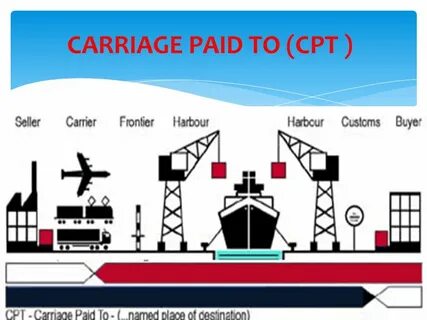
Carriage Paid To (CPT) is an international trade term and Incoterm where the seller sends the goods to a carrier of his/her preference and pays transportation cost to a specific destination, but risk is transferred to the buyer upon hand-delivery of the goods to the first carrier. The article will provide you with all details you should know about CPT: what it exactly is, how risk and cost are separated, how it is differentiated with other similar terms such as CIF and CIP, and what practices can lead to savings of money and headache.
CPT is an important concept to understand whether you are an importer negotiating shipping conditions, an exporter creating your offers or a supply chain manager trying to optimize the cost of logistics. It finds a compromise between the convenience of the seller and the control of the buyer, where the buyer assumes responsibility but only when you are aware of the precise lines where they are drawn. Now, it is time to get into the mechanics, advantages, pitfalls, and viable strategies that make CPT real world trade.
Definition & Core Concept

Carriage Paid To (CPT) is a commercial term internationally registered (officially among the Incoterms 2020 by the International Chamber of Commerce (ICC)) which specifies the roles of buyers and sellers in a transaction. In CPT, the seller must provide deliveries of the goods to a carrier, or some other party nominated by the seller, at an agreed place (unless there is an agreed place between the parties). The seller would also have to pay the expense of a carriage that would transport the goods to the described place of destination.
The key difference, here, is that even though a seller defrays the transportation to the destination, the risk is transferred to the buyer far earlier, that is, when the goods are delivered to the first carrier. Since then, the buyer bears the burden of any loss or damage to the goods despite the fact the seller pays freight charges.

CPT is mode-neutral i.e. it can be applied to any type of transport-road, rail, air, sea as well as multimodal combinations, including transportation costs . This is the reason why it is popular in global trades where the goods, including air freight, usually go through different modes of transport before they reach the final destination.
How CPT Works (Process & Mechanics)
To get a feel of CPT, one has to go through the process step by step:
a) Export Procedures & Seller’s Obligations
All the export formalities such as export license, customs clearance, and any other documentation in country of origin shall be done by the seller. The vendor organizes and finances the process of loading the products onto the transportation truck and shipping to the initial carrier.
b) Selection of Carrier or Nominated Party
The carrier is selected by the seller and the transportation has been booked to the nominated destination. This may be a freight forwarder, shipping line, trucking company or airlines. The seller bargains and fixes the contract of carriage.
c) Delivery to First Carrier & Risk Transfer

As soon as the goods are shipped to that initial carryer, that is, when they are loaded onto a truck at the factory, or when they are shipped to a container freight loading-room, the risk is shifted to the buyer. This is the main aspect: a seller has already completed his or her delivery task, and any further loss, damage, or delay is the burden of the buyer.
d) Buyer’s Responsibilities Post Transfer
After the handover point, all risks are transferred to the buyer. It is also the duty of the buyer to handle import clearance in the destination country, pay import duties and taxes and any further transportation to the premises to the ultimate destination. More importantly, the buyer will need to arrange for insurance cover themselves in case they would like the goods covered whilst in transit since CPT has no insurance commitment on the seller.
Edge Cases & Complexity
CPT gets finer in multimodal transport. In the case of trucking of goods, say out of a factory to a port, and then by sea to some other country and then on rail to the final city, the risk is transferred at the very first handover (loading of the trucks), although the seller has paid the full transport to the city named. In case there are several carriers in the line, then the risk transfer is the delivery to the first carrier. The same thing applies to partial shipments: with every part that is passed to the carrier, the risk is transferred.
Cost Components Included
With CPT, payment made by the seller will include, costs incurred such as freight fees to the named destination, export customs, terminal handling fee, loading fee, and any other fees until the delivery of to the carrier. It excludes the duty on imports, taxes, unloading at destination and insurance.
Example / Use Case

A real-life example of CPT can be demonstrated as follows:
Factors: Someone in Vietnam is a furniture manufacturer with 200 sets of dining furniture to sell to a retailer in Rotterdam, Netherlands in the term CPT Rotterdam.
Seller’s Responsibilities:
The manufacturer clears the export in Vietnam and orders a container by a shipping line. They will cover trucking the goods at their warehouse in Ho Chi Minh City to the port, loading of the container, ocean freight at Ho Chi Minh City to Rotterdam, and other related expenses to deliver the container to Rotterdam port.
Risk Transfer Point:
The main goods are loaded into the container and supplied to the trucking company (the first carrier) in Ho Chi Minh City, and risk transfers to the buyer. When the truck is involved in an accident on the way to the port, the buyer has to take that risk- despite the fact that the trucking was paid by the seller.
Buyer’s Responsibilities:
The purchaser should get insurance in case he/she wants (strongly advised). In Rotterdam the buyer does custom clearance before the importation, covers EU import duties and VAT, unloads and destuffs the containers and transports the goods to their warehouse.
Domestic Variation:
Suppose now there is a domestic one: a producer in Shenzhen sells electronics to a consumer in Beijing under the CPT Beijing Railway Station. The trucking and rail transportation expenses are paid by the seller at Beijing station, but the risk is transferred upon the delivery of goods to the trucking company at Shenzhen. All the risks in transit are taken by the buyer and the final delivery is made by the buyer in his or her store.
These are the instances of the way CPT has developed a distinct division clarifies the buyer’s responsibility in managing transportation risks. : a seller pays the ride, but a buyer bears transportation risks at the beginning of the chain.
Advantages & Disadvantages (for Both Parties)
Pros for Buyer:
- Less administrative cost: The seller takes care of exportation, carrierisation, and freight reservation of the primary carriage so the buyer does not spend time and complexity on the front end of the journey.
- Premeditive expenses: The buyer is aware that the seller is delivering to a named point, and it is easier to compute the total landed expenses.
- Fewer documents on the export end: The buyer does not have to manoeuvre through the foreign export laws or obtain export permits.
Cons / Risks for Buyer:
- Early risk transfer: The buyer assumes all the risk as soon as the goods are out of control of the seller into the hands of the carrier. The buyer has the problem of any damage, loss, theft and delay during the main carriage.
- Insurance liability: The buyer should initiate cargo insurance and this is costly and involves administrative burden.
- Import and onward logistics: The buyer does all the importation formalities, duties, taxes and any transportation over and beyond the named destination which can be a complicated affair in a foreign market.
Pros for Seller:
- Competitive offering: By assuming the freight expenses, the seller offers buyers a more desirable, turn-key offer when they remain simplicity oriented.
- Mastery of preliminary logistics: The seller has an option of selecting trustworthy carriers and negotiating good freight rates, which have a squeezy flow of goods out of the origin.
- Definite obligation endpoint: After the goods have been shipped to the carrier, the seller has no further duty in terms of delivery, and this limits the amount of liability.
Cons / Risks for Seller:
- Cost exposure: The seller assumes all the freight expenses to the destination which can be high particularly when the product is shipped internationally covering a long distance.
- Export liability: The seller has the full responsibility to do the export clearance and any complications that may happen in the country where it is originating.
- Less control after delivery: Once the carrier takes the goods, the seller can no longer have any control over the transactions that take place in transit, but he or she has already paid to the carrier.
CPT vs Other Incoterms / Comparisons
CPT vs CIF (Cost, Insurance, Freight):
CIF resembles CPT except in that it differs in two aspects. First, CIF has a minimum insurance value which the seller should insure the buyer against the benefit of the buyer compared to CPT where the buyer must insure himself or herself. Second, sea and inland waterway transport are only covered by CIF, whereas any mode is covered by CPT. When you are transporting containerized goods by sea, and you would like the seller to give insurance, CIF may be a better option; when you are transporting by air or multi-modes, CPT is the right option.
CPT vs CIP (Carriage and Insurance Paid To):
CIP is a combination of CPT and insurance. In CIP, the seller has to insure his cargo against at least 110 percent of the contract value under Institute Cargo Clauses (A) or its equivalent. The same applies to risk transfer (to buyer on delivery to first carrier) except that the buyer is assured of the existence of insurance. Buyers who value multi-purpose protection and who are not keen on organizing an insurance policy on their own favor CIP..
CPT vs DDP (Delivered Duty Paid):
DDP represents the other extreme. In DDP all the costs and risks are incurred until the time of delivery of goods to the specified location of the buyer, which entails import duties, taxes and clearance. The seller basically does everything on a door-to-door basis transportation process. DDP is most convenient to the buyers and most responsible to the sellers. CPT, in its turn, shares the load: the seller bears the cost of transportation, but the risk is transferred at an early stage, and the buyer is the one who takes care of the importation process.
CPT vs FCA (Free Carrier):
The seller transacts the goods to a carrier nominated by the seller (or the premises of the seller where there is agreement ) under FCA, and this is the point when both the risk and the cost transfers. The purchaser is the one who pays the carriage. CPT extends, the seller pays carriage to the destination, but risk remains at delivery by the first carrier. FCA is the better option when a buyer wants to have greater control over the freight arrangements and expenses arrange insurance cover, whereas CPT is the option when a buyer wants to leave the primary leg to the seller who must take care of and pay.
CPT vs EXW (Ex Works):
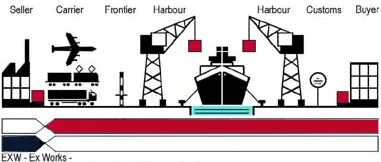
The seller has a low responsibility with EXW, which is that the goods are just made available in the premises of the seller, and the buyer does everything after that. CPT is much more consumer-friendly and the seller takes care of exporting and main carriage payment.
Practical Tips & Best Practices
Negotiate Clear Delivery Points:
State the precise location of the so called named place of destination. The name “CPT Hamburg” is ambiguous, as is it port Hamburg, a certain terminal or an inland rail depot? Ambiguity invites disputes cpt rules
. Enter CPT Hamburg Container Terminal, Burchardkai.
Clarify Insurance Arrangements:
As CPT does not imply insurance provided by the seller, buyers need to take extensive cargo insurance all the way right after it. Negotiate the arrangement and cost involved in it. There are purchasers who would want the seller to quote CIP so as to be covered costs transfer.
Choose Reputable Carriers:
Carrier used by the seller will influence the reliability, transit time and quality of handling. Use well known freight forwarders or shipping lines that have good track records. Request references and track records particularly of expensive or fragile goods.
Document Everything:
Get evidence of delivery to the carrier (bills of lading, airway bills, CMR documents) as evidence of time of risk transfer agreed upon destination. Such documentation is essential in case there is disagreement on damages or loss shipping terms.
Define Handling of Delays and Claims:
How to address the delay or damage of the goods in case of a delay should be stated in your contract. Who makes claims to the carrier? How is compensation done? Definite guidelines eliminate finger-pointing in the future.
Combine with Hedging Strategies:
When buyers are risk averse, they should buy cargo insurance that includes the full trip export fees. On the seller side, take into account freight contracts that have provisions that counteract cost jump surprises (fuel charges, congestion charges) seller delivers.
Use Incoterms Correctly in Contracts:
Always reference “Incoterms® 2020” in your contract to avoid confusion with earlier versions. State the named place clearly: “CPT [named place of destination], Incoterms® 2020.”
Common Misconceptions / FAQs
“Does CPT include insurance?”
No. CPT does not require the seller to insure. The purchaser should also make and pay cargo insurance in the event that he or she wishes to have its safety during transit. To get insurance offered by the seller during a cpt transaction , CIP is instead to be used.
“Is risk transfer always at the final destination?”
No. This is a very important misconception. Risks are transferred to the buyer under CPT when the goods are transported to the first carrier, but not at the destination mentioned in the name. In this type, the seller has to transport it to the destination but most of the way the buyer has to bear the risk.
“Can CPT be used domestically?”
Yes. Although the Incoterms are to be applied to the international trade, CPT may be applied to domestic one. As an example, a domestic sale in the United States where the seller is selling to Chicago is “CPT Chicago” where the seller pays carriage to Chicago but upon handing goods to the carrier, the risk is transferred.
“Who handles import formalities?”
The buyer. In CPT, the seller will only ensure export clearance, fulfilling export requirements, and payment of transportation. The buyer should clear his customs imports, pay duties and taxes, and any import licenses or inspections.
“What if there are multiple carriers?”
At the point at which the delivery is made to the first carrier, the risk is transferred, despite the fact that the goods may be transported by a series of carriers. The payment that the seller has engaged in will cover the full distance that the contracted route to the destination that is named but the risk is transferred at the very start of that route.
Conclusion
Carriage Paid To (CPT) is a flexible and common Incoterm in which the seller assumes responsibility to the buyer by bearing the cost of carrying the goods to a specified address and at the same time the buyer assumes the risk at the point of delivery to a carrier. It provides sellers with the capacity to make competitive offers that include freight charges on the export and freight side and gives buyers administrative ease. Early risk transfer, however, implies that buyers should be very attentive to insurance and be ready to resolve any problems throughout the main carriage. It is crucial to know the precise point of cost and risk separation in the context of CPT in order to prevent an expensive surprise. In the negotiation, one should take into account the fact that CPT is not universal: it can be effective when the buyer is interested in fixed freight rates but agrees with having risk and insurance, and when the seller would like to maintain the control over the first part of the logistics and avoid the risk coverage on the whole way. CIP (adding insurance) or DDP (to the door) could be better options, depending on buyer wishes for greater protection. in case buyers require more protection air freight carrier. On the other hand, FCA would be a better option should buyers desire greater freedom in the selection of freight and freight expenses. Critically consider your unique needs, value of cargo, and risk acceptance and select the Incoterm that fits your supply chain strategy and negotiation objectives.