Introduction
Within the complex network of international e-commerce, where there are no satriani margins and competition is intense, effective packaging appears as a mute facilitator of profitability of Amazon FBA sellers. Based on our long history of experience in the BM Supply Chain, a leading China-based supplier of end-to-end solutions including sourcing to fulfillment, we observed the ripple effects of such minor changes in Amazon FBA packaging getting sent through the entire chain of cost transmission, whether the effect is savings or cost increase. With rising fuel costs and changing trade dynamics that are putting a strain on logistics, as we move into 2026, it is not only educational to view packaging in terms of physics, dimensional economics and supply-chain analysis but it is also survival necessary. Think about it: a box that is not optimized could add 20 per cent of FBA dimensional weight, which will lead to increased charges that will drain profits before an item is sent to a customer. This resource explores the importance of effective packaging Amazon strategies and combines scientific methodology and practical knowledge to provide sellers with tools to reduce costs of shipping via FBA in the environment of increased economic examination.
The Fundamentals of Amazon FBA Packaging
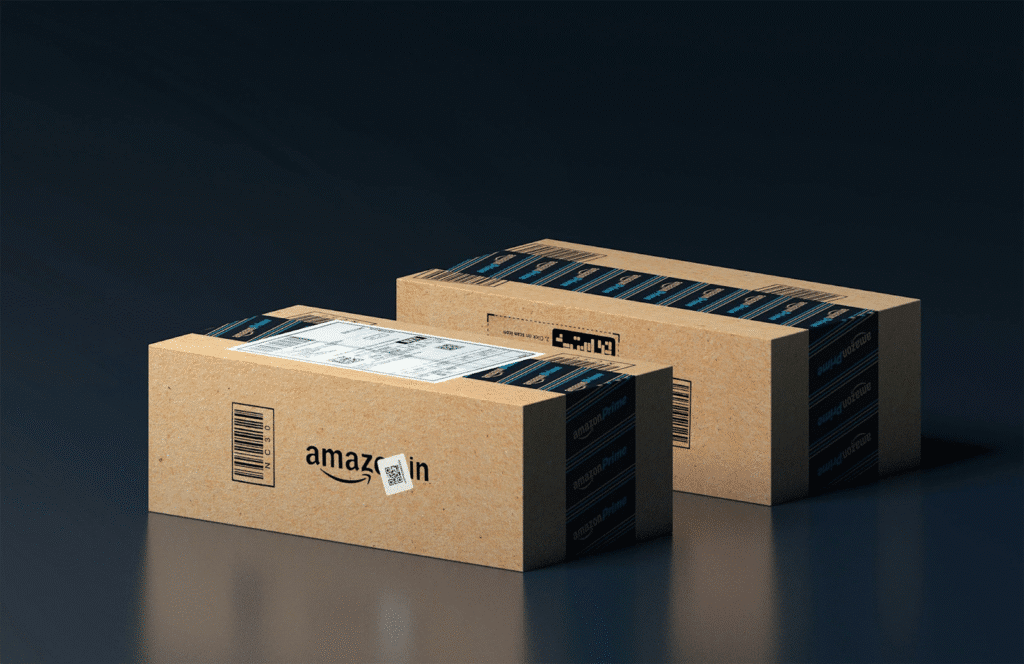
Amazon FBA package is the layer of base on which reality and economic necessities meet, making the basis of how commodities traverse the fulfillment ecosystem. Fundamentally, packaging has to withstand the shock of shipping, as well as to reduce volumetric inefficiencies, a compromise between material science and shipment requirements. As we stand in the sourcing, inspection, and preparation of innumerable FBA deliveries in the manufacturing hubs of China, we have seen that poor packaging, whether it is a poorly constructed carton or too much void fill, does not only open the product to destruction, but also raises downstream costs. This supply-chain analysis shows how decisions made at the origin regarding packaging affect all the aspects, including inbound freight and the Amazon storage evaluation and results in a chain reaction with decisions made on the initial stage multiplying over the handling processes. With FBA fees to compensate the increasing operational pressures in 2026, the sellers who do not take these basics into consideration will find themselves inflating their per-unit costs by 10-15 percent, which points to the necessity to have a comprehensive perspective that considers physics and economics in the first place.
Packaging Physics: Strength and Space Utilization
The physics of packing controls the behavior of materials under stress that defines durability and spatial efficiency, which has a direct effect on the FBA shipping expenses. Imagine a carton that is compressively modified when stacking or vibrationally when in transit- these physical processes will dictate whether your product will arrive unscathed or you will have returns that will increase your bottom line. The powerful warehouse systems of BM Supply Chain are built with physics-based tests like drop-test and compression analysis to streamline designs through equal distribution of forces thereby saving material as much as 25 percent without sacrificing integrity. This is not ordinary engineering, but a scientific strategy of reducing logistics friction in which aerodynamic shapes and lightweight materials reduce drag and weight, hence reducing fuel precedents in the cost transmission chain. In the case of Amazon FBA, where packages are subjected to a 3-foot drop test on solid surfaces, perfecting these principles would result in lowering the number of claims and a smooth-sailing process, which translates to tangible cost reduction in FBA shipping in terms of the resilience levels and reduced form factors.
Dimensional Economics in FBA Shipping
Dimensional economics redefines packaging as a volumetric currency, in which space inefficiency creates a markup in the charge system of Amazon. The mathematics are simple but deep: because of FBA dimensional weight, a calculated ratio of (length x width x height)/139) tends to replace real weight in the billing process, which penalizes large enclosures with overcharged inaccuracies. At BM Supply Chain, we have simulated our supply-chain analyses in terms of how simply slicing two inches off the dimensions of a box can reduce dimensional weight by 15% and directly reduce fulfillment charges, which in 2026 on small standard products of less than 2 ounces will be directly cutting dimensional weight by an average of 3.06 in peak seasons. This is not just an isolated shipment model, but an economic model that manifests in the larger ecosystem, where inefficient packaging adds to storage expenses, which is currently 0.78 per cubic foot per month during off-peak times, which has a multiplier effect that gnaws away the margins in the inventory cycles. Sellers who are sensitive to these effects use accurate measurements and modular designs to suit the sizes levels of Amazon, making any potential fines their advantage.
Reducing Logistics Friction Through Smart Packaging
Logistic friction – the drag cumulative effect of handling, sorting and transport – is realized as the hidden cost that Amazon effective packaging strategies can radically reduce. Physics is essential in this case, with smooth surfaces and good shapes decreasing conveyor snags and manual interventions, speeding up throughputs in the extensive network of Amazon. In supply-chain terms, our supply-chain optimizations at BM Supply Chain, such as free API docking to achieve effortless FBA forwarding, are a show of how optimized packaging limits friction points, e.g. too much tape or too much protrusion that is difficult to automate. It also economically means reduced inbound placement fee and quicker inventory turnover with research indicating that designs with reduced friction may reduce the total shipping costs by 11 per cent due to a reduction in damages and faster processing. It is not a luxury in the 2026 environment, where low-price FBA rates on products under 10 focus on efficiency, reducing friction is a strategic necessity that saves value along the cost transmission line.
The Cost Transmission Chain: From Origin to Delivery
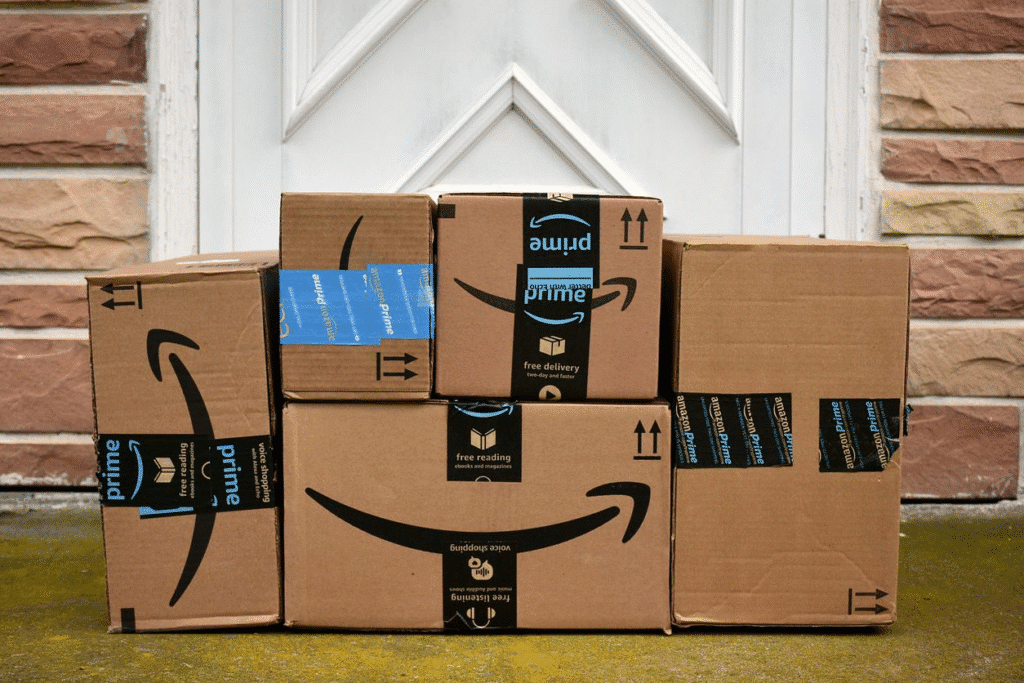
The cost transmission chain demonstrates the flow of costs associated with packaging choices, through all the links in the supply chain, on factory floor to customer doorstep. Ineffective decisions in the source like oversized boxes increase the cost exponentially, in the fact they add up to higher costs in freight between China and fulfillment centers in U.S., then add up to increased FBA storage and outbound charges. Our analytical designs in BM Supply Chain suggest that a 10 percent package volume can save 18 percent of the transmitted costs taking into consideration the dimensional economics and physics controlled durability. This chain is not linear; it is interdependent, with upstream optimization (such as bundling or void minimization) eliminating downstream upcharges, such as the 0.08 on average increase in the fulfillment fees of the mid-priced standard items in 2026. To international vendors, understanding this transmission implies the packaging is merely a channel to efficiency, meaning the material decisions reverberate through the logistics, and determines the ultimate profitability in an economic reality that is highly volatile.
FBA Fee Simulation: Quantifying Packaging Impacts

Simulation of FBA fees provides a quantitative approach of predicting the effect of packaging changes on bottom-line results fusing dimensional economics and real-world data. With tools such as Amazon rate cards, we at BM Supply Chain do simulating displays of how a 16x9x3 inch and 2 pounds package has a dimensional weight of 3.11 pounds that may raise the fees in case it slips into another group. This would reduce to 2.69 pounds, with fulfillment fees increasing 3-5% at each tier, to 14x8x3 in 2026, and would save $0.19 per unit in peak times alone. The models include physics variables, such as material density to convert actual and dimensional weight, and supply-chain variables, such as multi-unit packing to allocate costs. FBA shipping cost reduction leverages hidden in the case of sellers using such simulations, which can be turned into actionable strategies to increase EBITDA by optimizing against changing fee structures at Amazon.
China Packaging Optimization for Global Sellers
China packaging optimization is an important up-stream intervention with an origin-side improvement producing a disproportionate advantage in the worldwide FBA market. With our 30 days free warehousing and customization services with BM Supply Chain, sellers can design efficiency in early stages, with improved materials and designs that meet the demands of Amazon, such as scannable labels and drop-tests compliance, to reduce rejections and fees. The physics here are used to make decisions, lightweight, high strength polymers should help reduce weight as the economics encourages vertical stacking to load containers economy, lowering ocean freight by 15- 20. This optimization along the cost chain of transmission cushions against the changes in tariffs and fee increases of 2026 and lets it integrate smoothly with the FBA networks. To international sellers, collaborating with Chinese 3PLs such as ours will entail transforming sources of bottlenecks into efficiencies where a one-stop tracking and assembly service will help to match the packaging logistics to the requirements of Amazon which demand fast cost-effective fulfillment.
Supply-Chain Analysis: Integrating Packaging Efficiency
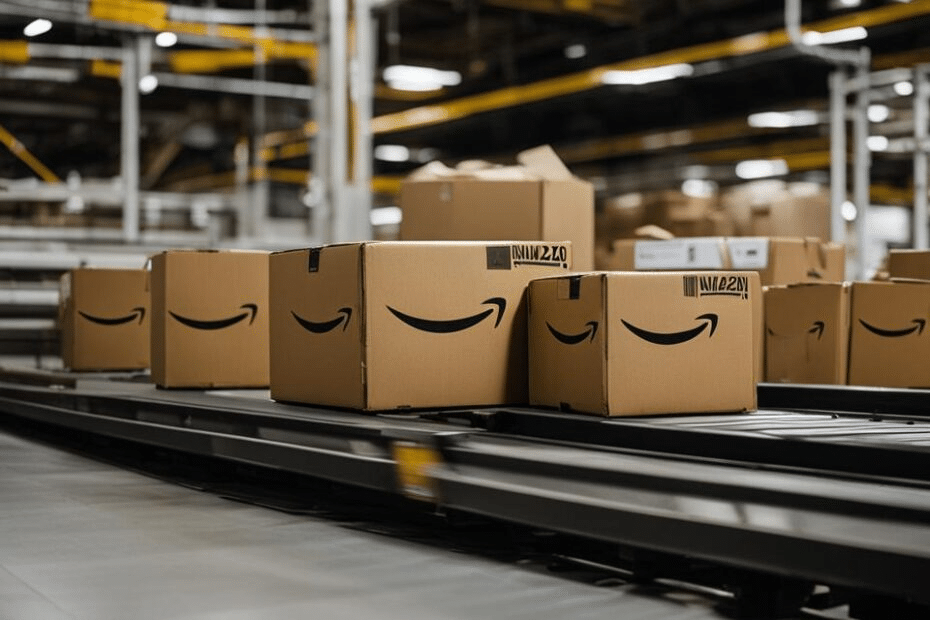
Supply-chain analysis helps to discover the packaging as a hub in coordinating end-to-end effectiveness, whereby interrelated nodes enhance the impacts of intelligent design. Inefficient packaging will create friction during the sourcing of raw materials to the final delivery, an aspect that increases costs, including increased dimensional charges and storage charges in high season periods at Amazon. BM Supply Chain holistic models combine simulations of physics with economic projections and it has been found out that optimal packaging can save the overall chain costs by 25 percent through optimal palletization and minimized waste. This is also applied to the adaptive approaches, such as mono-material films to be recycled, which is in line with the trend of sustainability, which indirectly reduces charges through incentives provided by Amazon. Sellers who use this multifaceted lens to analyze their chains by taking into account dimensional economics and logistics friction in 2026 will be well-placed to endure the economic pressure in the logistics space, and make packaging a strategic tool instead of a cost.
Conclusion: Actionable Insights for FBA Sellers
The competitive reality of the e-commerce environment has placed an increasing strain on the last years to 2030, thus, efficient packaging Amazon is not a side adjustment to success but a core element of long-term success in FBA. We have highlighted the ability of origin optimizations and fee simulations to break down cost barriers with the help of the prisms of packaging physics, dimensional economies and rigorous supply-chain analysis to drive profitability in a fee-laden environment. In the case of BM Supply Chain, our custom solutions whether from procurement to one-piece dropshipping give the power to sellers to leverage these insights, reducing the FBA shipping fees and improving operational flexibility. The way forward requires scientific accuracy and financial vision–accept it, and see your business change into a responsive business that is resilient.