
Introduction
To grow an Amazon business, one requires not just ambition but a conscious architecture that foresees the latent forces of growth. Being a consultant who has helped dozens of sellers to grow exponentially, I have observed how lack of control of scaling can lead to the disintegration of operations that may turn into potential. Add China fulfillment partner- a strategic hub that reinvents your supply chain at the foundation. At BM Supply Chain, being the leading provider of supply solutions in China, we have realized that what matters to achieve success in the Amazon business is the ability to bring procurement, inspection, warehousing, and fulfillment together in a unified system. In 2026, as the world trade flows will become more tightened and consumers more demanding, such alliances will enable elasticity to be unlocked, and sellers can absorb significant demand without collapsing in their operations. This scaling theory and constraint analysis excursion demonstrates how these alliances break down structural ceilings, which develop Amazon systems of growth that are sustainable.
Scaling Theory Applied to Amazon Operations

The scaling theory holds that growth is not linear, it is a process of interlocking systems in which bottlenecks develop as sources of multiplied inefficiency. To Amazon sellers, this refers to thinking of your business as an active organism, in which order volume drives inventory turnover and logistical bandwidth to the maximum. In my engagement as an operational scaling Amazon advisor, seller plateaus are often experienced not due to market saturation but due to internal inflexibilities, such as slow replenishment, which eats the seller ratings. The concept of a China fulfillment partner infuses scalability by matching manufacturing hubs with the needs of the FBA, which forms a feedback loop that expands resources with the demand. Thinking at the system level here is proportionality: you need to expand (in the same way as sales increase) without proportional increases in costs, through shared warehousing arrangements to spread the overhead. We have done this at BM Supply Chain, whereby our 30-day free storage buffers inventory jumps, which demonstrate how the theoretical scaling is put into use in realistic resilience to economic fluctuations.
Identifying Operational Constraints in Growth Phases
Operational limits are the silent killers that end up limiting growth even when it is yet to present itself. These are visible in constraint analysis as bottlenecks in the procurement cycles or even the customs delays where even the slightest frictions reduce into huge disruptions. To mid-tier Amazon sellers looking to grow Amazon business between six to seven figures, these are realized as stockouts in high seasons, which are fueled by a disconnected supplier network. This is solved by strategic China 3PL of scaling where control is centralized with high track practices anticipating bottlenecks. It is not that constraints are not interconnected: in a system view, any delay in Shenzhen is felt in Seattle in the fulfillment areas. This has been overcome with the help of integrated API docking by our clients at BM Supply Chain that coordinates data flows and minimizes the lead time variation by 40%. The mapping of such constraints in a holistic manner enables sellers to focus on making interventions that produce exponential returns to where weaknesses are converted into scalable strengths.
Building Scaling Infrastructure with Fulfillment Allies

The foundation of the long-term growth is scaling infrastructure that is not based on improvisation but rather general frameworks to accommodate the volumes in the millions. This infrastructure, in the ecosystem of Amazon, should include all the stages of the supply chain, including sourcing to last-mile delivery, with the base layer of the system being a China fulfillment partner. Based on the model of operational infrastructure, such alliances will expand your capacity without capital expenditures by sharing common facilities to participate in the economies of scale. The one-stop solutions provided by BM Supply Chain, including assembly of products and labeling by their specifications, will create such infrastructure at BM Supply Chain by imprinting flexibility into the heart of the process where sellers can adjust inventory quantities to market fluctuations. The interconnectivity of the infrastructure is emphasized by system-level thinking in which infrastructure is not simply physical but informational and where real-time analytics shorten decision-making cycles. In the case of the e-commerce boom forecasted in 2026, it will imply that sellers will be able to expand Amazon business not to get into the traps of overextension that afflict lone operators.
Enhancing Elasticity in Supply Chain Dynamics
Elasticity in supply chains is the ability to respond to changes in the most flexible way possible, and it is a very important element of not being brittle like a fragile crystal that breaks as soon as you stifle it. The Amazon growth systems are based on such elasticity of structures, which break during volatility of demand. This is further improved by a China fulfillment partner who offers on demand resources such as scalable warehousing which takes in seasonal spikes at no fixed cost. Elasticity in constraint analysis overcomes structural ceilings with variation- our BM Supply Chain model, where API integrations to direct shipping are free, provides sellers with the ability to switch suppliers mid-cycle, keeping flow going despite tariff increases. At the operational level this can be translated into scalability of FBA replenishment, where the partners will take care of bulk forwarding which will minimize the elasticity gap between the intake of orders and the availability of stock. Elastic systems pioneered by sellers we have worked with note 30 percent increases in response times, which is the way to establish resiliency in an environment of unpredictable global happenings.
Cycle-Time Compression for Accelerated Growth
Cycle-time compression replaces speed with a scalable asset, reducing the time gap between order placement and replenishment to create dynamic impetus. Long repetitive cycles cause drag in scaling theory, which increases operational limitations such as capital tie-ups during transit. A China fulfillment partner is more successful here, since it entails localization of prep and dispatch, which cuts ocean-to-warehouse times by weeks to days. This is the case of BM Supply Chain where our one-piece dropshipping and assembly services are interconnected to the Amazon inbound protocols to reduce dwell times. System level thinking considers compression as a chainwide optimization: any reduction in length of a segment of the chain speeds up the entire chain, and sellers can expand Amazon business with increased inventory turns. In 2026, with the spread of automation, this compression will be central so that the partners will be in sync with AI-generated predictions and provide just-in-time efficiencies that surpass competitors.
Origin-Level Synchronization for Seamless Integration
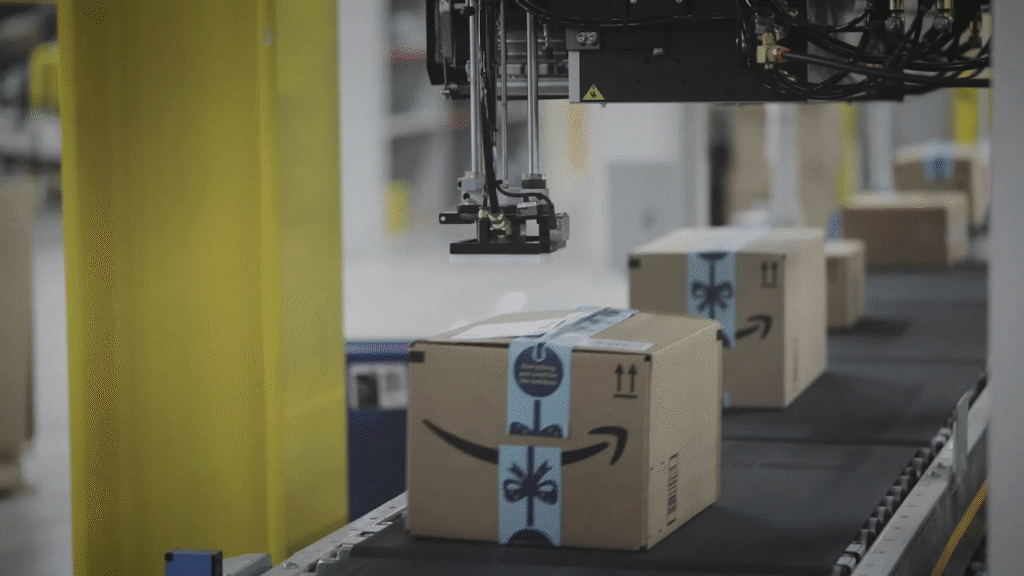
Origin-level synchronization aligns the origin of your supply chain with the needs of the downstream, removing dissonances that create scaling barriers. This synchronization is like a conductor, and it makes manufacturing in China align with its fulfillment timelines at Amazon, align. The operational infrastructure is also in a much better situation, since synchronized origins decrease variance – imagine automated labeling at the point of origin which preempts FBA rejection. This is made possible by our knowledge at BM Supply Chain, both on procurement and verification, with customizable plugins connecting outputs of factories to seller dashboards. In constraint analysis, unsynchronized origins provide limits to throughput; synchronization removes them through the formation of fluid paths. In the case of sellers seeking the benefits of operational scaling Amazon, this translates to harmony where data flows in both directions, allows the production to adjust in real-time and the systems that support Amazon growth processes to resist shocks such as the shortage of supplies.
Supply-Chain Scaling Through 3PL Collaboration
Scaling of the supply chain transforms your operations into the strategic level where a China 3PL to scale your operations is your engine of growth. Scaling theory is used to explain this as multiplicative growth, in which 3PLs increase your reach by sharing resources among clients. In BM Supply Chain, our diversified services, beginning with sourcing of raw materials and the final goods fulfillment service scale-up supply chains by bringing in the layered efficiencies, such as the bundled shipments that reduce cost in per-unit basis. The integration on the system level indicates the synergies: the integration of 3PLs spreads risks, which contributes to overall elasticity with the condensed cycles of consolidated logistics. Sellers who take advantage of this report breakthroughs in the scalability of FBA replenishment, with partners taking care of overflow inventory and fast restocks. This collaborative scaling will divide successful and declining businesses in the landscape of increased competition in 2026, constructing infrastructures that are resistant to macroeconomic forces.
Overcoming Structural Ceilings in Amazon Expansion
Structural ceilings are the maximum of your existing structure and beyond which your growth will be held by rigid frameworks. These are determined in a constraint analysis of things such as the capital-locked inventory or supplier dependencies which are broken down by the China fulfillment partner by outsourcing the complexities. Operationally this means reconfiguring to high ceilings, our BM Supply Chain customers do this through free 30 days warehousing, which allows them to release cash flows to market investments. Scaling infrastructure changes in this case, whereby partners give the framework in which the ceilings are raised in stages. As an example, supplier diversification, which comes as a result of our networks, prevents single-point failures, enabling sellers to Amazon business to grow further than before. At the system level, what we understand is that ceilings do not have to be broken to pieces; they have to be built up again to create systems of Amazon growth that can support Amazon volumes 10x without necessarily inciting chaos.
Conclusion: Forging Scalable Pathways Forward
The climb to greatness Amazon business is not just a tactic, but it is an architecture of systems that drive sustainable growth. By the China fulfillment partner strategic prism, sellers will be able to cross operational limits, add elasticity, and shrink cycles to create indisputable infrastructures. We are not mere providers at BM Supply Chain, but it is our story to design your scaling, and we will even propose a custom solution, whether it is in procurement to integrate into FBA smoothly. With fresh opportunities and challenges that come with 2026, adopt such partnerships to align origins, ramp scales supply chains, and break the structural ceiling. The result? A company that is not only on its way to grow, but also to dominate the changing space of Amazon.