Introduction
Even well-structured B2B firms are facing fulfillment problems–bulk and non-regular lead times and complicated shipping specifications can quickly get the organization in a jumble. Such obstacles not only reduce the pace but also cost profits and put relationships with clients into tension. B2B fulfillment refers to the step-by-step B2B fulfillment process from China, which involves storage, processing, and delivery of items between companies usually in large quantities — making it much more complex than retail logistics.
The B2B fulfillment problem has to be overcome in order to be scaled efficiently. By not tackling them directly, the brands face the risk of having to stock out, hold-ups, and miss on the competitive markets. This manual identifies the most common pain areas in B2B fulfillment and details how they can be solved in real-life ways with references to time-tested ideas that will allow your operations to be smooth.
Challenge 1 — Managing Complex Inventory Across Multiple Clients
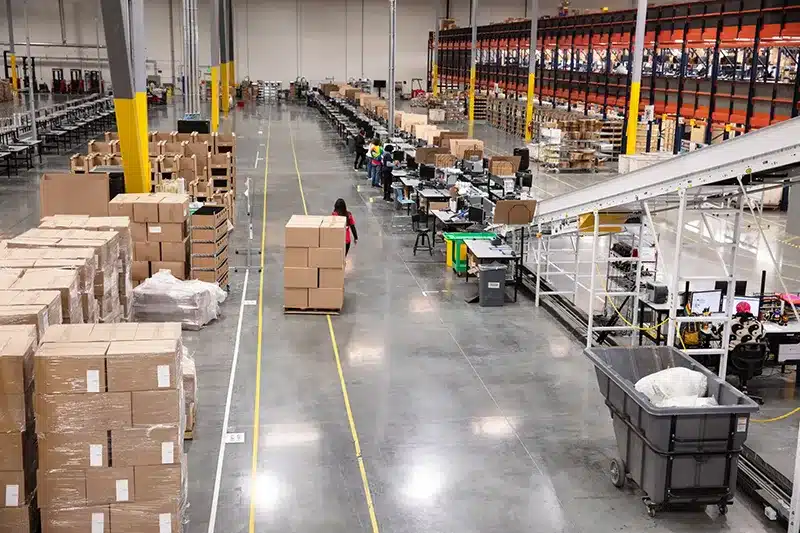
Inventory management across several customers is one of the most prevalent issues of B2B fulfillment. Warehouses can contain thousands of SKUs resulting in a mismatch, overstocking, or understocking as the demand changes. This is because of different product lines and different needs of the clients leading to wasted space and locked-up capital.
To do away with this, use a real time inventory management system (WMS) that monitors stock dynamically. Auto replenishment of orders according to past statistics and projections to avoid backorders. Enhance barcode or RFID tracking to track the locations and movements accurately and eliminate manual errors.
BM Supply Chain is a company that has a solution to inventory management in the B2B sector in that it provides a high-end WMS with complete visibility. Their system is easily compatible with those of the clients, so their stock is properly controlled throughout the worldwide operation and the brands do not have to face expensive mismatches.
Challenge 2 — Ensuring Order Accuracy and Timely Fulfillment
The accuracy of the order in B2B logistics is not negotiable, but the error during picking, packing, or labeling is still an ongoing concern. These mistakes may be caused by orders of high volumes or even by human attention which results in delays, returns, and unhappy wholesale customers who demand perfection.
The first solution begins by initiating the use of double-scan verifications during the picking process to make sure that items are in line with orders. Electronic order monitoring systems are able to track the receipt-to-dispatch progress. The risks are also reduced through training of staff in warehouse on provision of B2B specific packaging standards such as secure palletizing.
With companies dealing with B2B fulfillment with 3PLs, inaccuracy is reduced by the use of automated systems, such as BM Supply Chain. Our pick and pack fulfillment services in China involve quality assurance, ensuring delivery is on time and within strict deadlines.
Challenge 3 — Balancing Storage Costs and Space Utilization
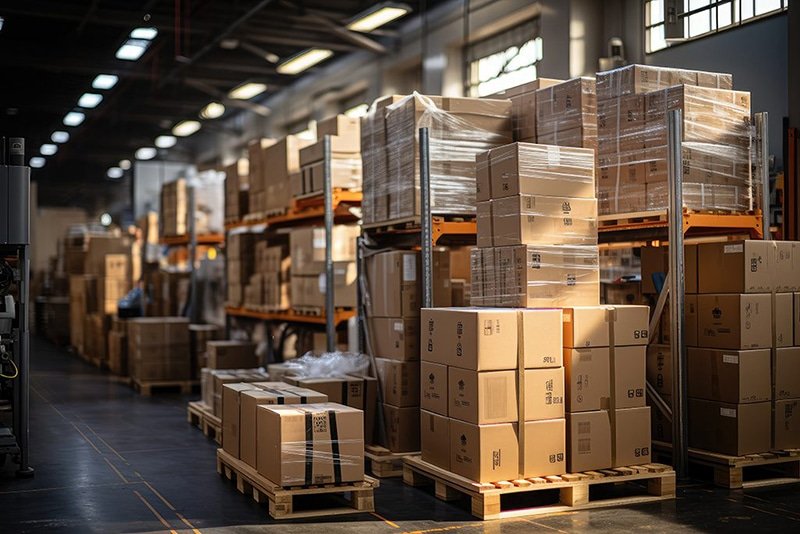
The issues of warehouse operations usually concern the costs of storage particularly the B2B where stores have to hold massive quantities of goods over a long contract. The waste of space contributes to increased charges, whereas overstocks is a waste of resources that may be directed towards other opportunities.
Vertical racking systems are used to optimize the space and maximize cubic footage without increasing the footprints. Implement plans of flexible storage, which responds to demand, and shipment consolidation plans to reduce idle inventory. Occasional audits can help in determining slow moving goods which can be cleared.
BM Supply Chain addresses this by providing warehousing services in China with up to 30 days of free storage, which will ease the financial burden.Their effective structures and sizeable warehouses in China provide cost-effective storage in China so that brands are not concentrated on overheads and instead they are concentrated on growth.
Challenge 4 — Handling Global Shipping and Customs Complexity
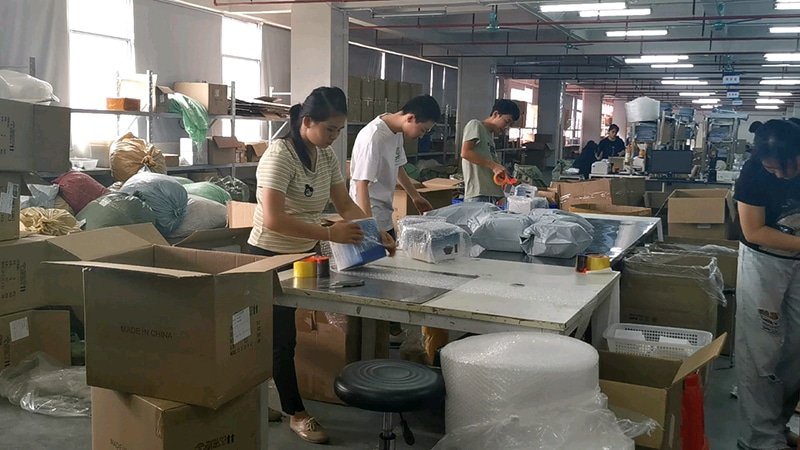
China shipping is a B2B challenge with special aspects such as tariffs, lengthy documentation, and unpredictable shipping time. B2B customs clearance can be very thorny as regulations differ between countries, and delay deliveries and raise expenses.
It is important to collaborate with an established 3PL that is conversant with the export process. Process shipping documents digitally to process them faster and automate customs declaring software. Flexibility is given by providing a variety of transport methods such as sea (when it comes to bulk economy) and air (when it comes to urgency).
In the cases of B2B, BM Supply Chain performs excellently in relation to customs clearance, taking advantage of their experience in China to smoothen out the regulations. Their multi-mode delivery serves in more than 100 countries so their customer will receive their shipments promptly without the normal hustle.
Challenge 5 — Lack of System Integration and Visibility
Loosely coupled systems are the biggest impediment of B2B fulfillment that leads to low communication between suppliers, warehouses and clients. Lack of real time visibility is a guesswork in tracking orders and thus inefficiencies and lost trust.
The solution is API integration through our ecommerce fulfillment integrations in China to ensure that it can be effortlessly updated across such platforms as Shopify, Amazon, or ERP systems. Centralized dashboards enable clients to track the shipments in real time, which creates transparency. Consistency in system auditing will make sure that it is compatible with changing needs.
Being a Chinese company that specializes in supply chain optimization, BM Supply Chain is free in API and plugin integrations. This allows end-to-end visibility, between the order placement and the delivery, and enables the brands to have data-driven control.
Challenge 6 — Maintaining Quality Control for Bulk Orders
In China, quality inspection is vital in B2B, but in bulk orders, a slip up may be made, which negatively affects brand names, leading to costly returns. This risk is intensified by the size of B2B since a single faulty batch impacts the clients down the supply chain.
Perform quality checks during pre-shipment and random inspections of quality to identify problems in time. Keep packaging materials and labeling procedures consistent. By cooperating with suppliers on the standards of quality, the issues are eliminated.
BM Supply Chain uses strict B2B validation of products in their services. Their field visits and normalised operations ensure that each of the orders is of high standards and this safeguards your brand in the international markets.
Challenge 7 — Limited Flexibility During Peak Seasons
B2B demand seasonal fulfillment demand Fulfillment demand spikes are a problem in the warehouse operation scenario where clients may overload with heavy orders before a holiday or a peak in the industry. Without being flexible, it causes a bottleneck, cost of overtime and lost opportunities.
Increase and decrease workforce and warehousing on-demand through temporary or overflow staffing. Use predictive analytics to predict demand using trends and client information. Use elastic resources to smooth the spikes received by partners.
BM Supply Chain offers that agility where large warehouses in China are concerned. Their predictive software and scalable infrastructure can easily cope with peaks, maintaining the operations always the same throughout the year.
How BM Supply Chain Helps Businesses Overcome These Challenges
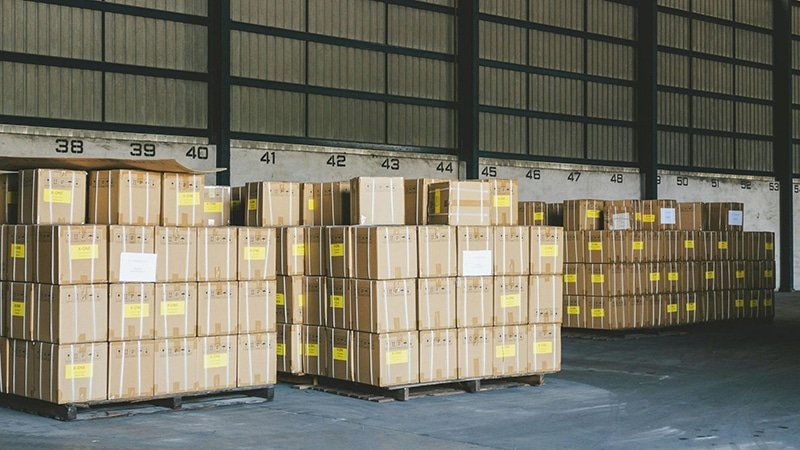
BM Supply Chain is one of the full service 3PLs that are taking all these B2B fulfillment challenges directly through our B2B fulfillment services from China.They have been the leading supply chain provider in China and as such they have incorporated product sourcing, inspection, warehousing and fulfillment as part of customized services. Their 3PL supply chain in China consists of a free 30 days storage facility to reduce expenses, automated warehouse management system to ensure accuracy and real time tracking to create transparency.
Individual packaging, labeling, and kitting services improve the precision of the order, whereas multi-channel API integration is a guarantee of seamless visibility. They have efficient and scalable supply chains with high-quality suppliers and worldwide shipping experience.
Enlist the services of BM Supply Chain in order to remove bottlenecks in fulfillment and improve your global B2B business in a cost-effective manner.
Conclusion
All B2B brands face operational challenges, including inventory problems and transportation problems but they are not unconquerable. These obstacles can be turned into opportunities, and this can be done through the implementation of smart technologies, processes, and partnerships. The ultimate solution to rising fulfilment difficulties is reduced to proactive measures followed through the main focus on accuracy, cost control, and client satisfaction.
It is not about evading obstacles in B2B fulfillment, but rather using smart technology and trusted alliances to circumvent them. BM Supply Chain, being a specialist in the 3PL solutions, can provide quantifiable outcomes because of clear and innovative services.
Get in touch with BM Supply Chain now so as to streamline your B2B fulfillment process in China.