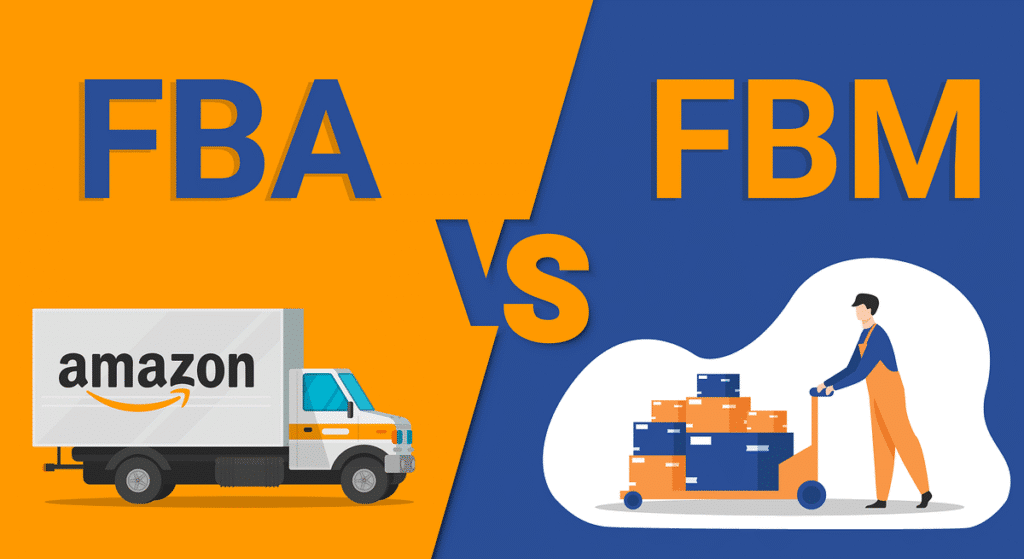
FBA or FBM is a choice that may be overwhelming, as Amazon continues to adjust its fees and regulations as of 2026. Being a longtime veteran of supply chain management operations at BM Supply Chain, who assists sellers in improving their Amazon fulfillment processes, I have witnessed firsthand how making the right decision can either make profits or implode a business. FBA (Fulfillment by Amazon) allows Amazon to do the heavy lifting storage, packing, shipping, and even customer service through Amazon fulfillment services from China. It is convenient but appears to have fees that are creeping up in 2026. FBM (Fulfillment by Merchant), however, puts you behind the wheel, leaving the fulfillment to yourself or a partner with 3PL such as us, which gives you more control, but needs a good logistics foundation.

FBA and FBM fall behind in a nutshell, with each being the most profitable in terms of speed and cost savings, respectively. But which is better? It is based on your products, sales volume and margins. FBA frequently competes away high-velocity products that require that Prime badge, but FBM may be more intelligent with large products or with low-margin niches that you would prefer to avoid storage charges.
In the following table, you will be oriented in a few seconds:
| Aspect | FBA | FBM |
| Cost | Higher fees (avg +$0.08/unit in 2026) | Lower, but you cover shipping |
| Speed | Fast (1-2 day Prime) | Variable (aim for 2-day with SFP) |
| Control | Less (Amazon rules) | More (custom packaging) |
| Prime | Automatic eligibility | Possible via SFP |
| Scalability | Easy for growth | Requires strong setup |
Stick around as we dive deeper into these Amazon fulfillment methods.
FBA vs FBM

FBA or Fulfillment by Amazon refers to the practice by which you ship your products to the Amazon warehouses and leave them to store, pick, pack, ship and even receive returns and customer enquiries. It is a golden parachute of most sellers, making your products under the fast delivery service of Prime and increase the confidence of buyers.
FBM, Fulfillment by Merchant, turns the tide the other way around, you or your fulfillment partner take all the care of storage, shipping, etc. None of the warehouses of Amazon are involved, hence you have control of the process, and still bear the burden of operation.
Both FBA and FBM are also convenient, fast and premium (even in 2026), but at a high price (a bit higher FBA fees) and flexibility (some possible savings) at a high price, respectively. FBA is excellent regarding Prime qualification as well as scalability whereas FBM is excellent regarding control over Amazon FBA advantages and disadvantages such as rigorous prep formations. Select depending on your configuration: FBA is used by sellers who are busy and FBM is used by sellers who have logistics figured out.
What Is FBA? (Amazon Fulfillment Explained)
The main fulfilment service offered by Amazon is FBA, where you pack things and send them to their facilities and they do everything else. As we can say freer at BM Supply Chain, it is a game-changer to sellers with Chinese sources, because it simplifies inbound shipping once organized properly.
Instructions: Prepare shipping plan in Seller Central, add FNSKU labels, package where necessary, and fulfill FBA prep standards, such as poly bags to soft products. They store and ship out to Amazon through freight or small parcel, and then inbound through freight or small parcel.
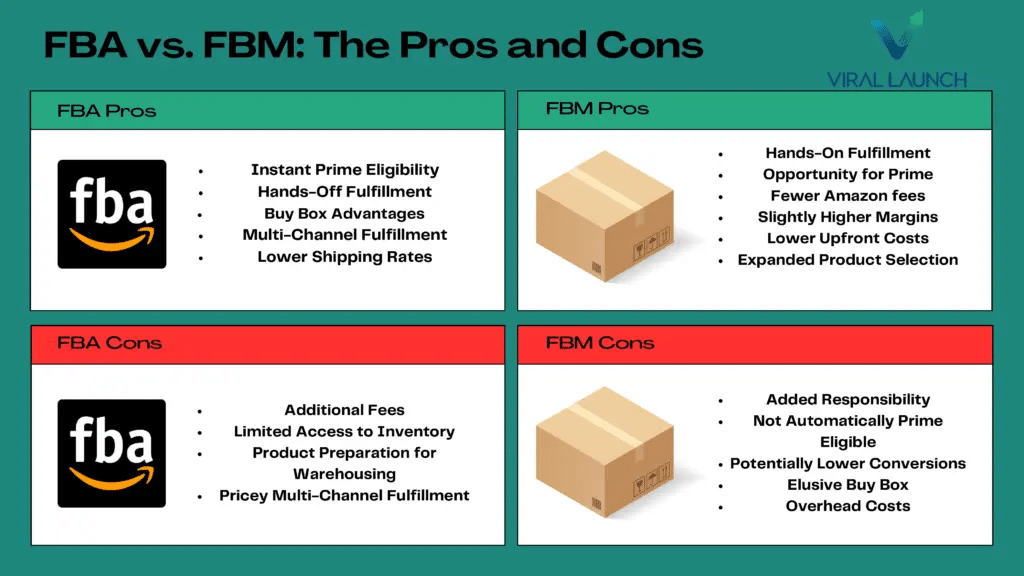
The advantages are the Prime label of expedited sales, 1-2 days delivery that increases the level of conversion, and customer trust is established by default- Amazon deals with complaints. Downsides? In 2026, fees will increase (by an average of 0.08 per unit on standard sizes), and the cost of storage will escalate (high up to 2.40/cu ft monthly on long-term stock). Stringent regulations imply refusals in case of slippage of packaging, and the reduced possibility of control over branding.
What Is FBM? (Seller Fulfilled)
FBM leaves fulfillment in your control-or a partner of ours at BM Supply Chain. You have inventory, do the order packing and deliver it to buyers with the association of (and not limited to) carriers, such as UPS or FedEx.
It operates by registering items as seller-fulfilled in Seller Central, and delivery the orders as per the timescales of Amazon (typically 2 days of Prime-level speed with SFP enrollment). Sellers employ FBM in cases they possess their own warehouse, or they employ a 3PL to be efficient.
Advantages: Better ability to control the shipping on Amazon FBM, reduced prices on oversized products (there are no Amazon warehousing charges), and customizable packaging options. Cons: Perceived slower delivery without Prime (unless SFP), increased workload and Buy Box losses possible in case of slip in the metrics. There is no automatic Prime, which means that you have to struggle to be seen.
FBA vs FBM: Core Differences
Now we shall dissect the major battles in this FBA vs FBM battle. I have recommended hundreds of sellers on them, and it might depend on your niche.
- Price: FBA includes fulfillment charges (3-10/unit) and storage; FBM transfers the charges onto your shipping, and not on Amazon.
- Shipping Speed: FBA has a network that provides Prime-fast shipping; FBM is relying on you-target 2-day shipping to compete.
- Prime Eligibility: FBA receives it automatically; FBM requires Seller Fulfilled Prime (SFP) which remains open in 2026 following reopening in 2023, but requires trials and metrics.
- Control & Flexibility: FBM will allow you to make packaging custom; FBA will have regulations such as FBA prep requirements.
- Storage Rates: FBA is a monthly charge (it will increase in 2026); FBM is your space, or the space of 3PL, which will be cheaper.
- Inventory Control: FBA has the tools, but restricted access; FBM offers real-time control.
- Customer Service and Returns: Amazon will do it with FBA, you with FBM, which can create loyalty but will create work.
- Scalability: FBA can easily be scaled; FBM requires upgrades of infrastructure.
- Suitability by Product Type: FBA small/light/fast-selling (e.g. books); FBM heavy/fragile/seasonal (e.g. furniture to avoid fees).
Example: A toy seller that we dealt with changed to bulky merchandise which was under FBM and saved 30% on the expenses.
Cost Comparison: FBA vs FBM
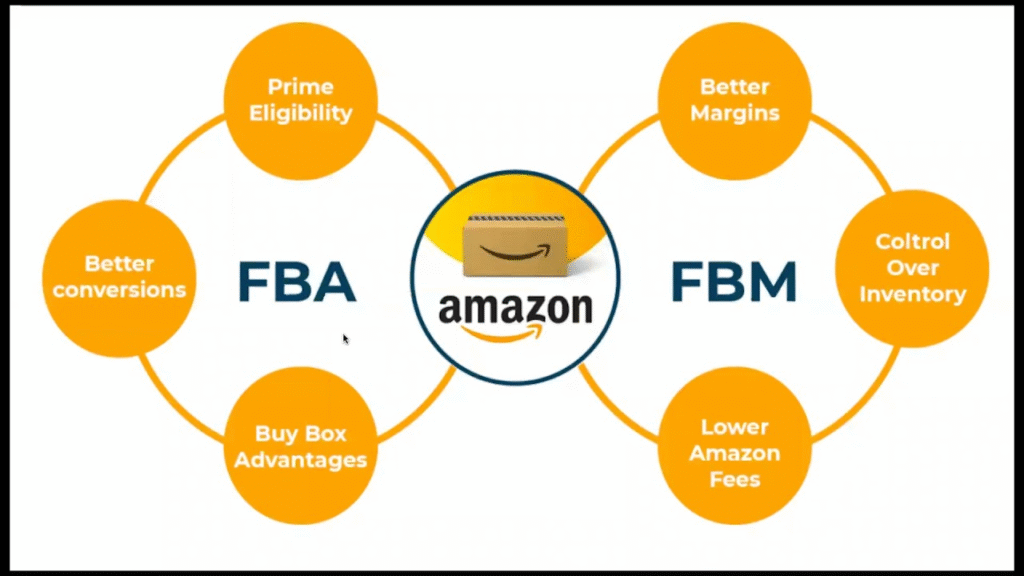
Getting into the depths of fulfillment costs, FBA is more expensive but volume-wise worth the cost. The FBA charges also increase in 2026, by 0.08 in average per unit of items of standard size (10-50) with a few levels of charge increased by $0.25. Include storage (e.g. 0.87/cu ft off-peak) and inbound placement fee.
FBA is also beneficial in terms of cost to high turnover products in which Prime gets the sales up to a point that it points to mirror the cost. With low-margin or bulky goods though, FBM is big-time savings–no warehousing fees and you are able to be able to bargain on shipping rates.
Packaging expenses: FBA requires rigid FBA prep expenses in the event that Amazon carries out it (however they are terminating in 2026 their prep services). FBM allows cutting corners prudently. Storage effect: FBA incurred slow-movers will pay long-term storage charges (as much as $2.40/cu ft); in FBM with warehousing services in China, there are no Amazon warehousing fees.
The FBM is crowding out BM Supply Chain on heavy goods, in which FBA charges based on weight and which swell.
When You Should Use FBA
On our professional standpoint, we recommend FBA in cases where the speed and hands-off operation is profitable. Small/light products are also good here- they are easy to store, minimal charges.
High sales velocity? Competition is killed by the Prime eligibility of FBA. This is a necessity in niches such as beauty where customers are in need of quick delivery. The sellers who do not want logistics on their hands, particularly the new ones, gain, and so do those selling the products that require rapid market testing.
Pro tip: When sourcing in China, prepare ahead of time to get on incoming deadlines and avoid delays.
When You Should Use FBM
The choice that you have when it comes to control and savings is FBM. Bulky/heavy goods such as appliances avoid the high charges at FBA. Slow moving or seasonal products are left without storage charges.
Customized/fragile goods? The packaging of FBM is flexible and prevents breakage. Low margin niche saves at the expense of Amazon. Vendors who have good 3PLs such as our Chinese one perform very well, and they get things in order.
Case study: A client who furnishes outsourced to FBM and placed us in storage and increased by 15 percent.
Using Hybrid FBA + FBM (Pro Strategy)
Intelligent sellers do not pick any of them, they crossbreed using a hybrid FBA + China 3PL model. Give fast-movers to FBA to grab Prime, and large/slow SKUs to FBM so the company can cut expenses. It is a backup in case of FBA delays or stockouts, and Buy Box is kept.
As we have learned at BM Supply Chain, hybrids can enable you to test the waters: Start FBM to gain control, upscale to FBA. Control through Seller Central switches. This seller fulfillment technique on Amazon depicts actual professionalism – we have assisted customers in merging to 20-30% efficiency points.
Why China Fulfillment Centers Matter
A China 3PL fulfillment partner such as BM Supply Chain is a treasure trove to sellers with China as their shipping location. We have quicker replenishment — same day prep and outbound — cutting lead times.
Reduced prep and storage cost (free 30 days) is better than U.S. alternatives, straining cash flow. One-stop: Prep, Inspections, Shipping, Integrated, FBA Compliant or FBM Efficient. Improved packaging control on bundling, as well as ecommerce fulfillment integrations in China for easy tracking.
FBA or FBM, our China assets, including sourcing raw materials up to the final fulfillment is customized to allow you to concentrate on growth.
Final Recommendation
New sellers or large volume / Prime-driven products? Choose FBA for ease and speed. Low-turnover/bulky and price sensitive? FBM’s control wins.
Most pros? Go hybrid-FBA core SKUs, FBM non-core. Determine your margins, speed and supply chain configuration. We provide advice to fit your China sourcing at BM Supply Chain — contact us to receive free consulting.
FAQs
- And is FBA more costly than FBM? Yes, in many cases because of charges and storage but can be used to boost sales and cover costs.
- Can FBM win the Buy Box? Of course, when you do better than the competition at the level of metrics (price, shipping speed), even in FBA.
- Is SFP (Seller Fulfilled Prime) available? Yes, up to 2025 updates; enroll passing performance trials on Prime on FBM.
- Is it possible to alternate between FBA and FBM? Easy – SKU-toggle in Seller central, very useful in testing.
- Will FBM be helpful to international sellers? Yes, particularly when China 3PLs are used to do local logistics and customs.
- Is FBA preparation required prior to Amazon inbound shipping? Mandatory–labels, packaging should conform, or they are rejected. Outsource to evade inconveniences, particularly after the end of prep service after 2026.