
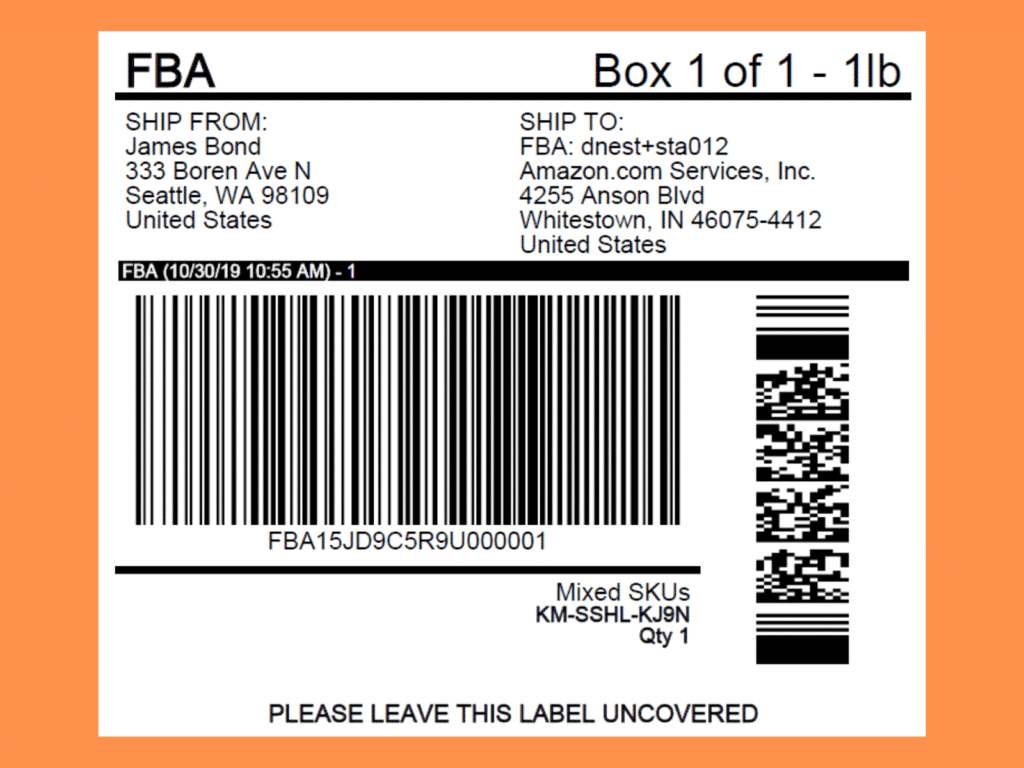
Proper labeling of your carton when selling on Amazon FBA is one of the things, which will save you a lot of whims later on. Here in China, as a major provider in the supply chain, BM Supply Chain has witnessed numerous cases of sellers getting into trouble due to minor labeling slip-ups, e.g. delays in picking up, a non-compliance fee or even total rejection of the shipment. Since Amazon will cease its own prep and labeling services beginning January 1, 2026, it will be entirely up to you or your 3PL partner to hit a nail on the head every time. The correct labeling of Amazon FBA cartons would guarantee that your boxes scan with ease in the automatic Amazon warehouses keeping your inventory flowing well and account in good standing.
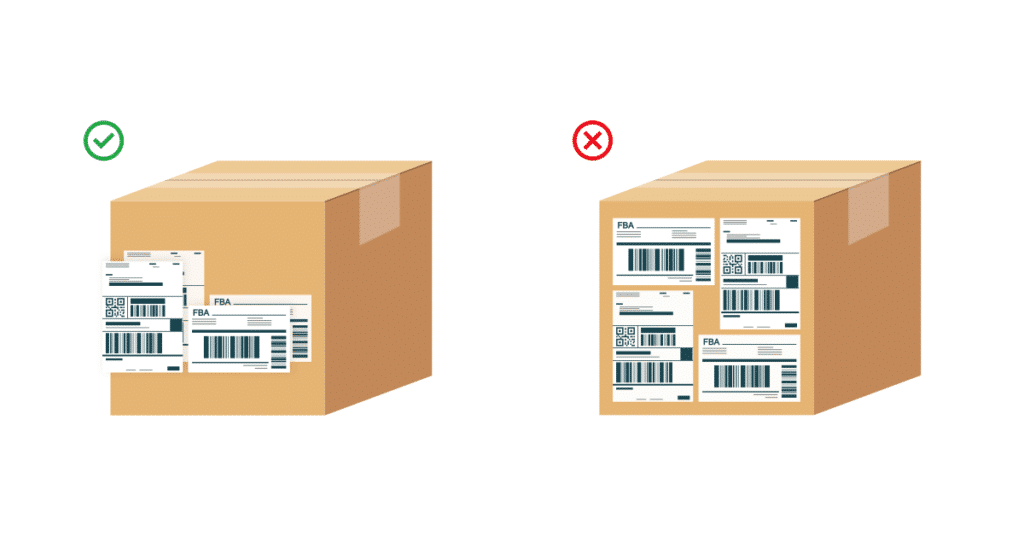
The basics? Each carton must have its individual box label with the scannable barcode and it must be placed on a flat surface- not on edges, corners or seams. add the shipment ID on Seller Central, and ensure that labels are durable, 3×3 at least without any tape or straps to cover them. The visibility is important; the systems used at Amazon are based on rapid scans to categorize and trace. Carton size and size affect it as well-maximum 50 lbs in one box (unless one item weighs more than that), with size to 36x 25x 25 as of the 2025 update, which spans into 2026.
If labels are off? Expect processing, in which Amazon could charge to repair the fix or else recall the delivery- time and money. We have helped customers to escape this by managing the labeling in our China plant where we combine checkups and preparation to the perfection of compliance.
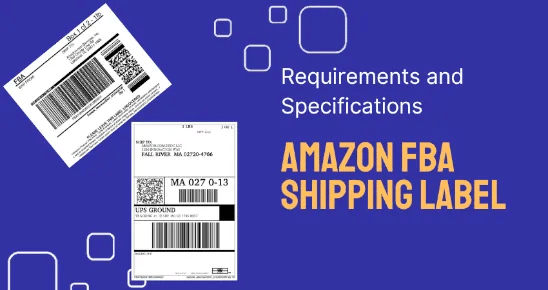
Quick compliance checklist:
- Create and print FBA box ID labels out of Seller Central.
- Lays on flat, visible surface; no seams or folds.
- Test, where possible, ensure scannable barcodes.
- Label carrier label separately when using small parcel.
- Weight of check carton (less than 50 lbs) and size ([?]36 longest side).
- Add Team Lift (>30 lbs) or Mech Lift (>50 lbs) to heavies.
- None of these mixed SKUs unless authorized.
Why Proper Carton Labeling Is Critical for FBA
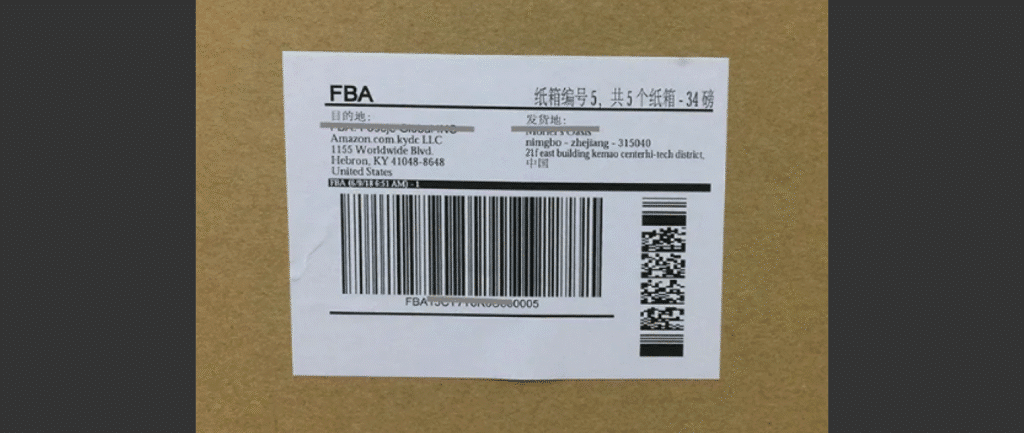
The warehouses of Amazon represent a technologically advanced center where there are automated scanners and robots that handle millions of packages every day. The correct labeling of cartons should enter this system directly, defective scans are stopped by mislabeling. In our case at BM Supply Chain, a bad label on one label can slow down a whole pallet resulting in stock out and a revenue loss.
Positioning is important as scanners require a flat shot that is not obscured; labels on creases or wrinkled areas do not always work. This has an impact on tracking as well–Amazon will use them to place your inventory in the right place to avoid intermixing that would hurt your performance metrics.
It is all about precision and effectiveness in a nutshell. The prep service cutoff deadline is 2026, and the lack of non-compliance will be more demanding, since it will not be Amazon that provides a safety net during relabeling. Believe us–you put it right at the start and your FBA preparation and packaging proceeds without the need to incur unnecessary expenses.
Carton Label Requirements
We will decompose the most critical Amazon inbound labeling regulations. These have not been significantly changed as of 2026 other than the end of prep service, but maintaining compliance is now more critical than ever before.
Requirement #1: FBA Box Label
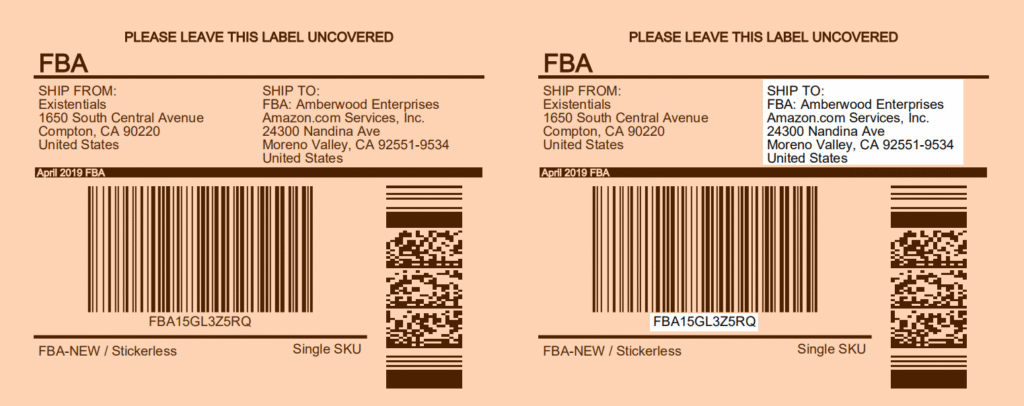
It is what Amazon is offering through Seller Central; it is your carton’s ticket into the warehouse. It contains scannable barcode and shipment details.
Amazon application: To scan and direct your box in the process of receiving. Normal positioning: At a flat surface such as the top or the side at least 2 inches away at the edges. Not at corners, seams or where it may be required to be covered with tape.
Durability: Use good quality paper or thermal prints that will not smear. Laser prints have proved to be the best during transit in China.
Requirement #2: Shipment ID Label
Each carton will have a new Shipment ID label, which is also printed on your shipping plan in Seller Central. This assists Amazon in sorting multi-boxes.
Why? It connects every box to your general shipping, and not to lose items. Print, paste with the carrier label in case of UPS/FedEx.
They need to be seen both carrier and FBA. Note: Do not make duplicates, every ID is different.
Requirement #3: Barcodes Must Be Scannable
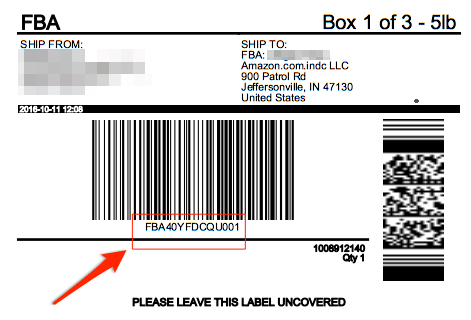
Barcodes must be large enough to scan easily (a minimum of 3x 3 inches) – Amazon suggests 4×6 to use on boxes. Reflective tape on them should be avoided and they should have no smudges or low contrast printing.
Straps or bands? Place so they don’t block. Scanability with a barcode application–we check our shipments before shipping at BM Supply Chain to ensure that problems are identified.
Requirement #4: Carton Size & Weight Rules
Cartons are limited to 50 lbs, unless it has a single overweight piece (then place a label of MEC Lift). For 30-50 lbs, add “Team Lift.”
Dimensions Longest side [?]36 inches (revised 2025), no side longer than 25 inches preferably with some carriers. Minimum: 6x4x0.375 to accommodate labels.
Non-compliance? Rejections or fees- oversized boxes break automation.
Requirement #5: No Mixed SKUs (Unless Pre-approved)
As a rule, a single SKU per carton to accelerate the receipt. Mixed can only be uploaded as part of approved multi-box shipments, with this containing all the exact contents.
Why delays? Amazon fact-checks; confusions make this more difficult. In the case of multi-SKU sellers use separate cartons or 3PL consolidation.
Requirement #6: Pallet Label Requirements (If Applicable)
In case of palletized shipments (LTL/FTL), affix FBA Pallet ID labels on each side (4) and on the top of the center. Tracking requires the use of SSCC.
Pallet sizes: 40×48 inch, shrink-wrapped, no overhangs. Pallets should have separate labels on every box as well.
How to Apply Carton Labels the Right Way (Step-by-Step)
This is a working guide depending on our day to day operations in BM Supply Chain.
- Create labels: In Seller Central, make your shipping plan and get box ID PDFs.
- Print well: Thermal or laser printers, inkjet will smear.
- Surface: Flat clean surface on the box-top or largest size.
- Seal: No creases, apply stickers.
- No seams/curves: Provides flat scan.
- Add carrier label: Visible and separate to FBA label.
- Check: Scan check and weigh/measure carton.
It reduces errors- this process has been perfected by thousands of deliveries.
Examples: Good vs Bad Carton Labeling
Good: Sticker on top, clear barcode, no tape on, under 50lbs box with Team Lift label where necessary.
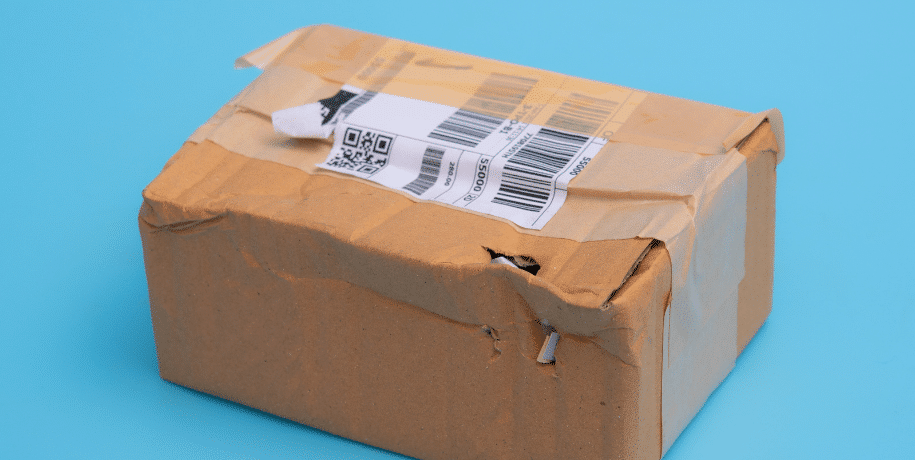
Bad: Seam label (wrinkles), strap-covered barcode, positioned on corner (scan problems), poor printing.
Imagine a clean square position, and a sloppy edge, the clean one will scan in seconds, the sloppy one will hold lines.
Common Carton Labeling Mistakes
- Wrinkled labels: This occurs because of poor application, it can be prevented by using good stock and pressing flat.
- Wrong size carton: Longer than 36–before packing.
- Seam marks: Folds-better keep flat.
- Tapes with barcodes: Tapes have seams that are perpendicular to the labels.
- Wrong PDF scaling: Print too small – print at 100%.
- Unapproved mixed SKUs: Separate or upload contents correctly.
- Lacked pallet labels: For pallets, insert four all–use templates.
- Poor quality of printing: Lost ink – change to thermal.
- No heavy-lift titles: Forgets safety–add depending on weight.
- Reuse of IDs: Photocopies are perplexing- print every time.
Remedies: Checklists inspections and 3PL experts such as ourselves take care of it.
Using a China Warehouse to Ensure Carton Label Compliance
Scattered sellers collaborate with China 3PLs such as BM Supply Chain to have their inventory prepped on the spot at FBA. We deal with correct labeling at consolidation, before ocean transportation, errors are caught.
Advantages: Low cost availability of labor in precise work, QC to rectify errors, 30 days free warehousing to make shipment plans without hurry. In the case of multi-supplier orders, we combine and label flawlessly, without rejection.
This upstream strategy – close to factories – will save on rework expenses after 2026.
Carton Labeling Checklist for Amazon FBA
- Check size of carton: [?]36x25x25 inches, [?]6x4x0.375.
- Weigh: less than 50 kg/lb; place lift labels on top of 30kg.
- Create Shipment ID/FBA box labels Seller Central.
- Print durable: 4×6 scannable barcode.
- Lay on the flat: No seams, edges or covers.
- Separate carrier labels and FBA labels.
- None of mixed SKUs unless described.
- In the case of pallets: 4 labels, sealed.
- Test scan and visibility.
- Post contents of the upload boxes to Seller Central.
Put this in your warehouse crew!
FAQs
- Will All Cartons require an FBA label? Yes–unique box ID for each.
- Is it possible to label two things on the same box? Yes, FBA and carrier, and separate and visible.
- What will be the case in case of improper labeling of cartons? Waits, rejections or charges- Amazon can impose charges on repairs.
- Does a prep center label cartons? Indeed, there are places such as China centers that are specialized in it.
- What is the size of Amazon FBA labels to be? No less than 3×3 inches; 4×6 suggested.
- Do FBA labels expire? No, but use fresh each shipment so as to prevent duplicates.
Conclusion
Adequate labeling of cartons will save your business those annoying FBA delays and will keep your business running smoothly. You make sure that you receive fast and the correct inventory by obeying the Amazon regulations: flat placement, a scannable barcode, and size restriction. In the view of increased self-sufficiency in 2026, a good checklist or a reliable 3PL partner will be essential. In BM Supply Chain, we simplify this by customising solutions all the way to the labelling with minimal concerns about sourcing, among others, to allow you to concentrate on growing. These practices will get you through your shipments..
SEO Title:
Carton Labeling Requirements for Amazon FBA: Complete Guide for 2026
Meta Description (155 characters max):
Learn Amazon FBA carton labeling requirements, including label placement, size rules, barcode compliance, and best practices to avoid warehouse rejections.
Excerpt (50–70 words):
Correct carton labeling is essential for smooth inbound shipments to Amazon FBA. This guide explains every requirement sellers must follow—from label placement and barcode rules to carton size limits, shipment ID labels, and common mistakes that cause rejections. Ideal for Amazon sellers preparing inventory or working with a 3PL in China.