Why will multi-channel ecommerce (Shopify, Amazon, Tik Tok, Walmart, Etsy) become the mainstream in brand building in 2026? And what makes fulfillment integration the ordeal of success or failure? By 2026, international ecommerce brands will cease to be dependent on single-channel orientation towards multi-channel focus to attract the divided consumer interest and stimulate a diversification of revenues. Such a strategy will increase sales and increase the complexity in the management of inventory, SKUs, prices, and cross-platform logistics. Integration of multi-channel fulfillment is the key: it consolidates operations, eliminates stockouts, delays, and mistakes that hamper profits. In its absence, brands will be prone to siloed operations that inhibit scaled operation. In simple terms, multi-channel ecommerce logistics helps the brands to address the different needs of the platforms and control costs and maximize customer satisfaction. Multi-channel fulfillment integration will provide synchronized inventory, speedy shipping, and smooth customer experience in Shopify, Amazon, Tik Tok, Walmart and Etsy.
Why Multi-Channel Fulfillment Matters in 2026
1. Consumer behavior is fragmented across platforms
Customers jump between platforms: TikTok is generating impulse purchases through viral content, Amazon is leading the search-based purchases due to its reliability, and Shopify provides brand loyalty because of personalized experiences. Those brands that do not take this into account miss the point – the multi-channel approaches have more contact points, yet lack coherent fulfilment, orders on the basis of such diverse behaviours result in a disjointed delivery.
2. Multi-channel increases sales but amplifies operational chaos
Distribution over platforms can increase income 20-50 times, but splatters inventory and orders. Lack of a central inventory system leads to duplication of efforts, the wrong stock quantity in the wrong place, and bottlenecks in the delivery of products that can turn a potentially lucrative venture into an expensive nightmare.
3. Each platform has different rules & requirements
Amazon requires strict preparation and timelines, TikTok is dedicated to ultra-fast logistics to enable viral spikes, Shopify is the platform with the ability to perform self-fulfillment fully, Walmart is committed to performance, such as the number of deliveries on time, and Etsy is concerned with handmade details. Travelling through them without the integration of ecommerce channels is punishable, such as the account suspension by Amazon or traffic jamming by Walmart.
4. Without integration, brands lose money
Unsynced stock may be oversold resulting in refunds and negative comments; lost sales opportunities at a stockout, wrong shipment blows out returns, and delays ruin ratings. Such problems may result in annual lost margins of 10-30% to brands in a competitive 2026 environment.
Understanding Multi-Channel Fulfillment Integration
1. Centralized inventory management
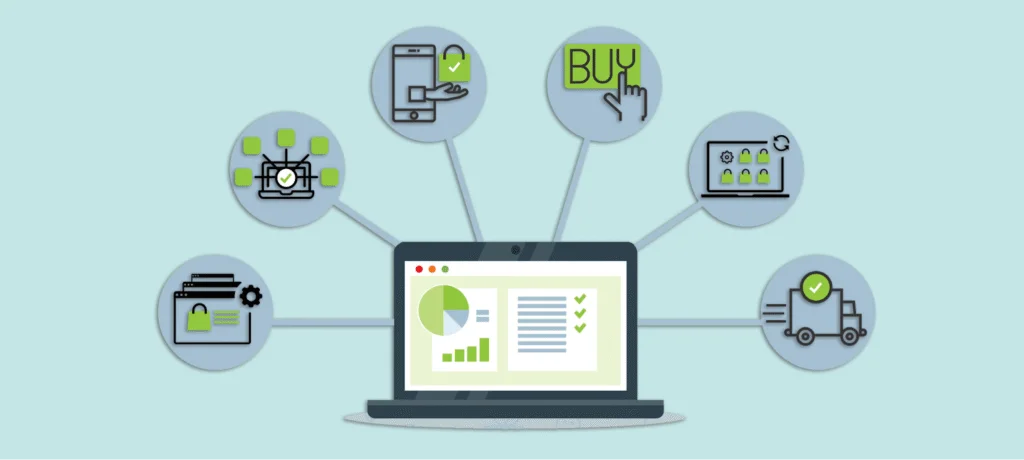
One pool of stock services all the channels and in real time to avoid over selling. In the case of DTC multi-channel fulfillment, this would imply having a single WMS (warehouse management system) that manages it all to minimize the number of mistakes and allow them to make accurate predictions.
2. Automatic order routing
Orders in any platform will initiate automatic picking and packing by rule (such as giving priority to Prime-eligible items). This simplifies the integration process of Shopify Amazon TikTok, thus making it efficient without the need to intervene.
3. Real-time syncing
Real-time information in all APIs ensures that the inventory, orders, and tracking are synchronized to prevent data malalignment, resulting in delays or wrong delivery. This is very important in China 3PL multi-channel fulfillment arrangements so as to reach the world.
4. Unified analytics dashboard
One perspective is the aggregate channel performance in terms of sales velocity, turnover rate, responsiveness in fulfillment so that brands are able to streamline strategies. This understanding transforms data into actions, such as redistributing inventory to platforms that are performing well.
Platform-by-Platform Integration Overview
Shopify Integration
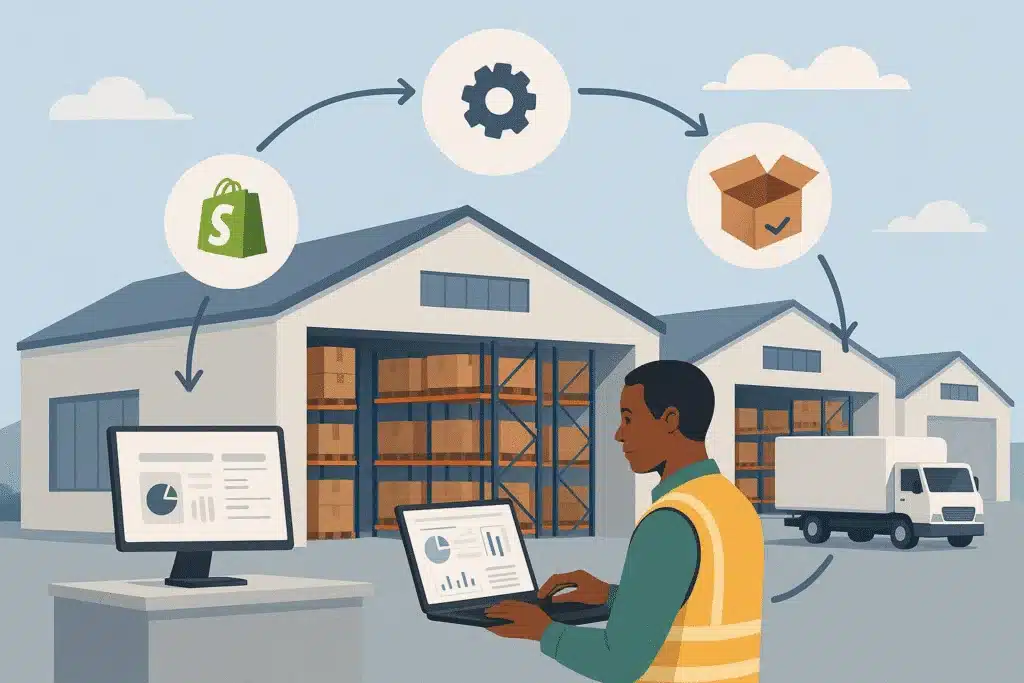
The API of Shopify is not obstructive to push: an order is received, this is sent to your WMS, where it is picked, and an automatic update is sent back to tracking. It helps to build loyalty through ideal packaging, bundle kitting, and UGC inserts; it is suitable with DTC brands, as the customer experience is a priority. As consultants, we have seen the use of this to do personalized unboxings, which improve the rate of returning.
Amazon Integration
Three models prevail: FBM (Fulfilled by Merchant) is appropriate with light, low-priced products being shipped out of warehouses in China, bypassing the FBA fees and having to rely on trusted carriers. SFP (Seller Fulfilled Prime) requires 1-2 day delivery, which is not an easy task because the metrics are very strict only large volume operations are eligible with US hubs. FBA Replenishment is sold in China (prepared and labeled and bundled to Amazon specifications) and shipped to FBA centers. The compliance with the prep is important, and the lack of compliance leads to rejections and additional expenses.
TikTok Shop Integration
The highly viral nature of TikTok business implies that its sales rely on impulse purchases, and prompt delivery becomes essential, as otherwise, the transaction will be counted as a failure and to be fined. Light products are doing well due to China-based shipping that manages the viral surge through flexible staffing. Orders are also synced automatically to WMS and lightweight viral items are shipped through economy lines without delays.
Walmart Integration
The quality of metrics at Walmart is more stringent than in Amazon- late shipments kill visibility. In the case of the US-heavy traffic, the DDP (delivered duty paid) in China reduces the costs and meets timelines. The viability will depend on strong APIs connecting to WMS to auto-fulfill without interruption of performance that hinders listings.
Etsy Integration
The handmade nature of Etsy implies a variety of SKUs such as jewelry that can weigh little, and China warehouses can save a lot as compared to overseas ones. Integration is glamorous with customization: file attachments, notes and individual packaging. The capability of a good 3PL to manage such increases brand differentiation without exaggerating costs.
How Multi-Channel Fulfillment Works (Step-by-Step Process)
1. Inventory receiving & SKU standardization
The inbound inventory brings the standardization of SKUs across channels that combine variants to reduce errors, which is necessary in preventing duplicates in logistics of multi-channel ecommerce.
2. Multi-channel inventory sync
Connect APIs of Shopify, Amazon, Tik Tok, Etsy and Walmart to a single WMS and update stock levels every few minutes to be accurate.
3. Order processing automation
The orders received are generated into pick lists with priorities: 1day shipping for urgent, Prime for Amazon, SLA-compliant for Tik Tok – simplifying order automation.
4. Picking & packing
Channel-specific SOPs are applicable: the rules of bundling at Amazon vs. the custom inserts at Etsy, which require compliance but no rework.
5. Shipping-channel assignment
Allocation by rule-like assigning Tik Tok lights, Walmart special lines, Prime express, by DDP.
6. Tracking update automation
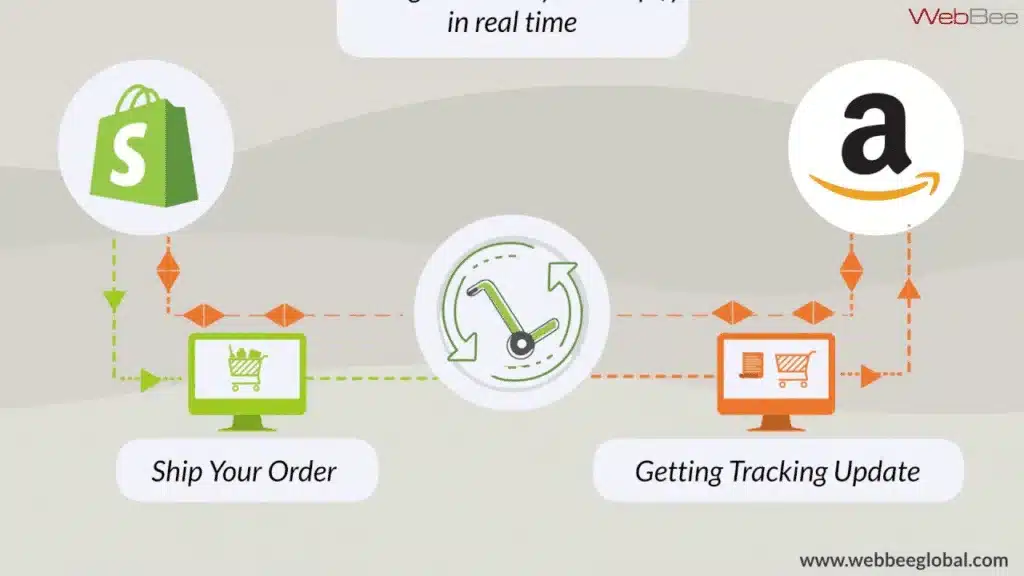
Platforms vary: the milestones required by Amazon are detailed, Shopify is fine with simple updates, Tik Tok wants real-time to be seen by users, APIs can work with these differences flawlessly.
7. Returns handling
Amazon sends orders to FBA facilities where they are very strict in terms of inspection; Shopify does not have restrictions on DTC. These are brought together through integration, which simplifies them.
Key Benefits of Multi-Channel Fulfillment Integration
1. Avoid overselling
Synced stock avoids conflicts and maintains trust as well as prevents refunds.
2. Faster shipping and higher performance score
Exceeds platform SLAs, which enhances Amazon/Walmart standings, and Tik Tok exposure.
3. Centralized operations reduce labor cost
No multi-tasking of dashboards- automation reduces hours of manual work by 40-60%.
4. Better forecasting and scaling
Cross-channel data helps to refine predictions, making it safe to expand.
5. Improved CX
Regular supply, reduced mistakes, and excellent monitoring increase satisfaction at every touchpoint.
Common Multi-Channel Fulfillment Challenges
1. SKU duplication across platforms
Incompatible variants, resulting in havoc in inventory- inconsistency in the early stage is prudent.
2. Tracking information mismatch
Formats are different; incompatible updates perplex customers- adopt API translators.
3. Handling marketplaces with unique rules
Orders defect rate (ODR) of Amazon and dispatch windows of Tik Tok require individual compliance.
4. Multiple shipping requirements
Express, small packets, special lines, DDP It makes it more complicated, test routes often.
5. Returns complexity
The gap between Amazon and Shopify lies in the automation and the manual unified systems.
Real-World Cases
Case 1 — A DTC brand selling on Shopify + Amazon
Issue: Stock was not synchronized resulting in 15 percent oversells and delays. Measures: Introduced centralized inventory synchronisation through WMS API connections. Findings: Stockouts, on-time delivery (98), and increased quarterly sales (25).
Case 2 — A TikTok viral brand expanding to Shopify & Walmart
Issue: Channel bottlenecks in fulfillment were caused by order spikes. Measures: Viral item route priority routing. Outcomes: Processing time went down by 48 to 24 hours processing 3x amount of work without additional staff and this resulted in a savings of 40k penalty in Q4.
Case 3 — An Etsy jewelry brand integrating with a China 3PL
Issue: SKU diversity created 8% error in picking and excessive overseas expenses. Standardized SKUs and added custom packaging SOPs. Findings: The increase in accuracy was 92 to 99.6, the reviews were enhanced by the upgrade of the packaging, reduced returns by 12 percent, and reduced costs by 20 percent.
Best Practices for Multi-Channel Fulfillment
1. Use unified SKU naming across platforms
Prepend channel codes to prevent repetitions, making sync easier.
2. Apply channel-specific SOPs
Individual packing of Amazon versus personalization of Etsy.
3. Test multiple shipping channels quarterly
A/B testing to get the optimal cost-speed ratio.
4. Implement automated routing rules
Priorities placed by platform SLAs.
5. Set daily cut-off times
Match carrier pickups to fulfil same-day.
6. Monitor KPIs across all channels
ODR track (goal 95), inventory accuracy (goal 99%), processing time (goal less than 24 hours), and late shipment rate (goal less than 2%).
How to Choose the Right Multi-Channel Fulfillment Partner
1. Must have Shopify / Amazon / TikTok / Walmart / Etsy API Integration
Complete compatibility is guaranteed to have a smooth flow of data.
2. Must offer multi-channel inventory sync
Real time updates to avoid discrepancies.
3. Must support diverse packaging needs
Kitting to DTC-appeal branding.
4. Must have strong shipping network
International flexible route carriers.
5. Must provide channel-specific SLAs
Assurances to fit in platform regulations.
6. Must be able to scale during viral spikes
Elastic capacity to TikTok-led spikes.
Conclusion: Multi-Channel Fulfillment Is the Future of Ecommerce Growth
Multi-channel is not a trend, but it is the 2026 mainstream of ecommerce. Incorporated fulfillment brands and limits the chooses, integrating operations to make them effective. Planning to expand on Shopify, Amazon, Tik Tok, Walmart, and Etsy: invest in unified multi-channel fulfillment at the beginning of the process, automation will always be faster than humans.