
What is the need of quality control (QC) being the most ignored yet the most important success factor in ecommerce fulfillment? QC is essential as it reduces returns by eliminating defects before they occur, increases customer satisfaction rates with consistent customer deliveries and reduces operational expenses by preventing rework and refunds which can reduce brands costs by 10-20 percent in hidden costs. In the case of the DTC, Shopify, Amazon, or Tik Tok brands, the bottlenecks of the growth are often the quality gaps instead of the budgets on ads or product concepts; one batch of bad shipments can crash the ratings and demolish the trust during the night. QC provides an additional service in China-based fulfillment because it can use the closeness to factory to conduct cost-efficient inspections and repairs, which makes it a giant in cross-border operations. The pillar of ecommerce fulfillment is quality control- this helps to protect margins, avoid returns as well as making sure that each and every customer receives the product he or she expects.
Why Quality Control Matters in Ecommerce Fulfillment
1. Direct impact on customer satisfaction & CX
Broken deliveries, incorrect SKUs, or low quality triggers negative feedbacks that go viral on such platforms as Tik Tok or Amazon. Within our case at BM Supply Chain, a one-low cascade rating will reduce repeat rates by 15-25; effective QC in ecommerce fulfillment will gain loyalty as it provides consistency and converts one-time purchaser into a repeat customer.
2. Reduces return rates
QC concerns are the most expensive return drivers 20-30% of the apparel or beauty products returned because of defects. This can be reduced to less than 10% with checks across the entire ecommerce fulfillment experience, which saves the brands on reverse logistics and stock-out costs, which can run as high as $10-20 per item.
3. Saves operational cost
Labor and shipping costs increase 2-3 times per order with returns and re-ships; QC reduces it, and resources are used to grow. To Shopify sellers who may be operating DTC unboxings, this can be accepted as a shift of the budget to marketing- enables actionable tip to track QC-related savings at the end of every month and to justify investments.
4. Ensures brand consistency
Poor quality undermines brand loyalty, particularly in multi-SKU lines of Etsy or Walmart. QC is strict, and all the packages are according to your promise- key with DTC where experience is more important than price.
5. Critical for multi-channel operations
Amazon requires the FBA-compliant labeling, Tik Tok requires the viral-speed accuracy, Walmart requires monitoring the defects, and Shopify prefers custom touches: the mismatch of QC results in suspensions.
The Three Pillars of QC in Fulfillment
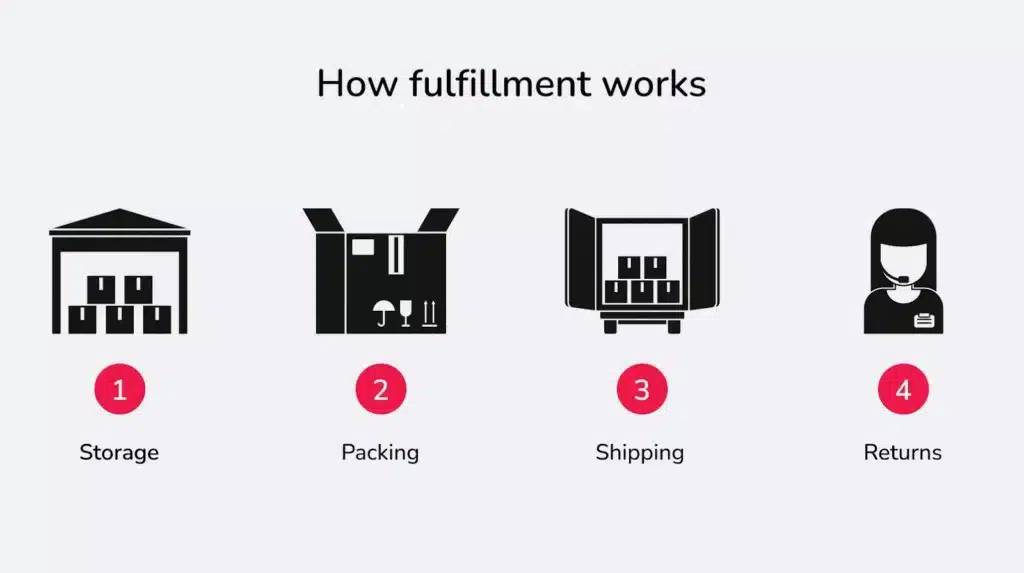
1. Inspection (Inbound QC)
The front line defence is inbound QC which examines incoming in order to identify problems before they spread. Any mistakes on the part of the supplier such as inaccurate SKUs, shortages or mix-ups are immediately identified and downstream chaos avoided. The damage checks determine the effects of transit, including rough handling dents, which minimize the number of complaints post sale by 20-30. Barcode and labeling QC is non-negotiable and Amazon FBA does not take in items that do not match the requirements and reprepreparment cost us a lot, we will scan each and every item to confirm. In case of high-value SKUs, such as electronics, beauty, or jewelry, they have protocols such as visual checks, seal checks and batch sampling. The functional testing is applicable to only a few categories, such as plugging in, or swatch-testing, cosmetics, to verify that it works; in China fulfillment QC this proximity with suppliers means that the fix can be done instantly.
2. Storage QC
Storing is not something inert—QC is continuous. Proper bin placement through WMS ensures that there is no confusion, particularly in high-SKU settings where a lost beauty option will hold orders. Perishables such as skincare need to be maintained at temperature/humidity control: 15-25o C/40-60o RH to prevent spoilage. FIFO/FEFO policies promote the shipment of oldest/first-expiring inventory that is essential when dealing with seasonal or dated products. Degradation prevention includes dust covers, anti-static bins and pressure-free stacking- warehouse QC workflow consists of daily patrol. Cycle counts (5-10% per week) in the audit of inventory accuracy identify discrepancies at an early stage; otherwise, the residual discrepancies translate into oversells and lost confidence.
3. Packing QC
Before shipment, QC is used to close the deal. Picking accuracy is based on dual-scan verification, and it reduces 3 to 0.1% errors, which Tik Tok needs to fulfill its orders within a time constraint. Packaging material QC compares packages to weight/size/fragility- oversized mailers increase mailing expenses. Brand experience QC makes sure that the inserts, stickers, or kits are unboxed to the standards of DTC. In the case of custom unboxing, aesthetics such as tissue placement are checked. End sealing and labeling QC differs Tik Tok prefers fast visuals, Amazon requires FBA codes, Shopify permits branding – this will cause returns; checklists will achieve 99% compliance.
How QC Connects to the Full Fulfillment Workflow

1. Reduces re-picking & re-packing labor cost
Solid QC reduces rework – 1-2 hours of work saved on each bad order at the beginning; add it to WMS as an automated flag.
2. Avoids wrong-item shipments
The most expensive mistake in fulfillment- multi-checks by QC helps block 90 percent of these; in the case of DTC it helps to protect the margins of high-priced packages.
3. Improves forecasting accuracy
QC will help get the inventory accurate and have accurate restocks made, prevent overbuys by 15-20; connect QC data to sales analytics to make better predictions.
4. Strengthens supply chain transparency
QC logs show the supplier trends, and negotiation of more favorable terms can be made- brands acquire power in cross-border QC inspection.
5. Boosts review ratings & CX
Perfect deliveries increase the rating by 0.5-1 star on average; in case of Tik Tok/ Shopify/Amazon, that is the organizing traffic, track the feedback loops of the post-QC.
Quality Control Standards in China-Based Fulfillment
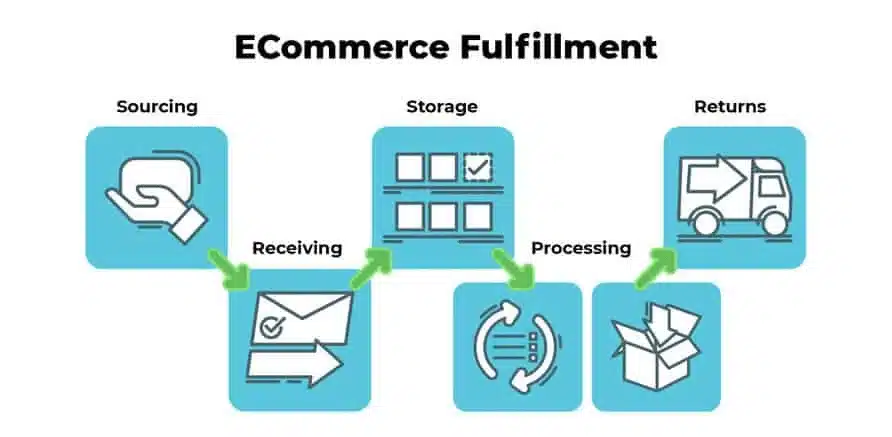
1. Close proximity to factories
On-site returns can be repurposed in weeks and even Western hubs saved 30-50 percent on shipping-wise; a perfect fit with iterative products in DTC.
2. Lower labor cost allows deeper QC checks
It is possible to conduct detailed inspections: sampling 20-50 percent of batches: this level is equivalent to $1-2/unit and $5-10 West; subtle defects are identified.
3. More flexible kitting & custom packaging QC
Holiday packages are packaged and QC at a low cost- so as to support beauty/jewelry bundles with layered checks included.
4. Better rework capability
On-site repairs (cleaning or repacking) recover 70-80% of returns- China fulfillment QC recycles waste into a sale.
5. Real-time photo/video QC reporting
Brands respond to inspections remotely through apps- improving trust; establish alerts of high risk SKUs.
Common QC Issues and How to Prevent Them
1. Wrong SKU sent
Prevent with barcode requirements and dual-check-up–gets down to nearly zero in smooth operations.
2. Damaged items due to poor packaging
Change to drop-tested materials- perform drop tests every three months.
3. Cosmetic quality defects
These are captured by inbound visual grids, which are train teams on brand tolerances.
4. Expired or outdated SKUs
Apply FIFO/FEFO through WMS- automatize approaching date warning.
5. Labeling errors
FBA in particular–make use of template scanners; pre-audit 100 percent of stock that is bound to Amazon.
Real-World Case Studies
Case 1 — A beauty brand reducing return rate from 22% → 9%
Issue: Supplier mix-ups were the cause of high defects and returns soared. Measures: Introduced inbound QC and sampling and functional tests. Findings: The savings of 13% in processing (saving 15k monthly) were achieved.
Case 2 — A gadget brand decreasing wrong-item shipments by 95%
Issue: 4% errors were experienced at peaks due to multi-SKU picks. Interventions: WMS and Dual-scan picking. Findings: The number of mistakes decreased to 0.2% and on-time rates increased to 98% and reviewed by 0.6 stars.
Case 3 — A jewelry brand improving customer ratings
Issue: The damage on the packaging aggravated unboxings. Measures: Packing: Improved packing with custom-fits and seals. Findings: Ratings increased by 4.1 to 4.7, UGC shares 35 up.
Best Practices for Implementing QC in Fulfillment
1. Create clear QC SOPs
Step-by-step instructions- distribute and train to the same end.
2. Use technology for scanning & tracking
Handheld scanners and WMS connectivity- seek 100 percent digital logs.
3. Train warehouse teams for multi-SKU accuracy
Role-play scenarios Weekly sessions on high-risk items.
4. Perform weekly cycle counts
Sample 10% inventory- same day correct discrepancies.
5. Build packaging guidelines
Platform checklists-specific platform-specific checklist-test of transit resilience.
6. Communicate QC expectations with suppliers
Report upstream- enhance the quality of incoming.
7. Monitor QC KPIs
Picking accuracy (>99%), return analysis (by reason), damage rate (<1%), inspection time (<5 min/unit) – dashboard these to trend.
How to Choose a Fulfillment Partner With Strong QC
1. QC reports available
Photo/video evidence and statistics.
2. Warehouse audit transparency
Visit/ virtual tours- check on organized zones.
3. Incoming QC capabilities
Specific stations where the tools are used to test.
4. Packaging inspection ability
Special arrangements with QC stations.
5. Experience with high-SKU brands
Tried in the beauty/fashion department due to diversity.
6. Ability to handle refurbishing & rework
In-house repairs to recover maximally.
Conclusion: QC Is the Foundation of Scalable Ecommerce Fulfillment
QC does not just exist in warehouses, but it is the driver behind ecommerce efficiencies, both in containment and in generating satisfaction and rising to growth. Investing in end-to-end quality control is the most affordable method of safeguarding profit and enhancing customer trust in case you want to scale in 2026.