Selecting the inappropriate 3PL partner may bring an online shop to its knees– imagine skyrocketing returns due to failed orders, money locked up in sluggish delivery service, or even loss of customers due to one too many missing deliveries. I have watched brands spend thousands fixing the things that went wrong due to ignoring the red flags at the beginning. The main criteria of selecting a 3PL are reduced to the price transparency, impressively fast fulfillment, solid reliability, perfect technology compatibility, and actual scalability that expands with your business. One of the reasons why a 3PL partner is important to your business is that it must be made faster, cheaper, and more reliable rather than more complex.
Why Choosing the Right 3PL Partner Matters
Fulfillment Impacts Customer Reviews, Retention & Brand Reputation
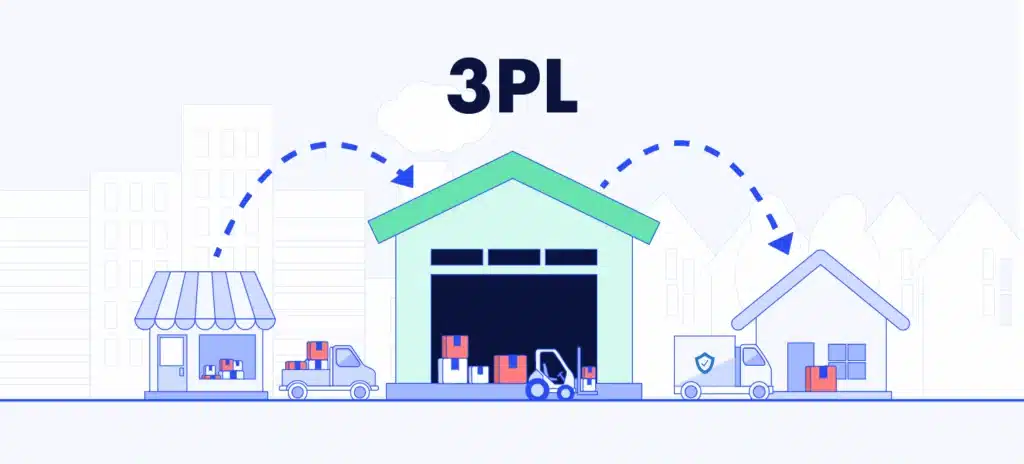
It is much more than mere delivery of packages when it comes to fulfillment as it is the face of your brand. One inaccurate or damaged order will sink reviews on a platform such as Shopify or Amazon, where having an accuracy of 99% on orders is not a luxury, but a necessity. Lack of ecommerce fulfillment creates more churn, and, according to research, 73 percent of customers will never come back after a negative delivery experience. As a logistics advisor, I assisted brands to come out of this, moving to quality fulfillment companies that valued accuracy, and transformed one-star complaints into five-star loyalty.
Logistics Inefficiency Is One of the Top Reasons DTC Brands Fail
Direct-to-consumer brands usually fail to understand how the logistics bottlenecks may sink them. Inefficiencies such as slow processing or expensive shipping costs consume margins and statistics show that three-quarters of DTC brands fail between 10M and 50M revenue because of operational hurdles, most of which are related to mishaps in fulfillment. In the absence of a strong 3PL provider, you will spend time managing warehouse business rather than growing a business hence cash flow crunch and lack of opportunities in a competitive market.
The 3PL You Choose Directly Affects Scalability and Cash Flow
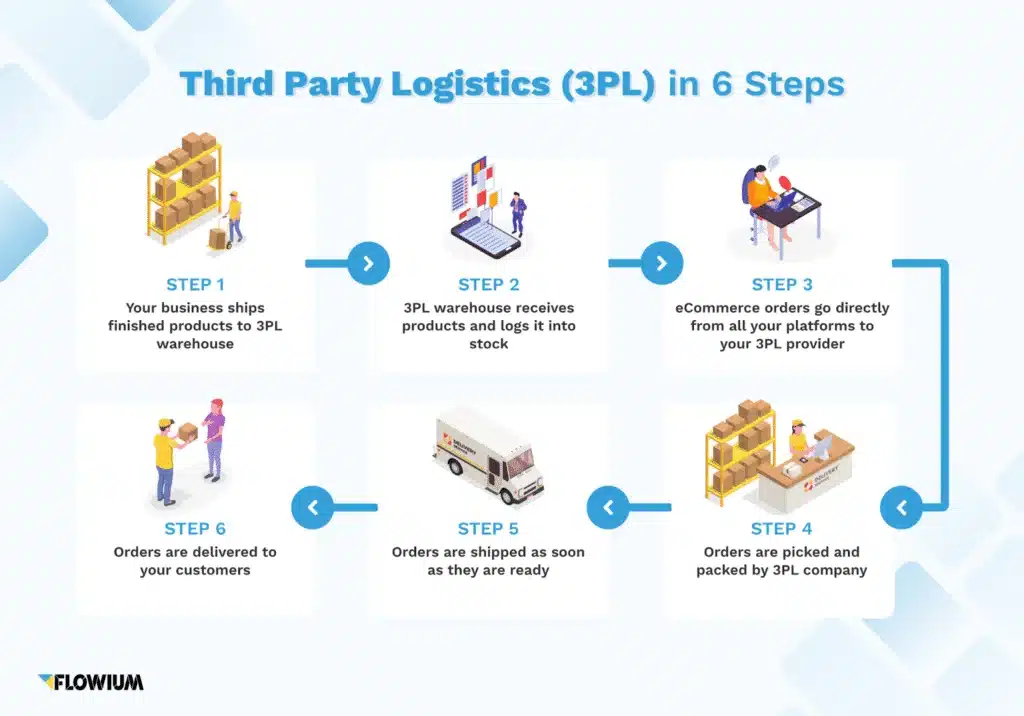
An outstanding 3PL fulfillment service grows as you do and manages order spikes without exponentially increasing the cost. This is the reason why 3PLs are being used by almost 95% of online retailers; they enhance cash flow because, unlike in-house warehousing, they provide pay-as-you-go models. I have recommended ecommerce customers in which the appropriate provider reduced logistics costs by 15-20 percent, which were directed to the reserve of inventory or marketing- the fundamental of sustainable growth.
Why Online Store Owners Must Think Long Term—Not Just the Next 30 Days
Short term thinking such as obtaining the low cost quote disregards the needs of the future. The logistics of your online store must facilitate the penetrations into new markets or products. In the long run, a poorly matched fulfillment supplier burns resources; we suggest one that has been proven to scale so that changing it later will be expensive.
Key Factors to Consider When Choosing a 3PL Partner
1. Fulfillment Speed & Order Accuracy
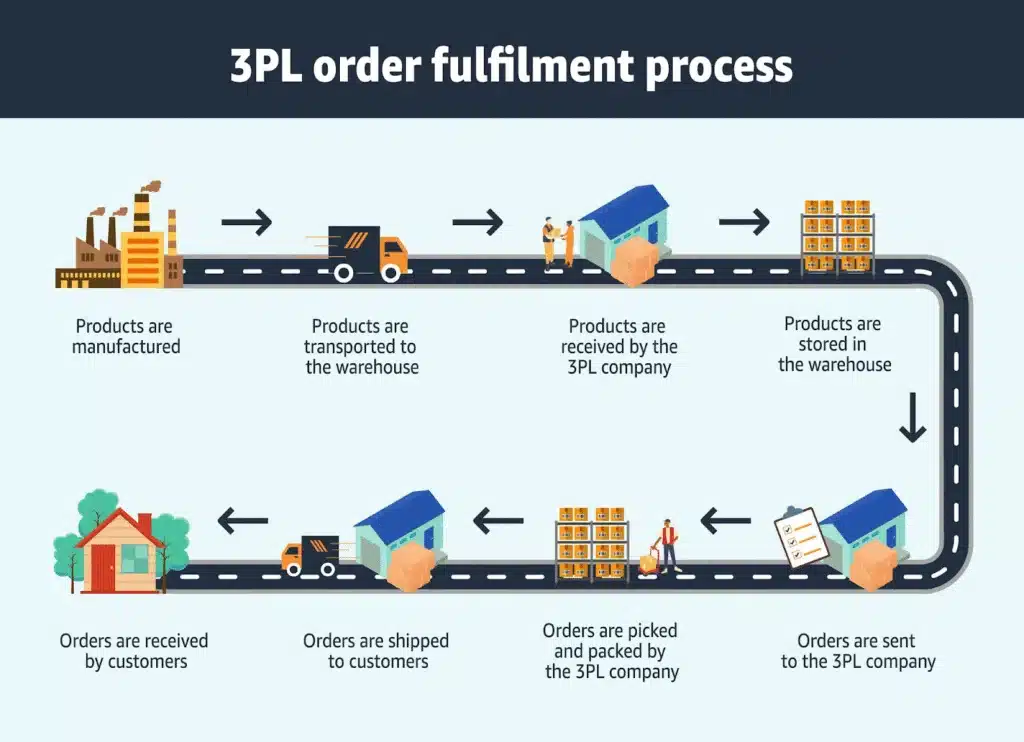
Speed No compromise- strive to achieve either same-day delivery or next day delivery to satisfy the customer 2-5 day deliveries. Why 99%+ accuracy? The smallest percentage of error can result in refunds, returns and mistrust. This immediately enhances customer experience and this minimizes complaints and boosts repeat purchases within your ecommerce fulfillment system.
2. Warehouse Location & Supply Chain Proximity
China 3PL vs domestic 3PL: China alternatives are bright in cases when the brand has its sources in the Asian region reducing transport time and costs by being close to manufacturers, think 40-60% savings in labor and warehousing. A close location reduces the occurrence of duplicity in shipping, which is best suited to international coverage. Multi-node fulfillment (warehouses in major markets) can be used when sales are heavy in the U.S., so that it can deliver goods at the same time their speed is faster within the last-mile; consider this option depending on your audience.
3. Technology & API Integration
Smooth technology is a requirement, investigate simple Shopify fulfillment, WooCommerce or Amazon integrations, through APIs. Inventory visibility in real time eliminates the possibility of oversells, and automated routing and tracking makes sure that the customer is in the know. Picking, reporting everything, all of it is automated by advanced WMS (Warehouse Management System) abilities, and it simplifies your order fulfillment service.
4. Pricing Structure & Transparency
Prefer pay per use models which increase with volume, as opposed to fixed fees which are painful in lean times. Monitors concealed fees in warehousing, pick-packing, labeling or FBA preparations. apples-to-apples Compare: It is transparent 3PL, which disaggregates costs and allows you to predict and run healthy margins.
5. Scalability & Peak-Season Readiness
Are they capable of increasing 20 to 500+ orders/day without hiccups? Peak ready implies elastic labor and ability to manage surges at Black Friday. I have witnessed how brands can flourish with 3PLs that can dissolve 70% growth led by ecommerce so that when there is a holiday there are no bottlenecks.
6. Global Shipping Capabilities
Different needs are accommodated by versatile services such as express, postal, air or sea shipments. DDP (Delivered Duty Paid) freight makes custom duty easier in all the cross-border sales and it has been performing well in the U.S, Europe or Australia. This improves the capability of your fulfillment provider to aid international growth.
7. Quality Control, Packaging & Value-Added Services
Strong QC checks will identify faults at the initial stages, and bespoke wrappings will create brand loyalty. Additional services include kitting, bundling, FBA prep compliance, which will ultimately be beneficial to Amazon sellers. Such services make a 3PL an equal partner.
8. Customer Support & Communication
Clear SLAs (Service Level Agreements) in terms of response time – preferably less than 24 hours. This is because a specialized manager resolves faster and problems are dealt with promptly before becoming overwhelmed.
Common Mistakes Online Sellers Make When Choosing a 3PL
Choosing the Cheapest Option Without Evaluating Reliability
The low bid strategy is counterproductive- poor service is disguised in the low bids resulting in errors and delays. According to one expert, the decisions made based on the cost only overlook the long-term effects such as a tarnished reputation.
Ignoring the Importance of Technology Integration
Omission of API checks leads to manual workarounds and error. In the absence of a smooth Shopify fulfillment, you will have to keep up with the old ways of doing things.
Not Considering Long-Term Scalability
Specialization on the existing requirements overlooking growth leads to switches being expensive in the future as a 3PL will not be able to support the spikes.
Using a Provider Without Understanding Their SLAs
Unclear SLAs create unfulfilled expectations- always ensure that guarantees are made on precision and speed.
Failing to Test With Trial Shipments
Entering without pilots is dangerous as problems can be found out when it is already too late; test operations determine actual performance.
Not Checking Real Customer Reviews or Case Studies
Ignoring feedback lacks warning signs; actual reviews show trustworthiness in practice.
How to Evaluate a 3PL’s Reliability
Ask About Their Fulfillment SLA
On-time rates Probe SLAs 99%+ on-time rates, as on-time rates are the measure of operational strength.
Examine Daily Cut-Off Times
Early cut-offs mean that it is shipped the same day; late ones are indications of inefficiency.
Review Error Rates & Customer Claims Processes
Reliability is evidenced by low error rate (less than 1) and easy claims handling.
Check Real Warehouse Photos or Videos
Modern facilities are not merely an assertion as confirmed by the visual evidence.
Understand Return Handling & Exceptions
Reverse logistics optimizes the returns losses.
Look at WMS Dashboards (If Available)
The demo access will provide a first-hand inventory and tracking capabilities.
Checklist: Questions to Ask Before Hiring a 3PL Partner
What Platforms Do You Support Via API?
Make sure that it is compatible with Shopify, WooCommerce, or Amazon.
How Fast Do You Process Orders?
Validate same/next-day delivery and cut-off.
Do You Offer Free Storage or Volume Discounts?
Find deals such as 30 days free storage to facilitate the flow of cash.
What Are Your Packaging and Labeling Fees?
Break even costs so as not to be caught up.
What Carriers and Shipping Methods Do You Use?
Confirm alternatives of global and express requirements.
What Are Your Inventory Accuracy and SLA Commitments?
Demand 99%+ guarantees.
How Do You Handle Peak Season or Spikes?
Ask about capacity scaling.
Do You Provide QC, Kitting, or Custom Packaging?
It does confirm value-added services.
Are There Hidden Fees I Should Know About?
Insist on full transparency.
Can I Visit the Warehouse or See Video Proof?
Trust is developed through visual verification.
When Should an Online Store Switch to a New 3PL?
Declining Order Accuracy
When mistakes are greater than one per cent. it is time–intermittent errors damage surveys.
Rising Storage or Unexpected Charges
Increasing unvalued fees are indicative of a bad fit.
Slow Shipping or Frequent Customer Complaints
Delays are a source of dissatisfaction; switch in case of unresolved delays.
Lack of Transparency in Inventory
There is no actual visibility that results in stockouts.
Insufficient Support or Communication
Delayed responses enhance problems.
Poor API Sync or System Errors
Technical faults interfere with the activities.
Conclusion: The Right 3PL Should Help You Scale, Not Slow You Down
The selection of appropriate 3PL provider will depend on the technology to enable smooth integration of the business, speed to make customers happy, cost transparency to enjoy healthy margins and stability to enable long-term business development. Since I started advising on ecommerce fulfillment, I could observe how these factors make struggling stores successful. Do not rush- compare several offers, conduct test shipments, and contrast SLAs with each other. Begin with auditing your existing configuration with respect to this guide; it is well-compensated in scalability and efficiency.