The next milestone that is a strategic choice of ecommerce brands to take in order to grow is to partner with a provider in the 3PL business, yet it may turn into an expensive nightmare because of miscommunication, improper selection, or lack of knowledge of the processes. Such errors would frequently lead to late deliveries that annoy customers, negative feedbacks damaging the reputation, soaring costs due to undervalued charges, and a loss of inventory that grabs capital. The majority of the failures of 3PLs are not caused by the provider, but rather by the expectations, improper communication, and the inadequate preparation.
Mistake #1 — Choosing a 3PL Based Only on Price
Why the Cheapest Option Often Leads to Errors
The decision to take the lowest-price bid may appear to be a good idea, yet more often than not, this would be at the expense of quality control or technology with the result being increased number of errors during picking and packing. In the case of BM Supply Chain, customers have moved off cheap 3PLs due to frequent confusion, and have recognized that low cost does not translate to quality in ecommerce fulfillment.
Hidden Fees That Appear Later (Storage, Returns, Labeling)
Low initial quotations conceal additional services such as long-term storage fees ( $0.50+ per sq ft after free time), returns handling (2-5 per item), or labeling options ( 0.10-0.30 per unit). These pile up, making a bargain to be a liability.
Why Low Fees ≠ Low Total Cost
The lowest pick-pack charge may disregard the total productivity – slow processing reduces SLAs and sales. Complete cost also entails opportunity losses, not only invoices.
What to Evaluate Instead (SLA, Accuracy, Technology)
Focus on providers of 99%+ rates, defined SLAs, and well-developed WMS to track the goods in real-time. China 3PLs tend to strike a balance between cost and technology, providing global vendors with better dealings.

Mistake #2 — Not Understanding the 3PL’s SLA (Service Level Agreement)
Daily Cut-Off Times
Lack of cut-offs, such as 4 PM to process the same-day orders, slows down the orders, and annoys the customers that need the goods delivered fast. Always check them to ensure they match with your promises.
Fulfillment Speed
SLAs are supposed to ensure 24-48 hour turnaround; the open ones will result in uneven performance particularly during peaks.
Error Handling & Claims Process
Understand how they cope with errors – immediate refunds or credits? Ineffective processes imply that you cover their slip expenses.
How Unclear SLAs Lead to Customer Complaints
Late shipments go out of control without quantifiable metrics, making problems such as order took forever go viral and ruin your ratings and sales.
Mistake #3 — Poor SKU Data & Inventory Mapping
Incorrect SKU Naming Causes Order Mismatches
Wrongly matched codes, such as BLUE-SHIRT-M in Shopify and SHIRT-BLUE-MED in WMS, will lead to incorrectly shipped items, exploding returns.
Duplicate SKUs Create Inventory Gaps
Duplicates drive up syncing resulting in phantom stock and oversells. At BM Supply Chain, a client that we had advised resolved this by doing an audit whereby they reduced errors by 40%.
Failure to Provide Dimensions/Weight Leads to Shipping Errors
Wrong data swells up charges (dimensional weight charges) or carrier rejection.
Best Practices for SKU Mapping
Make all naming standard across platforms, barcode, test mappings before launch, to ensure a smooth order fulfillment service.
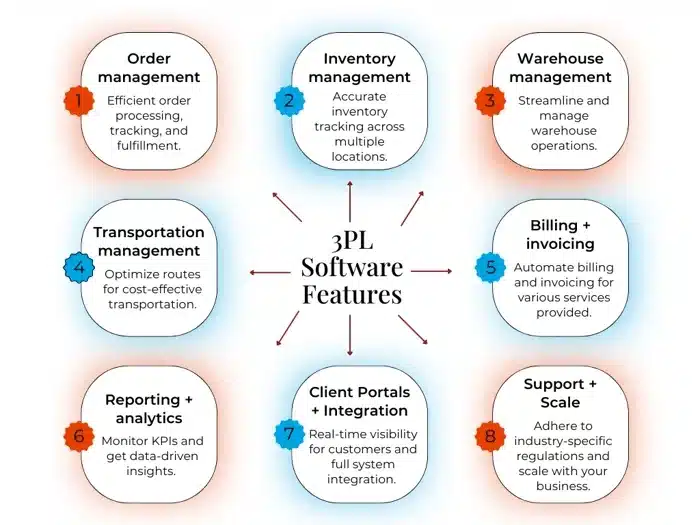
Mistake #4 — Not Integrating Platforms Properly
Importance of Shopify / WooCommerce / Amazon API Sync
API connects auto-syncing orders and inventory which eliminates manual errors, which is important to multi-channel sellers.
Manual Order Uploads Lead to Delays & Errors
CSV uploading takes time and is subject to typing mistakes, WMS integration is done automatically.
WMS Visibility Prevents Overselling
Checks in real-time prevent out-of-stock products sale, which is keeping faith.
Test Sync Before Peak Season
Pilots should be run to spy glitches to prevent scaling difficulties.
Mistake #5 — Ignoring Packaging Requirements
Brand’s Custom Packaging vs 3PL Standard Packaging
Your branded inserts may not fit into their defaults resulting in labels being sent out as generic, which blunts the identity.
Overpackaging Increases Shipping Cost
Unnecessary products increase weight, which increases costs- efficiency versus balance.
Underpackaging Increases Damage Risk
Slim Boxes result in breakages, claims, and refunds, particularly in cross-border.
How to Set Clear Packaging SOPs
Requirements of documents (e.g. bubble wrap of fragile ones) and check samples early.
Mistake #6 — No Forecasting or Inventory Planning
Overstock Leads to High Storage Costs
Excess fee money in cash and optimize (10-20/CBM/month); predict.
Understock Leads to Lost Sales
Stockouts lose income-buffers using sales data.
Seasonal Spikes Require Early Preparation
Pre-planning holidays; the non-planning strains 3PLs.
Forecasting Tools and Best Practices
Use trends based on Shopify analytics or 3PL; audit quarterly.
Mistake #7 — Not Checking the 3PL’s Shipping Options
Misaligned Expectations on Delivery Speed
Assuming all offer 2-day? Balance realities to correspond to promises.
Understanding Express, Postal, DDP Air, DDP Sea
Express fastness (15-30/kg), postal cheapness (3-8), DDP foretellability of duties.
Regional Delivery Performance Differences
U.S. express shines, EU sea saves bulk-tailor market.
How Wrong Line Selection Increases Cost
Choosing air for heavy items? Prices are skyrocketing, – optimize by weight/urgency.
Mistake #8 — Poor Communication With the 3PL
Unclear Instructions Cause Mislabeled Orders
The vague notes will result in erroneous labeling; give elaborate SOPs.
No Weekly Check-Ins → Unnoticed Issues
Problems are uncovered at an early stage by regular calls; they are left to rot by silence.
Importance of Sharing Product Changes
New variants? Notify to update systems.
How to Maintain Healthy Communication
Assign contacts, use shared dashboards, and schedule reviews.
Mistake #9 — Having No QC Process at the Warehouse
Seller Assumes Factory QC Is Enough
Transit damage is overlooked in factory checks, as compared to warehouse QC.
Defects → Bad Reviews & High Return Rates
Ship faulty? Returns hit 10-15%, harming metrics.
China 3PL Can Do Pre-Shipment Inspection
Reduce expenses with close-source checks.
Examples of QC Tasks (Barcode Check, Packaging Check, Function Test)
Scan barcodes, check seals, check functionality – avoid problems.
Mistake #10 — Not Reviewing Performance Metrics
Key Metrics: Accuracy Rate, SLA, Return Rate
Measures of importance: Accuracy rating, SLA, Return rate.
Why Tracking Performance Helps Reduce Cost
The relevance of Tracking Performance in Cost Reduction.
Assessing Monthly and Quarterly Reports
Review data; adjust as needed.
When to Consider Switching 3PL Providers
When metrics are not maintained, consider options.
Bonus: Mistake #11 — No Onboarding Checklist
Importance of a Structured Onboarding Process
Hurried start is the incidence of mistake; checklists guarantee flawless start.
Checklist Items (SKU Mapping, SOPs, Shipping Rules, API Test)
Mappings, documentation, code.
How Onboarding Sets the Tone for the Entire Partnership
Serious beginning creates confidence, preventing future traps.
Conclusion: Avoid These Mistakes to Build a Successful 3PL Partnership
Effective 3PL relationship depends on effective communication, successful selection, standardized operations and transparency of data – avoiding these pitfalls that are likely to occur makes the possible pitfalls just smooth sailing operations. In our eyes, at BM Supply Chain where we have already been through some of these hurdles, these errors are not only costly to evade but rather growth-driving. To really do something with it: Have elaborate SOPs, check data mappings, and audit SLAs first before signaling- it is the source of a partnership that grows with you.