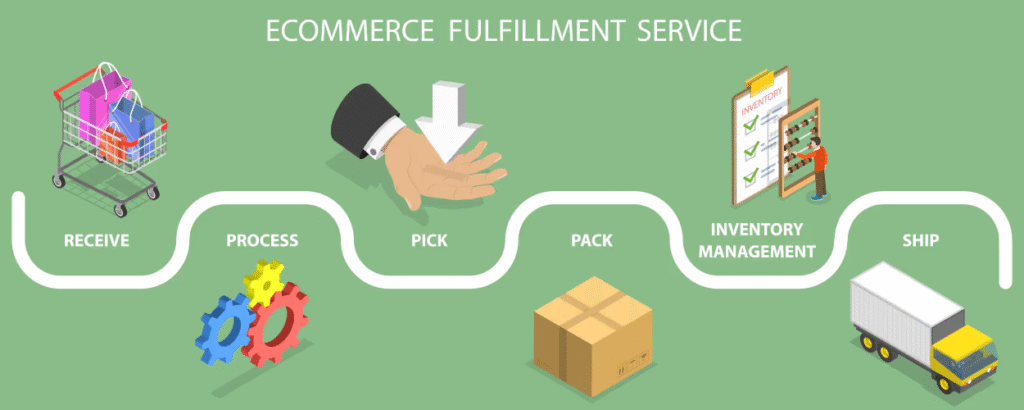
Ecommerce fulfillment is a foundation of all online brands operations: it determines the speed of delivery, customer experience, purchasing frequency, and scalability. With shoppers requiring speedy shipping services, pinpoint precision, real-time inventory tracking, and cross-platform synchronisation in the 2026 ecommerce, this is not a thing to get wrong. It is not only about shipping out orders, but it is a system in totality, inbound inventory and returns. The working heart of any order, including the reception of an inventory and the delivery of a package to the door of a customer, is ecommerce fulfillment.
Why Ecommerce Fulfillment Matters
1. Direct impact on customer experience
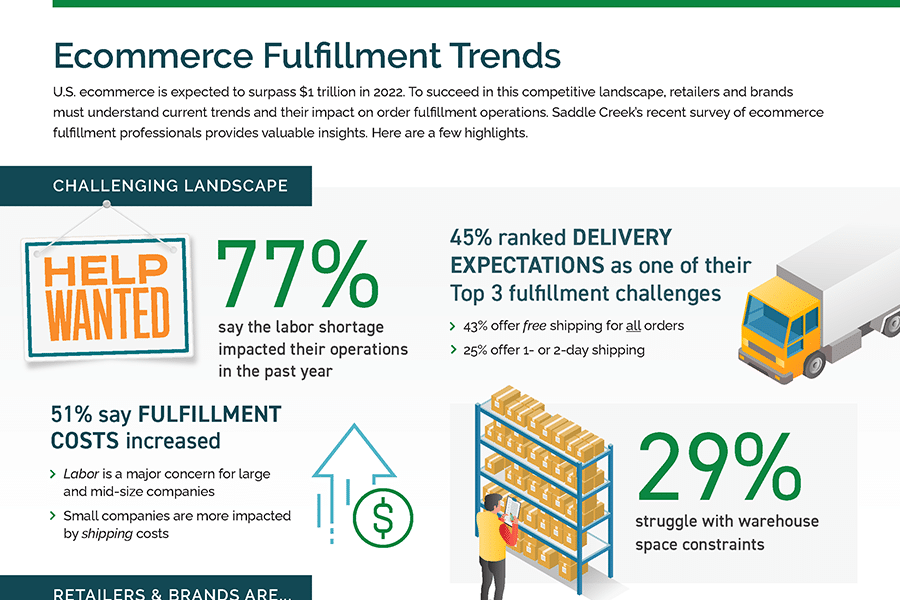
There is nothing like a delayed shipment, a damaged box or the appearance of the wrong item that kills trust. I managed supply chains in my years but I have witnessed the fact that the speed of transportation is directly related to satisfaction: the goal is to reach 2026, when 30% of consumers will insist on same-day delivery, based on current surveys by NielsenIQ. The rate of accuracy of more than 99 percent reduces returns and the low rate of damage (less than 1) creates loyalty. Get this wrong and you are dealing with negative reviews that will kill your conversions.
2. The heart of ecommerce operations
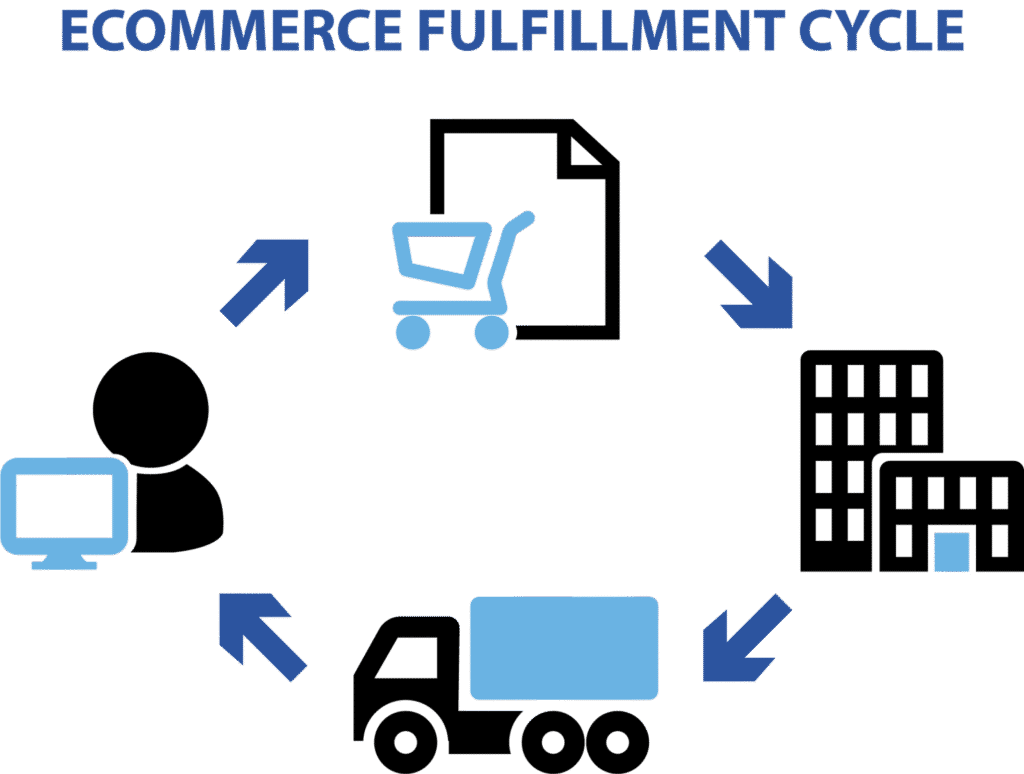
Fulfillment process cuts across all the chains: beginning with the inventory intake, continuing to the order Ecommerce Fulfillment, the outbound shipping and returning again to the after-sales support. It is the bond that ecommerce logistics is made up of. Any workflow that is not solid is stockout eating sales, and inefficiencies draining profits. In the case of brands working in such platforms as Shopify or Amazon, this chain guarantees the flow of orders between the cart and the door.
3. High expectations in 2026
Customers do not wait any longer. Information about OPLOG logistics trends report 2026 reveals that customer expectations are of a 48-hour processing as a standard with quick commerce driving 1-hour delivery in cities. Tik Tok virals have the potential to increase orders 10x during the night and peak periods such as Black Friday increase the pressure. Brands that cannot scale fulfillment fall apart under this I consulted on a case where a 20 percent revenue loss due to delays happened because of the poor prep.
Overview: The Full Ecommerce Fulfillment Workflow
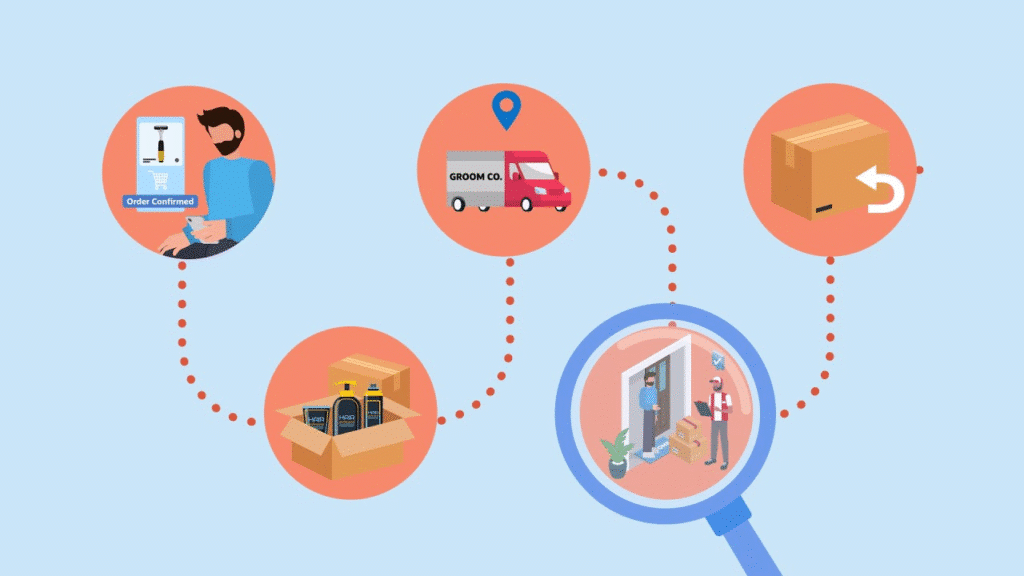
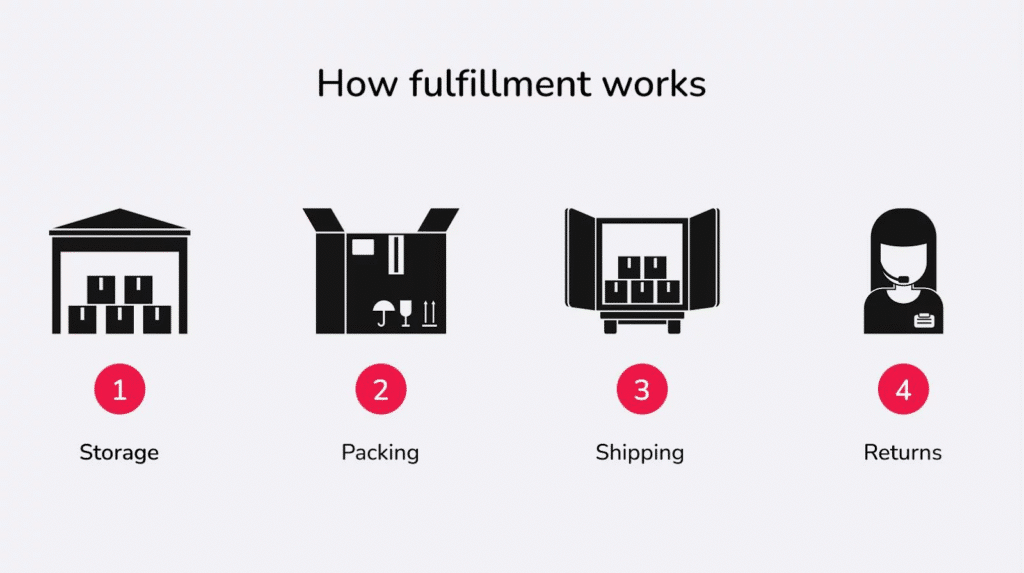
Imagine ecommerce fulfilment as a smoothly running machine: it starts with inbound receiving and inspection, continues with intelligent storage, channels inventory, orders, pick items efficiently, pack them in a secure way, ships them via optimal routes, monitors all miles, and returns are handled smoothly. It is not a linear process of fulfillment but rather a dynamic process that is driven by WMS (warehouse management systems) and real-time tweaks through APIs. We will break it down later, but first understand this summary; it is designed to be fast, precise and scalable when it comes to fulfilling with multiple channels.
Step 1 — Inbound Receiving & Inspection
1. ASN (Advance Shipping Notice)
ASN is your head-up call from suppliers- a technological heads-up call, an informational call, notifying you about what is going to arrive at which time and how much. Why bother? It reduces errors and prepares slots and staff, reduces receiving time by up to 50%. In my case with Chinese suppliers, lack of ASN will result in madness, such as an inaccurate number of various parts, which will stall the entire fulfillment process.
2. Quality check
After the goods have arrived, it gets down to business: check each unit on the ASN, examine external damage, mark defects. In case of high-value SKU such as electronics, we carry out more in-depth checks such as functionality checks where necessary. Damaged goods are quarantined as soon as possible so that they do not contaminate inventory. This measure keeps inventory on course in ecommerce, on the first day.
3. Barcode & labeling
Equivalent all this. Use distinctive barcodes or RFID tags on each SKU, which are scannable and must have information attached to them, such as a batch number. This increases subsequent accuracy in picking and tracking. In its absence, you will be tempting confusion that involves time and money during fulfillment.
Step 2 — Putaway & Smart Storage
1. Bin / Rack / Pallet storage
Placing locations through product characteristics: little things in the bins to reach easily, middle-size on the racks, and large items on pallets. Prime spots are located by fast-movers close to the packing areas in order to reduce the time of walking. In the case of delicate items, cushioning areas are required. It is not coincidental but planned to make ecommerce logistics efficient.
2. WMS placement rules
An effective WMS optimizes routes: the high-turnover SKUs are put in a golden zone (above waste at the waist) and algorithms evaluate travelling in order to minimize distances. I have also installed systems that cut put away time by 30 per cent and the process of fulfillment is humming.
3. Real-time stock visibility
After putaway, inventory is updated immediately on your dashboard. With the help of sellers, levels are checked at any time, avoiding out-of-stocks. Multi-channel ops is gold with this visibility and eliminates oversells on both Shopify and Tik Tok.
Step 3 — Inventory Sync & Multi-Channel Integration
1. Integration with Shopify, Amazon, TikTok, WooCommerce, Etsy
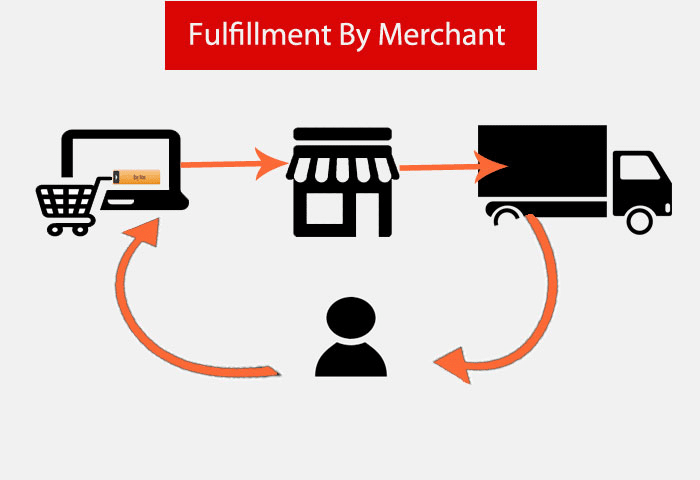
Auto pulls: Hook your WMS on these platforms through APIs. Amazon stock is updated every few minutes therefore an Amazon sale automatically updates Tik Tok inventory. This multi-channel fulfilment maintains everything in line.
2. Real-time order push
New order? It causes instant notifications to the warehouse. There is no batch waiting – processing begins immediately, shaving off delays. This automation is essential in fulfillment work in 2026, according to the trends of AI forecasted by Forbes.
3. Avoiding overselling
Missing of syncs causes nightmares: stock that was promised but is gone. This is bridged by APIs, which update channels on the fly. In the case of expanding brands, this avoids loss of revenue and loss of confidence.
Step 4 — Order Processing
1. Auto-generated pick lists
System will give lists sorted by location, sorting by deadline. This simplifies the following stages of ecommerce order processing.
2. SKU verification
The scanners will check every item with the list and indicate discrepancies at an early stage. It is an easy technical victory that has an accuracy of 99 percent.
3. Priority handling
Rush orders take precedence; pre-sales are marked as being picked in future. Reason such as this treats mountains like soda fountains.
Step 5 — Picking
1. Wave picking / Batch picking / Zone picking
Shipment groupings by activating big warehouse effectiveness. Combines similar orders in batches to save trips- good with high volume. Zone allocates employees to zones, accelerating multi-SKU pickings. Depending on your scale, select large ops as zones, mid-sized as batches.
2. Accuracy is everything
Targeting 99%+ -reships, refunds, and painful reviews are all errors. It is possible to have expenses reaching up to $50 per error; the prevention through training and technology is a major consideration in the fulfillment process.
Step 6 — Packing
1. Packaging materials
Match to product: fragile bubble wrap, apparel poly bags, and bulk cartons. Factor weight in order to avoid overage charges.
2. Brand experience
Go on thank-you cards, tape with a brand, lean on eco-materials- 2026 trends at Ware-Pak will improve loyalty by 20%.
3. Kitting & Bundling
Compile packages in real time: vacation packages or cross-sells. This value is created without any additional inventory headaches.
Step 7 — Shipping
1. Shipping methods
The choice is very wide: Express such as DHL in case of speed, postal in case of economy, special lines in case of cross-border, DDP air/sea in case of bulk. Tailor to needs.
2. Shipping rules
Lightweight? Go postal. Heavy? Freight. Compare prices – express could cost 10-20 domestic, but sea will cost a little less to international. In the case of markets, such as EU vs. US, choose channels that have the best timelines.
3. Cut-off time
Establish a daily shipment deadline, e.g. 2 PM to ensure shipment on the same day. Lose it and you are playing catch-up.
Step 8 — Tracking Updates & Notifications
1. Tracking sync
Push notifications to platforms will be automatic- Shopify will show as in transit immediately.
2. Customer notification
where’s my order? is cut in an email or text. queries by 40%, per my client data.
3. Carrier-level visibility
Progress is logged in each scan, which provides complete transparency.
Step 9 — Returns Handling
1. Return receiving
Record arrivals, note such reasons as the wrong size.
2. Item inspection
Assess for resale: clean? Restock. Damaged? Refurb or scrap.
3. Repackaging / relabeling
Repair and label useful materials, modify stock. This completes the cycle effectively.
What Makes a Fulfillment Process Successful?
1. Speed
Reduced complaints = quicker processing- less than 24 hours pick and pack.
2. Accuracy
Higher rates are a savings on corrections; track using KPIs.
3. Scalability
Bend upwards with additional employees or robotization.
4. Technology-driven workflow
WMS and AI predict demand, according to 3PLBridge projections of 2026.
5. Cost efficiency
Streamline the packaging process and reduce wastes, negotiate carrier costs on a quarterly basis.
Real-World Scenarios
Case 1 — A fashion brand dealing with size variations
One customer normalized labels and inspections with 200+ SKUs and 15 percent returns on sizing. Outcome: reduced cut errors by a quarter, accelerated restocks, increasing their efficiency in their fulfillment process.
Case 2 — A gadget brand scaling after TikTok viral moment
Orders surged 800% post-viral. We scaled the process of batch picking and multi-channel synchronization, managing without inventory issues out -of-stock -important in scalable fulfillment.
Case 3 — A beauty brand with strict packaging requirements
They had to brand with custom inserts and that is why they have embraced kitting SOPs. This was retained experience during scaling, which is in line with the eco-trends.
Common Fulfillment Mistakes to Avoid
1. No SKU standardization
Results in picking anarchy and over-selling.
2. Poor packaging SOPs
Destructive causes, increasing returns.
3. Using only one shipping channel
Restricts choices, overblows expenses.
4. Ignoring forecasting
Results in over/under stock.
5. Not tracking key metrics (SLA)
Misses improvement spots.
Best Practices to Improve Your Fulfillment Process
1. Automate order sync & inventory updates
Make applications using APIs to enable multi-channel fulfilment.
2. Use clear naming rules for SKUs
Brand-category-size like easy-ID.
3. Set cut-off times
Ensures timely ships.
4. Review carrier performance quarterly
Switch underperformers.
5. Invest in protective & branded packaging
Trades off between safety and marketing.
6. Monitor KPIs:accuracy rate, processing time, cost per order
Weekly reviews drive tweaks.
Conclusion:Fulfillment Is a Growth Engine
A rock-solid fulfillment procedure drives brand development- it is the basis of processing additional orders, new markets and satisfying customers. Trying to scale in 2026, then optimize early fulfillment- it enhances conversion, customer satisfaction and operational efficiency. Collaborate with experts such as BM Supply Chain to have custom workflows that will release your energy to concentrate on growth.