
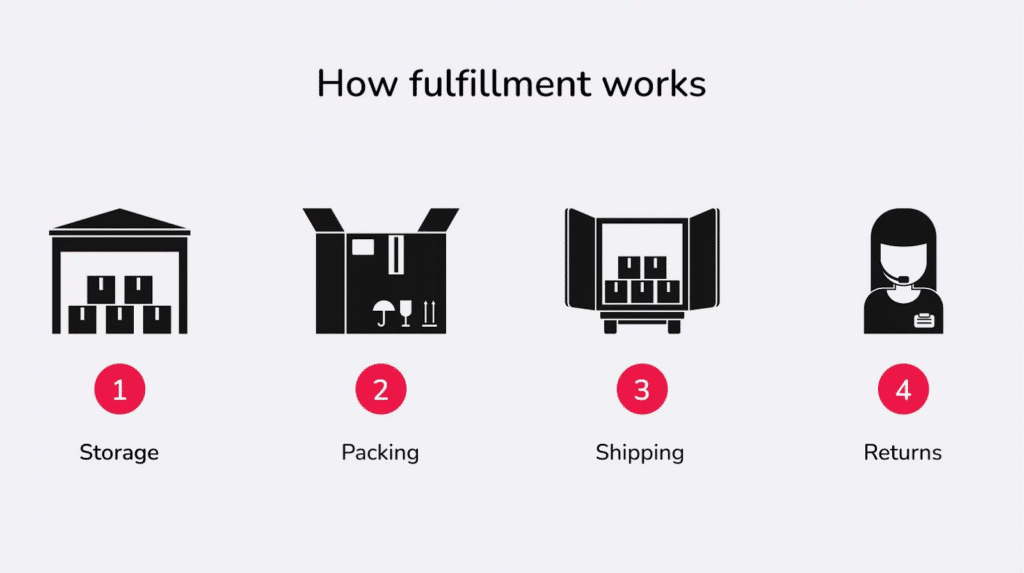
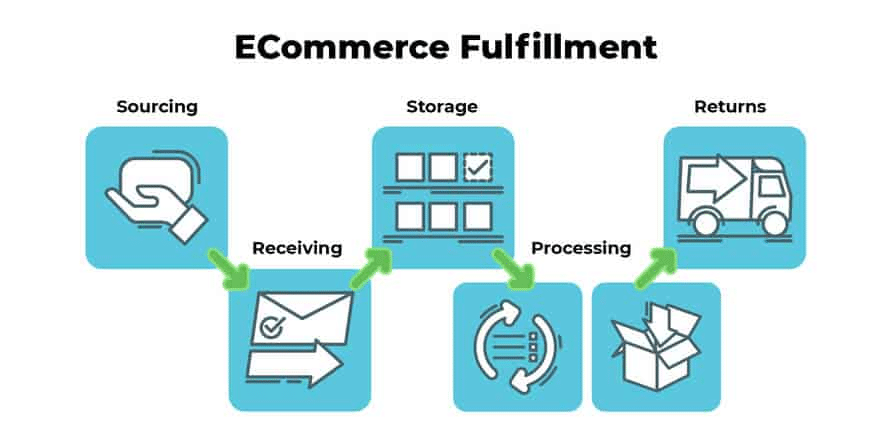
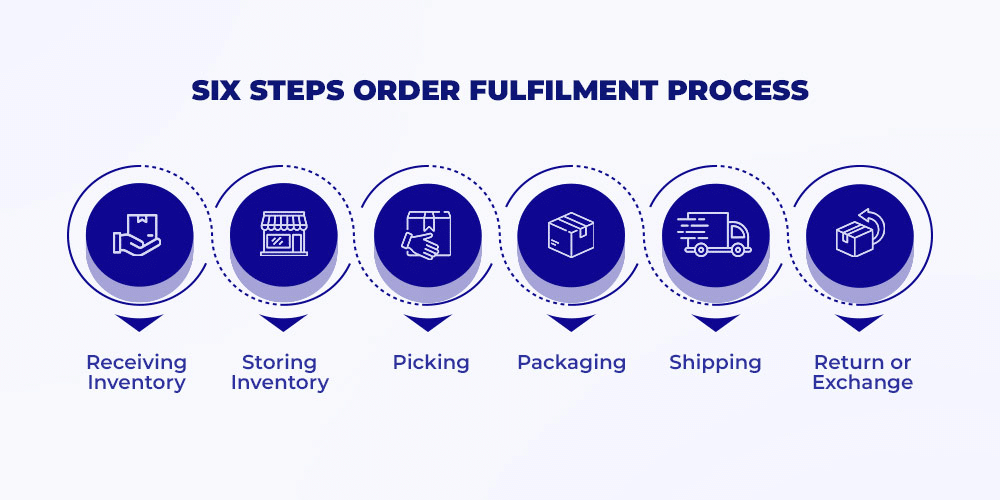
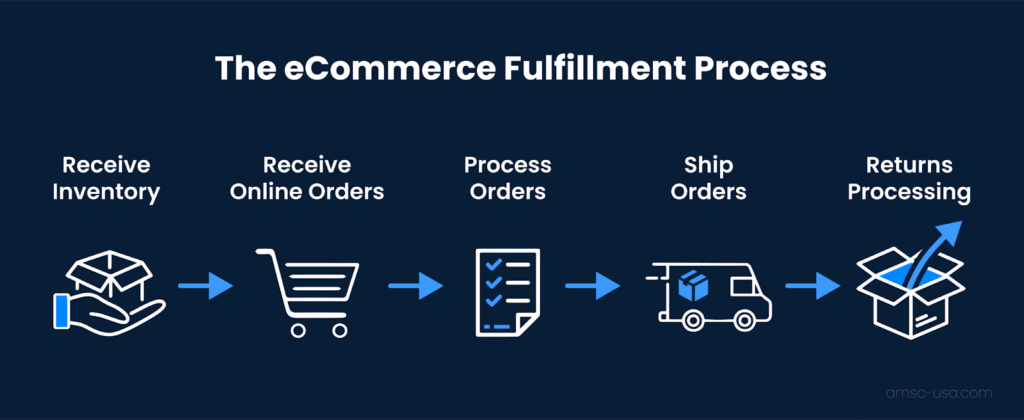
What is the actual cost of e-commerce fulfillment? What are the means of producing these costs? Which are the hidden expenses that are easily ignored? Fulfillment costs form the biggest, most complicated and the most misconstrued cost section in most e-commerce brands. Prices between the various 3PLs (third-party fulfillment centers) are very different. The following table will be used in this article to de-aggregate the costs: warehousing, receiving, picking, packaging, labeling, handling, return, shipping, and hidden costs. Knowledge of your system of fulfillment costs is critical to profit margin control and efficient scaling in 2026.
The Full Breakdown of Ecommerce Fulfillment Costs
1. Receiving Fees
What this fee covers
The fees come into force when the inventory is received into the warehouse. This includes hand unloading of the trucks, counting items to fit the purchase order, barcode scanning to add them to the system, and shelf prep. It is an initial point of contact in the fulfilment process, and everything should begin with a correct point.
Common pricing models
Most providers may charge by volume; by cubic meter (CBM) to ship loose goods, carton to ship boxed goods, pallet to ship bulk goods, and by hour to ship complex intakes. As an example, when you are shipping out of China, fees that are based on pallets are usually used to be efficient.
Reasonable price range
Often, depending on industry standard, you should pay between 3 and 8 per carton in standard receiving or 20 to 50 dollars in pallet receiving. Rates may range at $35 -60/hour depending on volume and intricacy- cheaper in high-volume systems such as those in Shenzhen.
Hidden cost risks
Additional handling fees may be required based on fragile or oversized items and this is an additional charge of $1-5 per item. Cartons with mixed-SKU can cause overcharges of between 2 and 10 dollars due to increased time of sorting. Unlabeled SKUs can result in either a cost of relabeling between $0.50 and 2 each item, making a basic intake a drain on the budget.
2. Storage Fees
How storage fees work
Storage is charged by space occupied: bin of small articles, shelf of middle articles or pallet of large. Billing cycles are different-monthly averages or daily so that it can be accurate. It is computed based on the average inventory balance and thus sluggish inventory incur costs at a rapid rate.
Factors influencing cost
The size of SKUs directly relates to rates, the larger the item, the more space it consumes. Turnover is important, it is important to keep fees down with high turnover. Space crunch usually attracts peak seasons such as Q4 by adding 2050 percent surcharges.
Typical China vs US/EU comparison
Storage is relatively cheap in China: storage can be as low as $515 per CBM per month or 820 per pallet, due to cheaper real estate and labour in such hubs as Dongguan. The US rates range between $15 and 26 per CBM (equivalent) and EU can reach 20 to 35 due to the increased wages and regulations. The Chinese advantage is found in the high-density warehousing systems and effective scalability, which are suitable to cross-border sellers.
Hidden cost risks
Storage fines are imposed after 90180 days to trigger 2-5 times normal rates of turnover. The bills can be increased by 30 due to poor forecasting leading to unplanned overstocking. Peak increases are not always announced in advance, and revise the seasonal contracts.
3. Pick & Pack Fees
What’s included
This base charge includes picking one item off shelves, and the extra pick per each order, as well as using standard packaging such as basic boxes or fillers. It is the workhorse of fulfillment pricing.
Extra charges that often apply
Perishable items may impose an extra fee of $0.50-2 on special wrapping. Additional charges can be included on overweight packages (more than 1kg) by one to three dollars. The custom packaging or kitting (packaging several SKUs together) often involves an extra of $1-5.
Reasonable cost ranges
The base pick and pack charges are around $1.50-2.50 per order and for each extra item, it is 0.15-1. In automated warehouses, first picks are as low as 0.20- 0.50, increasing to manual operations.
Hidden cost risks
The pricing of better materials may be increased unexpectedly by adding $0.50 to $2. Additional fares on high-value items could be 1-3 dollars. During rushes, there are surcharges of $5 10, as urgent pick list, usually deep in the fine print.
4. Packaging Material Fees
Standard packaging
This would entail poly mailers (0.10-0.30/ unit), bubble mailers (0.20- 0.50/unit), and cartons (0.50-2/unit depending on size). This is the fundamentals to secure goods during transportation.
Branded packaging
In the case of DTC brands, custom boxes cost between $1 and $5, inserts such as a thank-you card cost between 0.10 and 0.50, stickers cost between 0.05 and 0.20, and tissue paper cost between 0.20 and 1.00. These increase customer experience but accumulate.
Hidden cost risks
A volumetric (dimensional) weight that is greater than the actual weight may inflate shipping downstream by 2050 percent. Branded components have a tendency to add additional handling time, which can be charged as labor surcharges of between 0.50 and 2 not as packaging.
5. Shipping Fees
Types of shipping
There are express (DHL/FedEx within 2-5 days), postal (China Post within economy), special line (specific routes with mid-tier speed), and DDP air/sea (duty-paid within smooth custom).
Key cost factors
Prices in zones are different depending on the destination-US West Coast less expensive as compared to remote EU. Weight/volumetric (length x width x height/divisor) prevails; speed is an extra premium of 50-200.
China shipping cost advantage
China warehouses cost 2040 percent less than other global shipping regions because of volume bargains with a carrier, the distance to manufacture, and efficient ports. To take an example, special deliveries to the US cost 5-15/kg vs 10-25 of hubs in the US without overstating the benefits, it is question of leverage and logistics maturity.
Hidden cost risks
Fixing the address costs between $5 and 15. Remote areas add $10–$30 surcharges. Fuel surcharges (515 percent base) vary with the price of oil. Until the holidays, peak logistics fees increase by 10-30 percent, which is not usually pointed out.
6. Returns Processing Fees
Typical return flow
The returns include accepting the package, checking the package against damages or resale, repackaging goods that are still in good shape and determining the next course of action (restock, recycle, or destroy).
Pricing model
Flat charges per return (2-5 dollars), per item (1-3 dollars), or per hour of labour (30-50 dollars). Higher for inspections.
Hidden cost risks
Substandard quality control may increase costs by up to twice. Shipping Return-to-sender (5-20) is not always promoted. Simple charges may not include detailed inspections, and this may add $2-10 extras.
7. Additional & Common Hidden Charges
Unfair compensation can wipe out margins by 1030% with hidden fulfilment. Here’s a deep dive:
1. Warehouse minimum spend requirements
Numerous 3PLs are mandating 500-2000 monthly minimums; even when you slack you pay. Significant since it commits costs in periods of low demand – avoid by using no-min providers.
2. API integration or system maintenance fees
Installation $150-1500 (one time), and $50-200/month (updates). Important in multi-channel sellers; make inclusions negotiable to avoid unpleasant surprises.
3. Account management fees
Dedicated support is between $50 to 300 per month. Critical to multifaceted processes, yet not mandatory, and can be dropped in favor of being independent.
4. Long-term storage penalties
Rates increase by 2-5x after thresholds. Important to seasonal brands; do not through improved forecasting.
5. Oversize or irregular item handling
Non-standard shapes cost between 2 and 10 dollars per unit. Issues of special SKUs; get away with packaging standardization.
6. Dangerous goods handling
Supply cost $520 extras/battery/cosmetic. Living compliance; state in advance.
7. Weekend / holiday surcharges
20–50% uplifts. Significant in worldwide selling, schedule by calendars.
8. Shipping label printing fees
$0.10–$0.50 per label in some setups. Mundane and yet incremental; want wholesale prices.
Real-World Scenarios
Case 1 — A Shopify apparel brand struggling with unexpected storage costs
Issue: A medium-size clothing retailer on Shopify experienced a 40% increase in monthly bills due to slow inventory. Root cause: Due to high SKU diversity, there were overstocking in bins, which caused long-term penalties. Resolution: Changed to a Chinese-based 3PL with lean inventory solutions and 30-day free storage. Findings: Costs were reduced by 25 percent, turnover was also enhanced through improved forecasting, which released funds to promote.
Case 2 — A beauty brand paying hidden pick/pack fees
Issue: Multidimensional kits with samples would increase the cost per order by 30 per cent. Cause: Weak products and special inserts have not been included in the base quotes. Solution: Checked charges, negotiated pick and pack all-inclusive with a provider that provides kitting on specified charges. Outcomes: Base fees were changed to $2.50, accuracy was improved and returns decreased by 15%.
Case 3 — A gadget brand discovering unplanned shipping surcharges
Problem: Volumetric weight bills were 50% underestimated using bulky chargers. Reason: DIM weight and actual discrepancies, and remote surcharges. Resolution: Hybrid special line of China which was used and reduced dimensions by optimizing the packaging. Findings: Costs of shipping breakdown reduced by 35 percent, delivery time decreased, and reviews increased.
Cost Optimization Strategies
1. Improve demand forecasting
prediction of sales with the help of such tools as AI-programmed software to avoid overstocking, targeting 4-6 annual turnover.
2. Optimize SKU size & packaging dimensions
Test boxes to save volumetric weight; shave 10- 20% shipping.
3. Use hybrid shipping channels
Express mix when there is urgency, postal when it is economy-saving, about 15per cent. to 30per cent. on averages.
4. Consolidate inbound shipments
Delivery to suppliers in batches in order to reduce receiving costs by 20-40%.
5. Negotiate volume-based discounts
Once 1,000+ orders/month, negotiate 10-25% discounts of regular rates.
6. Keep inventory lean
Turnover frequency every few days; just-in-time to reduce inventory 20-50%.
How to Choose a Cost-Efficient Fulfillment Partner
1. Transparent pricing
Bring out full breakdowns in advance – no ambiguous lines of miscellany.
2. All-inclusive vs à-la-carte fees
Inclusive: Use predictability when your operations are normal .
3. Multi-shipping capability
Buy express, DDP, flexible lines.
4. No long-term commitment
Short trials: to prevent lock-ins test with short trials and Ecommerce Fulfillment.
5. SLA accuracy & speed guarantees
99 percent accuracy, 24-48 hour delivery – guaranteed money back.
6. Easy API integration
Connected with Shopify/Amazon to minimize human mistakes.
Conclusion:Knowing Your Costs = Protecting Your Margins
The profit margins in ecommerce are determined by the fulfillment costs, do it wrong and scaling halts. Brands must learn how to control the cost variables such as storage, pick and pack costs, and shipping charges. An adult system enhances growth by reducing the number of surprises. Go through your fulfillment costs before scaling in 2026 – margin to-day clarity saves tomorrow.