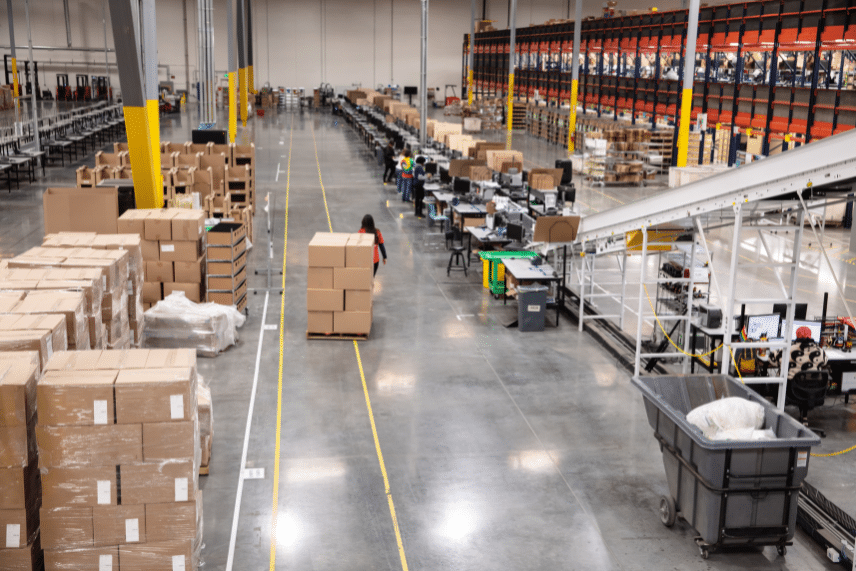
In the initial stage of a startup ecommerce brand, the biggest challenges are usually associated with the creation of products on time, dealing with a chaotic inventory, costing that is going out of control, and the logistical complexity all with bootstrapping on a small budget. outsource the fulfillment to China 3PL can become the redefining factor, as these young businesses can grow by zero to 1,000 orders per month when they outsource the fulfillment to a team of professionals who do all the storage and shipping. A 3PL based in China can assist startups grow the idea to 1,000 orders in the least amount of time by lowering the price and simplifying the process as well as allowing plug-and-play shipping.
Why Startups Should Consider China 3PL Fulfillment Early
1. Lower Storage & Handling Cost
The storage offered by China 3PLs is only 8-15 per cubic meter per month, significantly lower than those in the West of 25-45, which gives startups the opportunity to maintain a buffer inventory without burning its cash, which is vital when every dollar counts towards marketing or product development.
2. Close to Manufacturers → Faster Replenishment
The 3PLs, which are located close to factories, reduced lead times used to do restocks, which would otherwise be taken in several weeks, down to days, enabling startups to react almost instantly, in response to increases in demand, without the need to invest their own capital in holding equity in stock.
3. Scalable Labor (Pick/Pack on Demand)
Pay-per-order models imply you only pay when sales increase – no overheads on personnel – it is perfect when the volume of the startup is uncertain.
4. Fewer Upfront Investments (No Warehouse, No Staff)
Bypass the cost of renting space, or assembling teams; join an existing infrastructure to scale up instantly, allowing the founders to work on product-market fit.
5. Great for Small MOQs and Fast Product Testing
Minimized minimums allow startups to experiment with new SKUs using small runs, and adjust based on actual sales information without huge investments.
The Startup Scaling Roadmap: From 0 → 100 → 1,000 Orders
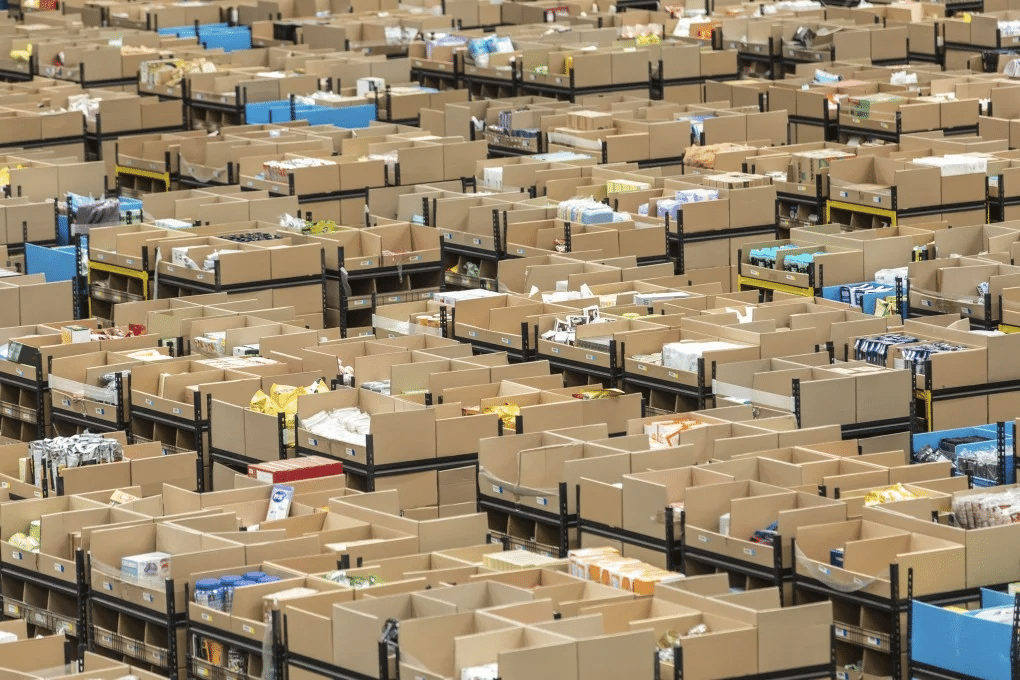
Stage 1 — 0 to 100 Orders
During this bootstrapping stage, it is better to focus on testing products with little inventory. Flexible storage with no minimums is offered by a China 3PL, enabling low-risk testing- important advantages here are fast setup and iteration on the basis of early feedback, and the burn rates are low.
Stage 2 — 100 to 500 Orders
When predictability occurs, focus on consistency in fulfillment. Basic automation and synchronization of inventory becomes a necessity; the 3PL takes care of the accuracy of picking and the cost management, and orders are shipped without mistakes as volume increases.
Stage 3 — 500 to 1,000 Orders
Scaling systems are important now stable WMS to track, optimization of shipping to control costs. With help of the 3PL, receiving in bulk, quality inspection, returns to reduce losses, and forecasting are taken care of, which helps its gradual increase.
How China 3PL Fulfillment Works (Step-by-Step)
1. Product Receiving
The suppliers send goods, the 3PL receives the goods through scans, adds barcodes where necessary, and also does QC to identify defective items- only quality stock reaches the system.
2. Storage
Products enter bins with small SKUs, racks with mid-size, and pallets with bulk- they are configured to maximise fast access, and may also have climate-control where products are sensitive.
3. Inventory Sync
The API links with Shopify, WooCommerce or Amazon to update stock in real-time, avoiding oversells and giving visibility to startups keeping track of each unit.
4. Order Processing
Auto-synchronized orders in your platform create pick lists in the WMS, which simplifies the confirmation all the way to prep.
5. Pick & Pack
Employees read to verify correctness, respect the packaging regulations such as branded inserts or custom boxes and make sure it is presented in the way you want.
6. Global Shipping
The choices are express urgency, postal light, air mid-volume and DDP sea bulk- destination and cost tailored.
7. Tracking Updates
Real-time syncs provides details back to the customer and your dashboard, which completes the loop in terms of transparency.
Key Benefits of China 3PL for Startups
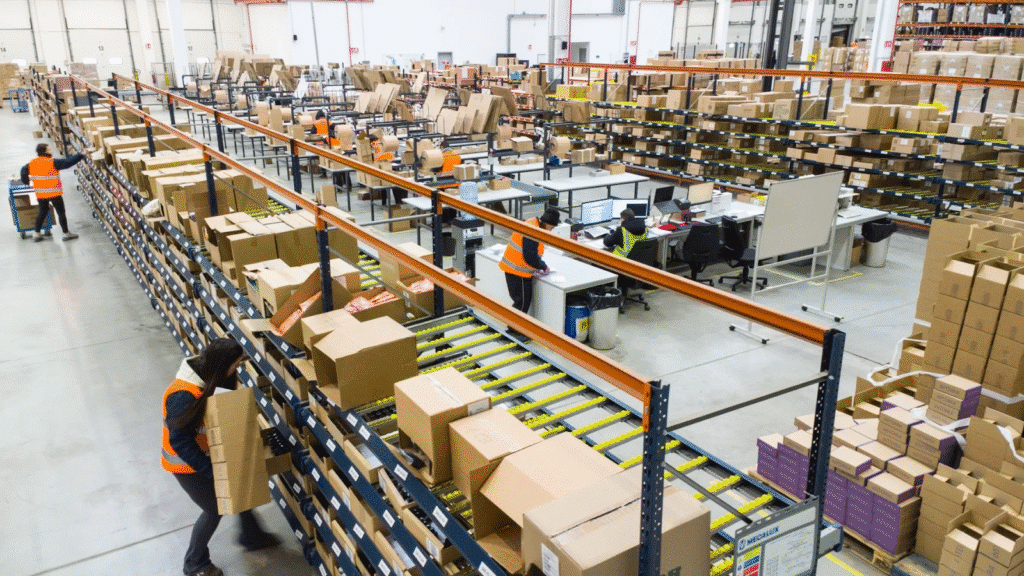
1. No Need for a Warehouse or Employees
Startups do not require setup costs and they just leap into operations with a ready infrastructure.
2. Saves 30–60% Compared to Western Warehouses
Reduced labor and storage will allow higher budget to growth-essential when the margins are low.
3. Easy to Test New SKUs
Small batches enable fast pivot based on the data, and there is no overproduction of waste.
4. Handles Kitting, Custom Packaging, FBA Prep
Bring in add value such as bundling or Amazon compliance with no in-house experience.
5. Fast Scaling During Campaigns (TikTok/Meta Viral Moments)
Virality becomes sustained revenue as absorb order surges with ease.
What Startups Should Look for in a China 3PL Partner
Real-Time Inventory Sync
Critical in preventing stocking challenges with increasing orders.
No Minimum Order Fees
Starts low-volume flexible.
Transparent Pricing
Obvious failures to prevent shocks.
Supports Express + Postal + DDP Sea
Versatile for global reach.
Handles QC & Repackaging
Guarantees quality at the very beginning.
Has Returns Processing Capability
Deals with the inevitable to reduce the losses.
Clear SLA (Cut-Off Time, Accuracy Rate)
Confidence is created by such guarantees as 99% accuracy.
Can Onboard New Stores Quickly
Quickly deploy agile startups.
Cost Breakdown: What Startups Typically Pay
Pick & Pack Fees
Basic will be $0.60-1.50 per order and is cost-effective with small runs.
Storage Cost (CBM or Bin Cost)
$8-15/CBM/month, or 2-5/bin, and there are usually free periods of 30 days.
API / System Fees (If Any)
Integrations are normally free or $10-50/month.
Freight Forwarding / Consolidation Fees
1-3 dollars per consolidated shipment and lowering unit cost.
Shipping Cost by Channel
Express: 15-30/kg; Postal: 3-8/package; Air: 4-8/kg; DDP Sea: 0.50-2/kg- volume based.
Real Startup Scenarios
Case 1 — Apparel Startup Scaling After TikTok Viral Moment
Problem: A burst in orders of 500 at once bombarded the manual packing process and resulted in delays. Solution: Replaced with China 3PL with auto-synced and express shipping. Findings: Met in 48 hrs, accuracy increased 99, costs reduced 40 per order.
Case 2 — Beauty Brand Testing Three New SKUs
Issue: small batches held on cash in self-store. Resolution: Outsourced 3PL to do QC and low-MOQ. Findings: Reduced overstocking caused speed to market to reduce by 2 weeks and accuracy to decrease to 98% of reduced returns.
Case 3 — Gadget Brand Scaling to 1,000 Orders Via Hybrid Shipping
Issue: Infrequent delivery over the world undermined confidence. The solution is 3PL with DDP sea bulk and light postal. Findings: Cost decreased by 35 percent, on-time percentage reached 97 percent and the company was able to grow steadily.
Common Mistakes Startups Make When Growing With a 3PL
No Unified SKU Naming
Result in picking errors; standardize prematurely.
Sending Inventory Without ASN
Abiding by the principle of receiving only after pre-notifying.
Failing to Forecast Sales
A cause of stockouts; predictions are made using data.
Not Documenting Packaging Rules
Findings in uneven branding; develop SOPs.
Choosing Price Over Reliability
Budget 3PLs fail; put focus on SLAs.
Poor Communication on Product Changes
New SKUs shock teams; update immediately.
Best Practices for Startups Working With a 3PL
Keep SKU and Inventory Data Clean
Maintain SKU and Inventory Data Clean.
Share Forecast & Campaign Plans
Share Forecast and Campaign plans.
Test Shipping Methods for Cost/Speed Balance
Best methods of Test Shipping Cost/Speed Balance.
Use Branded Packaging Early
Build loyalty from day one.
Establish SOPs for QC
Ensure quality consistency.
Review Performance Reports Monthly
Adjust based on data.
Conclusion: A China 3PL Helps Startups Scale Faster, Cheaper & With Confidence
A China 3PL is the growth engine of start-up offering scalable modules such as warehousing to allow scalable storage, order processing to allow efficiency, automation to allow accuracy, and global shipping to allow reach all to bootstrap budgets. When you are willing to grow between 0 and 1,000 orders, collaborate with a 3PL at the earliest, it will save you time, money and headache managing fulfillments.