
The majority of crowdfunding fulfillment failures can be anticipated and avoided once the creators know where campaigns tend to go wrong in their operations. Fulfillment failures in crowdfunding are not usually coincidental, rather they are caused by foreseeable planning and performance errors.
I have witnessed this trend in dozens of Kickstarter and Indiegogo projects: a campaign successfully raises money, and later on, the campaign hype is offset by the realization upon delivery. A lot of creators believe that a successful fundraising must automatically end in the successful delivery. It doesn’t. The main source of crowdfunding fulfillment errors is that, the post-campaign operations are not implemented as a fundamental discipline. The good news? Such mistakes are institutional and can be prevented by timely knowledge and professional training.
To learn more about professional management of such challenges, see this guide to crowdfunding fulfillment service.
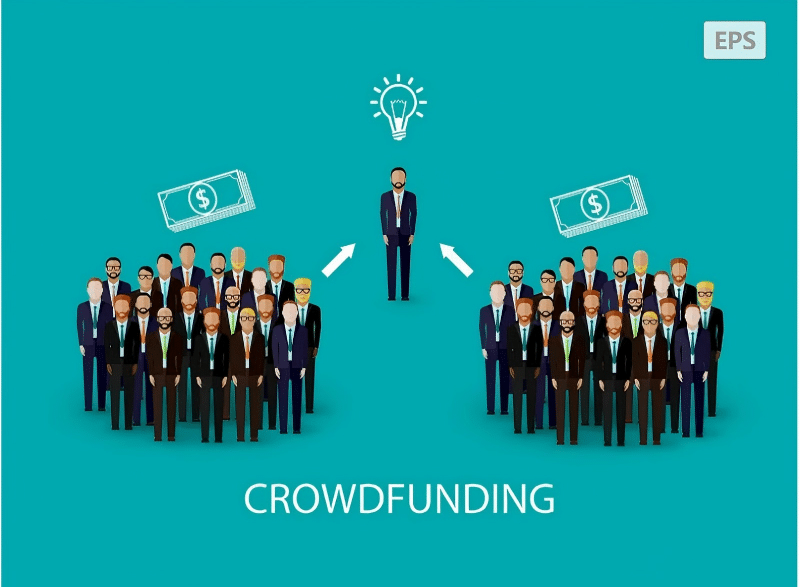
Why Crowdfunding Fulfillment Mistakes Keep Repeating
New inventors will highly misjudge fulfillment as their attention remains confined to the objective of meeting the funding target. Fundraising is creative and on the surface; fulfilment is administrative and invisible, until supporters begin to demand reporting back.
Smalls and an imperfection then multiply forcefully under post-campaign pressure: with tight budgets there is no margin of error, time is always of the essence, and variables that have not been anticipated (changes in production, changes in addresses, customs holds, etc.) are multiplied. The reason why operational blind spots exist is that most creators have not had the previous experience of scaling physical delivery.
| Root Cause | Why It Happens |
| Lack of fulfillment planning | Be fundraising oriented, rather than logistical oriented. |
| Data unpreparedness | Questionnaires received late or partly. |
| System gaps | Use of manual processes and spreadsheets. |
These underlying problems cause a domino effect: a single omitted point leads to re-work, the introduction of extra expenses, and losing credibility.
Mistake #1–#3 — Underestimating Fulfillment Complexity
The biggest initial failure is to think that fulfillment is merely a delivery of boxes. The fact of the matter is that it is a multi-step supply chain which incorporates variability of production, personalization of rewards, and the global logistics. The reductive approach to it as a mere e-commerce scaling process ignores the special systems chaos of rewards of crowdfunding.
Several creators would simply use common online-store logic and apply it directly – except that in the case of crowdfunding, the production is done in one batch, stretch-goal bonuses, and sponsors looking to get a special experience.
| Mistake | Resulting Problem |
| Taking fulfillment as a mere shipment. | Delays due to unaccounted measures. |
| Negligence to reward tier complexity. | Wrong kits and repetitive re-shipments. |
| The assumption that e-commerce fulfillment is applicable as such. | Error escalation and cost overruns |
Mistake #4–#6 — Poor Data, Packaging, and Kitting Control
Missing or non-recent data on backers is a silent killer. Respond to change, questionnaires default (or never), and authors learn too late that foreign formats are as diverse as the world. The packaging assumptions tend to fail as well: what fits perfectly in a prototype box balloons in packaging materials or accessories.
Unless there are defined kitting standard operating procedures (SOPs), mistakes in assembly get multiplied by misplacing the item in the box, leaving the insert out, or putting the fragile goods subpar.
| Control Gap | Operational Impact |
| Lost or wrong addresses. | Failed delivery or returns |
| Oversized packaging assumptions | Cost inflation and carrier surcharges |
| No kitting checks or SOPs | Fulfillment errors and backer complaints |
Mistake #7–#8 — Ignoring Shipping and Customs Realities
Global shipping is not national delivery with extra zeroes. Negligence on actions, VAT, clearance regulations, and restrictions on carriers results in delays of goods, unexpected charges to sponsors, or it might result in returns. Most of the creators choose the lowest-cost carrier regardless of reliability in remote areas or requirements of a customs broker.
Preparations Before the customs finish: wrong statements bring about inspections, time is wasted weeks, and sponsors accuse the publisher.
| Shipping Mistake | Consequence |
| No customs prep or declarations | Shipment holds and inspections |
| Wrong carrier choice | High re-delivery costs or lost packages |
Mistake #9–#10 — Late Fulfillment Planning and No Buffer
Rushing decisions and High-price forces A delay in partners (manufacturers, 3PLs, freight forwarders) until the funding was available had to be rushed. There are no timeline slip or cost increase buffers inbuilt meaning that the slightest hiccup during production would be a major delay.
Even a single missed delivery by a supplier or a tariff increase eliminates profits and imposes agonized concessions.
| Planning Gap | Outcome |
| Late partner engagement | Rushed execution and higher costs |
| No contingency or buffer | Budget overrun and eroded trust |
When Crowdfunding Fulfillment Mistakes Become Irreversible

Errors do not remain in a vacuum, they multiply quickly. A control delay causes the kitting to be delayed and this causes shipping to pass carrier cutoffs which causes customs to be altered or tariff increases. Solutions are progressively costly by the time they are made public: rushed deliveries, reimbursement, rereads consume the available budget.
Full confidence is not easily regained through late intervention. Supporters tolerate commendable stalling provided they receive open communication; they have little tolerance towards non-communication or excuses.
How Creators Can Avoid These Fulfillment Mistakes
The cure is discipline: don’t do the fulfillment as an after-funding exercise, but as one of the main operations since day one. Begin planning in advance of implementation, add buffers, and install early error detection systems.
| Prevention Area | Practical Action |
| Planning | Create a detailed fulfillment roadmap pre-launch |
| Data | Use validation rules and early mandatory surveys |
| Execution | Document SOPs, run test kits, and set checkpoints |
Making sure that the partners are up to the task early, making a budget that is realistic without adding a 30-50 percent buffer to shipping/packaging, and good communication beforehand will be seen as a disaster before it occurs.
Conclusion — Fulfillment Success Is About Discipline, Not Luck
Crowdfunding fulfillment mistakes happen every time due to campaigns repeating the same planning shortcuts. However, by making fulfillment an ordered exercise, not an off-the-job consideration, creators prevent delays, avoid loss of trust, and help to create more powerful brands around future projects. Delivery success is not about luck and it is about identifying the pitfalls that are always there and putting up structures to avoid the same.