The Flexport and China fulfillment centers serve the world chain of supply with various purposes. Mainly, Flexport is an effective orchestration platform of logistics with a heavy focus on managing freight, freight visibility, and end to end shipment management across the borders. On the contrary, China fulfillment facilities focus more on order-based fulfillment capitalizing on the access to manufacturing locations to conduct picking, packing, and last-mile services effectively. Only under the precondition that businesses define what value each model brings first can a direct comparison of costs make sense, or where it seeks to provide unnecessary complexity and cost.
Flexport optimizes the whole global freight flow and visibility, whereas china fulfillment centers optimize on the per-order fulfillment cost, and the confusion of the two will lead to needless costs. A common misconception among these brands is that Flexport is capable and willing to completely eliminate a fulfillment center, which is generally more of an overlay of logistics control instead of expediency of core order processing. This fallacy may exaggerate ecommerce fulfillment expenses particularly to the scaling DTC brands that will continue to encounter increased labor, storage, and international shipping demands in 2026.
Quick Cost Verdict: Which Model Is More Cost-Efficient in 2026?
The efficiency of costs in 2026 will not be as dependent on the raw pricing but rather adherence to your operational requirements-importers who are heavy in freight can save with Flexport but order-driven sellers may reduce by 20-50% with the help of China centers.
| Scenario | Flexport | China Fulfillment Centers |
| Freight coordination | Strong fit | Limited |
| Order-level fulfillment | Not core | Core capability |
| Cost per order | Higher | Lower |
| Storage flexibility | Limited | High |
| Multi-SKU handling | Not optimized | Optimized |
As emphasized in this executive summary, it is essential to control fulfillment cost comparison 2026 by examining particular points of pain.An example of this should be in the case your core pressure is a volatile ocean rate, Flexport will have the capacity to shine with its platform prowess. However in parcel shipping of high volumes across the Asian continents the built-in models of China centers are generally lower in terms of landed cost.
Deeper Dive into Scenarios
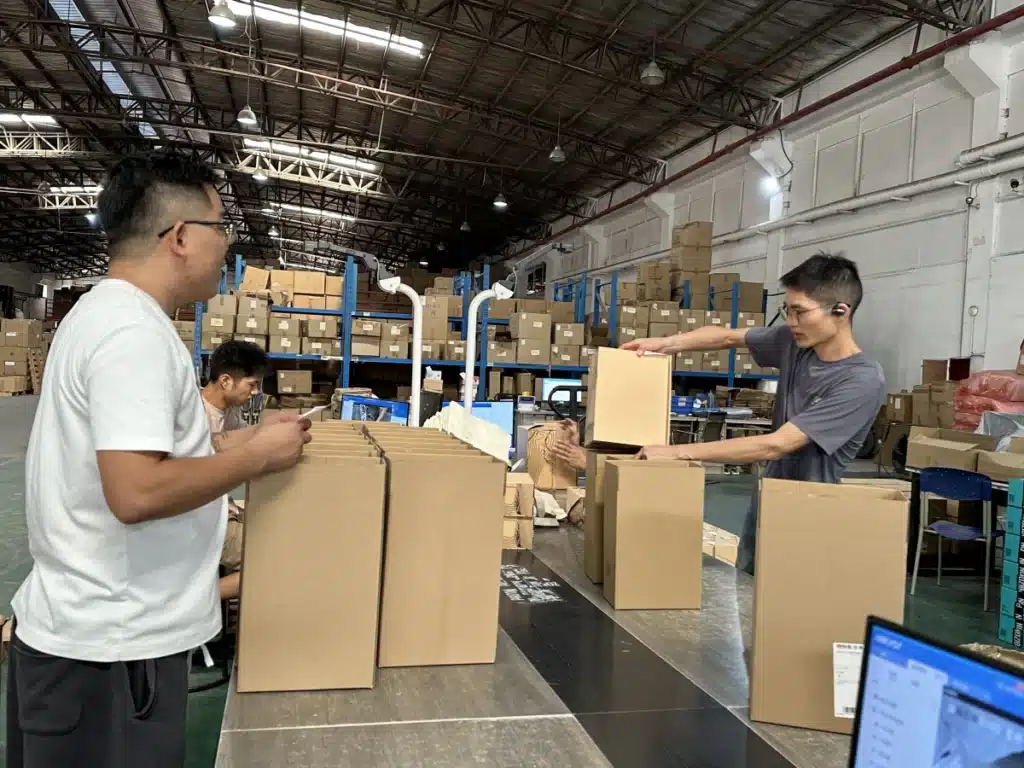
In order to narrow this judgment, look at the quantity of orders: Those that ship less than 5,000 per month would get to the new minimum fee requirement of 5,000 charged by Flexport, and no longer be profitably operational. China alternatives, such as Cainiao or JD Logistics, have no such minimums, and thus are less restrictive on operations of any middle-size.
Understanding the Cost Structure: Logistics Platform vs Fulfillment Operation
The inherent difference in cost models is that Flexport has the tech-oriented logistics orientation, whereas the China centers have a practical efficiency of fulfillment- ignoring it may cause the adjustment of the expectations and exaggerated budgets.
| Cost Category | Flexport Model | China Fulfillment Model |
| Freight booking | Core service | Often outsourced |
| Warehousing | Secondary | Primary |
| Pick & pack | Limited | Core |
| Order processing | Not optimized | Optimized |
| Last-mile shipping | Indirect | Integrated |
This is an important structural difference when it comes to cross-border fulfillment China situations.Flexport is good at organizing complicated freight actions, e.g., container transport among Asia and ports of the U.S., but also introduces additional coordination features that can raise management expenses. The China fulfillment centers which are located within the manufacturing ecosystems such as Guangdong simplify storage to parcel dispatch, in many cases, logistics is cheaper than fulfillment cost due to the integration of the processes under the same roof. This integration will reduce pass through costs in 2026, when shipping surcharges increase as a result of fuel and environmental charges.
Key Structural Implications
When the online sellers are not just dealing on a single market, the visibility tools offered by Flexport can be helpful in tracking inland routes, however, they do not necessarily reduce the order handling price per transaction. Models of China, in their turn, take advantage of the economies of scale within warehouses that have high turnover as the variable costs remain predictable.
Storage and Handling Costs: Where the Gap Widens
Storage and handling can be perceived as increasing cost points of difference in the year 2026, as labor inflation and space are driving the west prices up and China can afford low-cost pricing due to its ability to use the space effectively.
| Factor | Flexport | China Fulfillment Centers |
| Storage purpose | Freight staging | Order fulfillment |
| Cost sensitivity | Lower priority | High priority |
| SKU organization | Limited | Advanced WMS |
| Long-term storage | Expensive | Cost-controlled |
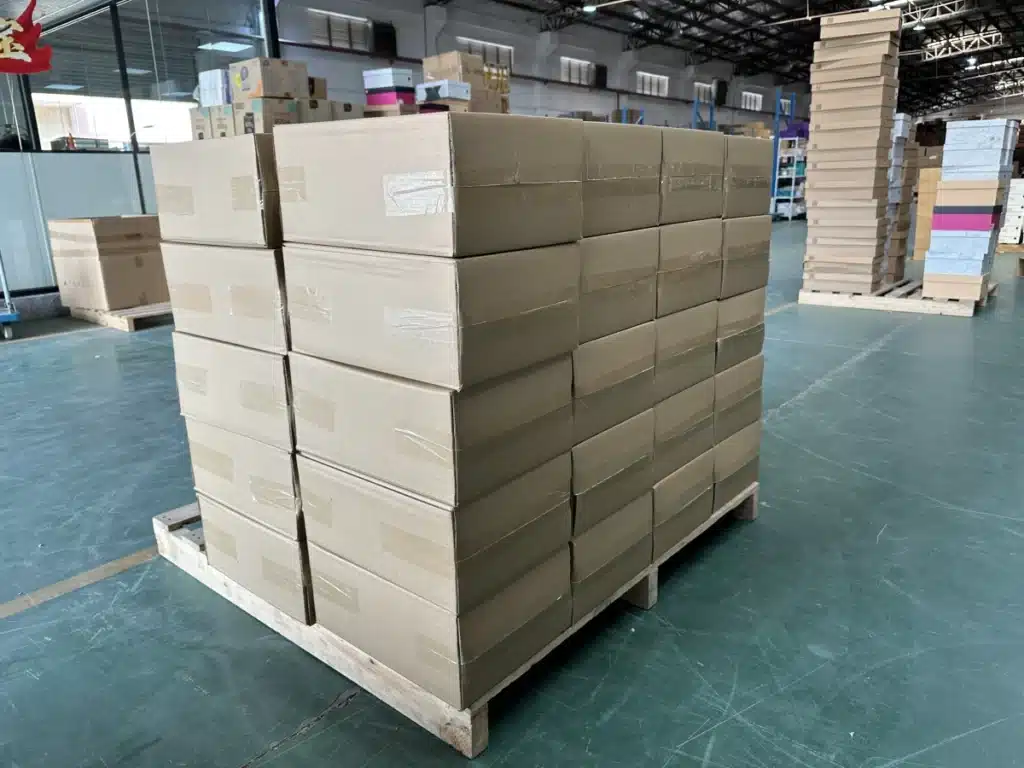
Flexport warehousing can also be connected to freight centers, charged as a storage on demand feature with a minimum fee such as 0.10 per SKU per day in 2026, which can accommodate temporary storage but anything longer will be expensive to maintain. The prices of China fulfillment center, which are on average between 0.10 and 0.50 in terms of cubic feet monthly, maximize SKU turnover based on high-quality warehouse management systems (WMS) systems that reduce dead space. This is essential in light of the increasing ecommerce fulfillment pricing, wherein the brands that are seasonal in their SKUs receive a penalty in the form of sluggish inventory on the fresh platforms such as Flexport.
Handling Nuances
Fee management in the China centers are within a range of $1-3 per order with the advantage of low labor cost (in spite of the 5-7 percent increases per year). Flexport, which specializes in bulk moves can outsource this and give it variation and possible additional fees on marketplace compliance.
Shipping and Delivery Costs: Freight vs Parcel Economics
In 2026, shipping economics would have a greater preference to parcel-optimistic models in the DTC sellers because cross-border tariffs and carrier surcharges increase freight volatility.
| Shipping Aspect | Flexport | China Fulfillment Centers |
| Freight cost | Optimized | Neutral |
| Parcel shipping | Indirect | Optimized |
| Route flexibility | Limited | High |
| Destination diversity | Moderate | High |
Flexport is a bright novelty in the optimization of bulk freight, which negotiates the prices of containers in the softened yet full of charges market of 2026 conditions. But at parcel-level economics, which is needed in ecommerce, China centres build shipments by networks, such as Cainiao or YunExpress, where delivery to the U.S. or Europe at 0.5kg per kg shipment can be below $6-9. This is unlike the indirect modality used by Flexport, whose final mile deliveries may add to the expenses without the density of the route.
Economic Trade-Offs
Cross-border fulfillment China uses bonded zones by offering duty deferral, allowing minimal initial capital connections. Flexport has an advantage of the visibility across multiple destinations, but the model of parcel consolidation in China is more suitable to address the increasing fuel surcharges.
Operational Complexity and Cost Visibility
Logistics platforms such as Flexport have operational layers that lead to mispricing of actual costs, whereas China centers need clean visibility, which is vital to margin-sensitive brands in a high year of inflation.
- Coordination overhead: The multi-vendor ecosystem that Flexport uses necessitates data reconciliation, which may use an additional 10-20% of administration time in comparison with integrated China operations.
- Data reconciliation: Platform dashboards are powerful, whereas reconciling with carrier invoices may give variations; China WMS has a number of APIs that tend to be real-time and smooth to use.
- Vendor dependency: The dependency on the network of Flexport also involves such risks as rate increase (ex.: the 2026 minimum fee increase), where China focuses centers enable a change in provider (e.g. JD Logistics).
It will experience faster scaling without a similar increase in costs, because in 2026 the trends in fulfillment are towards automation, and the models of China are less complicated than theirs.
When Flexport Makes Sense — And When It Does Not
The business size and priorities of the right decision in 2026 are based on the fact that Flexport is right to 2026 operations that involve high freights but again China centers are right in terms of cost-saving fulfilment.
| Business Scenario | Better Choice | Reason |
| Large-volume freight import | Flexport | Freight orchestration |
| High order volume DTC | China fulfillment | Cost efficiency |
| Multi-channel ecommerce | China fulfillment | Order routing |
| Freight visibility focus | Flexport | Platform strength |
| Margin-sensitive brands | China fulfillment | Lower per-order cost |
Flexport is suitable in the case of a brand that restructures logistics, in which freight coordination is the primary component (e.g., importing 40-foot containers). China centers are best when selling to DTC that has a monthly rate of 500+ orders as the savings of each order is compounded.
Decision Checklist: Choosing the Right Model for 2026
A structured decision begins with mapping your pressures- keep your brand off your hype, build it entirely on data.
- Primary pressure on cost (freight vs fulfillment): In case freight rates are your constraint, lean Flexport; focus on China in case you need per-order efficiency.
- Order volume/SKU complexity? Less than 5, 000 units? No minimum fees in China, complicated SKUs are well served with WMS.
- Storage time: Flexport would best use short-term staging; China would ideally use long-term storage due to low rates.
- Shipping destinations: Various international destinations? Flexport; outsourcing to Asia? China consolidation wins.
- Team strength: Little team? Technology helps Flexport; strong operations? China integration saves.
- Margin sensitivity: Skinny margins require a 20-50 percent savings advantage that China possesses.
Decisions are made on the basis of operational realities with this checklist having its foundation in practical advisory experience.
Conclusion — Cost Efficiency Depends on Structural Fit, Not Brand Reputation
To control the cost of fulfillment in 2026, it is necessary to be clear on the points where value is added in the supply channel. Flexport and China fulfillment centers address various issues one coordinates logistics on a large scale, and the other promotes per-order efficiency. Making a choice between them is an ultimate structural choice, and not a branding choice, making sure that you will be aligned with your emerging needs and increased demands.