
China 3PL is not a flat price- no, it is a stratified system of costs that have the storage, handling and shipping interact in a way that even an old time operator can hardly believe. Majority cost shocks occur since the brands compute every fee separately, not realizing how they will build up in actual settings such as the changing number of orders or SKU addition. In this case, a China 3PL pricing calculator is a decision framework to model such interactions, but not a drop-in quotation tool. It is only when storage, picking and shipping are considered as a whole, but not as individual line items that China 3PL fulfillment will lead to the reality cost.
Numerous vendors wrongly assume that China 3PL is cheap by default and they do not know which variables contribute to total monthly cost factor i.e. inventory turnover rates or square shipping corrections which have the potential of costing a lot more than expected.
China 3PL pricing should be thought of as a stratified cost structure, as storage, handling, and shipping become increasingly different as the order volume and the complexity of the SKU.
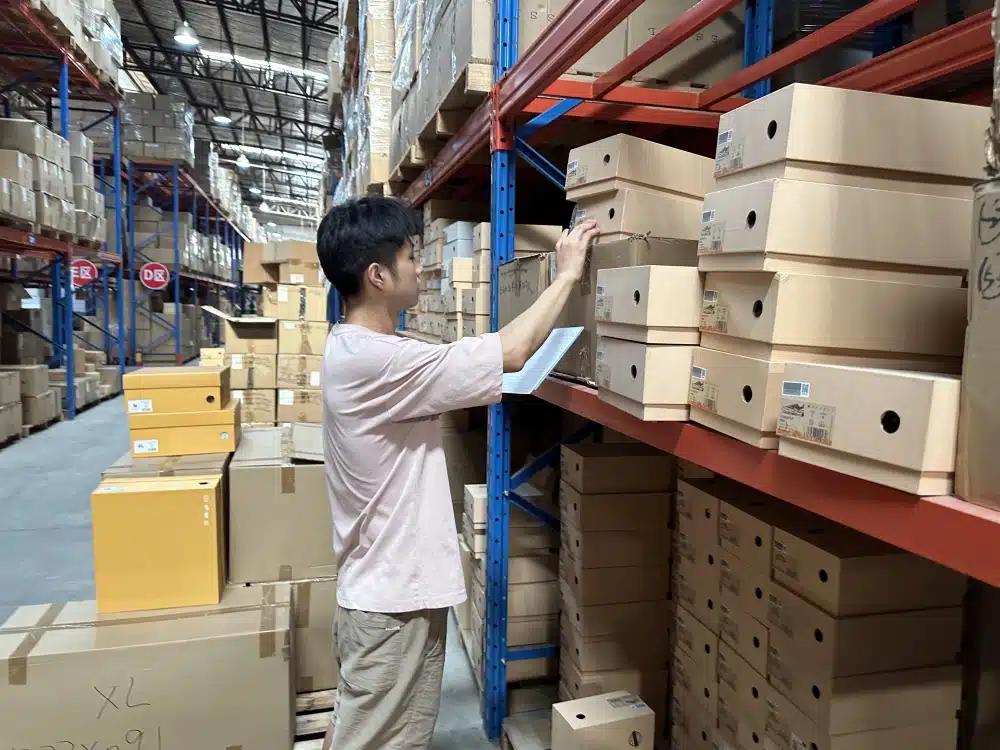
How China 3PL Fulfillment Costs Are Actually Structured
China 3PL fulfillment expenses is arranged within a modular fashion in which every segment reacts to various strain pressures, and therefore, separated quotes are deceptive with no context.
| Cost Component | Primary Cost Drivers |
| Storage | Volume, duration, SKU turnover |
| Picking & packing | Order count, SKU complexity |
| Shipping | Weight, dimensions, destination |
| Value-added services | Packaging, kitting, labeling |
| Returns | Reverse-logistics handling |
Shipping typically is the most predictable with the least predictability as opposed to storage as it is directly related to the external carrier rates as well as the specifics of the order that can change significantly.
Storage Costs: How Warehousing Fees Are Calculated in China 3PLs
Warehouse storage costs in Chinese 3PL operations mount up depending on the efficiency with which inventory flows within the warehouse.
Rates may be low to lure volume with a cubic meter (CBM), pallet, or bin as the common storage units. To stimulate early sales sometimes free or discount storage will be provided in the first 30-60 days to get the necessary turnover, yet this will obscure the actual cost of slow moving SKUs. Sluggish inventory silently adds to overall expenditure through long-term storage fees by tying up space and capital and causing escalated effective rates.
| Storage Factor | Why It Matters | Measurement Unit | Affects Cost Visibility |
| Storage duration | Short-term vs long-term impact | Days or months | Hidden in extended holds |
| SKU turnover | Capital efficiency | Turnover rate | Low turnover amplifies fees |
| Space efficiency | Packaging density | CBM or pallet | Inefficient packing raises costs |
| Peak season | Temporary cost adjustments | Seasonal surcharges | Unpredictable spikes |
Common Storage Calculation Scenarios
In the case of a mid-sized ecommerce brand of 10 SKUs in 5 CBM at a rate of 0.50/ CBM per day, every month storage costs may be 450, but it doubles during periods of low demand such as 60 days.
Picking and Packing Costs: Where Volume and Complexity Intersect
Where the order volume initially coincides with the addition of SKU complexity, picking and packing costs will explode when the brands are unprepared to switch single-item orders into multi-line ones.
Such charges are usually based on a per order or per item rationale with base rates about $1-2 per order in China because the cost of labor is lower than in the Western markets. Multi-SKU orders increase costs since every single item has to be handled differently, which may increase costs by an extra $0.50-1 pick. In China labor economics affect picking prices in different ways and high availability of labor moves base rates to remain constant but introduction of variability by customization is required.
| Picking Scenario | Cost Behavior |
| Single-SKU orders | Highly predictable |
| Multi-SKU orders | Cost increases per order |
| Bundled products | Lower marginal cost |
| Kitting | Higher setup, lower repetition cost |
| Custom packaging | Variable and service-dependent |
Impact of Order Complexity on Costs
The same case may occur that a DTC brand moving 500 orders a month and each order has an average of three items may have a picking cost of $1,500 where fees amount to 1 USD per order, and 0.5 USD per extra item, but this will increase 20 to 30 percent during promotional periods that have special bundles.
Shipping Costs: The Largest Variable in Any China 3PL Calculation
Shipping costs are the major dominating China fulfillment costs and they vary according to carrier dynamics and order characteristics that can not be just averaged.
Provider calculators use dimensional weight pricing (volumetric) versus actual weight, charging whichever is higher, which often surprises sellers with bulky yet lightweight products.Destination-based: Destination-based pricing forms zones and the U.S. or EU shipments are priced 2-3 times more than intra-Asia. Per-unit costs by high-volume shippers may be lowered by line selection (economy vs express) and effects of consolidation but rates vary monthly because of fuel surcharges, carrier negotiations, or world events.
| Shipping Variable | Cost Impact |
| Actual weight | Base calculation |
| Dimensional weight | Cost multiplier |
| Destination | Zone-based pricing |
| Line selection | Speed vs cost trade-off |
| Volume | Consolidation benefits |
Monthly Fluctuation Examples
In the case of 1,000 orders with an average weight of 1kg to the U.S., they could be shipped at a cost of 5-8 per unit via the economy lines, yet the cost could be 10-15 per unit in high seasons/during dimensional penalty.
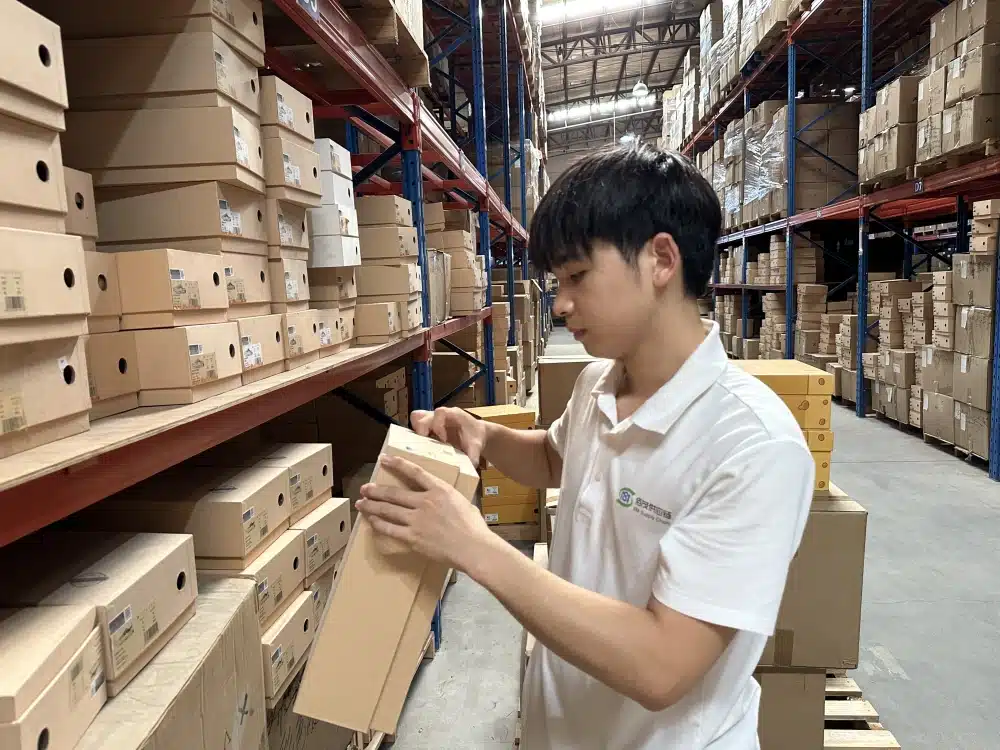
Building a Practical Pricing Calculator for Monthly Cost Estimation
An effective China 3PL pricing estimator begins with a cost segmentation and realistic assumptions, in order to simulate scaling situations.
Firstly, to estimate the total cost, prior to making a request to the suppliers, you need to collect your operational data: operational order volume, SKU information and shipping profiles. Multiply them by ranges provider rates (e.g., 0.40-0.60/CBM/day to store) and vary depending on variables such as peak periods. This framework helps calculate true per-unit cost for decision-making, though real invoices will be based on negotiated conditions and real-time changes.
| Cost Category | Estimation Logic |
| Storage | Average CBM × rate × days |
| Picking | Monthly orders × pick fee |
| Packing | Items shipped × pack fee |
| Shipping | Orders × average shipping cost |
| Add-ons | Service-specific estimates |
Step-by-Step Estimation Process
- Monthly orders (e.g. 1,000), and items per order on average (e.g.2).
- Storage compute: Add $150 to 10 CBM with a $15/month charge.
- Add picking: $1/order × 1,000 = $1,000.
- Factor packing: $0.50/item × 2,000 = $1,000.
- Estimate shipping: $6/unit × 1,000 = $6,000.
- Total: $8,150, followed by an increase in test sensitivity to volume.
Hidden Cost Factors Brands Often Overlook
Unrevealed expenses in China 3PL rates manifest in the workaround aspects that do not necessarily appear in the first offers.
- Dimensional weight corrections: Dimensional weight corrections can be used to fix prices of large products that may outweigh the computation of weight.
- Repacking or inspection costs: This task is required and is often mandatory to control quality or comply with requirements, normally 0.5-2 per unit.
- Peak season surcharges: 20-50% increases in storage and shipping costs over holidays, such as Singles Day.
- Returns processing: Processing reverse logistics costs 2-5 a return, and restocking is additional.
- Currency fluctuation exposure: In RMB-USD, unhedged 5-10% of costs can be added to costs.
These hidden fulfillment costs have the capability of eating up margins by 10-20% unless modeled at the early stages.
How China 3PL Pricing Compares Structurally to FBA and US 3PLs
China’s third-party logistics providers offer greater flexibility in storage and customization but add greater variability in shipping than integrated providers such as FBA.
| Cost Aspect | China 3PL | Amazon FBA | US-Based 3PL |
| Storage flexibility | High | Low | Medium |
| Labor cost | Low | Embedded | High |
| Shipping variability | High | Bundled | High |
| Customization | High | Very limited | Medium |
| Cost transparency | Medium | High | Medium |
Pay attention to the fact that China options give an opportunity to deal precisely but need to carefully observe changes in variable factors, which is not available in FBA.
Decision Checklist: Is a China 3PL Cost-Effective for Your Business?
The cost-effectiveness of China 3PL requires a comprehensive assessment of your operations with high volumes having the ability to implement economies of scale but low margins increasing the risks.
Fit test: Check the following checklist:
- Monthly order volume: Over 500? The kick in to economies comes under 200, may be not worth it to set up.
- Mean order weight and sizes: lightweight and small? advantaged to shipping; cumbly? Survey punitive measures.
- SKU number and kitting: 10-50 SKUs and kitting? China has excelled; hundreds none? Complexity costs rise.
- Shipping destinations: Mainly U.S./EU? Factor zone premiums; Asia? More predictable.
- Storage turnover preferences: high (less than 30 days)? Low costs; seasonal holds? Plan for surcharges.
- Sensitivity to margin: Close margins (less than 20%)? Plan on forecasting to prevent variables erosion.
The methodology was informed by various audits of fulfillment transitions carried out in dozens and serves to determine whether China 3PL can ascend to your scale curve.
Conclusion — A Pricing Calculator Is a Decision Tool, Not a Quote
Those brands that understand the interaction between storage, picking, and shipping in China fulfillment expenses are in a position to make wise choices in relation to partners and model margins with confidence. Projecting these drivers instead of seeking the lowest starting rates avoids traps of scaling and helps to achieve sustainable growth. Operational realism of ecommerce fulfillment pricing can be accomplished by using a comprehensive 3PL pricing guide as a strategic framework that allows operation teams to wade through the challenges of price determination related to ecommerce fulfillment.
1 thought on “China 3PL Pricing Calculator: Storage + Picking + Shipping Breakdown”
Pingback: How Much Does Amazon FBA Prep Cost? Full Cost Breakdown for Sellers