
Port congestion in China causes vessel delays, container shortages, and rising freight rates. It disrupts inventory planning and marketplace performance for ecommerce brands reliant on timely ocean freight from Chinese suppliers. Many importers assume congestion only affects shipping timelines. In reality, port congestion in China impacts inventory allocation, cash flow timing, and multi-channel fulfillment stability.
The brands that manage port congestion in China successfully are those with flexible routing options and distributed inventory strategies.
Port congestion in China is not just a shipping delay — it is a supply chain disruption that requires proactive rerouting, inventory reallocation, and logistics flexibility.
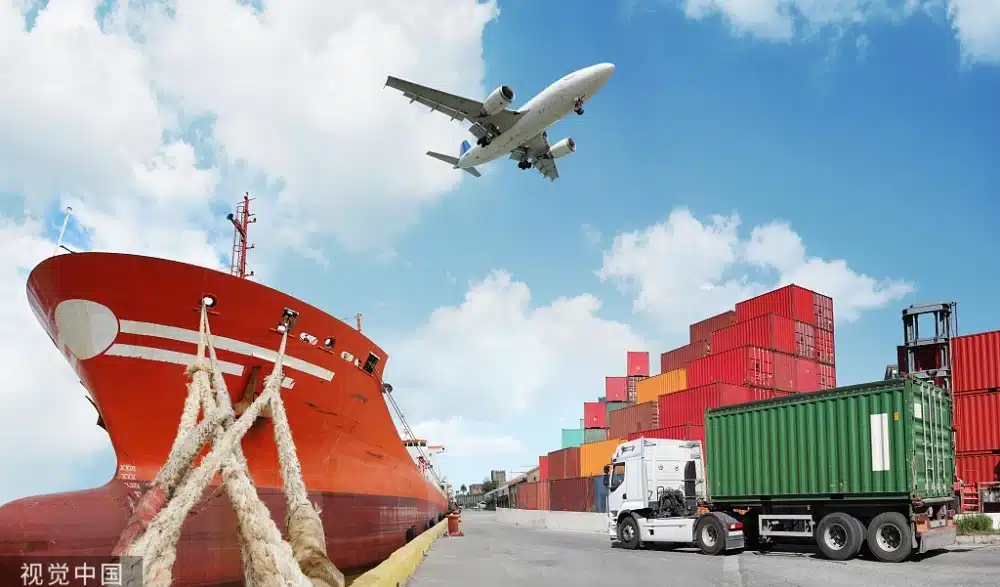
What Causes Port Congestion in China?
Congestion at the key gateways in China such as Shanghai, Ningbo, Shenzhen and Qingdao arises due to structural and cycle pressures that cannot adequately serve the terminal capacity and efficiency.
The main causes are high volumes of peak exports before holidays (e.g. Chinese New Year), weather issues like typhoons interrupting operations, seasonal labour shortages lowering the magnitude of trucking equipment and stevedorer, increased scrutiny at ports during the high volume seasons, and long term global trade imbalances, causing equipment to be stranded in other countries (empty containers).
These issues cause backlog of vessels, overloading of yards and long waits in anchorage; frequently 1-3 days or longer at high periods.
| Cause | Impact on Shipment |
| Peak export season | Vessel backlog and schedule bunching |
| Typhoons / severe weather | Port closure or reduced productivity |
| Labor shortage | Slow container handling and trucking delays |
| Customs inspections | Clearance delays and hold-ups |
| Equipment imbalance | Container shortage and repositioning issues |
These problems are operationally combined: vessels wafer at anchorage, terminals reach yard high utilization (which is often 90percent or more), and there is gate-in congestion, compelling shippers to wait longer or pay demurrage.
How Port Congestion Affects Ecommerce Brands
Port congestion causes shipping delays in China which have a trickle effect on ecommerce brands, causing a transportation problem to translate into a wide-scale operational and financial burden.
Late arrival of vessels postpones the stock up and causes the Amazon restocking or warehouses empty in Shopify.Surge pricing on the ocean freights lowers margins when the sales demand are high. Lost sales opportunities in promotions would cause the loss of revenue and frozen inventory would tie the capital and rise the holding costs. Finally, the problem of customer dissatisfaction due to failure to deliver orders and longer duration of delivery is increased.
These affects endanger the multi-channel stability and ad ROAS of the brands whose performance relies on ocean freight congestion cycles.
| Disruption | Business Consequence |
| Vessel delay | Stockout risk on key SKUs |
| Rate surge | Margin erosion |
| Missed sales window | Lost revenue during peak periods |
| Inventory freeze | Cash flow strain and higher holding costs |
Early Warning Signs of Port Congestion
Early detection of China shipping means taking proactive moves and not reacting to the firefight.
Note prolonged anchorage waiting time (more than 1-2 days average), extreme fluctuations in spot freight rates (an indicator of capacity constraint) and frequent changes of carrier schedules or blank sailings, as well as delays in container pickup at factories or regional depots.
These alerts usually manifest 2-4 weeks prior to total interference to key terminals.
| Indicator | What It Signals |
| Increased demurrage / detention | Port backlog building |
| Delayed sailing notifications | Terminal congestion |
| Rate spikes on spot market | Capacity constraint |
| Frequent schedule changes | System instability |
These signals can be tracked in real time through monitoring mechanisms offered by carriers, forwarders or platforms, such as Portcast.
Rerouting Options During Port Congestion
Rerouting will be necessary when it is known that primary ports are severely backlogged and it is necessary to achieve flow of information without the use of cascading delays.
The viable options require dependence on the destination, cargo value, urgency and carrying volume.
Chinese ports other than Shanghai/Ningbo are poised to provide the least frictional shift – e.g. not just shift away Shanghai/Ningbo but to Qingdao or Shenzhen/Yantian on some of the lanes. China rail freight alternative, which is a secure mid-speed movement (15-25 days), can be offered to the EU-bound cargo and avoid sea congestion. Air express is appropriate with high value or urgent SKUs despite overcharges. For time-sensitive inventory, express shipping from China provides a reliable alternative when ocean routes are congested.Transshipment via neighboring countries (e.g. hubs in Vietnam or South Korea) or inside-out shipments (partial ocean and rail/air) provide flexibility in harsh lockdowns.
| Alternative | Best Use Case |
| Alternate China port | Regional congestion avoidance |
| Rail freight | EU-bound cargo needing speed over ocean |
| Air freight | High-value urgent SKUs |
| Split shipment | Mixed urgency inventory |
| Third-country routing | Severe port lockdown scenarios |
The ideal combination of these is usually represented by a multi-modal shipping strategy.
Inventory Reallocation Strategy
Eliminating inefficiencies in rerouting is matched with intelligent changes in inventory to respond to uncertainty.
Position buffer inventory can be moved to neutral hubs or closer to demand markets to reduce effective lead times. Safety stock of core SKUs should be increased on the patterns of disruption which has taken place historically. Implement the multi-warehouse model of distribution to decentralize risk with support from a flexible warehousing network.Allocate inventory amongst fulfillment centers instead of using one-point arrivals.
This can be assisted by working with a China 3PL (such as that which offers temporary warehouse space during port delays), allowing a single shipment to be partial, making flexible adjustment of routing and making multi-modes shifts where ocean options fail. This strategy will decrease strain on cash flow, and it will help avoid massive stockouts.
Cost Implications of Rerouting
Deviation consumes time instead of money, knowing the trade-offs, there will be no margin shocks.
Air freight is very expensive but does not expose it to delays. Rail is medium priced and fastest than ocean and less prone to ocean freight congestion risks. Transshipment would incur handling costs and would be taking advantage of the unused routes. Split models add the complexity of coordination but enables prioritization of urgent items ocean with others (rail or air).
Never forget total landed cost, plus latent demurrage discount and revenue insurance.
| Mode | Cost Level | Speed | Risk |
| Ocean | Low | Slow | Congestion risk |
| Rail | Medium | Medium | Border delay |
| Air | High | Fast | Limited capacity |
| Split model | Variable | Flexible | Coordination complexity |
Long-Term Risk Mitigation Strategy
Resilience requires port disruptions to be considered as a normal and not a rare occurrence.
Increase export ports to eliminate one- point dependence. Book multi-modal transport (contracted rail and air capacity). Use a model of distributed inventory that has regional buffers through professional China fulfillment partners.Arrange freight contracts with stable rates in time of peak. Optimize demand projection to eliminate excess stocking of susceptible products.
These measures reduce the general exposure and transform the possible crises into manageable changes.
| Strategy | Risk Reduction Effect |
| Multi-port export | Reduced dependency on one gateway |
| Buffer stock | Lower stockout risk |
| 3PL consolidation | Routing flexibility |
| Freight contract | Cost stability |
Common Mistakes During Congestion Events
The even seasoned teams fall into pitfalls in case of disruption:
- Delaying too much to reroute so that the delays develop.
- Loading all the inventory at a single point which increases the single-point risks.
- Keeping a two-week cushion in stock to no avail, a zero stock buffer.
- Negligence of carrier warnings and timetable changes.
- Switches to overreacting with full airfreight, and add unnecessary cost.
- The secret is quantitative, evidence-based action -control early, readjust proportionately.
Findings conclusion — Supply chain resiliency is determined by flexibility.
Conclusion — Flexibility Determines Supply Chain Resilience
The process of Rerouting should be planned, not a panic: consider options such as alternate ports, China rail freight alternative, or air critical-item delivery; re-allocating the inventory to distributed models; and including multi-modal options in baseline strategy.
These brands that create routing flexibility, an inventory buffer strategy, and diversified logistics can be able to remain operational even in times of global shipping disruptions. It is adaptable, rather than avoidant, that will build the resilience required in this persistent state of uncertainty. A flexible China supply chain and fulfillment partner provides the multi-port access and inventory options needed to execute this strategy effectively.