The practicality of single-location fulfillment models was demonstrated by COVID-19 lockdowns since geographic diversification became a strategic requirement and not an operational luxury.
Reconstruction Due to the pandemic, the work of factories, warehouses, and transportation systems were almost at once stopped in the regions. Types of brands that relied on one fulfillment location either in a country or a centralized manufacturing development zone saw a crippling blow, to either shipping delays or a total halt in orders. These risks of operation were exacerbated by geographic concentration, which appeared to be successful centralization changing into a system weakness.
However, many companies traditionally thought that operational effectiveness required centralization: the less facilities the less overheads, less processes and economies of scale. Practical experience showed that COVID-19 has caused the opposite effect, as over-centralization became more vulnerable to the system in case external shocks strike the reserved region. Fulfillment diversification is not enhancing complexities, it is about strategic use of risk spreading and having genuine business continuity.
What COVID-19 Lockdowns Revealed About Fulfillment Risk
The lockdowns revealed the vulnerability of the way modern fulfillment networks are.
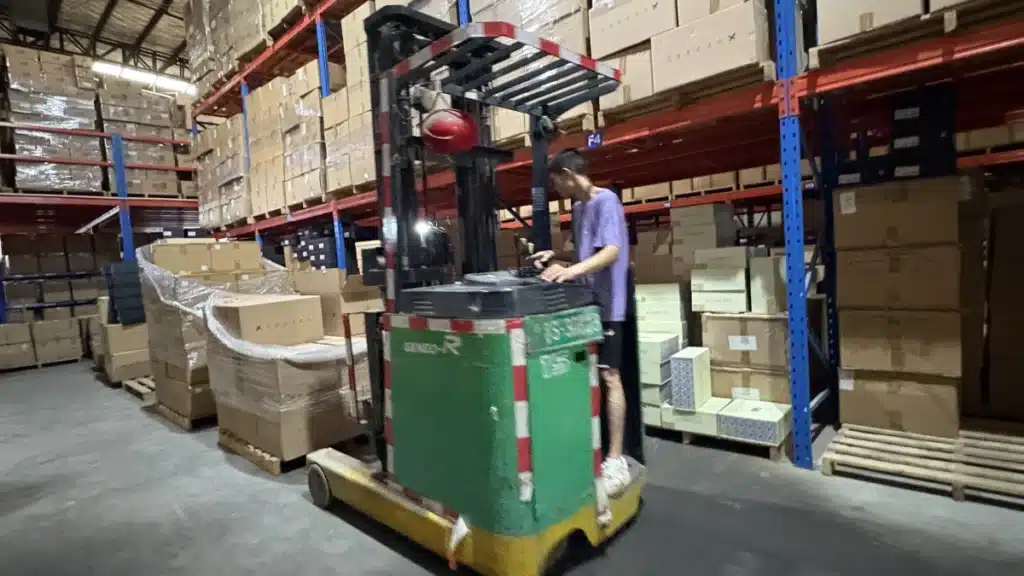
As some of the main production centers closed down to the restrictions, the chain reaction echoed instantly: the raw materials were not received, production lines were not busy that needed that raw material, and the stocks of finished goods were depleted. The ports experienced congestion like never before since ships were waiting on the high seas with zero chances of offloading due to the labor restrictions and health measures. The labor shortage and the social distancing restrictions forced warehouses to close or work at a lower capacity, resulting in order backlog and fulfillment suspensions. Labor shortages added to it all: the workers became ill, quarantined, or other restrictions were imposed, which increased the pace of picking, packing, and shipping in general.
These were not accidental occurrences but a point of weaknesses in the centralized systems.
| Disruption Type | Systemic Impact |
| Factory shutdown | Production halt |
| Port delay | Shipment backlog |
| Warehouse closure | Order suspension |
| Labor shortage | Processing delay |
The pandemic demonstrated that with a tightly-knit model, the failure of one of the nodes may be felt throughout the chain almost immediately.
The Risks of Single-Location Fulfillment
The dependence on one location of fulfillment – or even one predominant area – is unacceptable in the current volatile world.
Geographic dependency: there is one regional dependability so that operations are vulnerable to a single regional event. Full stoppages can be caused by regulatory risk, i.e. abrupt lockdowns or trade restrictions. Facilities are vulnerable to stalled or postponed operations due to natural calamities e.g. typhoons, earthquakes among others. The possibility of political disruption poses threats of border closure that prevents cross-border migration. There is a large scale shipment delays due to infrastructure failures such as port strike or transport choke point.
A single location strategy balances the short term cost reduction against the weakness of the long run.
| Risk Category | Consequence |
| Regulatory lockdown | Full stoppage |
| Natural disaster | Delayed operations |
| Political disruption | Border closure |
| Infrastructure failure | Shipment delay |
These dangers are not just theoretical, the pandemic turned ecommerce brands into the victims of pain.
Models for Diversifying Fulfillment Locations
Diversification does not mean a complete redesign and restructure in the middle of the night, realistic models can enable risk mitigation in stages.
A dual-warehouse design will be based on a primary warehouse in China and a second warehouse in the target market (such as the US), which can deliver products to the market faster without costing too much in terms of sourcing. Multi market coverage is done through the distribution of the facilities worldwide to each continent. Forking Cross-border plus local constitutes a mixture of overseas consolidation and local fulfillment points. Satellite locations are only utilized as safety stock in buffer stock positioning with the aim of reducing daily overheads.
The models are appropriate to various business profiles.
| Model | Best For |
| China + US warehouse | US-focused brands |
| Asia + EU split | Multi-continent sellers |
| Central + regional hubs | High SKU brands |
| Buffer-only satellite | Risk mitigation |
These are strategies that are both effective and strong.
Inventory Allocation Strategy Across Multiple Locations
Mastery Inventory distribution transforms diversification into a cost center to an advantage of continuity.
Safety stock allocation distributes stocks to locations to overcome local disruptions. Channel based stock split is used to allocate inventory to high-demand markets or sales channels. SKU prioritization works so that fast-moving products are located near to the clients whereas sluggish products are concentrated within the center. Per region based demand forecasting involves both historical based and the real time based data to determine replenishment to prevent excessive inventory.
Good splits increase concentration and do not explode any complexity.
| Allocation Strategy | Benefit |
| 70/30 split | Reduced concentration risk |
| Regional stock | Faster local delivery |
| SKU prioritization | Focus on bestsellers |
| Dynamic reallocation | Flexible response |
It depends on the decisions, which are data-driven as opposed to homogenous duplication.
Role of a Centralized Coordination Hub
Centralized control achieved efficiency even in the case of distributed locations.
A coordination hub ensures that there are peak inventory visibility of all sites so that real-time tracking is possible. Order routing logic is another logic that assigns fulfilment to the best warehouse depending on the proximity stock and costs. Stock syncing done in real time eliminates differences in the course of transfers or sales. Multi-modal transport coordination is concerned with replenishment of the ocean, air, rail, and road transport.
It is critically important here: a robust China 3PL unites the deliveries made by factories, provides the flexibility of route provision to various locations, manages multi-location stocks, and simplifies cross-border rejuvenation ones- the connective tissue of diversified systems.
Cost Considerations of Diversified Fulfillment
Diversification is associated with a trade-off, yet in the long-term perspective the gains may exceed the short-term gains.
However, additional storage will increase overhead at first, but disruption costs will be enormously above additional rental expense. The regional freight can be more expensive at a per unit than the bulk shipping centralized but at least it is faster and the customers are satisfied. Coordination systems have set up costs, but offer operational stability and faster decision -making.
The ROI comes out in terms of losses avoided in times of crisis.
| Cost Factor | Short-Term Impact | Long-Term Benefit |
| Extra storage | Higher | Risk mitigation |
| Regional freight | Moderate | Faster delivery |
| Coordination system | Setup cost | Operational stability |
Diversification as a survival strategy is not a cost to an investor, it is a benefit.
Common Mistakes When Diversifying
Most brands falter in terms of expanding fulfillment footprint these are the traps to avoid.
- It is not economical to duplicate complete inventory in all the locations.
- Nothing causes blind spots and stockouts since we do not have a centralized visibility system.
- Disregard of cost structure makes the diversification unsustainable.
- The unfortunate allocation of SKUs puts the slow moving items in the wrong place and places high-demand products in poverty.
Growing excessively is a burdensome on cash flow and operations before processes gain maturity.
Long-Term Supply Chain Resilience Framework
To be resilient, there should be a holistic and prospective strategy in creating resilience.
Multi-warehouse (spreads geographic) risk. Multi-modal transport offers back-ups at the time of bottlenecks. Buffer inventory planning predicts shock (excessively) not. Scenario forecasting makes teams ready to work with a variety of futures. The diversification of vendors also guarantees continuity of production past the single suppliers.
These materials are locked to each other to provide strength.
| Resilience Strategy | Risk Reduction Effect |
| Multi-warehouse | Reduced geographic risk |
| Multi-carrier | Transport flexibility |
| Vendor diversification | Production continuity |
| Forecast planning | Demand stability |
Conclusion — Diversification Is Strategic Insurance
When everything is stable, centralization works best. Diversification enhances survival during instability of conditions. Long-term resilience depends on whether the two are in balance.
The lockdown due to COVID-19 showed that there is no operational efficiency that leads to geographic diversification that would make the system economically resilient. Long-run supply chain resilience is developed by brands that spread locations of fulfillment, arrange the location of inventories in central points, and keeping the flexibility of routing. Unexpected world, this strategy is not a choice, it is a key to meeting the success in ecommerce.