A highly optimized order tracking page is not just a logistic solution, but a high intent marketing touchpoint that can drive improved customer retention, cross-sell revenue and lifetime value.
During the post-purchase stage, there is no better moment than to check the status of the orders to make the customer interested. Customers view the tracking page numerous times on the way to the house, some four or five times during an order, which is fueled by excitement, anticipation, or a slight sense of anxiety about receiving the order. Every visit will be a savored moment of undivided attention: the buyer has already made a purchase, the advertising is minimal, and he or she is already thinking about your brand.
Achieving brands that maximize their order tracking page turns a typical logistics check into a retention and revenue generating touchpoint. However, lots of ecommerce brands continue to redirect the customers to carrier tracking pages (such as UPS, FedEx, or DHL), and accidently relinquish control over this very important experience. The result? Lost branding chances, unable to strengthen trust, zero possibility to lead the customer to the next purchase.
Why the Tracking Page Is a High-Intent Customer Touchpoint
The best part of the entire customer journey is the post purchase tracking stage which is the best moment of contact.
Customers experience a sense of satisfaction and anticipation after leaving. They desire a confirmation that their order is on the move and it will be delivered as expected. As observed in the industry, most shoppers, when there is a possibility to do so, look into tracking several times each day or even more frequently, in case of delays. This is not a passive behavior but is more emotionally-charged and brand-centered with minimal distractions as compared to the acquisition channels.
The following is a breakdown of the level of engagement and opportunities at various levels:
| Customer Stage | Engagement Level | Opportunity |
| Order placed | High | Reassurance through confirmation |
| In transit | Very high | Brand reinforcement & subtle reminders |
| Out for delivery | Peak anticipation | Upsell opportunity |
| Delivered | Completion moment | Review & referral prompt |
This continuous focus renders the tracking page very special in terms of developing loyalty without necessarily having to pay advertisements.
The Problem with Redirecting to Carrier Tracking Pages
Diverting the customers to the third party carrier pages silently compromises the post purchase experience.
When the shopper is taken to a generic carrier site, he or she is met by a number of disinterests: no brand recognition, intermittent competing adverts, incoherent terminology to describe the status (e.g. departed facility rather than plain language updates), and no way to reenter your shop to have the engagement further. More importantly, no chance to record data, propose other related products, or provide incentives.
The difference is noted in a side-by-side analysis:
| Tracking Method | Brand Control | Revenue Opportunity | Customer Experience |
| Carrier page | None | None | Neutral |
| Basic tracking page | Limited | Low | Functional |
| Optimized branded page | Full | High | Integrated |
The default carrier redirect takes away the customer journey at the most open point, which curtails trust-building and incremental revenue potential.
Core Elements of an Optimized Tracking Page
A good tracking page should be both transparent and strategically involved, which will make logistics visibility a retention key.
The important structural elements are:
- Brand-header and logo — Trust visual reinforcement at once.
- Real time tracking updates – Certain milestones with easy to understand language.
- Projected delivery time frame – Accurate, realistic ETAs to control expectations.
- Contact visibility Since it is easy to access without coercion of a ticket.
- FAQ snippet Watch frequently asked questions such as customs or delays.
- The cross-sell recommendation section – Non-intrusive and relevant recommendations.
- Rewards or loyalty coupon — Inducement to recurrent purchase.
- Referral program Banner- Soft nudge at the right time
These factors interact:
| Element | Purpose | Impact |
| Real-time status | Transparency | Reduces WISMO |
| Delivery estimate | Expectation control | Reduces anxiety |
| Cross-sell product | Additional revenue | Increases AOV |
| Discount banner | Incentive | Drives repeat purchase |
| FAQ snippet | Self-service | Lowers support cost |
It is best to focus on being clear and fast to make the experience beneficial instead of being salesy.
How Tracking Page Optimization Reduces WISMO Inquiries
Properly implemented tracking transparency will directly reduce Where is my order. One of the greatest sources of drain of post-purchase support is (WISMO) tickets.
The questions posed by WISMO to customers are asked in case of information incompleteness or delays. This is countered by optimized pages with:
- Tracking of milestones (e.g. Your order flew customs in Shanghai and is now in the hands of local delivery).
- It has a special custom explanation section about international deliveries.
- Realistic updates in proactively scheduled delay messages.
- A low-friction and integrated contact form of actual problems.
The level of transparency has a high correlation with the volume of support:
| Transparency Level | WISMO Volume | Support Cost |
| Minimal | High | High |
| Moderate | Medium | Moderate |
| Structured & transparent | Low | Low |
Companies that use systematic changes tend to realize significant decreases in requests and operations teams can work on more valuable tasks.
Fulfillment Integration Is What Makes Optimization Possible
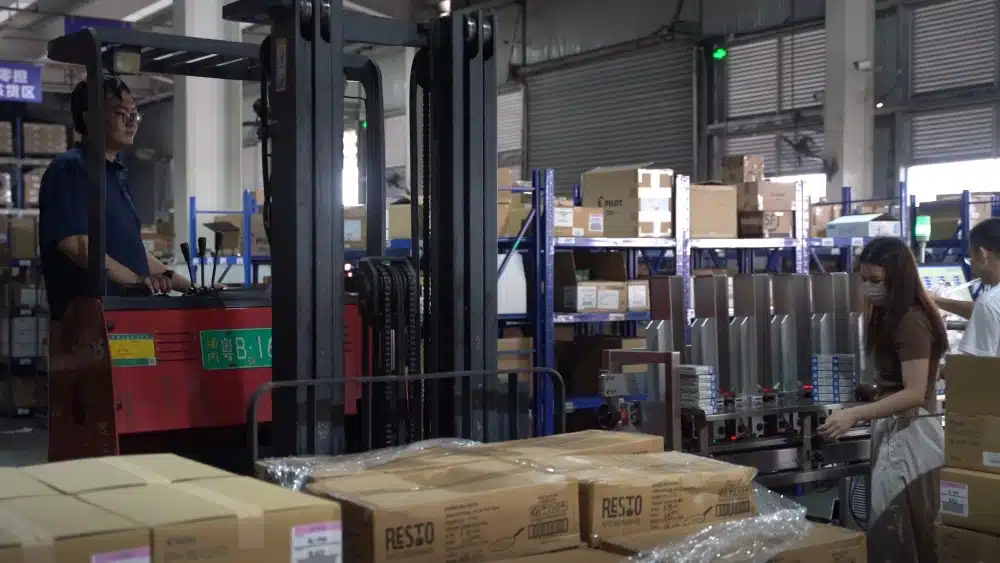
The promotion of real-time, branded tracking can only be possible in cases where your ecommerce store and fulfillment system are closely aligned.
This begins with API connectivity between your warehouse and store (or 3PL partner) so that you can automatically update your status without any human intervention. Marketing content can then be triggered by event-driven logic e.g. showing a recommendatory product when the status becomes in transit.
Many of the brands that go global with their business relying on China 3PL fulfillment services are the foundation of their success: regular data feeds, correct ETA, and event management that enables personalized tracking systems. In the absence of this, optimization efforts are shallow or prone to errors.
Cross-Sell and Repeat Purchase Strategy Through Tracking Pages
Recommendations at the strategic level that are context-sensitive on the tracking page can improve average order value and attract repeat business in a manner that does not seem pushy.
It is all about timing: recommendations must be congruent with shipping phase and helpful. Realistic examples include:
| Shipping Stage | Marketing Action |
| In transit | Recommend related item (e.g., accessory for main product) |
| 2 days before delivery | Offer accessory discount |
| Delivered | Ask for review + loyalty points |
| 7 days after delivery | Cross-sell replenishment |
These are most effective prompts, and should be customized and low pressure and should be based on the existing trust that the customer has in your brand.
Common Mistakes Brands Make
Even the optimisation attempts which are well-intended may fail miserably when the implementation does not take proper foundations into consideration.
Common pitfalls include:
- Refusing to limit the page to what is needed to be helped in the marketing process- makes helpful transparency a sales pitch.
- Disregarding loading speed – customers who are already waiting impatiently become frustrated.
- Not mobile-optimizing – the majority of the tracking checks occur on phones.
- Presenting wrong ETAs – destroys confidence more rapidly than absence of information.
- Failure to match the brand voice with the tone generic copy does not match.
These can be avoided to make the page functional and brand-oriented.
Impact on Customer Lifetime Value (LTV)
Optimized tracking will bring healthier LTV through building trust and influencing repeat behavior.
Favorable after sales experiences minimize the churn rate, increase the percentage of repeat purchases, raise average order average due to considerate cross offers, and decrease support expenses due to self-service.
Typical outcomes:
| Tracking Experience | LTV Outcome |
| Basic | Neutral |
| Branded | Improved trust |
| Branded + optimized | Higher repeat rate |
| Branded + optimized + integrated offers | Long-term growth |
These compounding effects render retention economics to be more attractive than constant acquisition in the long run.
Conclusion — Control the Post-Purchase Experience
Brands that own the post purchase experience such as the tracking page will be better placed to build customer trust, retention and turn the logistics participation into quantifiable revenue growth.
With a strategic approach to tracking as a strategic asset and not a cost center and strong commitment of fulfillment integration, ecommerce operators can transform one of the most neglected touches into a regular satisfaction engine and source of value. The reward is not flashy, but offering trustworthy transparency that does not waste time and attention of the customer.