
Fulfillment Customer communication with delays defines the difference between a temporary logistics problem and a lasting trust problem. Delay is a reality in the ecommerce and more so the cross-border shipping industry in China. Delivery delays, which are caused by carrier problems, customs clearance, or peak-season traffic, can delay the delivery by days or even weeks. However, the response of the brands to the delay is what actually defines the result.
Delays in fulfillment are only harmful to the brand trust when there is no structure of communication, lack of transparency, and discipline of time. Most brands are wrongly convinced that the solution to delays lies in accelerated shipping. As a matter of fact, proactive communication is usually important than transit speed. Organized communications will reduce refunds by huge amounts, reduce reviews, and retain lifetime value (LTV) of customers as they transform frustration into insight.
When the customers are informed using good and timely information, they feel that they are respected. This minimizes the escalation to justify tickets, chargebacks, or complaints of people. Being an order manager who has completed thousands of cross-border orders, I have personally experienced the impact of a timely and sincere message to rescue a customer relationship that would otherwise have resulted in a refund and a lost repeat customer.
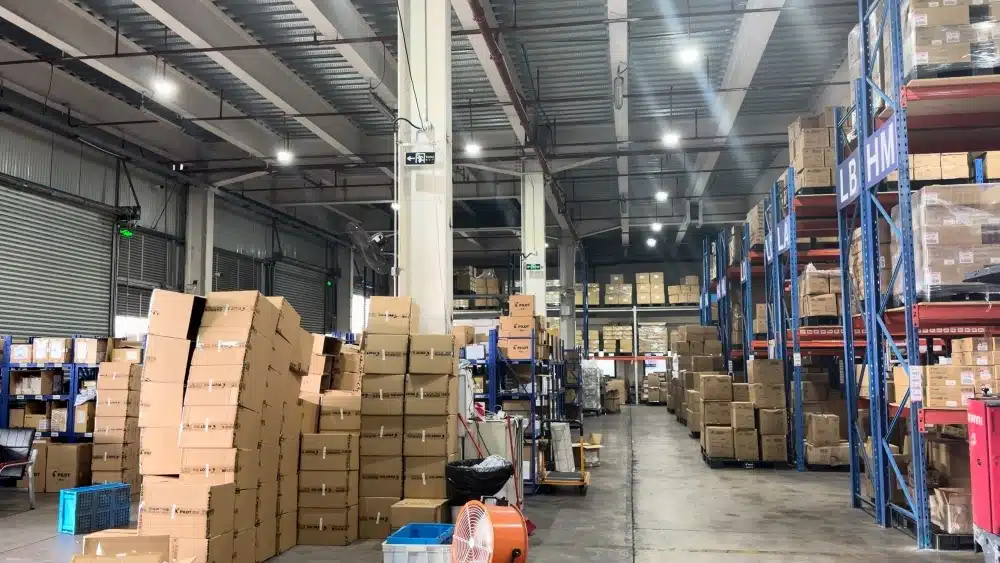
Why Fulfillment Delays Happen
Delays during fulfillment are a standard aspect of ecommerce logistics particularly in international supply chains. The immunity of any brand is not indisputable, but being aware of the underlying reasons enables the teams to be better prepared to respond.
Examples of typical triggers are carrier backlog at high volume times, variability of customs clearance in delay of cross-border shipping, peak season surcharges and volume spikes, weather or route delays, and warehouse to warehouse or supplier inventory transfer delays.
These are the common causes, common periods and the communication risks associated with them:
| Delay Cause | Typical Duration | Communication Risk |
| Carrier backlog | 1–3 days | Anxiety spike |
| Customs hold | 2–7 days | Confusion |
| Peak season congestion | 3–10 days | Expectation gap |
| Weather or route disruption | Variable | Frustration |
| Inventory reallocation | 1–5 days | Brand doubt |
These are not excuses, these are facts. When these are recognized at the initial stage of communication, it becomes hard to assume that they are negligent.
Principles of Effective Delay Communication
Good delay communication is able to transform the possible negativism into moments of building of trust. It is not about the amount of messages, but it is about the quality and the timing.
The most important is the speed of response, preferably hours after identifying a problem. Transparency involves telling what you know and not promising too much. Defined timelines provide the customers with something tangible to base their expectations. Accountability is shown through an ownership tone (We are actively keeping watch on this on your behalf). Lastly, the use of reassurance monitoring ( “We’ll update you by [specific time/date] will help avoid repetitive questions.
The following is the basic structure that we have realized works on thousands of orders:
| Communication Principle | Why It Matters |
| Acknowledge quickly | Reduces escalation |
| Provide realistic ETA | Builds credibility |
| Avoid vague wording | Prevents repeated inquiry |
| Offer next update timeline | Sets expectation |
| Maintain calm tone | Protects brand image |
These are not theoretical principles. Choosing to remain consistent with the variables in cross-border fulfillment reduces support loads and increases retention following shipping delay.
Template 1: Minor Delay (1–3 Days)
The most frequent and least challenging to deal with (when proactively dealt with) are minor delays such as carrier backlog, minor route changes.
An expeditious, non-alarming update at this point will prevent most of the anxiety spikes and customers will not open support tickets too early.
Subject line: Your Order Update: Minor Shipping Delay.
Message body template:
Hi [Customer Name],
We just wanted to have a heads-up with you that your order [ORDER NUMBER] has had a slight delay shortly during transit.
The carrier has now been backlogged and this has moved the estimated delivery to [ NEW ETA, e.g., 2-3 days from original ]. We are closely following it, and we are going to move soon.
Another update will be sent by [specific time/date, e.g., end of day tomorrow] in case there is any change. Meanwhile, you may check progress here: [TRACKING LINK].
We are grateful to your understanding–we do value your forbearance.
Best regards,
[Your Name]
Customer Operations
[Your Brand]
This template is also kept to the point, takes the issue as its own responsibility without giving too much detailed information and promises to follow up.
Template 2: Moderate Delay (4–7 Days)
Middle of the pack delays can be as a result of customs processing or inventory movements. In this case, customers require more context in order to remain calm.
Subject line sample: Some important information: Your Order Delivery Schedule.
Message body template:
This is to inform you regarding your latest order [#ORDER NUMBER]. Regrettably, we have been faced with a moderate delay because of [long clearance of customs / carrier volume].
The new estimated arrival has been changed to [NEW ETA e.g. 5-7 days since original date]. Our department is tracking the shipment order daily and making efforts to solve this within the shortest time possible with the help of our partners.
We shall keep you informed by giving the next status update by [a particular date/time, e.g., this Friday afternoon]. To see your real time status, at any time, check [TRACKING LINK].
To cover the inconvenience, as a small token to the inconvenience, we have provided [ optional: e.g., a 10 credit to your account / free upgrade on the next order ].
Your further trust is appreciated.
Warm regards,
[Your Name]
Operations Team
[Your Brand]
Only add goodwill when it suits margins it works to keep them on but should not be automatic.
Template 3: Customs or Cross-Border Delay
The time taken in cross-border shipping at the customs is random because of the checks on the regulations, reviews of documents, or random checks.
The customers usually fear the lost packages, and thus it is necessary to explain the processes clearly.
E-mail heading: Notice on Your International Order -Customs Processing.
Message body template:
Hello [Customer Name],
Your order has been received [#ORDER NUMBER]. We are writing to report on its progress.
Your package is at the customs of the destination country where it is to be cleared normally. Time of this step may differ based on volume and regulatory reviews- average hold periods are 2-7 days.
Fear not, all the papers have been taken care of and we are also tracking progress with our logistics associates. The actual estimated delivery deadline is [NEW ETA].
We will inform you as soon as it comes out and runs. Meanwhile, updates can be viewed here: [TRACKING LINK]. We will make contact again by [specific date/time] or earlier should it be resolved.
We thank you to put up with this unified global procedure.
Best,
[Your Name]
Fulfillment Support
[Your Brand]
This reassures by framing it as “routine” while committing to updates.
Template 4: Severe Delay or Lost Shipment
Severe cases—like extended holds or apparent loss—require direct ownership and clear resolution paths.
Subject line example: Important: Update and Options for Your Order [#ORDER NUMBER]
Message body template:
Dear [Customer Name],
We’re truly sorry for the significant delay with your order [#ORDER NUMBER]. After thorough investigation, the shipment appears [e.g., held indefinitely / not scanning as expected].
We take full responsibility and want to make this right. Your options are:
- Reshipment of the item at no additional cost (expected to arrive by [NEW ETA])
- Full refund processed within [timeframe, e.g., 3–5 business days]
Please reply with your preference, or let us know if you’d like assistance choosing. We’ll handle everything from here.
Again, our apologies—we value your business and are committed to resolving this promptly.
Sincerely,
[Your Name]
Senior Operations
[Your Brand]
Stay professional: own it, offer solutions, avoid emotional over-apology.
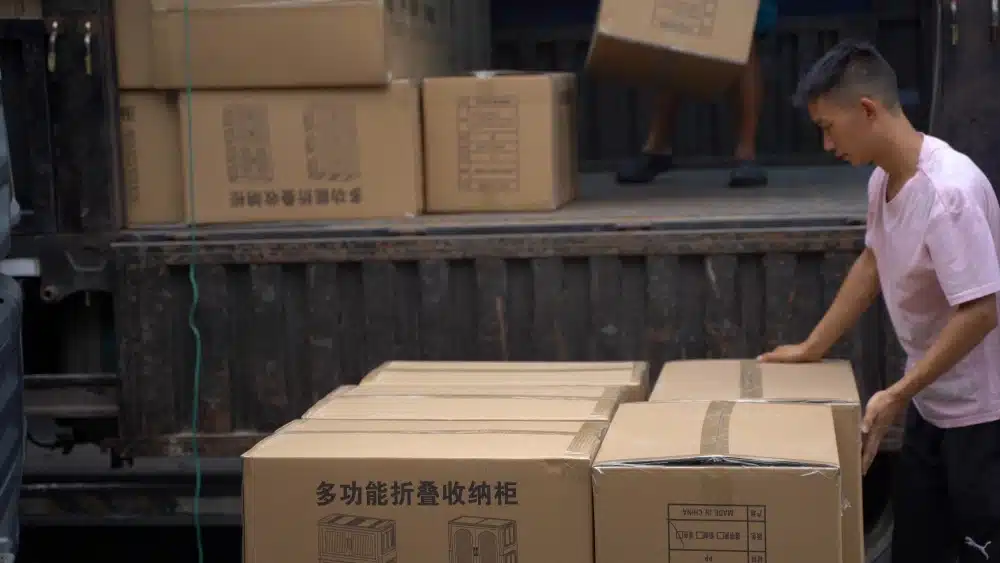
How Fulfillment Systems Reduce Delay Communication Risk
Advanced fulfillment systems reduce considerably the occurrence and magnitude of delays that require communication. Issues are flagged early by real time tracking integration. Delay alerts are activated automatically and proactive notifications are given before requested by the customer. Transit is reduced when strategic inventory positioning (Multi-region warehouses) takes place. Single-point failures are eliminated by carrier diversification. The cross-border shipments are reduced through regional warehouse strategies.
When the brands utilize China 3PL fulfillment services where there is excellent system integration, the number of escalations reduces since the visibility begins at the origin.
Impact on Refund Rate and LTV
Organized communication has a direct impact on such bottom-line measures as refund rates and repeat purchase behavior.
Improper management leads to refunds and churn, proactive strategies will safeguard LTV.
| Communication Quality | Refund Rate | Repeat Purchase Rate | LTV Outcome |
| No update | High | Low | Reduced |
| Late update | Moderate | Moderate | Unstable |
| Structured proactive update | Low | Higher | Protected |
| Transparent + compensation | Controlled | Stable | Retained |
Evidence of cross-border activities always indicates that any proactive updates can alleviate the number of refund requests since customers tend to be engaged instead of frustrated.
Common Mistakes Brands Make
Even professional teams fall into these traps when they are in the stressful times:
- Aggressive apologizing that may render the brand unreliable.
- Giving false promises on the delivery dates, which causes frequent bad news.
- Shifting the perceived responsibility over to carriers or outside factors.
- Nobody should take support tickets at 24hours and leave without responding, frustrating all along.
- Sending impersonal copy- paste messages.
This prevents these, which is strategic in tone and trust.
Conclusion — Delay Communication Is a Retention Strategy
Delay management of fulfillment is never merely support but it is a retention key. Most of the brands that view customer communication as an operational process when fulfillment delays happen, instead of being a firefighting mechanism, stand in a better position to minimize refusal, safeguard consumer confidence, and sustain customer lifetime value.
Punishment on time, transparency and performance ensure that a potential challenge problem in logistics is transformed to show reliability. Customers will never forget how you treated them in the hard times in ecommerce, particularly cross-border, much more than they actually remember the product.