The decision between picking and packing services outsourced or in-house is not only a cost choice but a business decision that has an impact on high capacity, efficiency and the business development in the long term.
A lot of Shopify and Amazon sellers recommend in-house fulfillment at first, as it seems easier and easier to manage at the initial steps. However, with increasing volume of order the obscurity of managing stocks, labor, packing and shipping usually overwhelm the apparent value. Outsourced pick and pack services, in contrast, transfer many of these fixed costs to specialized vendors and turn many of them into variable costs.
With this guide, you will dissect the actual disparities, advantages, and drawbacks along with practical considerations of making choices thus to make sure that your fulfillment strategy compliments your current phase and future objectives.
What Is In-House Fulfillment?
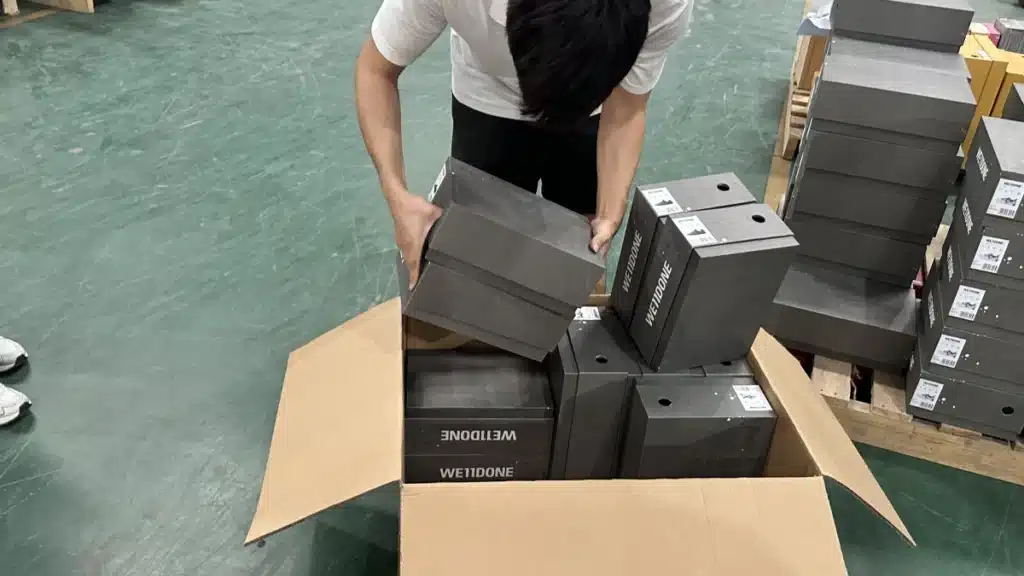
In-house fulfillment This is where the company does all the order fulfillment tasks in-house, including accepting inventory to getting, packing, and dispatching the order to the customer.
Core Responsibilities in In-House Fulfillment
- Inventory Management: Whether in a warehouse space that you own or leased, storage and tracking products.
- Order Processing: Receiving and accepting customer orders using your systems.
- Picking and Packing: Semi automated or manual process of selecting items and shipping them.
- Shipping: Organizing the work with carriers, regulating delivery times.
You have a total control of all steps under this model. Nevertheless, it requires a large investment: warehouse lease, shelves, packing supplies, workforce (full time or part-time employees), warehouse management systems (WMS) and regular training.
With small teams or low-volume operations, in-house fulfillment might seem straightforward. With scale, the driving load rises swiftly such that it can easily shift attention to other tasks such as product development and marketing.
What Are Pick and Pack Services?
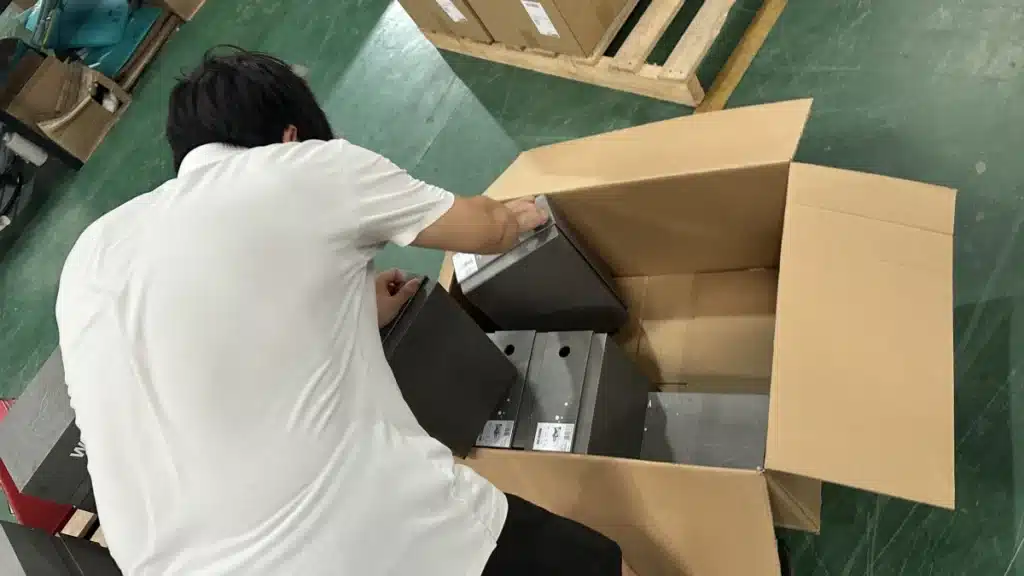
Pick and pack services entail sourcing to a third party logistics (3PL) provider the labor-intensive aspects of order fulfillment, namely, retrieving objects in the warehouse (picking) and wrapping them safely to be shipped (packing) to the customer.
Core Functions of Pick and Pack Services
- Picking: The process of effectively finding and retrieving the right products on warehouse shelves, which in many cases is aided by sophisticated inventory system.
- Packing: Professional filling of orders with protective materials, inserts or branding materials as necessary.
- Workflow Integration: A smooth integration with your online stores (Shopify, Amazon, and others) to synchronize orders and tracking them in real-time.
Contrary to full 3PL services which can also include storage or returns, pick and pack only addresses the implementation of the operation and you can still control the inventory sourcing and strategy in most situations. The companies considering the outsourcing solutions in picking and packing services versus maintaining the process should consider the level of operations against anticipated growth.
Key Differences Between In-House Fulfillment and Pick and Pack Services
The two strategies are vastly different in both functional and financial aspects. Here a simple comparative view, next to each other:
| Factor | In-House Fulfillment | Pick & Pack Services (Outsourced) |
| Control | Full control over every process | Partial control; provider handles execution |
| Cost Structure | High fixed costs (rent, labor, equipment) | Mostly variable costs (per-order fees) |
| Scalability | Limited; requires new space/staff for growth | High; leverages provider’s existing infrastructure |
| Setup Complexity | High (warehouse setup, hiring, systems) | Low (integration and onboarding) |
| Operational Burden | High (daily management of staff and processes) | Reduced; focus shifts to core business |
| Technology | You manage and maintain WMS/automation | Provider supplies advanced systems |
These variations are amplified with an increase in order volume. Their knowledge can enable the eCommerce owners to avoid the pitfalls, like underestimating the costs of scaling within the in-house business.
Pros and Cons of In-House Fulfillment
Advantages of In-House Fulfillment
- Full operational control such as custom packaging and branding inlays as well as last minute process modifications.
- Direct control over the accuracy of inventory and the quality.
- Higher flexibility of highly specialized or sensitive products.
- Potential long-term cost savings, very high, stable volumes, and with which you can negotiate your own carrier rates.
Limitations of In-House Fulfillment
- Expensive initial and maintenance expenses in terms of warehouse space, stock, man power and technology.
- Poor scalability in times of seasonal highs or high growth – enlarging consumes lots of capital and time.
- Greater complexity of operations and overheads on management that may focus on sales and product strategy.
- Strong likelihood of inefficiencies, errors or delays in the case where processes are not optimized.
In-house fulfillment can be appropriate when the business has lower order volumes (usually less than several hundred orders per month) that are predictable or when the business requires high control of all aspects of its interaction with the customer.
Pros and Cons of Pick and Pack Services
Advantages of Pick and Pack Services
- Much reduced operational overheads – there will be no requirement to recruit, train, and employ warehouse employees to pick and pack.
- Superior scalability which swells along with your business without comparable augmentations in fixed expenses.
- Access to the optimization of direct time off, to the latest technology of warehousing, as well as to the bargained shipping rates that small business can hardly obtain.
- Quick procession of orders and increased accuracy through special expertise and systems.
Limitations of Pick and Pack Services
- Less direct control in managing the day-to-day management of orders.
- Reliance on the efficiency and availability of the provider and their communication.
- Possible integration difficulties at the initial set up or when accommodating of workflows.
- Potential other charges on special requests or accessorial services.
Pick and pack services are especially useful to fast growing eCommerce brands, multi channel sellers, and those with seasonal changes.
Cost Comparison: In-House vs Outsourcing
Price is usually the determining element, although the actual scenario encompasses both the apparent and additional costs.
Cost Structure Comparison
- Warehouse Rent/Space: This is necessary and in-house fixed; it is generally covered or is based on usage in the case of outsourcing.
- Labor: Salaries, benefits, overtime in-house fixed; variable per-order fees including pick and pack service.
- Equipment & Systems: You will incur all costs of shelving, scanners and WMS in house; vendors will include these in the service.
- Scaling Costs: Expensive and intensive in-house; significantly less and more predictable upon outsourcing.
In reality calculations indicate that in-house may seem less expensive at lower volumes (less than 500-1000 orders/month) when you do not consider the worth of your own time. But with increases in quantities, outsourcing can often provide the reduction in the overall cost per order with the efficiency and bulk shipping advantages. There are numerous developing brands that report to convert fixed costs to variable costs, which enhances the cash flow, and minimizes the financial risks in slow periods.
When Should You Keep Fulfillment In-House?
In-house fulfillment is an effective option under such situations:
- Small and fixed order volumes (e.g. less than 200300 orders per month).
- Simple product catalogs with minimal customization needs.
- High demand of complete work control and brand management.
- Local or regional shipping orientation in which customers proximity is important.
- Adequate available space, capacities of the team, and capital to invest in infrastructure.
When what you are doing is predictable, and you find the idea of logistics as a part of your brand experience, then a retained approach can be fine, at least initially.
When Should You Outsource Pick and Pack?
Outsourcing is beneficial in instances where:
- The volume of orders is increasing at a high rate or is experiencing high spikes.
- You do sell through a wide range of channels (Shopify, Amazon, marketplaces) and must be integrated seamlessly.
- Space, warehouse or labour capacity is limited.
- You desire to free up management time and devote energy to marketing, product development or customer acquisition.
- You require a more rapid processing, more accuracy or an access to superior shipping rates.
A significant number of successful labels switch at 500+ orders a month or when it starts taking more than 2030% of their time to maintain fulfillment. Through outsourcing, you will be able to concentrate on growth and not on day to day logistical pain.
Conclusion — Align Fulfillment Strategy With Growth Stage
When deciding between in-house fulfillment services and pick and pack services, it all depends on your business size, product complexity, growth path and strategic priorities. Internal will give the highest level of control but it needs a lot of resources and a good scalability strategy. Pick and pack outsourcing provides efficiency, flexibility, and less responsibility, which are particularly important in expanding businesses in eCommerce.
A reflective analysis of your existing pain areas and future objectives is usually the best way to go. It is common to see many businesses initiate internally and outsource as they grow and sometimes have a hybrid approach during the changeover phases.
When deciding between pick and pack services provided by an outsourcing company and those same services performed internally, the key aspect to weigh is how the ways to act attract or fit your cash scenario, staffing limitations, and customer requirements. The right fulfillment strategy does not only save you money, but is also a way of liberating yourself so that you can create a better, more competitive business.