Pick, pack and ship are the three crucial processes involved in the eCommerce order fulfillment; the products are chosen at the inventory level, securely packed to deliver, and ship to the consumer.
The combination of these steps constitutes the working basis of processing online orders. They also directly influence the speed at which orders are completed, the accuracy at which deliveries will be made and the experience of a customer with a brand.
Shipping is the main aspect of fulfillment that is assumed in many businesses. As a matter of fact, the picking and packing processes are equally critical since they have to make sure that the right products are picked and packed to be shipped.
Pick, pack, and ship are more than a series of operations but rather an organized method of operation that speeds up or slows down the way eCommerce orders are managed and received and delivered.
Breaking Down Pick, Pack, and Ship
Pick, pack, and ship are three different steps that are interconnected and each has a specific role to play in fulfilment operations. They develop a smooth flow between reception of orders and delivering to customers when done well.
Here is a concise description of the procedure:
| Step | Definition | Operational Role |
| Pick | Selecting items from inventory | Ensures correct products are chosen |
| Pack | Packaging items securely | Protects items and prepares for delivery |
| Ship | Sending orders to customers | Completes fulfillment |
Every step should be done correctly in order to ensure efficiency and customer satisfaction. One error in a step would trickle down the line causing delays, mistakes or dissatisfied clients.
Step 1: What Does “Pick” Mean?
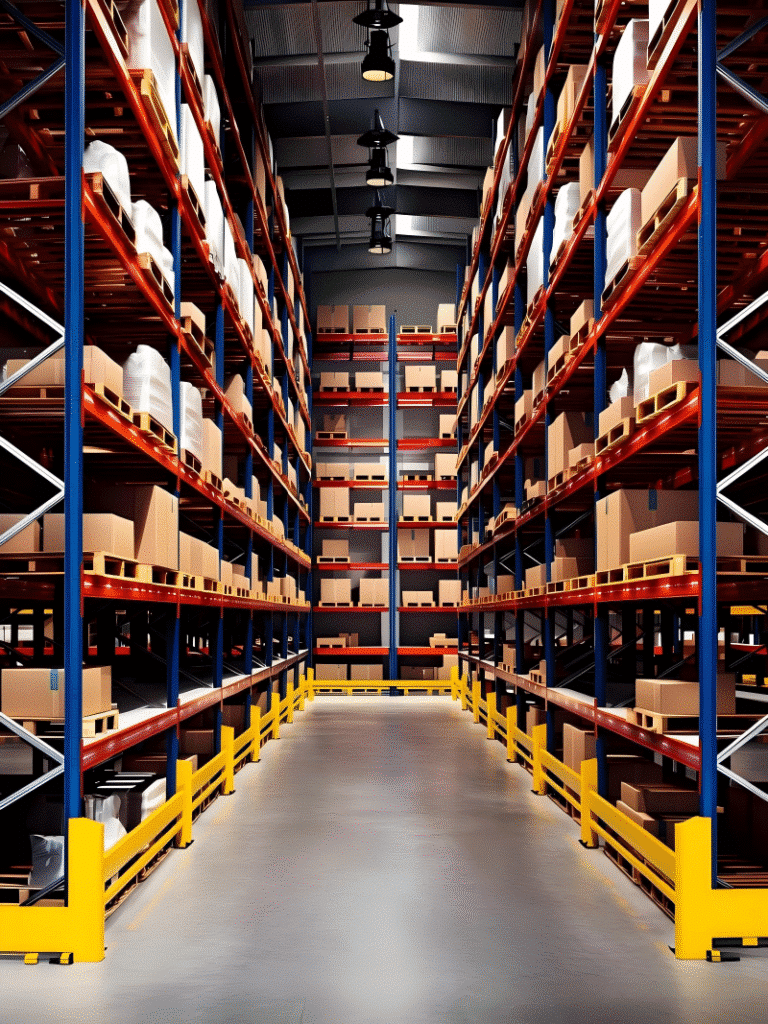
The process of removing items in storage areas depending on orders is known as picking. It is the initial physical act in the fulfillment process and provides the speed of what is going to come next.
Key Activities in Picking
- Finding products at the warehouse by the picking lists or computer systems.
- Checking SKU, quantity and condition against the order.
- Ready products to deliver to the packing station (most of the time through carts, conveyors or robots)
Why Picking Accuracy Matters
The accuracy of picking is important. Mistakes during this phase, e.g. choosing the wrong object, the incorrect size or the incorrect amount, result in returns, refund, customer reactions, and negative brand image. ECommerce business can be costly to the company, especially in high-volume setting when the error rate is as low as 1%.
Common Picking Methods
Various warehouses also select their picking method according to the volume of orders, product mix and the layout. The most popular methods are as following:
- Single Order Picking (also known as discrete picking): Each order separately. Simple and straightforward, most appropriate when the volume of orders is low, or when the products are very customized or fragile.
- Batch Picking: Multiple orders get together and are picked at a time. One trip to a picker yields multiple orders of the same SKU and the orders are sorted at a later time. Best suited to medium volume operations.
- Zone Picking: the warehouse is zoned and pickers are given a particular area. Products of various zones are then grouped. Suitable to high volume and SKUs.
- Wave Picking: Orders are issued in sequences of waves according to their requirements such as shipping dates or carrier cut off hours. It integrates both the batch and zone picking to enhance integration with packing and shipping.
These techniques are commonly stacked together with experienced fulfillment teams or warehouse management systems (WMS) employed to streamline the route and take the shortest time possible on the move, which can contribute up to 50-70 percent of picking labor.
Step 2: What Does “Pack” Mean?
Packing is the process to package the selected items to be shipped. It is the step of connecting the operations of the warehouse and the door of the customer.
Key Activities in Packing
- Using the right packaging materials (boxes, mailers, bubble wrap, void fill, etc.).
- Tying down goods to avoid damage during the transportation.
- Including shipping labels, invoices, return labels and any other promotional inserts.
- Final quality checking and weight/dimension checking.
Important Packing Considerations
There are a number of factors that affect the quality and cost of packing:
- Packaging Material — Immediately influences product protection (e.g., sustainable or branded may be used to improve unboxing experience).
- Box Size — Right-sizing saves shipping expenses as well as waste of materials and avoids any movement within the package.
- Branding Elements – Special tape, thank you cards or inserts can transform a standard offering of shipment into a significant customer touchpoint.
- Label Accuracy — Guarantees that the package is sent to the correct address and it meets the donnelly of the carrier..
Packing is not only practical but also affects the customer perception of the brand when receiving their delivery. A packed product will reach its destination intact and will produce an impression, whereas when it is packed badly it will result into complaints despite sending out the correct product.
Step 3: What Does “Ship” Mean?
Shipping The process of transporting packed orders to customers using logistic carriers (such as DHL, FedEx, UPS or local postal services).
Key Activities in Shipping
- Choosing the best shipping route and carrier, according to price, time and place.
- Creating tracking numbers and labels.
- Recording current status of order in the store and informing the customer.
- Devolution of packages to the carrier within cut-off times.
Why Shipping Efficiency Matters
Direct impact of shipping includes the time of delivery, overall satisfying the customer and expenditure incurred. Delays or expensive shipping costs can reduce the margins, and affordability, and reliable delivery with track-abilitation can build a trust and stimulate repeat-buying.
How Pick, Pack, and Ship Work Together
The three steps relate closely to each other and have to operate as a single workflow. The delay or error of picking ripples into packing and shipping; poor packing can add costs to packaging or breakage rates.
Ecommerce business is dependent on structured pick pack and ship solutions to businesses often operated by businesses to streamline these processes and make each run smoothly and effectively.
Workflow Relationships and Risks
- Selection is based on precise inventory location and real-time stock information. Risk not efficient: Inappropriate items picked causing rework.
- Packing requires the proper and all picked items. Risk of inefficiency: Wrong or faulty orders to the customers.
- Shipping requires properly packed and labeled orders. Risk inefficient: Late deliveries, increased prices or non-deliveries.
The fulfillment is faster, more accurate and scalable when the entire pick-pack-ship process is streamlined and technology is employed (barcodes scanning, automated sorting, or built-in WMS).
Why Pick, Pack, and Ship Is Critical for eCommerce
Pick, pack, and ship directly affects the overall business performance in a number of ways which are measurable.
Key Impacts
- Accuracy in Orders: Minimizes customer complaints and returns. There is high accuracy and the brand is given confidence.
- Operational Efficiency, Co-ordinates, workflows, minimises labour waste and reduces time in processing orders.
- Customer Experience Request- Customers will get high satisfaction and loyalty through frequent, punctual, and without damage delivery.
- Scalability -Grows with the business demand throughout the business peak seasons without corresponding escalations in complexity and expense.
To the expanding eCommerce merchants on a platform such as Shopify or Amazon and the dropshipping sellers, pick-pack-ship is not a luxury that a growing business can afford to do without anymore: it is the key to business sustainability.
Who Needs Pick, Pack, and Ship Solutions?
Different business models need this kind of workflow particularly when an appreciation in the amount of orders occurs.
Common Use Cases
- eCommerce Sellers – Direct-to-consumer online orders are made with short turnaround.
- Dropshipping Businesses – The products are outsourced to be physically handled and their business is concentrated on marketing and sales.
- Subscription Box Brands — Dealing with regular shipments that appear or happen at the same quality and time.
- Global Brands — Organizing international logistics, compliance, and multicarrier transfer.
These steps cannot be handled manually effectively with an increase in the volume of order. At one stage, many businesses will be on the brink of collapse because they need professional fulfillment support to sustain the levels of service delivery.
Common Challenges in Pick, Pack, and Ship Operations
Lots of companies face the problem of scaling up fulfilment.
Typical Challenges
- Lack of good organization of inventory resulting in slow search.
- Slow order processing that slows down during peaks.
- Ineffective routes in picking leading to an overload in walking and loss of energy.
- Lack of uniform packaging patterns that lead to damages or increase in shipping expenses.
- Absence of linkage of store, warehouse, and carriers in a system.
Such difficulties may decrease efficiency, elevate operation expenses, and damage customer satisfaction. Some of the common solutions to them include improved layout planning, use of technology, employee training and often contracting established fulfillment service providers.
Conclusion — Pick, Pack, and Ship Is the Core of eCommerce Fulfillment
Pick, pack and ship is not just a mere routine but the essence of the work of eCommerce fulfillment. All the steps are very important in order to improve the correct handling of orders and their efficient delivery.
Having an insight into the operation of these stages can enable business to come up with more consistent and scalable systems of fulfillment. Whether you are running operations internally or considering outsourced options, this workflow can be optimized to ensure you deliver on customer expectations, manage costs and concentrate on your core business.