
Warehousing Inventory storage is an organized process of receiving, organizing, tracking and maintaining goods in a warehouse in such a way that they are readily available, secure and can be easily ordered to meet customers demands. It involves physical location as well as proper labeling, real time positioning and smooth connectivity with the larger logistics processes.
Most individuals believe that inventory storage is just a mere arrangement of items on shelves yet in the real sense it entails organization, constant supervision, and close integration with picking, packing and shipping procedures. It can be the foundation of sustainable warehouse practices when properly implemented.
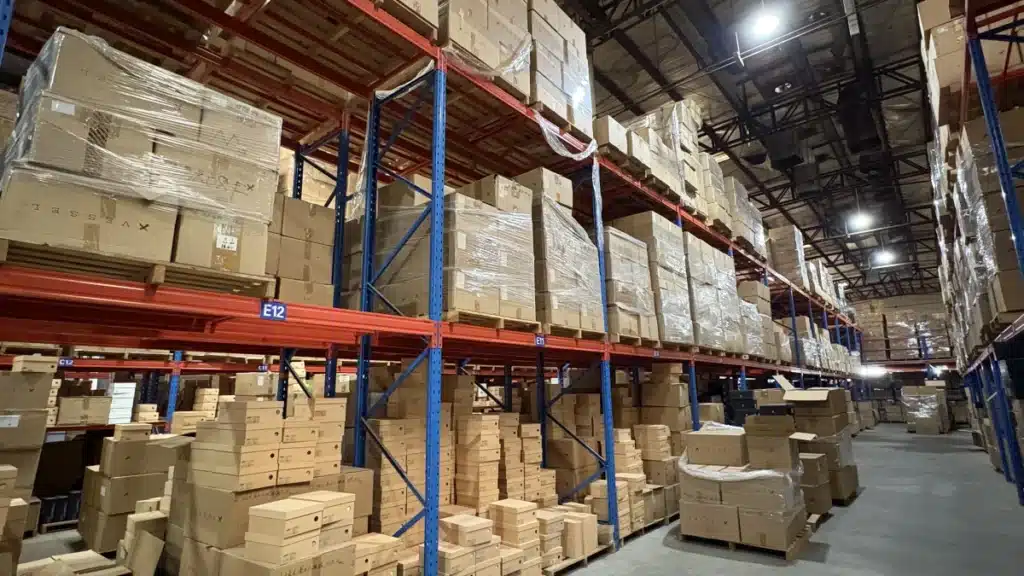
What Is Inventory Storage? (Simple Definition)
Inventory storage is most simply a term that is used to refer to the physical and operational management of inventory within a warehouse. It is an essential component of warehouse operations in inventory management that provides safety of products, ease of their location, and efficiency in their movement in response to order receipts.
Professional warehouse inventory storage, as opposed to simple storage, incorporates physical location with intelligent technologies that facilitate accurate inventory management and quick stock retrieval.
| Element | Description |
| Storage | Physical placement of goods in designated areas |
| Organization | Structured arrangement of inventory by category, size, or demand |
| Tracking | Monitoring stock levels and movements in real time |
| Accessibility | Easy and safe retrieval for order processing |
Such a combination transforms a warehouse into a vibrant center that can directly influence the performance of fulfillment.
Why Inventory Storage Is Critical in Warehousing
The effectuality of inventory storage is what directly decides the smoothness of a warehouse. Bad storage habits result in lost or misplaced products, missed deliveries, and dissatisfied customers, whereas good inventory storage in the warehouse is associated with quantifiable savings in speed, accuracy, and cost-effectiveness.
With the current eCommerce landscape that is highly dynamic and fast-paced, with same-day or next-day delivery becoming the new norm, good storage systems provide real competitive advantage to sellers.
| Benefit | Impact |
| Accurate stock tracking | Fewer picking errors and stockouts |
| Faster picking | Improved delivery speed and customer satisfaction |
| Organized layout | Higher operational efficiency |
| Inventory visibility | Better demand forecasting and decision-making |
Companies investing in the appropriate storage minimise holding costs, damage to products and achieve a stricter control of the overall supply chain.
How Inventory Storage Works in a Warehouse
Inventory storage is a definite, repeatable workflow, which starts when the goods are received to the warehouse and extends until the time the goods are delivered. Knowing each of the steps will aid in explaining why storage is much more than simple putting away.
It usually involves:
- Receiving goods – Goods have been shipped in by suppliers or manufacturers.
- Inspection – The items are inspected with regard to quantity, quality, and condition.
- Labeling – SKU or barcode identification is done on each unit or carton.
- Storage allocation- Goods are stored in the most appropriate place in terms of size, demand and handling.
- Tracking – all the stock quantities and their locations are updated in the warehouse management system.
A lot of companies depend on the high-tech systems of inventory storage and warehousing so that the products could be properly arranged and prepared to be fulfilled effectively.
| Step | Description |
| Receiving | Goods arrive at the warehouse |
| Inspection | Quality and quantity check |
| Labeling | Assign SKU or barcode |
| Storage | Place in designated location |
| Tracking | Monitor movement and update records |
This organized system eliminates confusion and has inventory correct on the first day.
Types of Inventory Storage Systems
Storage approaches are different depending on the products and business models. The selection of the appropriate warehouse setup of storage systems can significantly enhance the space usage and speed of picking.
The most typical types in the contemporary warehouses are as follows:
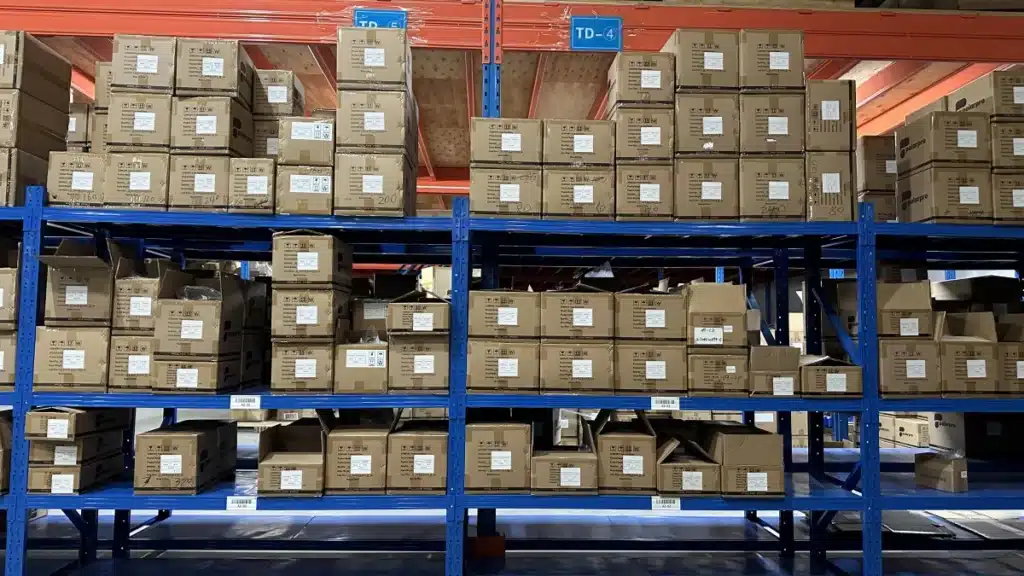
- Shelf Storage: Ideal for small to medium-sized items that need frequent access, such as electronics accessories or beauty products.
- Pallet Storage: This type is used when large volume goods and heavy products are involved and are usually furniture, appliances or wholesale size.
- Bin Storage: Ideal to store high volumes of small SKUs, e.g., spares, hardware, or fashion accessories.
- Automated Storage Systems: AS/RS (Automated Storage and Retrieval Systems) are useful in high volume operations to enhance speed and minimize human error.
| Storage Type | Best Use Case | Advantage |
| Shelf Storage | Small items | Easy access and quick picking |
| Pallet Storage | Bulk goods | Efficient space usage |
| Bin Storage | Small SKUs | Better organization and visibility |
| Automated Storage | High volume | Speed and accuracy |
The choice of the right combination of these systems is based on the product attributes, volume of orders and expansion strategies.
Inventory Storage vs Inventory Management
Although the two terms are very similar, they are used differently in the operations of warehouses.
Storage of inventories is concerned with the physical aspect of it – where and how the goods are stored. On the other hand, inventory management encompasses the wider information-driven procedures of tracking, ordering, and optimization of stock quantities.
| Aspect | Inventory Storage | Inventory Management |
| Focus | Physical storage | Data and tracking |
| Role | Placement of goods | Monitoring and control |
| Function | Organization and accessibility | Optimization and replenishment |
Practically, the two collaborate with each other. Good storage systems give the correct base on which inventory management systems depend in forecasting and decision making.
Common Challenges in Inventory Storage
Even seasoned teams have challenges in handling warehouse inventory storage. Being aware of these issues at an early stage avoids larger issues later on.
Common issues include:
- Wastage due to overstocking which occupies valuable space and capital.
- Ungood organization resulting in loss of objects and slow collection.
- Absence of real-time tracking that leads to stock variations.
- Poor layout that has increased pickers travel time.
Such issues tend to add up, leading to increased operating expenses, shipment delays, and decreased customer satisfaction.
Best Practices for Effective Inventory Storage
Effective warehouse operations are guided by best practices that ensure inventory storage is dependable and scalable.
- Adopt clear and consistent labeling systems (barcodes or RFID) to avoid guessing when picking.
- Maximize warehouse design by locating fast moving products near the packing areas.
- Install effective inventory monitoring tools that are real time.
- Audit stocks on a routine basis to identify discrepancies in time to influence orders.
- Check and change storage locations according to demand patterns of season.
- Train operators should be trained to handle effectively in order to minimize damages and enhance safety.
The practices are useful in keeping high accuracy rates and in assisting easy scaling as the volumes of orders increase.
Conclusion — Inventory Storage Drives Warehouse Efficiency
Warehousing Inventory storage is an essential part of warehousing that promises the availability of goods in an orderly manner and in a way that can be easily fulfilled. With proper storage mechanisms, processes and proper tracking, it can greatly minimize mistakes, expedite operations and decrease the total logistics expenses.
To eCommerce sellers, Amazon FBA operators, and emerging brands, warehouse inventory storage is not a luxury, but a necessity that guarantees consistency in performance and long-term expansion in competitive markets.
Treating storage as a strategic component of warehouse operations instead of mere holding area enables businesses to gain accuracy, quick turnaround times, and control their entire supply chain.