A significant number of business people believe that a fulfillment centre and a warehouse is one and the same thing. In real-life, they have very different functions in the supply chain. The warehouse is mainly designed to store whereas a fulfillment center is meant to process and dispatch customer orders. The two have vital but complimentary functions in contemporary logistics. Awareness of this difference will enable eCommerce sellers, dropshippers, and supply chain managers to prevent expensive errors in their operation and create more efficient systems.

What Is a Warehouse?
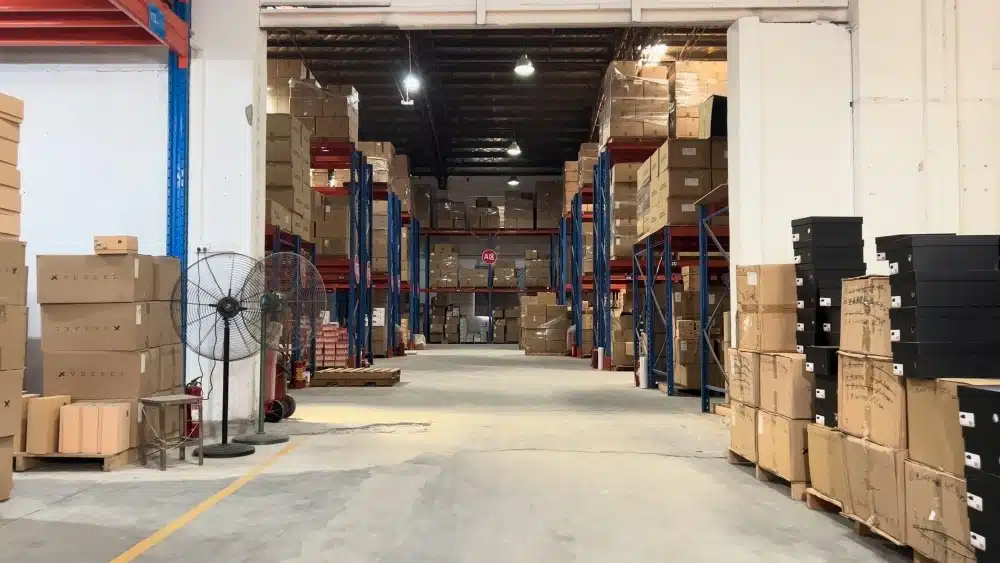
A warehouse is a building that is used in the long or short-term storage of goods. Its core is to store inventory in a safe location, and to plan it to be utilized in future.
Warehouses are known to process huge amounts of products that can remain in stock many weeks, months or even years. They put an accent on space, inventory tracking, and damage/theft protection. Activities within a warehouse are relatively simple includes delivery of shipments, warehouse shelving/stocking them on shelves and racks, counting inventory periodically and shipments that require delivery are prepared.
Key functions of a traditional warehouse include:
- Stocking of raw materials or finished product in large quantities.
- Sensitive items under climate controlled environments.
- Simple inventory control systems.
- Pallets and container loading and offloading.
Warehouses serve as an effective place to cushion against the supply shocks and involuntary price changes in businesses that bring in products (China) or carry a seasonal stock.
What Is a Fulfillment Center?
A fulfillment center is a dedicated logistics hub that helps to process and ship customer orders within the shortest possible time and precision. The fulfillment centers as opposed to warehouses, value speed and accuracy of order.
Goods are delivered to these centers by suppliers or warehouses and they are stored in temporary storage before undergoing all stages of the order lifecycle: e.g. picking goods off shelves, filling them up, attaching labels to packages and delivering the package by the carrier to final destination. Most fulfillment centers also provide value added services like kitting, bundling, custom packaging and inserting marketing material.
The fulfillment centers today are run with high-tech (such as warehouse management system (WMS), picking tools, and real-time inventory synchronization). This enables them to facilitate large scale eCommerce business on platforms such as Amazon, Shopify and Tik Tok Shop.
Key Differences Between Fulfillment Centers and Warehouses
Inasmuch as both warehouses hold inventory, their fundamental aims, daily functions and performance indicators vary greatly.
| Aspect | Warehouse | Fulfillment Center |
| Purpose | Storage | Order processing and shipping |
| Inventory Flow | Slow (long-term holding) | Fast (quick turnover) |
| Operations | Basic (receiving & storing) | Advanced (picking, packing, shipping) |
| Use Case | Bulk storage, seasonal inventory | eCommerce fulfillment, retail orders |
| Technology Level | Standard inventory systems | Sophisticated WMS + automation |
| Cost Focus | Storage cost per square foot | Cost per order + speed |
Smarter businesses in reference to their logistics approach are those that have learned these differences. In fact, many of these successful operations are a mix of the two through integrated warehouse and fulfillment center services to effectively handle the storage and fast order processing.
How Fulfillment Centers and Warehouses Work Together
Fulfillment centers and warehouses do not compete with each other, they are the complementary components of an effective supply chain.
In a classic workflow, materials are shipped by manufacturers and/or suppliers to a warehouse where they are initially stored long-term. Inventory is relocated (or moved) to a closer fulfilling facility when there is a customer demand. Picking, packing, and shipping to final customers is then done by the fulfillment center.
This hybride model has a number of benefits:
- Warehouses are useful in minimizing the cost of storing slow-moving or bulky goods.
- Slow-moving products are also delivered quickly by the fulfilment centers.
- State-of-the-art systems enable real time visibility and automatic synchronization of inventory.
- Storage and fulfillment capacity is scaled independently and can be interpreted by businesses.
Co-ordination between the two helps to cut the holding cost, stockouts and general customer satisfaction.
When Should You Use a Warehouse?
A warehouse should be used primarily when the business activities that you are dealing with involve long- term storage that is cost effective as opposed to processing orders daily.
A warehouse would be most suitable in such cases:
- You are bringing in high volumes of materials of foreign origin (including that of China)
- Your inventory has low turnover or is seasonal
- You will have to store work-in-progress or raw material.
- Your business model is wholesale or B2B distribution.
- You would like to enjoy bulk buying discount and you require some room to store stock.
In the case of the SMEs and import/export companies, warehouses allow them to decrease the capital load through safe and organized storage without the cost of daily operational fulfillment exercise.
When Should You Use a Fulfillment Center?
Attach a fulfillment center, in case the activity speed, accuracy, and customer experience are important in making direct-to-consumer or eCommerce sales.
Fulfillment centers are ideal for:
- Online stores with a high volume delivered via Amazon, Shopify, or Tik Tok Shop.
- Companies that need the goods within a short time (same-day or next-day shipping).
- Those companies which provide dropshipping or one-piece delivery.
- Works that require value added services such as labeling, packaging or kitting.
- Brands that grow faster and have high order changes.
As customer demands are increasing to have goods delivered fast, fulfillment centers have emerged as a necessary part of remaining competitive in the current eCommerce environment.
Benefits of Each Model
Warehouses and fulfillment centers are both associated with unique benefits based on the level of your business and the kind of orders you place.
| Benefit | Warehouse | Fulfillment Center |
| Cost | Lower storage cost | Higher operational cost but better per-order efficiency |
| Speed | Slower processing | Much faster order turnaround |
| Efficiency | Basic inventory management | High automation and accuracy |
| Scalability | Limited by space | Highly scalable with demand |
| Flexibility | Good for bulk and seasonal stock | Excellent for eCommerce and promotions |
Numerous start-up businesses begin with a basic warehousing system, and other service offerings in the form of fulfillment are implemented when order volume expands.
Common Mistakes Businesses Make
Experienced logistics professionals can often be mistaken in regards to the functions of warehouses and fulfillment centers, which become inefficient.
The following are the most prevalent errors:
- Imagining that they are the same – that any storage facility can work with fast order fulfillment.
- Selection on price alone– selecting the lowest priced but not based on speed and standard of service.
- Undervaluing the complexity of picking and shipping, and concentrating on storing only, overlooking the fulfillment needs.
- Ignoring scalability – committing to a fixed warehouse configuration that will not be able to expand with the eCommerce demand.
- Lack of integration – inability to unify warehouse and fulfillment system, and the visibility of inventory is compromised.
The first step to avoiding these pitfalls is to ensure that you define your storage versus fulfillment requirements.
Conclusion — Both Play Critical Roles in Logistics
Fulfillment center and warehouses play complementary but dissimilar roles in logistics. A warehouse is the best option because it offers secure and cost-effective storage, whereas a fulfillment center aims at the benefit of quick order processing and customer delivery.
Companies that know these differences and how to use both together can greatly enhance their operational effectiveness, lower operational costs and provide superior patronage experiences. Regardless of whether you manage an eCommerce brand, operate a dropshipping organization, or do international procurement, select the optimal balance of warehousing solutions and fulfillment solutions is the key to success in the modern competitive business world.