
Delayed performance on TikTok Shop is not an insignificant operation accident, but a quantitative risk element that can have a direct impact on account visibility rates, traffic distribution, and sale rights.
Most TikTok Shop sellers believe that a delay in shipping every now and then is no big deal particularly in the elaborate globally driven products or in online business cross-country deals. As a matter of fact, Tik Tok keeps track of performance in fulfillment by way of key metrics presented in the Seller Center. Anything that results in slow dispatch times causes high levels of late shipment rates (also known as Late Dispatch Rate or LDR), invalid or delayed tracking uploads, increased levels of order cancellations and decreased exposure of products and the shop itself to the algorithm.
Slow fulfillment is a compliance problem, not a customer service inconvenience on Tik Tok Shop. Shipping metrics are very sensitive in the platform since customer confidence and loyalty depend on how well the delivery is done. Systematic late dispatch by sellers is seen by the algorithm as an operational instability, which can eventually reduce to featured warnings, deduction of points under the Account Health Rating (AHR), suppressed traffic or even a temporary block on functions such as campaigns and order processing.
In the case of sellers across borders or long supply chains, these risks are increased by customs variability, transit time and latency in tracking. Knowing these dynamics will enable the operators to react more to fixes instead of proactive systems that are going to safeguard long-term accounts health.
Understanding TikTok Shop Performance Metrics
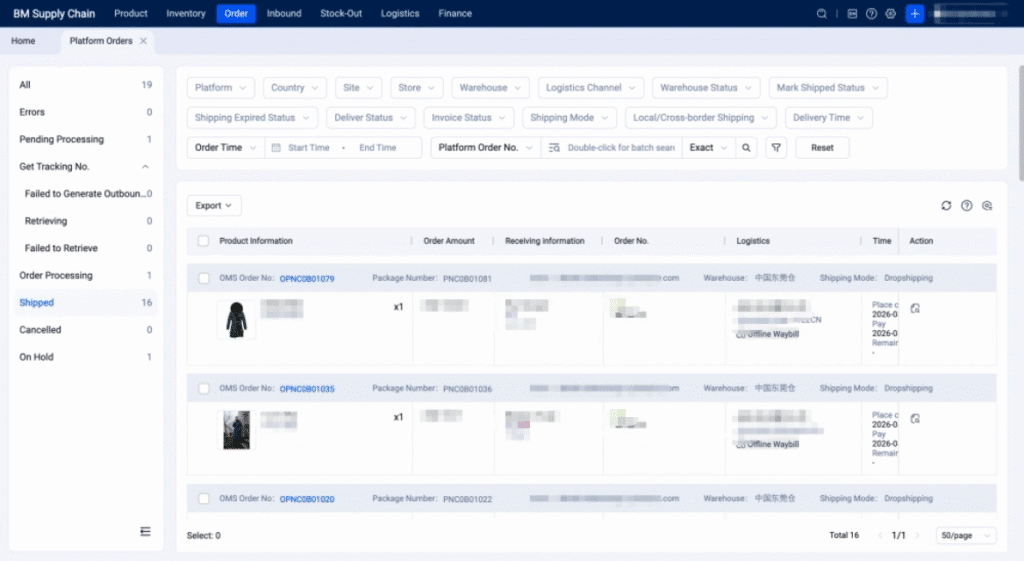
To gauge the performance of sellers, Tik Tok Shop uses a series of quantifiable KPIs that result in the overall health of the shops, but fulfilment metrics are more importantly rated.
These metrics enter into the Shop Performance Score (SPS) and Account Health Rating, which determines all the way to the product visibility in feeds to access to promotional tools.
| Metric | What It Measures | Penalty Risk Level |
| Late Dispatch Rate (LDR) | Percentage of orders not updated to “Shipped” within the required timeframe (often 2 business days) | High |
| Valid Tracking Rate (VTR) | Consistency of providing accurate, functional tracking numbers (target ≥95%) | High |
| Seller-Fault Cancellation Rate (SFCR) | Orders resent canceled because of seller problems such as stockouts, lateness (target ≤2.5). | Medium–High |
| Refund & Return Rate | Problems on post delivery, refunds/returns. | Medium |
| Negative Review Rate | Complaints affecting satisfaction ratings of customers. | Medium |
Failure to perform well in those fields decreases the score of the seller, less traffic allocation by the algorithm, and the state of the trust level of the account. As an example, an increasing LDR or decreasing VTR is an indication of unreliability, and the platform will rank the shop lower in search rankings and recommendations.
What Triggers TikTok Shop Seller Penalties?
The repeated inability to comply with dispatch SLAs is among the most widespread and direct conditions leading to penalties on TikTok Shop.
The platform monitors compliance and wrongdoing only begins small but grows exponentially.
| Trigger | Immediate Impact | Long-Term Risk |
| Late shipment spike | Seller warning or point deduction | Traffic reduction, lower SPS |
| Uploading tracking after deadline or invalid numbers | Account flag, potential order holds | Restriction risk, AHR deductions |
| High cancellation rate | Performance score drop | Order volume limits |
| Frequent disputes or refunds | Review downgrade | Visibility suppression |
These problems have a compounding effect: one instance of a failed delivery can result in a warning, but repeat behavior over a 7- or 30-day period will push metrics out of control (e.g., LDR ≥4-10% in different markets), with the consequence of such practices being enforcement measures such as visible limits or freezing funds.
How Slow Fulfillment Reduces Account Visibility
The algorithm of Tik Tok is highly concerned with the reliability of operations and making decisions about the exposure of products and recommendations of shops.
Fulfillment postpones signal potential buyer risk, therefore the system reacts by reducing reach. These involve lower appearance in For You feeds, decreased qualification in live-stream sales attribute, and elimination of various campaigns.
With algorithmic penalties, even without manual intervention, a traffic can be repressed, especially the products of shops with a high LDR or a low VTR are shown less frequently. The delivery speed and tracking precision are important factors here: precise and on-time delivery tracking creates confidence in buyers, whereas delays generate dissatisfaction signals which unleash through the algorithm.
Cross-Border Shipping Challenges and Penalty Risk
Operating internationally means introducing variables, which inherently increase the risks of fulfillment on Tik Tok Shop.
Delays in customs clearance are diverse, transit routes take up excessive time, the delivery window is extended by transit distances, tracking information is frequently delayed when foreign shipping companies are involved, inventory stockouts are allowed to occur more frequently, and local buffers no longer exist. These are reasons that lead to increased LDR and SFCR since orders have longer lag periods before being shipped or undergo unplanned delays.
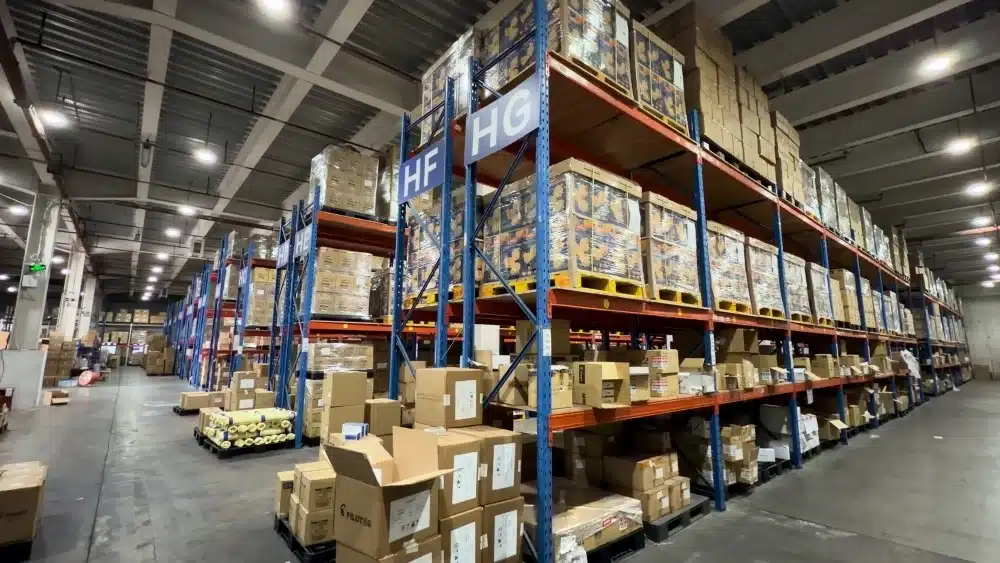
Structured China fulfillment center has the ability of minimizing these to a considerable extent due to the stabilization of the proximity of inventory, faster picking and packing, and dependable dispatch procedures through increasing closeness to major sourcing areas. This will reduce transportation-related delay and assist in ensuring the compliance of metrics even in times of a peak demand.
Operational Chain Reaction of Slow Fulfillment
Delayed shipment will cause a chain effect that will increase compliance risks as time moves further.
What starts out as a dispatch delay soon grows.
| Operational Delay | Immediate Effect | Secondary Effect | Long-Term Risk |
| Late dispatch | Shipment penalty | Buyer dissatisfaction | Lower visibility |
| Stockout | Order cancellation | Trust decline | Sales suppression |
| Tracking delay | Account flag | Refund request | Seller score drop |
This trend is obvious: the more delays the person has on the first excursion, the more the cancellations, the growth of refund rate, negative feedbacks, the larger-scale downgrades of the algorithm. These intersecting problems derode account position much more than one individual incident.
How to Reduce Fulfillment-Related Penalty Risk
The best method of reducing exposure to TikTok Shop penalties associated with sluggish delivery is proactive operational discipline.
Use this checks and balances checklist to enhance compliance:
- Hold buffer stocks near operational points in order to avoid stockouts in times of viral peaks.
- Collaborate with reputed, trusted shipping agencies that generate consistent scanning and status.
- Tracking Automated: This protects VTR by uploading and automating the tracking as soon as the dispatch is made.
- Deploy just-in-time dispatch ringing of picking and packing (2 business days).
- Track the performance fulfillment dashboard on a daily basis to provide early warning on the trend of metrics.
- Predict demand spikes based on sales information and make changes in inventory/logistics.
Periodic verification of Seller Center metrics will enable the sellers to counter the problems prior to entering the penalty boundaries.
Common Misunderstandings About Seller Penalties
There are a number of assumptions that will make sellers underestimate the risks of fulfillment on Tik Tok Shop.
- Punishments of thinking are not realized until numerous customer complaints are made, in real-life the automated values such as LDR will be activating on its own.
- Delays are pardoned by assuming the sales of viruses, on the contrary, high volume of orders only enhances the effect of bad measures.
- Since it is a part of the standard of slow transnational shipping in the eyes of consumers – TikTok issues all sellers with an equivalent SLAs irrespective of country of origin.
- Not counting measures of tracking validity The number of invalid or late uploads is a big liability to VTR.
- Launching advertisements without logistics support – more traffic with no capacity will result in a series of cancellation and fines.
Such misconceptions enable one to keep the problems silently building until enforcement measures come into the scene.
Conclusion — Fulfillment Speed Is a Compliance Variable
At Tik Tok Shop, operation reliability is rewarded more than nearly any other in the fulfillment sphere.
Sluggish satisfaction is not only a stress on orders but also a reduction in the level of trust in algorithms, a greater amount of penalties, and a lack of opportunities to expand them in the long term within the platform. The ability of the sellers to remain visible, to be healthy in metrics, and to establish sustainability is possible by making dispatch speed and tracking accuracy the primary compliance variables instead of optional efficiencies. Effler and Fester (2012) identify monitoring and structured procedures as the key to preventing unjustifiable risks in this dynamic marketplace.