Introduction
The market of logistics automation in the world will reach more than $120 billion by 2026 as businesses continue to increasingly resort to the use of technology to facilitate the automation of B2B fulfillment and remain competitive. This acceleration is indicative of a larger trend, in which automation is not merely possible, but it is necessary to meet the demands of the complexities of bulk orders, internationalized shipping, and real-time needs of the modern supply chains.
B2B fulfillment automation is the process of uniting high-tech mechanisms such as robotics, AI, and computer programs to streamline all the processes of inventory management to delivery. In the case of global brands, the failure to take notice of this change implies losing in terms of efficiency and cost effectiveness. The article examines the impact of B2B fulfillment automation on the global logistics, and how the innovations of China are driving the global operation.
What Is B2B Fulfillment Automation?
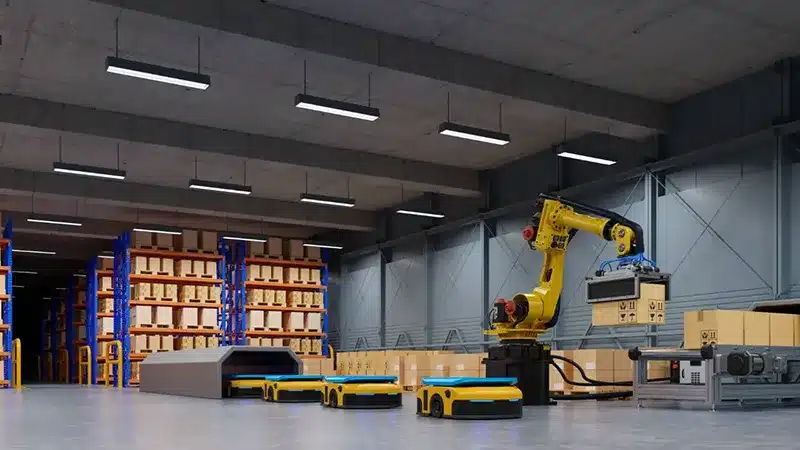
B2B fulfillment automation is the application of technology to reduce the amounts of human interference in business-to-business logistics. It includes hardware such as picker robotic arms and software to handle orders, which will minimize mistakes and increase productivity.
The most important examples are robotic picking systems that take items out of shelves, barcode scanning to update inventory immediately, and warehouse management system (WfMC) which is automating the tracking of stock. Forecasting is based on AI to predict demand, and automated order routing provides flows with high-volume wholesale orders without problems.
Automation is especially important in B2B settings where pallets or custom settings are frequently used during the order. It turns the conventional warehouses into intelligent centers, thus making it possible to fulfil them faster and more accurately without the corresponding labour expansion.
Why Automation Matters in Global B2B Fulfillment
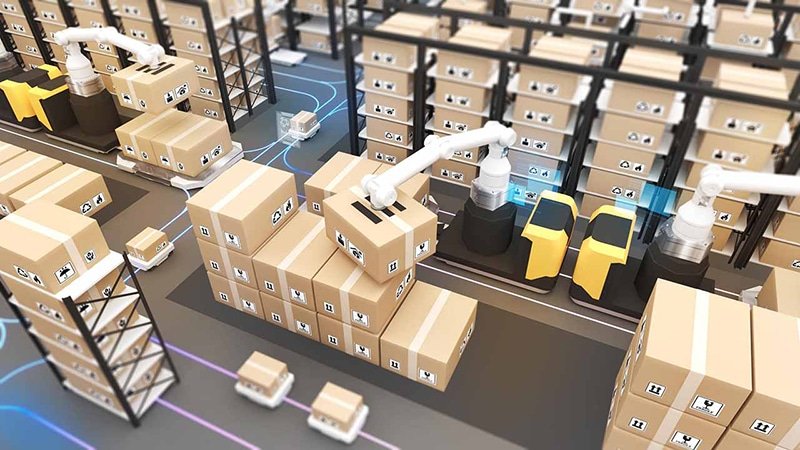
The automation of B2B fulfillment has become essential because of three fundamental reasons which influence the operational success directly.
First, speed: Automated systems reduce order processing time by minutes, reducing lead times of days down to hours. This is essential to international logistics, where customer delays might cause supply chains to be disrupted and client confidence to be lost.
Second, accuracy: Automation guarantees wholesale clients get the correct order, hence, minimizing returns and quarrels by removing human error in picking and packing.
Third, scalability: When a brand grows, it needs to automate its system to support a surge of volumes without increasing its human resources, thus becoming very suitable during seasonal peaks or market expansions.
All these aspects highlight the shift to automated solutions in technology in global logistics, which aids the brands to remain efficient, despite the increasing demands.
Key Technologies Transforming B2B Fulfillment
A number of innovative technologies are moving B2B fulfillment automation, transforming warehouses into smart ecosystems.
Warehouse Robotics
Robotic machines such as autonomous mobile robots (AMRs) are used in intelligent warehouses in China to select and sort products in the aisles. These save on labor to the extent of 50 percent, reducing errors during bulk handling, and increasing throughput.
Artificial Intelligence (AI)
AI in logistics and fulfillment predicts the inventory requirements with accuracy whereby the stock level is optimized to avoid overstocking. It also uses data to optimize routes reducing shipping expenses and time.
Internet of Things (IoT)
IoT sensors are used to check the real-time conditions, e.g. temperature of perishable goods, and track the location of assets. This makes it more visible, which guarantees compliance in B2B international shipments.
API Integration & WMS
Warehouse-linked eCommerce WMS with API ensures that warehouses are connected to the eCommerce platform and orders flow through. This smooth docking accelerates processing of the international brands.
Data Analytics & Predictive Insights
Advanced analytics detect the operational bottlenecks and they give some insight to optimize the processes. These tools foresee the maintenance requirements in Chinese warehouse robots avoiding downtime.
All these automation systems of 3PLs are transforming the way fulfillment centres are run, and they have become responsive and efficient.
How Automation Improves the B2B Fulfillment Process

Automation optimizes all the processes of B2B fulfillment to provide a smooth and error-free process.
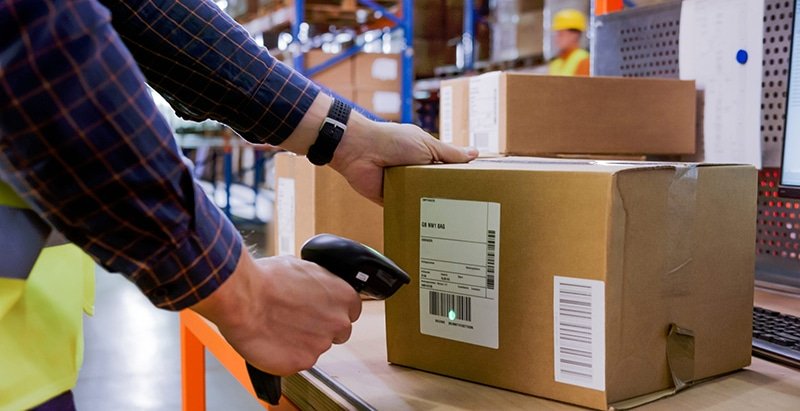
Automated scanning is used in receiving and inspection where data is instantly captured and then the shipments is verified against the orders without entering any data manually.
Smart shelving works to an advantage of storage, as the algorithms map the most appropriate positions where a desired item can be tried or searched in the shortest time possible.
Processing orders takes advantage of API-aligned systems to retrieve information on platforms such as Shopify or Amazon to automate validation and place orders.
In packing, custom bundles are created by robotic or guided systems with labels applied accurately to meet the compliance requirements.
Lastly, shipping will include automated printing on labels and carrier selection, and the clients will be informed in real time of their shipment.
This end to end method of digital supply chain solutions reduces the number of touchpoints to speed up fulfillment at a high standard.
Real-World Benefits for Global Brands
Brands that operate on a global front are drawn about the real-life results of automation of the B2B fulfillment process.
The wage rate is decreased tremendously, since robots are used to perform monotonous duties, and the staff is able to concentrate on strategic activities. Turnaround time is enhanced and some systems have attained shipment of bulk orders within one day.
Real-time visibility eliminates stockouts, and the accuracy of inventory is 99 percent and above. This consistency builds a bonding relationship with the wholesalers and reduces the rate of errors, reduced returns.
Scalability is bright to support the increasing eCommerce or wholesale customers, in which systems can accommodate rapid volume increases without redesigning the infrastructure.
An example of such advantages is BM Supply Chain, which has automated WMS, which can be integrated with the API to achieve a smooth operation. The 30 day free warehousing further reduces the expenses, and smart technology offers dashboards to provide transparent management to assist brands to grow in the world through China.
Challenges and Considerations
Although it can be a good idea, B2B fulfillment automation is fraught with obstacles that brands will have to overcome.
Start-up expenses of robotics or software may be large, but this is compensated by long-term savings. It must be seriously planned to ensure that it does not cause interruptions when integrated with the existing systems.
Training of the staff is necessary because when workers are no longer required to work manually, but they are supposed to supervise automated processes. Another issue is data management, which requires secure management in order to secure sensitive supply chain information.
One of the ways to overcome these is by selecting the appropriate 3PL partner. Digital supply chain solution providers such as those in China are offering turnkey automation with least friction to facilitate the smooth shift in the technology driven global logistics.
How BM Supply Chain Leads in Fulfillment Automation
Being the major provider of supply chains in China, BM Supply Chain is the pioneer of B2B fulfillment automation, which incorporates high-end resources (factories) to final consumers.
We have fully automated our WMS and provide free API and plugs to connect with other platforms, such as Shopify, WooCommerce, and Amazon. This facilitates real-time docking and makes the fulfillment of both B2B and B2C requirements easier.
The concept of real-time order monitoring with our one-stop query system provides full visibility, whereas sophisticated analytics forecast the demand and streamline operations. Our other value-added portfolio includes diversification of value added services such as assembly, custom packaging, and labelling with the use of automation to be precise.
BM Supply Chain also eliminates financial load with up to 30 days of free warehousing, enabling its brands to invest in expansion. We are the first Chinese company to innovate smart warehouse solutions, and we have scalable solutions that deal with product sourcing and international shipping.
BM Supply Chain assists major brands worldwide to automate China-based B2B fulfillment to save time, reduce expenses and enhance accuracy of delivery.
Conclusion
B2B fulfillment is not going to be automated in the future, but it is the present. Those companies that adopt technology today will have the best global supply chains in the future, using technologies such as AI or robotics to be even more efficient than ever before.
With such innovations, brands will be in a position to sail through the international logistics complexities without fears. BM Supply Chain is an expert in this field offering automated transparent solutions to meet your needs.
Get in touch with BM Supply Chain to find out about automated fulfillment opportunities and change your global logistics in 2026.