
Introduction & Hook
Looking through shipping rates, you might feel frustrated when the quote is over 700 dollars and wondering when you can get something better when the item is heavy. You’re not alone. By not knowing what shipping method to use per their particular shipment, or worse by being victim to some of these insidious extras, thousands of businesses and individuals have to pay too much to ship goods daily because they cannot know the difference between the two methods of shipping.
Transporting heavy weight products is a special challenge that lightweight packaging can never have. The carriers have very strict limitations in the weight, charge very heavy surplus to the weight beyond the normal dimensions, and need special handling equipments and strong packages that will withstand the pressures of the transportation of freight. Even a weight, size, or carrier miscalculation can result in having to pay $200 or $2,000 to transport the same package.
The next thing you will understand by the end of this exhaustive guide is which type of shipping is the least expensive at certain circumstances, how to stave off unnecessary expenses that add money to your bill, and what to look out when comparing quotes. It doesn’t matter if you are transporting a 50-pound old dresser or shipping large 500-pound industrial machine, you will have a good roadmap to keep the expenses down and retain dependability.
What Defines a “Heavy Item” in Shipping Terms
It is important to note before getting into the lead of cost comparisons that the definition of heavy differs between the shipping industry. Every carrier has its limits and categories that directly affect prices and provided services.
USPS Weight Cutoffs

Most domestic services of the United States Postal Service are characterized by oversized packages up to 70 pounds. All that is above this weight limit needs special handling or other forms of shipping. This 70 pound ceiling exists in USPS Priority Mail and Priority Mail Express, but there are other restrictions depending on size and shape of items. Although USPS can be quite competitive in terms of rates of less heavy packages, their weight limits render them inappropriate when it comes to really heavy packages.
UPS and FedEx “Heavy Package” Rules

Both FedEx and UPS charge heavy boxes exceeding 150 pounds as needing special handling, which leads to the charging of extra fees. An example is UPS Ground which has a 150 pound (normal handling) limit on packages but above 150 all the way to their 200 pound (not all services) limit would be heavily charged. The same is the case with FedEx because their Ground service covers up to 150 pounds after which they charge extra money. Beyond all these thresholds, carriers highly suggest or insist the freight services rather than standard parcel shipping.
Freight and LTL Thresholds

LTL shipping, especially freight shipping, would be the preferred choice when the shipments are more than 150-200 pounds. LTL shipping services deal with heavy and bulk products, and in many cases offer more cost effective solutions at weights that may begin at 150 pounds or even thousands of pounds. The parcel to freight transition does not always follow black and white lines since other aspects besides weight like dimensions, fragility and destination are major considerations in establishing the most economical approach.
Dimensional Weight and Volumetric Pricing
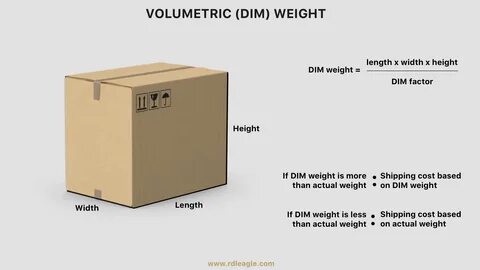
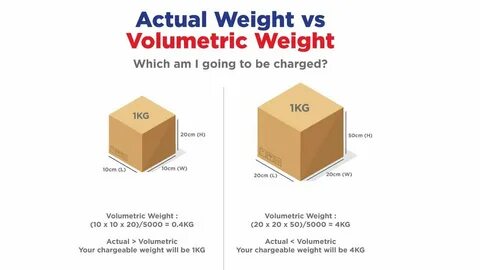
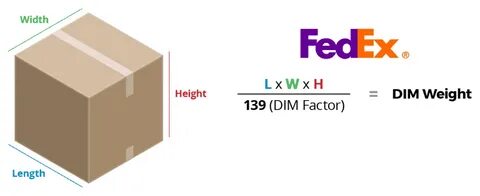
This is where the issue of shipping costs comes in especially when it involves carriers not necessarily charging on the basis of weight alone. Dimensional weight, alternatively referred to as volumetric weight, is a method of pricing in which the carriers would measure the weight or size of a shipment using the space it takes in a truck or a plane. The formula generally multiplies the length of the package, the width and height of the package (in inches) by a denominator (generally 139 when shipping domestically, but it depends on the carrier).
In case your carrying weight is more than your actual weight, carriers will charge accordingly. This is because a lightweight yet large article say, a large piece of furniture, which has a weight of 100 pounds, but has a large cubic area, may be charged as 180 pounds. This dimensional pricing can entirely disregard your pricing expectations and proper measurement is of paramount importance.
The Importance of Accurate Weight and Dimensions
Underestimation of packages by many shippers attracts reweigh charges and billing modifications which comes several weeks after the shipments. Weights and dimensions are regularly checked by carriers and differences incur extra fees as well as possible penalties.
Hundreds of dollars can be saved with each shipment by investing in a good scale and a measuring tape and using them with great care. When computing costs, always round-off to the nearest pound and inch and carriers will.
Cost Comparison: Shipping Methods for Heavy Items
The first thing you need to know to find the cheapest shipping solution is to know what you have. We will deconstruct each of the major approaches, looking at when it is economically viable and when it is prohibitively costly.
Parcel Services (UPS, FedEx, USPS)
How They Classify “Heavy”
Carriers such as package shippers, UPS and FedEx consider 70-90 pounds a heavy package and the surcharge is enormous above 150-pound. It is the services that are originally specified to small packages in pricing. Though they have increased capacity to carry bulkier weight, the cost structure tends to make them very costly to anything that borders on freight.
Constraints, Surcharges, and Special Labels
Stocky goods When delivering heavy goods through parcel services, you are likely to pay a lot of extras on top of the base rate. There are extra charges of about 70 pounds with UPS and FedEx which fees would be charged on top of the package to the tune of 15-30 pounds. The charges beyond 150 pounds are overweight charges, which can be an extra of 100 and above on your shipment. Surcharges on large packages impose a charge on anything over particular dimensions (usually 96 inches long or 130 inches long and girth) and it is an additional charge of 75-100 dollars.
Carriers need special heavy-package labels and special handling instructions. Poor labeling of heavy packages may lead to rejected shipments, shipping charges or claims of broken goods that the carriers will not accept because they were not well labeled. Other carriers also require heavy packages to be strapped or put on pallets that increases your packing expenses to that spending.

Pros and Cons
Speed and comprehensive delivery networks are the major strengths of parcel services. UPS and FedEx are capable of reaching almost any address in the country including home and usually takes 1-5 business days. Their tracking systems are strong and their liability cover (not always very high) offers certain security.
But expenses rise at a rapid rate. A 150 pound package delivered across the country by shipping companies such as UPS Ground could cost between 200-400 dollars and the same package sent by Next Day Air by UPS could cost more than 1000 dollars. These services are hardly the most cost-effective option with heavier items. Also, there are hard ceilings brought about by weight limits, whereby your item that is more than 200 pounds can not be delivered via the normal processes by parcel carriers.
Example Cost Ranges
Thinking about the delivery of 100-pound package between California and New York:
- UPS Ground: $150-250
- FedEx Ground: $140-240
- Priority Mail (below 70 lbs) in the USPS: $80-150.
Shipment of 300 pounds (had to be received special):
- UPS Freight or express service: 400-700.
- FedEx Freight Economy: $380-650
These fares not only differ widely depending on precise dimensions, origin/destination zip code and prevailing fuel surcharges.
Postal and Government Carrier Options
Weight Limits and Restrictions
USPS has a strict 70-pound cap on most consumer delivery and making them mostly pointless with realistically heavy freight. But on the items in the 50-70 pound category, they do offer good prices, especially when the distance is longer and they charge by the zone, which will favor you.
Postal shipments outside of the US are further restricted and most countries now have 44-pound (20 kg) limits on postal packages. Such limitations actually make USPS ineligible as an alternative to international heavy freight.

Flat Rate Options
USPS also provides flat-rate boxes and envelopes, which also have size limitations and therefore cannot be used to ship heavy and bulky materials. The biggest flat-rate plan, the Large Flat Rate Box, is only 12″ by 12″ by 5.5″ and can include objects up to 70 pounds, but it is difficult to physically apply items that heavy into such a small package on most shipments.
When It Makes Sense
It can be often financially justifiable in USPS to ship heavy items when:
- The weight of your item is between 50-70 pounds.
- It is within dimensional limits.
- You are sending to a far away ZIP code where the UPS/Fedex charges are high.
- Speed is not a big issue (Priority Mail requires 1-3 days (however, there are delays), though).
In a majority of the heavy freight usage, USPS can not compete with international shipments and specialized freight carriers in neither price point nor capability.
Freight, Consolidated Freight, and LTL Shipping
Why Freight Often Wins for Heavy Loads
When the volume of shipments is more than 150-200 pounds, the freight shipping is usually the most cost-effective mode- sometimes by a huge margin. Freight carriers do not focus on parcel carriers and base their prices on mass, size, and export category but on weight, size, and weight as opposed to charge-heavy.
The pricing of freights is based on a completely different principle. Freight charges are calculated per-hundredweight (CWT), instead of per-package, because expenses are lower with a heavier shipment since there are economies of scale. A 500-pound shipment could be 50 percent more expensive than a 300-pound shipment, but parcel carriers would charge proportionately or more.

How Consolidated Freight Works
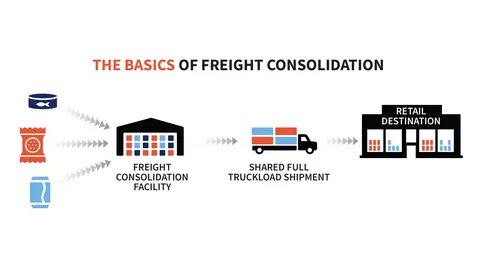
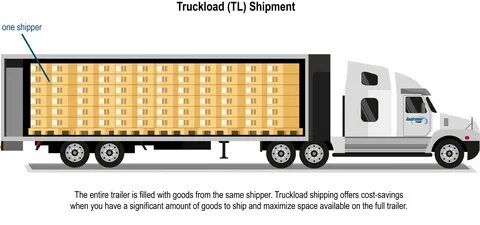
Less-Than-Truckload (LTL) freight can also be a type of freight in which numerous shippers share the same truck, spreading the cost among many. Your 400 pound pallet is being carried in the trailer with other freight of other businesses, and you are only charged on your share of space and weight. This consolidation makes LTL immensely cheaper to hire compared to having a dedicated truck (Full Truckload or FTL), which only makes sense to hire in terms of finances when you are shipping 10,000 pounds or more.
Freight carriers define 18 types of freight (50 to 500) classes, depending on density and handling needs, liability, and storability. Dense objects (such as machinery or metal) are often in lower freight classes (50-100), thereby receiving a lower price/lb than low-density ones (such as furniture or electronics packaging) that are in high freight classes (125-500).

Extra Charges to Watch For
Base freight rates tend to be lower than parcel carriers but accessorials can easily neutralize the benefits:
- Liftgate service: In case your pickup or delivery point does not include a loading dock, carriers have to use a hydraulic liftgate to get freight to ground level. This adds $75-150 per location.
- Home delivery: The freight carriers serve mostly commercial areas. There is a difference of 100-200 in residential deliveries because there is limited access and loading equipment.
- Inside service: This service motivates the shipment to the curb or threshold by normal freight. You should pay a further 75-200 in case you require something to be carried in.
- Restricted access charges: There is a $50-150 premium on deliveries to schools, churches, construction sites or places with limited access.
- Reweigh/reclassification charges: When the weight or freight category you claim is incorrectly measured by the carrier, s/he will charge the difference, plus fines.
One can know these accessorial charges prior to seeking quotes so that they can make proper comparisons of costs. Always insist on the total delivered cost as opposed to the base rate.
Example Cost Ranges
Take the example of a 400-pound palletized shipment of goods in Texas to Florida (around 1,000 miles):
- LTL Freight (freight class 100): $200-350 with normal accessorials.
- LTL Freight (freight class 200): $300-450
- FedEx Ground (assuming they would take it): $500-750
- UPS Freight: $250-400
A 1,000-pound shipment at the same distance, costs:
- LTL Freight (freight class 85): $300-500
- Full Truckload (not economical): $1500- 2500
These figures indicate why freight cost is more and more appealing with the weight- it is much cheaper per pound.
When to Use Each Method: Decision Matrix
The most competitive shipping method will be determined by weighing between the weight, distance, speed, and type of destination. Here’s a practical framework:
Less than 70 pounds: Compare the USPS Priority Mail with UPS/FedEx Ground. USPS usually prevails in the case of trans-country shipment; UPS/FedEx might be less expensive in case of shorter distance or in a situation where speed is a criterion.
70-150 pounds: This is the gray zone. Obtain prices of parcel carriers as well as freight forwarders. Parcel services are applicable when it is necessary to have residential delivery and high speed, however, it might save 30-50 percent when it is possible to operate on the conditions of the freight forwarders (commercial delivery, slower transit).
150-500 pounds: LTL freight is nearly the cheapest unless it has to be delivered overnight. Carriers will have a difficult time taking the weight, and you will get the heavy-parcel services they can offer at a great price.
500-2,500 pounds: LTL is the only viable alternative. Dwelling on freight class optimization, multiple carrier bargaining, and accessorial reduction.
2,500+ pds: You are in Full Truckload territory. Obtain quotes of FTL and LTL-FTL can become competitive in fact when your shipment falls empty much on the interior of a trailer.
Speed factor: In case you have a strict necessity, either in overnight delivery or 2-day delivery, you must expect high charges whichever way you do it. Nevertheless, not all of these emergency deliveries are really urgent. Freight can save thousands of dollars in the event that you are able to work with 5-7 working days.
Place: Freight deliveries to residential are expensive. Ideally, recipients can be required to come to the truck at a local business facility that has a loading dock, since many freight carriers do not charge residential delivery or liftgate service on commercial deliveries.
How to Reduce Costs When Shipping Heavy Items
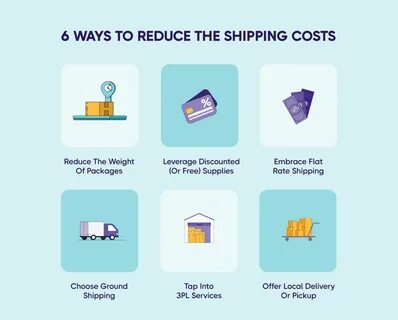
Other than selecting the appropriate carrier, there are many strategies that will cause your heavy shipping expenses to plummet drastically.
Optimize Packaging to Reduce Dimensional Weight
As the dimensional weight pricing can be applied over the actual weight, it is possible to minimize the package size to save money. Use boxes of the right size instead of too large boxes with too much empty space in them. Eliminate redundant packaging material and still provide sufficient protection.
Where the object is irregular in shape, custom crating should be considered with minimal wastage. A professional crating service may cost 100-200, but in case it decreases your dimensional weight to a lower price point, it will pay back in just one shipment.
Use Pallets, Crates, or Break Down Large Items

Palletizing heavy loads has a variety of uses. To begin with, it secures your merchandise through the unavoidable forklift-and-loading-dock mishandling freight experiences. Second, it standardizes dimensions, and determination of freight classes becomes easier. Third, most carriers provide superior prices to palletized freight since it is easier to manage.
Normally used pallet sizes (48x 40 is most prevalent) can be stacked easily in trailers. In case your item does not naturally fit the dimensions of pallets, we recommend whether you can divide it into parts that fit. Two 250 pallets of shipping can be cheaper than single 500-pound oversize shipping.
Negotiate Rates or Use a Freight Broker
Published carrier rates are hardly the last word. Frequent shippers are able to negotiate volume discounts which can save them up to 20-40. Even personal shippers are capable of negotiating every now and then, especially on recurring routes.
Freight brokers have negotiated rates with more than hundreds of carriers and in many cases can get a price that is 30-50 percent lower than calling the carrier directly. Carriers pay commission to brokers, and therefore there will not be an additional expense incurred in the event you use brokers, since you can enjoy the volume discounts of brokers, yet they receive a certain percentage on the carrier side.
Consolidate Multiple Shipments into One
Consolidation can save you huge amounts of money in case you are transporting several heavy packages to the same place (or near destinations). Rather than paying three 200-pound shipment, merge it in 1 shipment of 600 pounds. Per pound rate reduces considerably at heavier weights and you cut off on your duplicating handling charges, fuel surcharge, and per base charges.
Other logistics companies also provide consolidation services in which they store your packages until they can reach a level of volume required to achieve a full trailer towards your shipment location, and share the cost with other shippers.
Avoid Residential Delivery If Possible
As we have already stated, but it is good to reiterate, freight carriers will charge residential delivery between 100-200 and up since it is operationally inefficient to them. When possible, deliver deliveries to business points. Freight terminals or commercial mail receiving services are available in many cities, which can receive deliveries and store them to be picked up, at approximately $20-50, which is much cheaper than residential delivery.
Use Proper Labeling and Ensure No Surprises
Proper labeling will avoid unnecessary re-bills. Place mark on packages; indicate whether it is Heavy or Team Lift Required to enable handlers make necessary precautions. Make sure that you place exact weights and dimensions on your shipping labels. In case there is freight class, put a mark on it.
Surprises trigger fees. Should your 180-pound 150-pound package be found by a carrier, it will be re-weighed and liable to re-weigh fees as well as possible fines. When you announce your freight class 100 item but in fact the item is a freight class 200, you will have a re-invoiced weeks later and no bargaining power.
Buy Insurance Wisely
The coverage of carrier liability is infamously small-the most that is usually covered is 0.60 a pound in freight and this would cover your 5000 machine with a mass of 400 pounds and it is only 240. Other extra expenses 1-3% of stated value, and thus insuring that machine worth 5000 could increase shipping expenses by 50 150.
Nevertheless, insurance is something you should avoid. During transportation, heavy goods are mostly prone to damages. Balance cost versus risk: Consider full insuring of items of high value, but ordinary goods worth the same as carrier liability may not warrant extra coverage.
Use Comparison Tools and Freight Rate Calculators
Take never the first quotation you meet. Carrier prices differ drastically between airlines, and what is cheap on one route may be costly on another route. Comparison tools and freight calculators allow online users to enter their shipment details and get a quote with multiple carriers at the same time.
These tools are not all-inclusive, as they might fail to reflect all accessorial charges, but they will give you a starting point of which carriers can compete with your shipment. It is always important to follow up calculator quotes with real carrier quotes which would have all the applicable fees.
Real-Life Case Studies and Examples
To understand the effect of a choice of methods on costs, we will look at real shipping situations.
Case Study 1: 300-Pound Antique Furniture
One of the furniture restoration companies in Atlanta must deliver a 300 pound antique cabinet to a client in Seattle (around 2 800 miles). The cabinet is 72 X 36 x 24 and to be handled with care.
Option 1: UPS Freight
- Base rate: $450
- Residential delivery: +$150
- Liftgate service: +$125
- Insurance (declared value $8,000): +$120
- Total: $845
Option 2: Regional LTL Carrier via Freight Broker
- Base rate: $280
- Residential delivery: +$140
- Liftgate service: +$100
- Insurance: +$120
- Total: $640
Option 3: FedEx Heavy Package Service The cabinet weighs over the FedEx weight threshold and dimension restrictions of heavy packages and has to be handled separately.
- Quoted rate: $1,150-1,300
- Not competitive
Result: The freight, through the freight broker, to reach regional LTL carriers was $205 (24) less than UPS Freight and more than 400 less than FedEx. The freight took 6 business days rather than the 3-4 days promised by UPS Freight but the customer had a leeway in terms of time and value saving was a priority.
Case Study 2: 550-Pound Industrial Equipment
An Ohio manufacturer transports a machine part with a weight of 550 pounds to Texas (about 1, 200 miles). The equipment will be palletized to 48″ 40″ 60″ and fall under freight class 85 (dense metal parts).
Option 1: Standard LTL Carrier
- Base rate (class 85): $310
- No surcharge- Commercial delivery: $0.
- Insurance (declared value $12,000): +$180
- Total: $490
Option 2: Volume LTL with Negotiated Rate Since the manufacturer sends 15-20 pallets in a month, they negotiated volume rates.
- Discounted base rate: $220
- Commercial delivery: $0
- Insurance: +$180
- Total: $400
Option 3: What They Almost Did (UPS Ground) Firstly, the shipping coordinator has thought of using UPS Ground, and he was not aware that the weight was out of their practical range.
- The shipment would not go to UPS using ordinary channels.
- The price quoted by UPS Freight was 720 inclusive of insurance.
- Avoided by choosing proper freight from the beginning
Result: The volume negotiation was able to save on the shipment cost by 90. This is a savings of over 20 shipments per month, which amounts to 1800/monthly and 21600/year. This case illustrates why large-volume shippers will have to negotiate rates instead of taking published prices.
Case Study 3: The Hidden Fee Disaster
A 180 pound exercise equipment set was shipped by an e-commerce seller in Florida to Montana by declaring it to weigh 150 pounds so that UPS would not charge them the huge package surcharges (this is a dishonest gimmick, but in practice it is a common practice).
Initial Quote (UPS Ground, dishonest 150 lb declaration)
- Quoted rate: $185
- Expected cost: $185
What Really Went wrong UPS automated systems identified the disparity at the hubs.
- Re-weigh charge: +$35
- Heavy package surcharge: +$115
- Corrected shipping rate: +$42
- Actual billed cost: $377
The difference of 192 was reflected on the invoice of the seller three weeks after the purchase and it created disruption in cash flow and the profit margin of the sale was removed. The example explains why proper weight declaration is not a choice, carriers will be able to detect the discrepancies, and punishments greatly exceed the perceived benefits of under-reporting urgent air freight.
FAQ: Common Questions About Shipping Heavy Items
What’s the cheapest way to ship a single heavy item?
Under 150 pounds: the comparison will be made with USPS (when it is less than 70 lbs), UPS Ground, and with FedEx Ground. LTL freight using a broker is generally the best in the case of items around 150-500 pounds. LTL freight is nearly never expensive in excess of 500 pounds. The most important one is residential and commercial delivery residential delivery may be 30-40% less expensive because liftgate and residential fees are removed shipping heavy items faqs.
At what weight should I switch to freight shipping?
It will be good to consider freight transportation in cases when the weight is over 150 pounds, not to mention the size. Between 70-150 pounds, get quotes on parcel and freight- sometimes parcel is cheaper over short routes or where speed is particularly needed but frequently freight is 20-30% cheaper over longer distances. Freight between 200 pounds and above is virtually cheaper ship heavy boxes.
When do liftgate fees or residential surcharges apply?
Liftgate charges (75-150) are charged when the pick-up or delivery point does not have a loading dock and the shipment could not be safely lowered with hands. Special surcharge (100-200 dollars) is charged on delivering to residential addresses, not to be regarded as a commercial one. Home based businesses even normally incur residential charges unless they possess proper commercial infrastructure. Other carriers do not charge liftgate on shipments that are below a specified shipment weight that can be hand-unloaded, but it depends on carrier policy shipping cost.
Can I insure heavy and bulky items?
Yes, and you must upon valuable things. Liability of standard carriers is low-nothing to $0.10-0.60 per pound. The third-party insurance is about 1-3 percent of declared value and offers a much broader coverage. Make sure that you have your insurance at the full replacement value as opposed to the default liability of the carrier oversized shipping game. Other shippers take their own commercial insurance policies instead of insurance provided by carriers which can be more cost effective to a high-volume shipper international shipping0.
What if my package is both oversize AND heavy?
A combination of this combination is the highest surcharges with parcel carriers. You will incur extra charges of handling fee (75-100), oversize fee (75-100), and heavy package fee (100 and more), which may increase the cost of base shipping by 250-300 dollars. Freight shipping is even more appealing at this stage of the game in terms of cost. Freight carriers accept over-size and heavy shipments-it is in their business-and would not charge you going up with a surcharge like parcel carriers ship heavy packages.
What mistakes should I avoid?
The most expensive errors consist of: underweight or undersize estimation (incurs re-bill fees and penalties), selecting the wrong freight class (incurs reclassification fees), improper packaging (claims damages which the carrier denies), not comparing different carriers (potential 30-50% savings), and thinking that the first quote is the best possible price. Also, do not think that residential and liftgate fees are optional where they exist- trying to evade the charges by deceiving carriers will lead to fines that are much greater in value than the initial charges ship large packages.
Conclusion
To ship heavy items in a cost-effective manner, one needs to know which shipping process best suits his or her situation. In 70 pounds or less, conventional parcel shippers tend to be the most economical choice in terms of both speed and cost, but USPS may be competitive over longer routes. Weight close to 150 pounds – here the calculus changes – parcel carrier surcharges skyrocket and freight carriers start to demonstrate their economies of scale ground shipping. At a weight of over 150 pounds, LTL freight is price competitive; especially when the accessorials are kept to a minimum especially when it is a commercial delivery.
The most cost effective one is fully reliant on the weight, size, place of origin and delivery point, type of address to be delivered and the flexibility of their delivery schedule. A package of 100 pounds to a home-based delivery will always be expensive compared to a 400-pound shipment that is palletized and that has a 7-day delivery window with flexibility. Success is achieved by aligning approach with demands and not fall back to known carriers.
The most decisive thing you can do is to compare more detailed quotes with various carriers and methods, and all the relevant fees have to be revealed at the first hand. Check the fine print- residential delivery charges, liftgate charges and freight class assignments have a dramatic effect on final charges. Get the freight rates through freight brokers or comparison devices, which are not available when contacting the carriers themselves. Think of how to optimize your packaging and the possibility of consolidation, and the presence (or absence) of commercial delivery options at the site of your recipient. By thinking logistically instead of defaultially about the heavy shipment process, you can save 30-50% of the cost of shipping on a regular basis, and make shipping not a cost-out-of-pocket burden like it is now, but a predictable and controllable cost.