Amazon FBA prep errors are far too frequent, and may be enough to make a smooth process a nightmare at an enormous cost. As Amazon ceases its prep and labeling services in-house since January 1, 2026, it is up to sellers to get this right individually, or risk rejections, delays, and charges that are stealing their profits. These are some of the challenges we have experienced at BM Supply Chain, one of the leading Chinese supply chains, as we assisted sellers in sourcing, inspection, warehousing, and fulfillment. Our integrated resources including factories to final customers enable us to customize our solutions such as procuring raw materials or finished goods, provide up to 30 days of free storage, sophisticated warehouse facilities, free API docking so that shipping can be easy and complete tracking of goods to ensure easy cash flow.
Such mistakes are usually preconditioned by the harsh inbound demands of Amazon, such as strict labeling and packaging to guarantee the efficiency of the warehouse. Plunkitt, and you know what you get rebagging fee (as much as 0.15 per unit before 2026, however, full rejections afterwards) or processing fees, or even dings on your account due to crappy work metrics.
Most of such errors are the mere bypass, such as lost labels or incorrect poly bags, which are expensive both in time and money. We pick them up at BM Supply Chain as we prep in China and save clients thousands in returns and fees.
Usually, the most frequent errors include:
- Incorrect FNSKU labeling
- Still no poly bags or warnings.
- Skipping inspections
- Use of faulty wrappings to pack delicate items.
- Wrong bundling
- Overweight cartons
- Poor carton labels
- Exposed old barcodes
- No box content info
- Bad replenishment timing
- Mixing incompatible items
Why FBA Prep Mistakes Matter
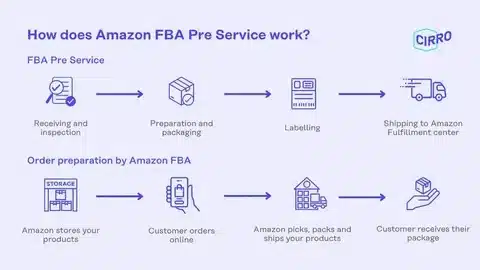
Precision is the foundation of FBA system at Amazon, as there are strict rules that guarantee millions of products flow efficiently through warehouses. The prep inaccuracies interfere with this causing an immediate dish during reception. Common culprits? Label errors, packaging errors and inspection oversights which allowed defects to pass through.
The consequences are not imaginary: Stockouts and lost sales due to delays, rejections that have to be shipped again at your expense, additional costs to fix things (although this one ends in 2026, which translates to larger outright returns). Unfavorable measures such as increased return rates damage your seller rating, which is subjected to Buy Box losses or suspensions. We have assisted sellers at BM Supply Chain to overcome these by transferring them to our premises, where we check compliance at the initial stages.
Why so costly yet simple? A lot of sellers hurry or count on suppliers that do not know about FBA peculiarities. Checklists and good tricks prevent avoidable, but bad cases are 10-20% wastage of inventory.
Mistake #1: Incorrect FNSKU Labeling
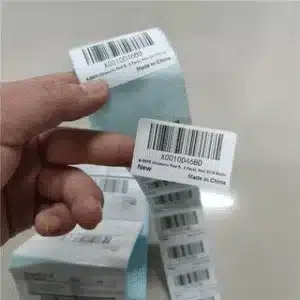
FNSKU labeling errors are the most frequent errors– incorrect location or poor quality results in no scan units, receiving stalling.
Problems that can happen generally: Labels on rounded objects wrinkle; poorly colored prints with inexpensive ink run blurred; cover no longer fits as manufacturer barcodes are adhered to old claims on the part of substitutes; incorrect FNSKUs address to incorrect vendors.
Rejections or manual fixes cost in terms of fees. Expert tip: Thermal printers are long lasting-we do this at BM Supply Chain in order to achieve 99 percent scan rates.
Fixes: Section creation Continue to Seller Central, paste on a flat surface, place opaque stickers on all barcodes. Pre-shipment scan on 10 percent of the units.
Mistake #2: Missing or Incorrect Poly Bags
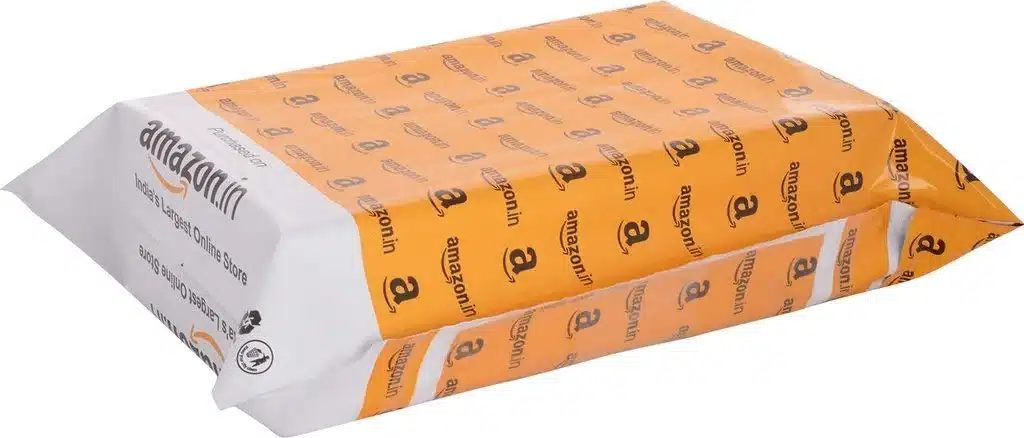
Poly-bagging is a problem associated with soft goods, absence of warnings or thin bags results in safety flags.
Problems No bag was marked with suffocation [?]5 inches; less than 1.5 mil thick tears; can spill out through unsealed edges; can not be scanned with barcode through wrinkled plastic; too large bags puff and burst.
This leads to contamination or hazards, which are provoking rejections. Recommended: Extra strength given by using clear bags made 2 mil and more.
Tools: Minimum printing size letters 20-point, that is, print-warning (WARNING: To avoid danger of suffocation…); use heating elements; attach external labels as necessary. We drop bags in our test center in prep center.
Mistake #3: Poor Product Inspection
Defects find FBA, Firing darts:? Cuts in corners.
Problems: Shortages of quantities; defects in quality such as stains; missing of accessories; mix-ups of variants (incorrect color/size); not as ordered complaints.
High rejection rates follow. This is discouraged by inspections in China – near suppliers to have things fixed quickly.
How to avoid: Check 20-80 percent of batch; use third party QC; check in AQL standard. Our inspections during shipments allow us to identify 90 percent of the problems at BM Supply Chain.
Mistake #4: Damaged or Unsafe Packaging
Packaging in an unsafe way allows damage to be caused during transit, and this results in dissatisfied customers.
Mistakes: Fr Religiose: no bubble wrap; untested liquids leakage; loose you hrr baggage: separate sets; unexamiled technology is scratched.
Returns soar, metrics tank. Threat fix: Drop-testing 3-ft. drop packaging.
Solutions: to wrap breakables in an envelope twice; use envelope with a leak-proof seal; package secure with a shrink. These steps have helped us to save clients 15 percent on returns.
Mistake #5: Incorrect Bundling or Multipack Preparation
Shipment errors allow sets to be shipped in parts, which bewilders Amazon.
Issues: No Sold as Set label; inappropriate FNSKU of the bundle; poor wrapping results in detachment of units; poor counts.
Fees for unpacking apply. Rules: One FNSKU on outer clear tape or shrink-wrap.
Avoid: Mark everything on both sides Do Not Separate; check durability. We have automated bundlers in our center.
Mistake #6: Wrong Carton Size or Weight
Carton errors delay processing- heavy or oversized boxes are identified.
Problems: >50lb by definition; height is more than 36x25x25in; weak boxes break; bad taping opens; unofficial mixed SKU.
Rejections or safety holds are the results. Amazon regulations: Labels Min 6x4x.375 inches.
Fixes: weigh/measure/pre-pack; double-wall boxes; separate SKUs. Hint: Divide heavies in cartons.
Mistake #7: Missing or Incorrect Carton Labels
Poor carton labels will result in non scannable shipments, stoppage of intake.
Errors: Seam labels wrinkle; edges cut off barcode; smear; misplaced shipment ID; tape is covered with apparently coded tape cover).
Delays pile up. Best practices: 4×6 labels, flat.
Solutions: Thermal print; center-top; scans. This we check in each outbound.
Mistake #8: Not Covering Old Barcodes
Bare barcodes are confusing to the scanners, sending the inventory off course.
Issues: Amazon reads half the UPC; lost item in commingled stock; wrong scan.
High error rates. Solution: Full-cover opaque FNSKUs.
Should not: Double-check; eliminate as much as possible. Usually in the case of items piled by suppliers–re-prepared every time.
Mistake #9: No Box Content Information
Box Content Information (BCI) skips to allow cartons to be manually inspected.
Problems: Amazon is not able to check contents; additional charges; delays in delivery.
Options Add BCI at Seller Central- SKU/box.
Fix: Detail when creating the plan; Templates. Prevents surprises.
Mistake #10: Poor Replenishment Timing
Timing is bad: it will result in overstock charges or stockouts.
Faults: Delays in sends will create gaps; excessive LTSF will create a gap of $3.63/cu ft 271-365 days.
Optimize: 30-60 days stock forecast; buffers are on-site in China warehouses.
A case in point: The 30 days of our free storage allow the clients to time out well.
Mistake #11: Mixing Incompatible Products
Mixed up goods that are incompatible spoil goods during transportation.
Issues: Softs are poked by the sharp objects and leave holes; the liquid stains clothes; perfumed objects contaminate others.
Separate categories. Poor: Pad between, Group similars.
Avoid: Check lists; with dividers.
Bonus Mistake: Doing Prep at the Supplier Without Verification
It is not effective to rely on suppliers, as they do not understand FBA peculiarities.
Problems: Mislabeling; low quality; lack of final QC; high rejected.
Resolution: Have a specially prepared prep center.
How a China Prep Center Helps Prevent These Mistakes
BM Supply Chain China prep centers are superior in compliance, such as, professional labeling, QC, bundling, poly bagging.
Advantages: Inspections pouncing defects; cartons checks incorporating size/weight; warehousing 30 days clock work adapts timing slot; consolidation integrating suppliers without fear.
Outsourcing minimizes risks- we have reduced the rejection rates of the clients to less than 5% when we do the end-to-end.
Full Checklist: How to Avoid Amazon FBA Prep Mistakes
- Examine: Quantity, quality, variants- apply AQL.
- FNSKU label: Varnish barcodes, flat positioning, scan testing.
- Poly bag: [?]1.5 mil, closed, warnings [?]5″ scannable codes.
- Securely pack: Bubbles, test liquids.
- Bundle: Secure wrap, one FNSKU, sold as a set.
- Cartons: 50 lb, obligatory, good tape, no blends.
- Question: Well, flat, sturd and right IDs.
- Cover old codes: Full opaque.
- Upload BCI: Detail contents.
- Time replenishment: Forecast, Buffer stock.
- Separate incompatibles: Group like items.
- Last check Scan/check all.
FAQs
What is the FBA Prep most frequent mistake?
Improper FNSKU labelling–results in scan failures.
How come that Amazon refuses to receive shipments?
Unconformity such as mislabeling or improper packaging.
Will China prep centers repair labeling errors?
Yes– we are labeling right before shipment.
In which cases are my products required to use poly bags?
In case it is loose, soft or multi-part–review Amazon rules.
What is necessary before shipping to Amazon FBA?
Labeling, checks, wrappings and cartons.
What in case a carton weighs more than it is supposed to?
Refuses or commissions–divided loads.
Conclusion
The best way to avoid Amazon FBA prep errors is to save time and money and avoid frustration and frustration – make everything the same: use checklists. A good process or China-based 3PL, such as BM Supply Chain would be the best choice with the end of prep in 2026. You don’t need the logistics drama because we do all the details. Spread these tips and your FBA processes congenitally.