
Take the hassle free experience out of your global logistics though end-to-end auto transport shipping services. Understand Incoterms, prices, customs clearance and practices to make the world global delivery seamlessly.
Introduction
Door-to-door shipping is the epitome of convenience in logistics, a full transportation package that takes care of your goods and delivers them at the doorstep of the buyer. In a modern globalized economy, companies and people are increasingly seeking door-to-door transport shipping solutions that eliminate the complexity of coordinating various service providers, managing various documentation needs, and finding their way through international customs processes.

The conventional shipping approach frequently has customers managing several contacts, freight forwarders, customs brokers, local delivery support, and warehouse operators, and each has its own procedures, schedules, and possibilities of miscommunication. This disjointed practice often leads to the introduction of hidden charges, an unwarranted delay, the spoilage of goods during the loading and unloading process, and the annoying confusion of tracking the shipment through various systems.
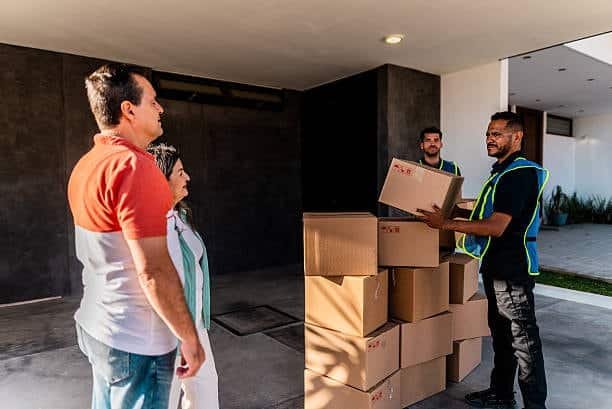
In this comprehensive guide, you will have a clear overview of the door-to-door shipping logistics, the necessary details about the key Incoterms and industry terms, how to negotiate and navigate different cost structures, and best practices to make international deliveries. As a small business owner going global or a person importing goods, this article is going to make you make well-informed decisions and prevent all the pitfalls when it comes to international shipping.
Definition & Scope
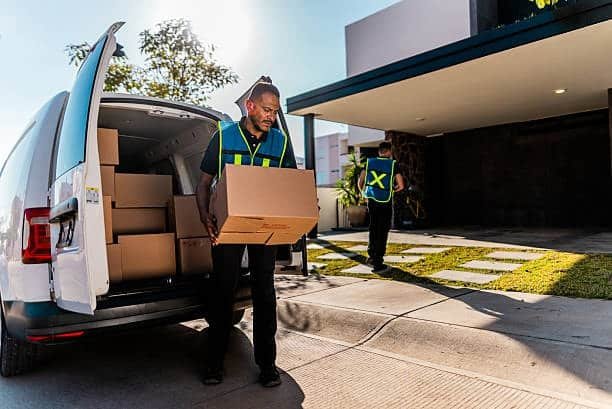
Door-to-door shipping is a logistic service that deals with the entire delivery of the goods in between the sender (factory, warehouse, or business premises) and the address of the recipient. This is an end-to-end door car shipping service that incorporates all the services required to be used as a means of transportation, documentation, customs clearance, and final delivery based on one service agreement.
What’s Included in Door-to-Door Service

A full shipping door to door service normally includes:
- Collection at the source point.
- Documents of export and clearance of customs at the point of origin.
- Main mode of delivery through sea freight, air freight or even ground.
- Clearing of import at the destination country.
- Carrying out local delivery to the final destination address.
- Tracking of cargo during the whole route.
- Insurance plans of the entire route.
What May Not Be Included

Although the services of door-to-door are comprehensive, some aspects may need to be supplemented:
- Beyond normal packaging and crating.
- Storage costs in cases where they are unable to deliver their appointment.
- Taxes and tariffs (based on the Incoterm agreement)
- Unusual treatment of dangerous or big cargo.
- On-site installation or assembly.
Transportation Modes
Door-to-door transportation is performed by several transportation modes:
International Shipping:
- Ocean freight: This is the most economical when dealing with large quantities that take a longer period to transit.
- Air freight: More expensive and faster, suitable when you need something urgently or have something valuable.
- Multimodal transport: This is a combination of sea, air, rail, and road transportation which gives the best costtime balance.
Domestic Shipping:
- Ground delivery: Delivery by truck of domestic and regional deliveries.
- Rail freight: Economical on domestic shipment of large quantities over a long distance.
- Last-mile delivery: Last move between distribution centers and final consumers.
How Door-to-Door Shipping Works: Step by Step

Knowing the entire door to door shipping process will allow to make realistic expectations and coordinate more effectively with your logistics provider.
Step 1: Pickup from Sender’s Location
This starts with the scheduled collection from your warehouse, factory, or business place. The pickup time is scheduled by professional logistics coordinators who make sure that they have the right equipment to handle the cargo. At pickup, the freight forwarder performs a preliminary inspection of the freight, compares the quantities to shipping documentation, and makes sure that the freight is properly packed to be transported internationally.
Step 2: Pre-Shipment Processes
After pickup, a number of important pre-shipment processes are carried out:
Documentation Preparation:
- Through commercial invoices that describe the products and values accurately.
- Lists showing contents and quantities in packing.
- Export license of regulated products.
- Certificates of origin where necessary.
Export Customs Clearance:
- Turning in export documents to the customs.
- Disbursement of export duties and tax.
- Getting required stamps and approvals of customs.
- Arranging liaisons with regulative bodies of restricted products..
Step 3: Main Transit Transportation
The main transportation stage will be quite different depending on the shipping mode selected:
Sea Freight Transit:
- Container loading at the port of origin.
- 10-45 days by ocean.
- Monitoring containers by sea networks.
- Possible transshipment at the intermediate ports.
Air Freight Transit:
- Cargo bundling and aircraft loading.
- Flight transportation 1-7 days average.
- Airport-to-airport handling and transfers.
- Priority pre-shipment of time-sensitive shipments..
Step 4: Arrival at Destination Port/Airport
Once at the destination gateway a set of processes is started concurrently:
- Unloading of cargo in ships or aircraft.
- Notification of imports to the customs authorities.
- Checking documentation to ensure completeness and accuracy.
- Inspection requirements by risk assessment by customs officials.
Step 5: Import Customs Clearance
Clearance of imports is a very important step and involves the need to know the regulations of the country where one wants to conduct business:
Documentation Review:
- Checking of import licenses and permits.
- Determination of values of duty declaration.
- Checking of the product classifications to ensure compliance with the regulations.
Duty and Tax Calculation:
- Use of right tariff codes.
- The duty on imports will be calculated using the origin of the product.
- Evaluation of value added taxes and other charges.
- The benefit of any of the trade agreements being processed.
Physical Inspection:
- Haphazard or premeditated cargo inspections.
- Confirmation of contents to documentation.
- Compliance test with safety and quality standards..
Step 6: Delivery to Final Address
The last delivery stage takes the door-to-door service:
Local Transportation:
- Shipment of ports/airports to local delivery vehicles.
- Optimized route to deliveries.
- Arranging the time of delivery with receivers.
Final Delivery:
- Delivery to the given address professionally.
- Confirmation and delivery proof signature.
- Real-time delivery warning to the families.
Key Terms & Incoterms
Incoterms (International Commercial Terms) and knowledge of the logistics terminology: To ensure successful door-to-door shipping arrangements, you have to understand logistics terms and Incoterms.
Relevant Incoterms for Door-to-Door Shipping
DAP (Delivered at Place): DAP makes the seller responsible for the delivery of goods up to a specified point, and the seller covers all costs and risks incurred in delivering the goods to a particular point. The buyer, however, has the responsibility of import customs clearance and duties. The term is also suitable for door-to-door transportation when a buyer wants to do his or her own importation.
DDP (Delivered Duty Paid): DDP is the greatest responsibility to sellers, who are required to deliver the goods to the place of the buyer, having paid all transportation fees, importation duties, and taxes. This gives it a real door-to-door experience with little buyer intervention but is usually priced at a high mark.
CPT (Carriage Paid To): In CPT, the sellers cover all the costs of delivery to a particular point and leave the risks to the buyers when the goods are delivered to the carrier. CPT is not exactly a door-to-door service, but it can be used together with other delivery service providers to build complete shipping arrangements.
Essential Logistics Terminology
Freight Forwarder: This is a professional company in the field of logistics that takes the international shipment of goods on behalf of an exporter and importer. Freight forwarders, through their connection with carriers, customs brokers, and local delivery services, offer combined shipping services.
Consignee and Shipper: The party who receives the shipment is known as the consignee, and the party who packages goods is known as the shipper. Third-party logistics arrangements may involve these parties, which are not necessarily the buyer and the sellers.
Carrier transportation companies move the cargo in a physical way with long lines of shipping ships in ocean transportation, airlines in air transportation, and trucks in ground transportation.
Demurrage and Detention: The concept of demurrage is that containers are held in ports longer than allowed by the free time, and the concept of detention is the cost of holding containers longer than they should be. These terms aid in the preventive measures of avoiding unforeseen expenses during shipping agreements.
Drayage: This is a transportation process over a short distance of containers between ports, rail terminals, and warehouses. Drayage is a very important connection within multimodal transportation chains and can also have a substantial effect on the total cost of shipping.
Benefits of Door-to-Door Shipping

Door-to-door shipping has strong benefits that are forcing it to gain momentum among businesses and individuals involved in international trade.
Convenience and Simplicity
The major advantage of door-to-door shipping is that it is simple. Customers do not have to deal with several service providers, as one point of contact handles all the shipments. This simplified model removes the complexity of dealing with individual relationships with local pickup services, international carriers, customs brokers, and final delivery companies.
One-point responsibility ensures that there is a clear line of communication and the chances of miscommunication between the various service providers are minimized. Whenever there is a problem, then there is one number that will be answered by customers as opposed to the deliberation over whether certain issues are the responsibility of certain service providers in the chain of service provision.
Enhanced Transparency and Tracking
The car carriers’ shipping door-to-door services that are offered by modern companies have thorough tracking services that provide some visibility throughout the process. Modern logistics platforms combine information about all the transportation modes, customs organizations, and delivery services to give real-time information about the shipment status, position, and time of delivery.
This openness allows planning the inventory more efficiently, gives communication with customers a more positive quality, and helps to resolve problems beforehand. Companies are able to give precise deliveries to their clients and modify operations in line with real-time shipment details.
Cost Optimization Opportunities

There may seem to be higher costs in door-to-door service, but in many ways, the service can be used to save money in the following ways:
Less Handling Costs: Fewer times in transit between various service providers will mean fewer cases of cargo damage and insurance claims. Direct coordination between pickup and delivery will also remove intermediate costs of storage and handling charges.
Negotiated Rates: Freight forwarders use the volume relationships with the carriers to achieve a better rate than those that could be achieved by an individual shipper. The savings are usually transferred to the customers in the form of competitive prices and narrow streets.
Eschewed Demurrage and Detention: Professional time management of transportation lowers the chances of paying costly port storage charges as well as container detention charges that may add substantially to the overall shipping prices.
Risk Mitigation
Door-to-door delivery minimizes a wide range of threats linked with international logistics:
Less Damage Risk: Less cargo handoff reduces the chances of damage during transportation. Goods are further secured by professional handling and packing processes during the transportation.
Customs Compliance: Established freight forwarders know the intricate rules of international trade and make sure to document and follow the required procedures, thus avoiding the risk of customs delays or fines.
Insurance Coordination: A full journey insurance can be organized instead of the individual policies that are required to cover various parts of the transportation.
Challenges & Costs to Watch Out For
Although the auto transport process services door-to-door shipping has its benefits, it has a number of challenges and traps that could be expensive to fall into.
Hidden Fees and Additional Charges
Import Duties and Taxes: Not all door-to-door quotes include import duties, value-added taxes, and other government duties. They may be up to 10-30 percent or higher of the shipment value, which has a large influence on total landed costs. Always ensure that quotes have all the duties and taxes that would apply.
Fuel Surcharges/Currency Adjustments: Costs of transport will vary depending on fuel prices and currency exchange rates. Numerous carriers charge fuel surcharges, which are changed every month, and international transactions can also involve factors of currency adjustment, which impact end costs.
Peak Season Surcharges: The periods of high demand, like the Chinese New Year, Ramadan, or pre-Christmas shipping seasons, usually occasion extra surcharges. Such peak season charges may raise shipping costs by as much as 15-50 percent during the seasons.
Regulatory Compliance Challenges

Limited and Forbidden Goods: The countries are imposing different limits on imported goods. Products that are lawful in the country of origin are either banned or must be issued special permits in the country of destination. Ordinarily, one has restrictions such as:
- Electronics that need certifications for safety.
- Food products that require health department approval.
- Clothes with quota restrictions.
- Hazardous handling of chemicals that are required.
Documentation Requirements: International shipping involves much documentation, and any mistake can bring about a lot of delay and extra expenses. The challenges that are common in documentation are:
- Wrong product classification for customs purposes.
- Lack of certificates of origin of preferential trade treatments.
- Partly finished commercial invoices that do not have the necessary information.
- Out-of-date permits or licenses for controlled goods.
Service Limitations
Geographic Coverage: Not every door-to-door provider will service every destination. Far-off or otherwise difficult destinations might need further local details or might not be accessible by some of the providers.
Cargo limits: There are freight forwarders who predominantly deal with certain types of cargo, and who might not deal with high-value, hazardous, or oversized freight. Awareness of the limitations of the provider at the outset helps avoid complications in the future.
Delay: Although car transport door-to-door services can claim complete delivery, the actual final delivery time usually relies on local conditions, processing of customs, and the availability of the recipient. Expectations can be addressed by setting up buffer time in the delivery schedules.
How to Choose a Good Door-to-Door Shipping Provider
Choosing the appropriate door-to-door shipping company involves a close consideration of other factors, more than just pricing.
Service Network and Coverage
Geographic Reach: Assess the networks of providers of services in the countries of origin and destination. Good local relationships guarantee high-quality pickup and delivery services, and poor coverage areas can lead to delays or extra expenditures.
Mode of Transport: Various mode of transport is provided by different providers. Think over your requirements in air freight services in case of an urgent delivery, ocean freight services in case of a large volume at cost-effective prices, and multimodal services in case of the most cost-effective time-cost balance.
Experience in customs: Determine the ability of providers in the ability to clear goods in the respective nations. Professional auto transport carriers and customs brokers are aware of local laws and regulations, they have good contacts with the authorities and can work their way through the complicated procedures.
Service Quality Indicators

Tracking and Communication Systems: Contemporary door-to-door providers must provide full tracking systems and real-time updates, and proactive communication regarding changes in the status of shipments. Test their technology infrastructures and customer communication systems.
Customer References and Reviews: Ask other related businesses to leave customer references and online reviews on other websites. Specifically note remarks regarding the quality of communication, the resolution of problems, and the need to keep to delivery schedules promised.
Financial Stability: Select providers that are financially sound and are able to keep their commitments regarding the provision of their services and have a reliable way of operating their business. Unexpected changes in money may cause service failures/shipment losses.
Cost Transparency and Contract Terms
Detailed Quotations: Demand detailed quotations that separately list all the cost elements, such as base transportation, fuel surcharge, customs clearance costs, and any other services. Compare quotes on an inclusive basis and do not just look at base rates.
Contract Terms and Conditions: Take care to study the limitations of liability and insurance, delivery guarantees, and dispute resolution procedures. Knowledge of the terms of the contract assists in making the right expectations, and they cushion against any surprises.
Terms and Methods of Payments: Assess payment terms, credit terms, and accepted payment terms. Other providers demand advance payment, and others provide credit facilities to regular customers.
Cost Breakdown & Sample Estimations
Learning about the cost structures of door-to-door shipping allows you to budget and compare providers auto transport industry.
Cost Components
Base Transportation: Ocean, air, or ground transportation expenses are the largest cost element and are usually charged according to the weight, volume, and distance of the cargo. They vary according to market conditions, fuel costs, and demand.
Origin Services: Pickup, export custom clearance, and port/airport handling costs in the originating location. These services are generally 15-25% of the entire door-to-door expenses of international shipments, door auto transport work.
Destination Services: Import customs clearance, duty and tax payments, and final delivery to the address of the recipient. The total cost of destination services varies between 20-35% of the total costs, as a result of customs procedures and local delivery demands.
Other Charges: Documentation, insurance, security charges, and special handling fees on special types of cargo or service needs.
Sample Cost Scenarios
Small International Shipment Example: A 100kg shipment of electronic equipment in China to the United States through terminal-to-terminal shipping via air freight:
- Base air freight: $800-1,200
- Origin services (pickup, export clearance): $150-250
- Destination services (custom clearance, delivery): $200-350.
- Duty and taxes (15 percent estimate): $300-450.
- Total estimated cost: $1,450-2,250
Large Ocean Freight Example: Consumer goods, a 20-foot container of Chinese goods to Europe:
- Base ocean freight: $2,500-4,000
- Origin services: $400-600
- Destination services: $800-1,200
- The import duties and taxes (12 percent estimated): 2,400-3,600.
- Total estimated cost: $6,100-9,400
Cost Optimization Strategies
Opportunities on Consolidation: When the various smaller shipments are consolidated into larger consignments, it reduces the unit transportation costs and increases the power to negotiate with carriers auto transport business.
Mode Selection: This is achieved by balancing cost and time requirements by using the right mode of transportation. Ocean freight is more cost-effective in the case of non-urgent shipments, and air freight is also fast but at a high cost low hanging trees.
Incoterm Optimization: Selecting the right Incoterms according to the cost setups and risk tolerance. Customers with a high level of customisation may choose DAP terms, whereas those who require convenience may choose DDP even though it is more expensive.
Best Practices for Smooth Door-to-Door Delivery

The use of best practices that have been proven will go a long way in enhancing the chances of successful deliveries door-to-door.
Documentation Excellence
Complete Commercial Invoices: You should prepare a detailed commercial invoice with proper product descriptions, values, and currency designations. When available, add HS (Harmonized System) codes to ease customs payment.
Correct Product Classification: Spend some time on the classification of the products with the destination country import laws car door to door. Wrong classifications may lead to wastes of time, fines, or extra responsibilities.
Certificate Management: Acquire the necessary certificates of origin, quality certifications, and regulatory approvals long before shipment. The most frequent causes of delays in customs are expired or lost certificates for auto transport services.
Packaging and Labeling Standards

International Packaging Requirements: Proceed with the help of the right packaging material and strategies to use during international transportation. Take into account several points of handling, climatic conditions, and possible transportation delays for auto door transport.
Clear Labeling: Stick on clear weatherproof labels with full address, contact, and any other necessary regulatory labeling. Additional labels in case of damage to primary labels during the car transport.
Hazardous Materials Compliance: Full compliance with dangerous materials regulations with any hazardous materials. Safety and legal requirements demand proper classification, packaging, and documentation of the car door.
Communication and Coordination

Proactive tracking: This involves keeping track of the progress of the shipment on a regular basis and updating all parties on the progress, possible delays, or delivery timing needs.
Receiver Coordination: Keep clear communication between the shipment receivers, delivery timing, documentation needed, and any special requirements of the enclosed auto transport.
Contingency Planning: Establish contingency plans in the most frequent situations, like delays at customs, documentation problems, or delivery address issues.
Case Study: Electronics Manufacturer’s International Expansion

A mid-sized electronic producer operating in Shenzhen wanted to enter into the European market but found it challenging due to the involvement of complex international logistical challenges. First, they had tried to handle deliveries on their own by contracting local trucking firms to retrieve shipments, freight forwarders to transport by sea, and customs brokers in Europe to deliver the goods with a local delivery firm.
Initial Challenges
The piecemeal strategy caused several issues:
- Production delays came about due to inconsistent pickup timing.
- Information breakdowns between various service providers contributed to documentation problems.
- Delays during the process of customs were common because of misplaced product responses.
- Coordination in final delivery was a challenge, which added extra storage expenses.
- The total cost of logistics was more than 25-30% higher than the budget.
Door-to-Door Solution Implementation
The manufacturer engaged a full door-to-door logistics company in which it offered:
- Combined pickup programs in line with production cycles.
- Specialist customs classification and documentation.
- Live tracking of the whole journey.
- Coordinated transcontinental shipment to various distribution centers.
- Only one point of accountability for all logistics activities.
Results and Lessons Learned
The door-to-door model provided quantifiable changes:
- Cost Reduction: The overall logistics expenses were cut by 15 percent by optimising routing and minimizing handling.
- Saving of time: Better coordination resulted in a 3-5 day reduction in average transit times.
- Reliability: 75 percent of the on-time delivery performance was also improved to 95 percent.
- Streamlined Processes: Administrative work decreased greatly with single provider management.
Key Success Factors:
- Extensive planning and specifications.
- Constant feedback and review.
- Agreeable service contracts that can adjust to business expansion.
- Investment in the integration of technology to facilitate the flow of information.
Conclusion
Door-to-door shipping is an advanced method of transport logistics that makes the complicated international transportation process a simplified, easy-to-manage one. With the integration of pickup, transportation, customs clearance, and final delivery in one hand, businesses and individuals can concentrate on their main activities, and at the same time, they have a reliable and cost-effective global link.
The success depends on the ability to see the full picture of the service, prudently choose the providers with experience, and introduce the best practices of documentation, communication, and planning. Although door-to-door services are more costly to invest in than basic transportation, the advantages of added complexity, increased reliability, and a full risk package can often more than compensate. Door-to-door shipping is the basis of sustaining international trade, whether it is expansion to new international markets or optimization of the current international business.
Summary
Door-to-door shipping provides end-to-end logistic solutions where the entire logistics, such as pickup, customs clearance, primary transport, and local delivery, are done. The main advantages of door car shipping and auto transport are easy coordination, visibility of the tracking, possible cost reduction due to the optimization of handling, and low risk due to the professional management of the auto transport service. Nevertheless, it takes meticulous choice of the provider, knowledge of Incoterms and cost structure, adequate documentation, and proactive communication in order to be successful. Although the initial costs can seem to be more expensive than the simplest shipping services, the all-inclusive service generally proves to be more valuable in terms of reliability, less administrative workload, and enhanced risk management of international trade operations.
Additional Resources & FAQs
Frequently Asked Questions
Q: Are import duties and taxes included in door-to-door shipping quotes? A: This is based on Incoterms that are employed and the service agreement. All the duties and taxes are covered in DDP (Delivered Duty Paid), and most often they are not covered in DAP (Delivered at Place). This is an essential point that should always be explained before engaging in services.
Q: How long does door-to-door shipping typically take? A: The transit times differ widely depending on the origin-destination and mode of transport, and customs processing needs. Airfreight door-to-door normally takes between 3-10 days, whereas ocean freight normally takes between 15-45 days. Add extra time to the clearance in the customs and the local delivery organization.
Q: What insurance coverage do I need for door-to-door shipments? A: Door-to-door shipments should have extensive cargo insurance that will cover the entire replacement value. Coverage should be made by taking into consideration all modes of transportation and points of handling during the journey. Coverage Standard carrier liability is usually restricted and might not offer sufficient protection.
Q: Can door-to-door providers handle restricted or regulated products? A: A lot of providers who have experience with restricted items can do so, though it will need special knowledge and more paperwork. Whenever possible, talk about the specific product requirements early in the planning process to make sure the company complies properly and can service it.
Q: What happens if the receiver is unavailable for delivery? A: The majority of door-to-door delivery services provide the flexibility of delivery in the form of booking an appointment, alternative delivery, or temporary storage. With your provider, talk about delivery processes and contingency plans to eliminate avoidable expenses.