
Introduction: Why Dropshipping Continues to Transform E-commerce
The Simple Definition That Changes Everything
The dropshipping business model is a traditional way to run an online store. It is not necessary for you to have any stock on hand since the dropshipping providers will supply the item to the customer whenever they place an order. The most significant challenges that have prevented people from beginning their own enterprises for a considerable amount of time are eliminated as a result of this revolutionary transformation in traditional retail.
Market Growth That Demands Attention
This online store will still be open in 2025, when e-commerce is even bigger than it is now. It gives businesspeople a low-cost way to get started with online shopping. The dropshipping business around the world is worth more than $350 billion and is expected to keep growing at an incredible rate over the next ten years. This isn’t just a trend; it’s a whole new way of doing business in the digital age.

What This Guide Delivers
In this complete guide, we’ll explain how dropshipping works in 2025, why a dropshipping agreement contract is important, and the pros and cons of that contract. Most importantly, we’ll give you a clear plan for how to succeed in dropshipping, including the need to check out the suppliers of dropshipping. We’re not going to write about how to become an overnight success like other articles do. Instead, we’re going to look at the real benefits of dropshipping and how to build a dropshipping business that will last and make you money in the long run.
What Is Dropshipping & How It Works: The Complete Breakdown

Understanding the Traditional Retail Model
Before you start dropshipping, it’s important to know what it is replacing. In traditional retail, business owners have to buy in bulk, store the goods in a warehouse, keep track of their stock, pay for packaging and shipping, and deal with unsold goods that take up capital and warehouse space. This kind of model needs a lot of money to start up, and it is also very risky financially, especially when you think about the mistakes suppliers might make.
The Dropshipping Revolution
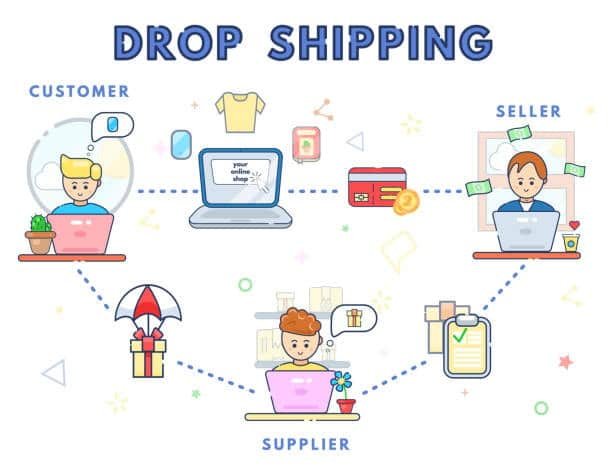
Dropshipping is a strategy to supply chain management that eliminates the traditional inventory paradigm by building a seamless interaction between you, your suppliers, and your consumers. You do not make purchases with the expectation that they would sell you, but rather you acquire products from a third party supplier after the clients have already paid for them. This shift in perspective alters the entire risk landscape associated with beginning an e-commerce business endeavor.
The Step-by-Step Dropshipping Process
Dropshipping fulfillment process consists of five major steps that form an effective business ecosystem:
Step 1: Find a trustworthy supplier, who keeps an inventory, and makes the fulfilment operations. This supplier turns into your behind-the-scenes fulfilment partner, ensuring product quality while taking care of the physical side of the business as you concentrate on marketing and customer acquisition.
Step 2: establish your online shop with well-selected product descriptions, competitive pricing strategies and convincing product descriptions. Your site turns out to be the front of your brand and customers find and buy products there.
Step 3: Take the customer orders via your web site, marketplace listings or social media channels in order to deliver products effectively. Every order is proven demand of certain products, and there is no more guesswork as to what customers actually desire, thereby improving customer delivery .
Step 4: Forward order to dropshipping supplier that takes the buy and sends it straight to your client using your branding wherever feasible. Such a smooth transition is done so that customers can obtain their products without knowing that several companies are involved.
Step 5: Maintain the profit margin between the wholesale supplier cost and retail selling price, and also be ready to take care of the customer returns effectively. This margin pays your shipping fees, marketing costs, your operating costs and the profit which makes your business viable.
How Money Flows in Dropshipping
In addition, the only way to achieve success is to have a solid grasp of the financial mechanics. It is possible that you may wind up paying your supplier the wholesale price of twenty-five dollars when one of your customers purchases an item in your shop for fifty dollars. This situation will result in you having a gross profit of twenty-five dollars. You will be responsible for covering the price of advertising, the charges associated with payment processing, the cost of the website, and any other incidental fees that are associated with running the business out of that twenty-five. This leaves you with your net profit, which might be as little as five to fifteen dollars per item depending on how efficiently you operate and where you are positioned in the market.
The Technology Behind Modern Dropshipping
The integrated technology system that automates most of the manual tasks and makes customer service easier is very important to the current ecommerce businesses. API connects your store and suppliers so they can share real-time inventory information, place orders automatically, and easily share tracking information. This is a key way to manage your supply chain. This integration of technology makes it possible for single entrepreneurs to scale up and handle modern dropshipping.
Why Dropshipping Still Dominates: The Unstoppable Growth Story

Market Statistics That Tell the Story
There is no sign that the dropshipping process will slow down any time soon, and some strong numbers suggest that it will keep growing. Market research shows that dropshipping e-commerce companies have grown by more than 23% each year, making them one of the fastest-growing e-commerce agreements. The COVID-19 pandemic sped up the use of e-commerce by about 5 to 10 years, which changed the way people shop in a way that can’t be undone.
The Demographics Driving Growth
Customers who are members of Generation Z and Millennials make up the substantial majority of today’s consumers. Dropshipping companies provide them a variety of benefits, including convenience and variety. Quick delivery, easy returns, and a streamlined purchasing experience are the things that these digital natives have come to expect. It is possible for dropshipping companies that are operated efficiently to offer these benefits.
Low Startup Costs: The Ultimate Business Democratizer
Conventional retail stores are those that demand a lot of capital investment, until the revenue is realized. This is somewhat an invert of the dropshipping model, which places entrepreneurship within reach of virtually any person with access to the internet. The vast majority of successful dropshippers do not require more than 500 dollars to begin, and they spend that money on setting up websites, starting marketing, and business tools instead of buying inventory.
Scalability Without Traditional Constraints
Drop shipping firms may grow faster than typical brick-and-mortar businesses since they don’t need as much space, staff, or equipment. This means that their overhead costs don’t go up as quickly as their sales do. You may expand your product line from 10 products to 10,000 without needing to rent bigger warehouses or hire people to ship them. This scalability feature lets good dropshippers work with more than one supplier to keep track of their growth rates, which wouldn’t be possible in a normal retail setting.
Product Testing Flexibility: The Entrepreneur’s Laboratory
The advantages of dropshipping, especially in the delivery to customers, allow quick validation in the market without monetary risks. In case you would like to make a test for the customers to see whether they will purchase a new product, you can add the product to your store on the spot and buy inventory after the orders are given. This will give you the chance to test hundreds of products in different niches and to discover winning combinations that encourage customer purchases, which appeal to your target audience.
Global Market Access
Modern dropshipping companies connect entrepreneurs, third-party suppliers, and customers all over the world, something that was previously exclusive to major corporations with extensive supply chain networks. You may go to Asian producers, sell to North American buyers, and operate your business from anyplace with a decent internet connection.
Common Challenges and How to Overcome Them: The Reality Check

Challenge 1: Intense Market Competition
Understanding the Competition Landscape
The reality is that the most frequently utilized dropshipping niches are densely saturated, with a large number of competitors offering comparable products at ultra-low prices. This rivalry is particularly intense in the trending product categories that garner significant attention on social media.
Strategic Solutions for Competitive Markets
One strategy to differentiate oneself in a market that is very competitive is to emphasise branding and to focus on certain niches. You need to establish a brand that people will trust and remember in addition to offering competitive prices. Price is not the only thing that makes you feel competitive. You should supply your items with great packaging that adds value, you should provide instructional resources that make you an expert, and you should establish customer service standards that are higher than the market average.
When looking at larger markets, it is important to consider micro-niches that do not receive a lot of attention. Rather than providing broad fitness equipment, you might want to consider concentrating on equipment that caters to specific needs. For example, you might provide workout equipment that is gentle on the joints or equipment that is compact enough to fit in small flats.
Challenge 2: Supplier Reliability and Quality Control
The Risks of Supplier Dependence
Until you fix the problem with unreliable suppliers, it could hurt your reputation very quickly. There can be problems with the quality of the products, late deliveries, running out of stock, and suppliers who don’t respond to your messages or even disappear with your orders.
Building a Robust Supplier Network
It is usually a good idea to make sure that suppliers have been thoroughly screened by buying samples, examining the credentials of the firm, verifying references, and ensuring that they are responsive in terms of communication. Before making commitments to partnerships, it is important to sign agreements that cover topics such as policies about return policies, quality standards, shipment times, and communication procedures.
It is important to have many sources of suppliers for each product category in order to prevent the occurrence of single points of failure. In the event that your primary supplier is experiencing issues, you are able to effortlessly swap your orders across to alternate providers without harming the quality of customer service.
Challenge 3: Shipping Delays and Customer Expectations

Managing the Expectation Gap
As a result of the fact that customers are accustomed to the two-day delivery system that Amazon Prime offers, it is imperative that small companies deliver their products in a timely manner. It is a significant problem to manage expectations because the majority of dropshipping vendors, particularly those that are overseas, require between seven and twenty-one days to deliver their products.
Proactive Communication Strategies
Be realistic in your promises of delivery with big fonts on your pages, product descriptions, and at checkout. Automatically update customers on the status of their orders, give tracking details as soon as they have them, and act proactively to inform customers of any delays before they have to inquire.
Think about the possibility of having suppliers with a presence in several countries so that your shipping costs and time to your main customer hubs will be lower.
Challenge 4: Customer Service Excellence Despite Distance
The Customer Service Burden
Despite the fact that you do not personally touch the items, you are still accountable for providing customer service, which includes correcting errors that were made by the suppliers. You have to deal with things like refunds, exchanges, broken items, lost deliveries, and general queries, and you have to arrange everything with suppliers who may be located in various time zones and even speak different languages.
Building Systems for Scale
Establish a comprehensive framework for the management of customer service services. Create comprehensive pages that contain questions and answers, establish protocols for returns and exchanges, and make use of help desk software that maintains a record of customer care information in order to ensure that every inquiry is addressed.
It is important to educate your staff on how to deal with common supplier coordination issues that involve more than one supplier before they begin working with you. In addition, you should think of strategies to cope with more complex issues that require the assistance of the suppliers.
Dropshipping + Automation = Efficiency: The Technology Advantage
The Automation Revolution in E-commerce
Automation software that makes it simpler for businesses to carry out their duties and reduces the amount of labor that individuals, are required to perform is the foundation upon which the success of drop shipping in the modern day is built. Technological advancements are being utilized by astute business owners in order to manage the tasks associated with projects that require repeated completion. Following this, they direct the efforts of their staff toward the activities of planning, marketing, and growth that are truly responsible for the success of the organization.
Order Processing Automation
They can also be automated order processing systems that transmit consumer orders right away to suppliers, which cuts down on waiting time and mistakes that could hurt customer relationships. These systems can take orders 24 hours a day, so orders placed on weekends and at night don’t have to wait until business hours to be processed.
Intelligent systems may send orders to different suppliers based on where the consumer is, what products are available, and how they want them sent. They can also optimize based on other aspects like pricing and delivery speed.
Inventory Management and Synchronization
Additionally, inventory sync products will use real-time supply inventory to automatically update your stock levels, preventing overselling situations that undermine customer confidence and result in fulfillment issues like unexpected delivery fees. When suppliers run out, these systems can instantly mark or hide products that are out of stock. They can also track thousands of products at once.
Customer Communication Automation
Software for customer communication Routine inquiries, shipping updates, product reviews, and even simple return requests are handled by automated customer communication systems. In addition to saving you time for other more crucial strategic tasks, this automation will ensure consistent and timely customer service.
Analytics and Business Intelligence
Advanced analytics on product performance, buyer behavior, traffic sources, and profitability are available through modern dropshipping infrastructure. Making well-informed decisions about the promotion of specific products, the distribution of funds to particular marketing channels, and the suppliers who perform the best overall will be made possible by this information.
Integration Ecosystems
The best dropshipping businesses use a variety of automation tools to make things run smoothly. Your e-commerce site is connected to your supplier’s inventory system, which sends data to your email marketing system, which starts customer service processes. This makes it an integrated system that works well without needing a lot of manual work.
Organic Dropshipping & Marketing Without Paid Ads: Sustainable Growth Strategies
Defining Organic Dropshipping
Organic dropshipping doesn’t use paid ads. Instead, it focuses on creating content, using social media, and building communities to help the business grow in a way that will last. This will lead to more stable businesses that make more money over time because organic traffic doesn’t go away when you stop paying for ads.
The Economics of Organic Marketing
Paid advertising only works for a short time, while organic marketing builds value over time. A viral Tik Tok video or a popular blog post can bring in traffic for months or even years without any extra investment. This means that the return on investment (ROI) is much better over time.
Content Marketing Strategies That Work
Educational Content Approach
Make good content that will teach your readers something important and also promote your products in a subtle way. You can become an expert in your field and bring traffic to your store by making how-to videos, buying guides, comparison articles, and troubleshooting content.
Behind-the-Scenes Content
Talk about your experiences as an entrepreneur, how you found products to sell, and the problems and successes you’ve had in business. This kind of openness builds real connections with your customers, which is different from dropshipping stores, which are anonymous and therefore unfeeling.
Social Media Platform Strategies
TikTok for Viral Reach
Short videos that show off product benefits, unboxings, how they fit into certain lifestyles, and creative presentations would automatically reach millions of people. Tik Tok’s algorithm doesn’t care how many followers a creator has; a new creator’s interesting content has the same chance of going viral.
Instagram for Visual Storytelling
Instagram is great for showing off products in a lifestyle way because of how visual it is. Use Stories to show behind-the-scenes content, Reels to teach something, and feed posts to show off great product photos and content made by users.
YouTube for Long-form Authority
You can use YouTube videos to make detailed product reviews, tutorials, and educational content that will help you build long-term authority in your niche. YouTube videos that are optimized can show up in Google search results, which gives them more ways to get organic traffic.
User-Generated Content Campaigns
Ask customers to share their experiences with your products by posting photos, videos, and reviews. User-generated content is real social proof that is more likely to lead to sales than most traditional ads, and it gives you a steady stream of marketing content.
Influencer Partnership Strategies
The partnerships that are strategic as influencers can increase your reach in certain communities who are aligned to your niche. Target micro-influencers (1,000-100,000 followers) with very active audiences instead of mega-influencers with millions of passive followers.
Email Marketing for Relationship Building
Automation of email marketing fosters leads and the customer relationship even after the first purchase. Welcome sequence and product education sequence and exclusive offers keep your brand at the top of their mind and encourage them to make repeat purchases.
SEO and Content Marketing
Search engine optimized blog posts can attract steady organic traffic over a long period of time. Dwelling more and more on long-tail keywords your potential customers are typing, and you are able to develop in-depth content that provides the answer to all questions.
Advanced Dropshipping Strategies: Taking Your Business to the Next Level

Private Labeling and Brand Development
When you have found winning products, you can think of collaborating with suppliers to produce their own-labeled products of your brand. This approach minimizes direct competition and also enables greater profit-making and the establishment of a true brand equity.
Subscription Box Models
Turn one-time sales into subscription box sales. Theme products, seasonal products, customer preference products: Build predictable sources of monthly revenue for your dropshipping company based on each theme.
Multi-Channel Sales Strategies
Add Amazon, eBay, Etsy, and Facebook Marketplace (among others) to the list of websites where you sell. The channels address varied customer groups and offer diversified revenue that will not be reliant on any individual traffic sources.
International Market Expansion
employ the fact that you can employ dropshipping anywhere to get into foreign marketplaces with different levels of competition and client tastes. Learn about the demands of the local market, how to sell to people from different cultures, and discover providers that can do a good job of supplying these new customers.
Customer Lifetime Value Optimization
Pay attention to maximizing the aggregate value of any given customer and his relationship with your business. Introduce customer loyalty programs, establish recommendations on complementary products and establish email sequences that make people buy products again.
Financial Management and Scaling: Building a Real Business

Understanding Your Numbers
Effective dropshipping also depends on paying close attention to such financial indicators as customer acquisition cost, average order value, lifetime customer value, profit margins, and cash flow cycles. Most dropshippers are not successful as these entrepreneurs are business oriented and not profit oriented.
Cash Flow Management
Although dropshipping does not mean you have to invest in inventory, you will encounter cash flow issues due to sluggishness in payment processing, advertising expenditures, and refunding. Ensure sufficient working capital to manage such fluctuations easily.
Tax Considerations and Business Structure
Tax planning and business organization is vital as your drop shipping retailer business expands. Use accounting professionals who have experience in e-commerce businesses to maximize your tax scenario and make sure you comply with the pertinent laws.
Scaling Operations Efficiently
Without systems there is growth that causes chaos. Standard operating procedures should be developed as part of your business strategy in areas of customer service, communication with suppliers, marketing campaigns, and finance before you are in a crisis that requires them.
In time, thriving dropshipping companies will need personnel members to manage customer services, marketing, supplier relations, and other business operations. Prepare the hiring and training strategies that will keep your business at its quality levels and provide the possibility to grow.
Legal and Ethical Considerations: Building a Responsible Business

Consumer Protection Laws
Various countries and states have certain legislation that safeguards consumers during transactions in e-commerce. Know your legal requirements as to product descriptions, shipment timelines, returns, and data security of customers.
Product Liability Issues
Although you do not produce or directly deal in product, you might still have some liability in the defect or even safety of a product. Address the proper insurance coverage and do business only with suppliers with proper quality standards.
Intellectual Property Respect
Do not sell fake products, illegal imitations, or products that violate patents, trademarks or copyright. Such lawbreaks may lead to account suspension, legal proceedings and severe monetary fines.
Transparent Business Practices
Ensure that marketing is kept honest, that return policies are made transparent and communication with customers is transparent. Long term success is achieved by the establishment of trust by a company using ethical business practices instead of a short-term profit but later damaged reputation.
Is Dropshipping Right For You? The Complete Self-Assessment
Comprehensive Pros and Cons Analysis
| Pros | Cons |
| Low startup cost ($100-500) | High competition in popular niches |
| Scalable business model | Supplier dependency and control issues |
| Product testing flexibility | Customer service burden and complexity |
| Location independence | Lower profit margins than traditional retail |
| No inventory management headaches | Limited quality control over products |
| Access to global suppliers | Shipping delays from overseas suppliers |
| Quick market entry and exit | Brand building challenges |
| Automated order processing available | Marketing costs can be substantial |
Critical Self-Assessment Questions
Digital Marketing Aptitude
Do you understand digital marketing and feel comfortable learning new platforms, advertising systems, and client acquisition methods? The success of dropshipping is heavily based on your ability to acquire and convert online clients through various means.
Are you capable of creating engaging content, writing unique product descriptions, and creating marketing strategies that stand out in a crowded digital space?
Operational Management Skills
Can you maintain a high standard of customer service while managing suppliers? The customer experience is still entirely your responsibility, and you will need to communicate with different stakeholders.
Are you meticulous and well-organized? Coordinating with multiple suppliers, managing orders, handling returns, and ensuring customer satisfaction all require methodical and consistent operational procedures.
Financial Management Capabilities
Do you know the basics of business finances, like how to manage cash flow, how to figure out your tax obligations, and how to plan for the future? Many dropshipping businesses fail because they don’t manage their money well, not because they don’t make enough sales.
Don’t you want to reinvest all of your profits at once and keep enough working capital on hand to keep the business stable?
Long-term Commitment and Patience
Are you willing to wait and keep trying to grow over time? Some people might want to promise quick results, but to be successful in dropshipping in the long term, you need to work steadily for months or years.
Are you ready to always change with the market, new rules that affect the platform, and what clients want? E-commerce is changing very quickly, so it’s important to keep learning and changing with it.
Risk Tolerance Assessment
Do you like the uncertainty of relying on suppliers, changes in platform policies, and changes in the market? There are a number of outside factors that can affect how well your dropshipping business does.
Are you able to handle customer complaints, bad reviews, and business problems without getting discouraged, or are you giving up too soon
Next Steps for Aspiring Dropshippers: Your Action Plan
Phase 1: Research and Planning
Choose Your Niche Strategically
Research market need with the help of such tools as Google Trends, social media listening, and competitor analysis. Target niches that will offer sufficient demand and reasonable levels of competition and good profit margins.
You should think of yourself and your interests, knowledge, and expertise. Customers can relate to authenticity and it makes the marketing more natural and sustainable in the long run.
Conduct Thorough Market Research
Look at the prices, marketing plans, customer reviews, and what seems to be the business models of your possible competitors. Find gaps in their service or product offerings that you can fill.
Look at seasonal trends in research, demographic preferences, and new market opportunities in the niche you’ve chosen.
Phase 2: Supplier Vetting and Relationship Building
Develop a Comprehensive Supplier Evaluation Process
Make a list of things to look for in a potential supplier, such as how quickly they respond to emails, the quality of their samples, the time it takes to ship, their business qualifications, and their references.
Order sample orders and look at the quality of the packaging, the speed of shipping, the condition of the goods when they arrive, and any other problems you have during the process to get the full customer experience.
Build Multiple Supplier Relationships
Make sure you have contacts with two suppliers for each major product group so that your business can keep going if one of them has problems.
Before making any supplier alliances, you should talk about and agree on clear terms for things like prices, minimum order quantities, shipping times, return policies, and how you expect to communicate with each other.
Phase 3: Store Setup and Technical Infrastructure
Choose Your E-commerce Platform Wisely
Pick an e-commerce platform that will work well with the suppliers you choose and give you the automation tools you need to run your business well. Consider things like transaction costs, customization, how well it works on mobile devices, and how big it can get.
Put money into good web themes, professional product photos, and persuasive product descriptions that clearly explain the value of your products and address customer concerns.
Implement Essential Business Tools
At the very beginning, set up analytics tracking, email marketing, customer support tools, and accounting software. It’s much harder to set up these kinds of systems correctly once your business starts to grow.
As your business grows, automating tasks like order processing, communication, and general customer service questions helps keep the quality of the service high.
Phase 4: Marketing Strategy Development
Create Your Content Marketing Calendar
Make a plan for how to regularly make educational blog posts, social media posts, email newsletters, and videos. In content marketing, consistency is more important than perfection.
Instead of always promoting, focus on giving your audience real value. When compared to direct selling, building a community, providing educational and entertainment content, and building relationships with customers are all better ways to do business.
Establish Your Social Media Presence
Choose one or two social media sites where your target customers are most active instead of trying to be on all of them. It’s better to be deeply involved on fewer platforms than to be superficially involved on many.
Make content strategies that work best for each platform based on its features and how people use it.
Phase 5: Customer Experience Optimization
Prioritize Customer Service Excellence
Create detailed customer service guidelines that cover common issues, set standards for how quickly you should respond, and outline how to deal with more complicated issues through an escalation ecommerce store.
To avoid making customers unhappy because they don’t know what to expect, set clear expectations for shipping times, returns, and product specifications.
Set up systems for getting feedback from customers and responding to that feedback that show you want to keep getting better and make customers happy with drop shipping legal.
Build Customer Loyalty Programs
To encourage repeat purchases, you should do things like email marketing campaigns, offer special deals to past customers, and use a drop shipping model for loyalty programs.
Instead of seeing customers as one-time buyers, focus on building real relationships with them.
Advanced Scaling Strategies: Growing Beyond Basics
Diversification and Risk Management
Product Line Expansion
Once your first products are successful, carefully add more products to your niche. Use sales data and customer feedback to find products that your current customers are likely to buy along with your main product.
Before spending a lot of money on either inventory or marketing dropshipping legal, try out new product lines in a planned way and measure how well they do against the set benchmarks.
Market Diversification
Go into new markets that have customers or product needs that are similar to yours. This lowers the risk of your business relying on just one market segment and lets you use your existing knowledge and supplier network to drop ship.
Revenue Stream Diversification
Look for other ways to make money besides your main dropshipping business, such as affiliate marketing, digital products, consulting services, or licensing opportunities.
Technology and Automation Advancement
Advanced Analytics Implementation
Use advanced analytics to show things like customer lifetime value, trends in product performance, the effectiveness of marketing channels, and seasonal trends.
Use predictive analytics to guess what people will want, improve inventory suggestions to suppliers, and find new chances before your competitors do.
Process Automation Expansion
Start a dropshipping business by automating more and more business tasks, like responding to customer service requests, communicating with suppliers, managing marketing campaigns, and making financial reports.
You should invest in custom automation solutions when an off-the-shelf tool doesn’t meet your business needs or when a custom tool has advantages over other tools.
Team Building and Delegation
Strategic Hiring Decisions
Instead of hiring people who are the same as you, hire people who are good at things you aren’t. If you are good at marketing, hire someone who is good at operations. If you’re good with numbers, hire someone who is good at coming up with new ideas for marketing.
Give your employees clear job descriptions, performance measures, and training systems that will help your business stay high-quality and let everyone do their job well.
Leadership Development
Learn how to delegate well and be responsible for quality control. Most entrepreneurs find this change hard when they have to manage people instead of doing everything themselves.
Conclusion: Your Dropshipping Journey Starts Now
Dropshipping in 2025 gives aspiring entrepreneurs who are willing to treat it like a professional and strategic-level business the chance to do things they’ve never been able to do before and face big problems. It’s easy to get started and can grow to an amazing size, which makes it a great option for anyone who wants to be their own boss. But just copying successful stores or following get-rich-quick recipes won’t guarantee success. Successful entrepreneurs in this field know that dropshipping isn’t about finding shortcuts or gaming the system; it’s about building real businesses that solve real problems for customers and provide unmatched value over time.
To be a successful business owner, you need to know how to do things like marketing, customer service, managing money, building relationships with suppliers, and making plans for the future. People who do dropshipping with realistic expectations, work hard, stay focused on customer satisfaction, and are willing to build long-term relationships instead of short-term profits will see it as a powerful way to become a successful entrepreneur and make money online.
It’s not whether dropshipping services are a good business model—clearly they are, since thousands of successful business owners use them. The question is whether you’re willing to put in the time, energy, and effort to build something meaningful instead of trying to get rich quick, which is almost impossible in any reputable business.