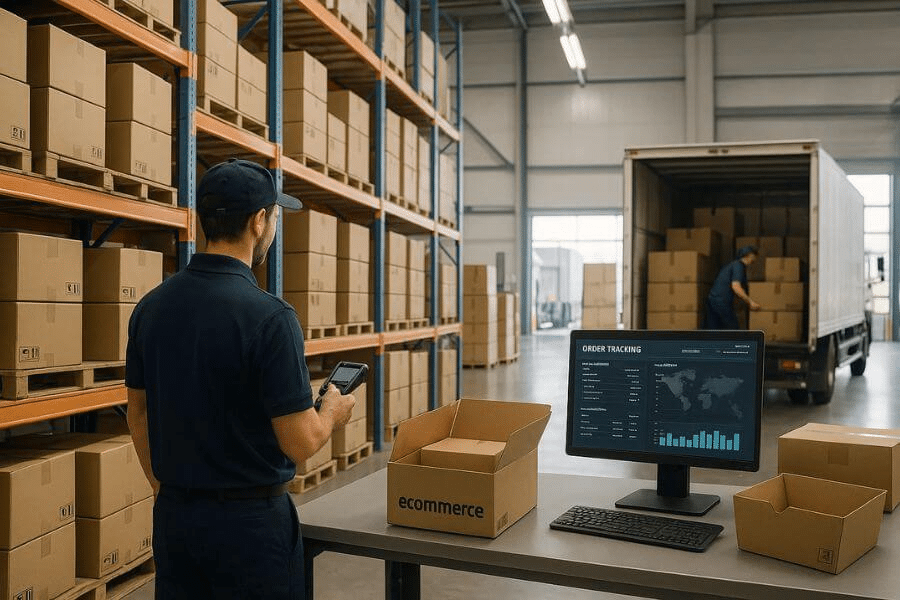
Increasing brands have a major choice of either staying within and keeping fulfilling orders within the company or outsource to an outside fulfillment provider, a 3PL. Your brand grows, so do orders, SKUs, and complexity of systems, the difference between in-house fulfillment and outsourcing fulfillment through ecommerce grows at a rapid pace. This article will assist you with the fulfillment decision guide to enable you to select the model that fits your growth stage. Outsourced fulfillment is more scalable, less expensive over the long run and offers superior customer experience to in-house operations of most growing ecommerce brands.
Understanding the Two Models
What Is In-House Fulfillment?
In-house fulfillment refers to the process of taking care of all it on your own: storing, picking, packing, and shipping. You are a tenant or a landlord, there are employees, there are shelves and bins to purchase and an operation in getting goods out the door on daily basis. The big appeal? Total control. You monitor each move, make adjustments on the spur of the moment, and make sure your brand touch is in all places. However, here lies the truth check- it is resource intensive. Space, people, and tools get more and more expensive as orders increase, and scaling turns into a nightmare. Consider that: when you are an emerging brand on either Shopify or Amazon, balancing between in-house and outsourced fulfillment is more likely to lean towards outsourcing as your expansion faces challenges.
What Is Ecommerce Fulfillment (3PL)?
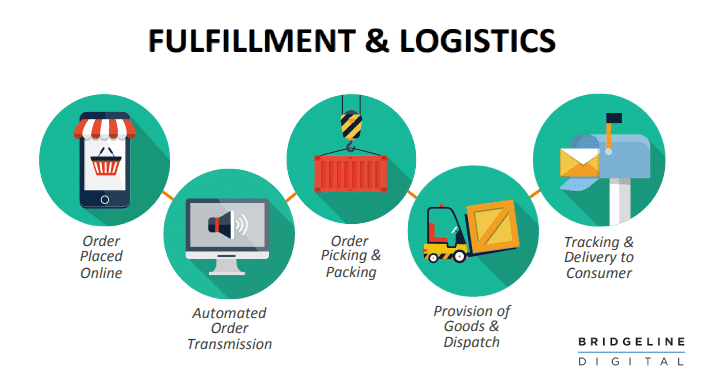
Handing these ops over to professionals such as us at BM Supply Chain is known as ecommerce fulfillment, or 3PL (third-party logistics). Our operations in China allow us to handle storage, picking, packing and shipping, and access some of the best supply chains in sourcing, inspection and even one-piece dropshipping. Expenses are reduced since you pay by use -there are no additional fixed overheads to savor margins. And herein lies the aspect of automation at its best, more precisely, sophisticated WMS (warehouse management systems), API interconnections, allowing the inventory to be properly synchronized across all platforms, such as TikTok Shop or Amazon. It expands for expansion, allowing it to grow without expanding it to more warehouses or temporary workers. This model is scalable to demand peaks, making it smooth in ecommerce logistics when the brand has brands that are scalable in fulfillment solutions.
The Core Comparison: In-House vs. Outsourced Fulfillment
1. Cost Structure
The make or break factor in in-house and outsourced fulfillment is costs. In-house charges you with fixed costs: manpower (salaries, training, benefits), renting a warehouse (recurring leases), taxes and compliance fees, packaging supplies (boxes, fillers, labels), maintenance of the system (software updates, hardware repairs). They do not move even during the slow months and they drain cash flow.
Outsourced ecommerce fulfillment reverses the expression- pay-as-you-go. Charges are proportional to the orders: storage charge per unit, pick-and-pack charge per delivery. No unexpected overtime or utility bills. To expanding brands, this guarantees the cost of ecommerce fulfillment to be more predictable and is usually less expensive in the long-run, taking into consideration the hidden in-house costs such as employee attrition.
2. Scalability
At in-house fulfillment, one goes wrong on scalability. Imagery peak season or a viral TikTok smash-hit – your staff runs about, room is limited, and time is lost. Expansion involves renting additional space, recruiting hastily (and subjecting oneself to unsuitable fits), and increasing inventory unguaranteed.
The outsourced 3PL fulfillment performs well in this. The suppliers such as BM Supply Chain can scale up on command: hire more employees, switch to larger containers, or turn on multi-warehouse connections. Flexible resources have helped us take in brands that have been able to double orders overnight without a problem. In the case of growing brands, outsourcing would win over adaptability.
3. Efficiency & Technology
The efficiency is reduced to tech. On-premise solutions demand large purchases of WMS, barcode readers, and Shopify/Amazon fulfillment comparison API. Building this from scratch? This is costly and time consuming and still needs tweaking.
Ready-made technology Ecommerce fulfillment specialists introduce automated picking robots, live tracking of stock, and channel-integrated stock that synchronizes inventory. Errors drop, speed rises. Sooner expanding brands tend to seek 3PLs with 99%+ accuracy, eliminating the tech pains.
4. Shipping Options
An in-house restricts you to a handful of carriers – UPS or FedEx or local post, or what you can negotiate. Rates may not be competitive and international? Unless you spend a lot, forget seamless.
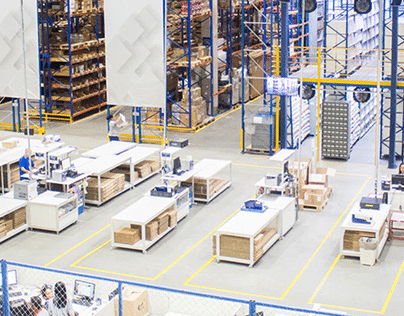
Our 3PLs are volume dealers: dedicated lines, express carriers, post; even multi-warehouse drops are on offer to reduce transit time. In the case of ecommerce logistics in a global context, this translates to faster and cheaper shipping which is important in customer retention in a competitive world.
5. Inventory Accuracy
Miscounts in manual stock checks are the bane of in-house: miscounts result in oversells or stockouts. Training is of use, but exhaustion sets in.
There is barcode scanning on all touchpoints, counts of the cycles, and forecasts done by AI, enforced by 3PLs. We have also witnessed a 85-percent in-house versus 98-percent outsourced brand moving where returns and sales lost are minimized.
6. Branding & Packaging
The two models embrace branding, although there are differences in terms of implementation. In-house offers the ability to customize each box, however, scaling custom kitting (bundling) or inserts consumes time.
Outsourced fulfillment is shine, we can deal with assembly, custom packaging, labels, and inserts without facing any problem. In brands that have enormous packaging requirements, branding is achieved with 3PLs without any additional pain.
7. Control vs. Delegation
Love micromanaging? In-house fulfillment provides complete control- fine-tune processes, check daily.
But delegation’s value? Huge for growth. Outsourcing allows you to focus on core work: product development, marketing. 3PLs provide transparency in operations through dashboards, and thus, you manage the operations without being overwhelmed by the details.
Cost Breakdown: Which Is Cheaper?
1. In-House Fulfillment Typical Costs
Running in-house? Assume the following ballparks, using industry averages (a mid-sized operation, i.e. 5,000-10,000 sq ft warehouse with 500-2,000 orders/month).
- Warehouse rent: $6-12/ sq ft annually and therefore 30,000-60,000/yr 5,000 sq ft.
- Staffing cost: $30,000 -50,000 per full-time employee/year (inclusion of benefits); require 3-5 staff? That’s $90,000-$250,000.
- Services, insurances, overtime: Utilities 500 -2,000/month; insurance 1,000- 5,000/year; overtime costs 20-30% labor peak.
- System tools and warehouse software WMS subscriptions: $2,000-10,000/year, hardware (such as scanners) costing start-up of $5,000.
These fixed costs sting during lean periods.
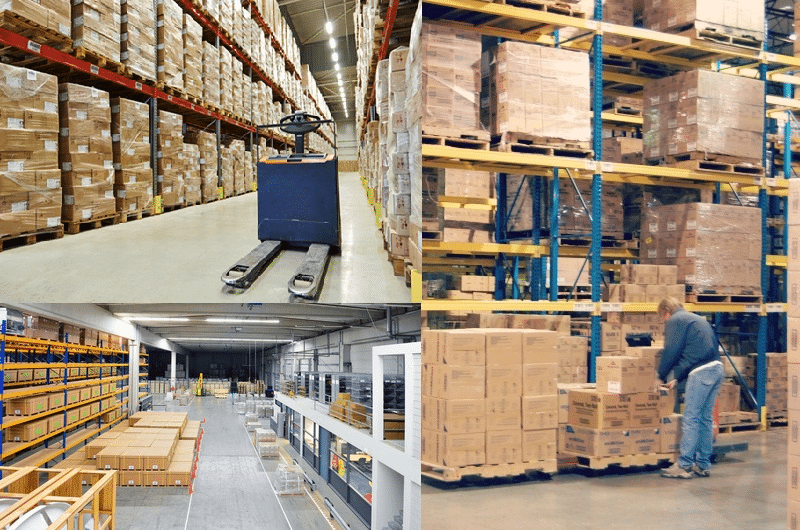
2. Ecommerce Fulfillment (3PL) Typical Costs
No initial warehouse constructions, 3PLs pay per variable charges.
- Receiving: It is often free or 50-2 per unit.
- Storage: 55 cents per cubic foot/month, or 20-25 cents per pallet; bins 2-5 cents/month.
- Pick and Pack: 1.50 to 5.00 per order, and 0.20 to 1.00 per member.
- Packaging: $0.50-2 additional cost on personalized packing.
- Shipping fee: Discounted prices, e.g. 5-15 domestic, depending on weight and destination.
Only pay what you utilize- no time-limited locks.
3. Which Is More Cost-Effective for Growing Brands?
Outsourcing 3PL fulfillment is obviously less expensive when the brands reach 200-2,000 monthly orders. Internal fixed cost is estimated to be $10,000-20,000/month minimum, whereas the 3PLs can cost the organization 2,000-8,000 handling the same volume minimum scalability without capex. Subtract costs on incorrect shipments and mistakes, and the growth is no-brained.
Case Studies: How Growing Brands Choose the Right Model
Case 1 — A Beauty Brand Scaling from 100 → 800 Orders/Month
Use a skincare brand with 50 or more SKUs and picky packaging requirements, such as sample inserts and custom boxes. Within the company, they were having a hard time: there were 10% errors caused by manual packing, which slowed down the shipments. Considering a deal with a 3PL such as BM Supply Chain? The accuracy was 99, speed increased to dispatch within a day. The expenses were reduced by 25 percent after abandoning the fixed rent allowing them to concentrate on Tik Tok campaigns. Outcome: lesser scaling, satisfied clients.
Case 2 — A Gadget Brand Handling Viral TikTok Traffic
One of the tech accessories brands was going viral on Tik Tok and the number of orders increased to 1,500/month after starting at 300. Internal warehouse stretched thin–overtime went sky-high, stockouts were irritating the shoppers. 3PL fulfillment outsourcing? Instant flex: additional personnel, multi-warehouse delivery reduced delivery time to 2-3 days. Logistics were made more efficient, returns declined 15%. They did not climb chaotically, but instead turned buzz into long-term growth.
Case 3 — A Clothing Brand Keeping Fulfillment In-House for Branding Reasons
Not all switch. A boutique clothing line that has ultra-custom fittings together with environmentally friendly packaging remained in-house, to be controlled. They owned the process and every tag should be in accordance with their ethos. Valid choice on low volume (less than 500 orders), stable operations. However, as they expanded, biased offshoring of peaks by 3PL was rational- trade-offs between control and efficiency.
Pros & Cons Summary Table
| Aspect | In-House Fulfillment Pros & Cons | Outsourced Fulfillment (3PL) Pros & Cons |
| Cost | Pros: No markup fees. Cons: High fixed overheads like rent and staff. | Pros: Variable, pay-per-use. Cons: Per-order fees add up at low volumes. |
| Control | Pros: Total oversight. Cons: Time-intensive management. | Pros: Delegated ops free your time. Cons: Less direct control. |
| Scalability | Pros: Custom tweaks. Cons: Hard to expand quickly. | Pros: Instant flex for peaks. Cons: Relies on provider’s capacity. |
| Systemization | Pros: Build your own tech. Cons: High setup cost. | Pros: Advanced WMS included. Cons: Learning curve for integrations. |
| Packaging & Branding | Pros: Full customization. Cons: Labor-heavy for complex needs. | Pros: Handles kitting easily. Cons: Standard options unless specified. |
| Logistics Channels | Pros: Choose your carriers. Cons: Limited negotiations. | Pros: Volume discounts, multi-options. Cons: Provider’s network limits. |
| Risk | Pros: Internal accountability. Cons: Single-point failures (e.g., staff illness). | Pros: Shared expertise reduces errors. Cons: Dependency on partner reliability. |
Common Mistakes Brands Make When Choosing a Fulfillment Model
1. Only looking at cost, ignoring scalability
Brands are obsessed with short term savings and overlook how in-house caps growth in booms.
2. Underestimating labor & warehouse staff cost
The recruitment process appears to be cheap until benefits, training and turnover reach 20-30% per year.
3. Inadequate inventory forecasting
Wrong forecasts result in excessive stock (wasted space) or stock-outs (lost sales), less so with in-house forecasts without pro tools.
4. Treating fulfillment as an afterthought
It is central to customer experience- delay here, and reviews tank.
5. Not documenting packaging standards
General specifications lead to disparities particularly outsourcing without briefing.
How to Decide Which Model Is Right for Your Brand
Choose In-House If:
- You desire a severe dominance over all particulars.
- SKUs are few (under 20).
- It is smooth sailing, no maniacal movements.
- Special packaging is not bargainable and easy.
Choose Outsourced Ecommerce Fulfillment If:
- You aim to slash ops costs.
- Orders are seasonal (or viral).
- Multi-channel sync should also be automated.
- Expansion plans involve expansion in 2010/2011.
- Shopify, Amazon, Tik Tok, – required flowing inventory.
Conclusion: Ecommerce Fulfillment Wins for Most Growing Brands
In the case of expanding brands, outsourced fulfillment is the most economical, efficient, speedy, and scalable. It manages the ecommerce logistics political agonies such as multi-channel management and branding without grinding the axe internally. Most of the expanding ecommerce brands that want to scale quickly by having fewer operational risks need to engage a 3PL at an early stage such as BM Supply Chain to have custom solutions designed, including sourcing to delivery.