What Is FOB? A Quick Primer
FOB stands for “Free on Board,” which is a very important set of rules for international shipping. It tells the buyer when the seller gives up ownership and responsibility for the goods. Think of FOB as a handshake in a contract that makes it clear who is in charge of the goods while they are in transit.
These are standard terms, so they will help clear up any confusion in cross-border trade. Both parties will know what they have to do before one container leaves. FOB terms are part of the Incoterms system, which sets rules for trade between countries all over the world.
Deep Dive: FOB Shipping Point
Definition
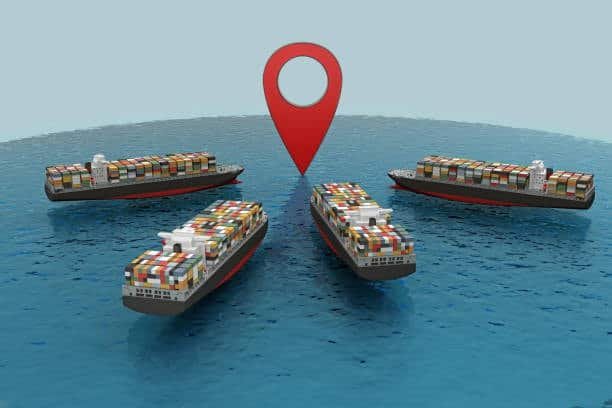
Under FOB Shipping Point, the buyer is fully responsible as soon as the goods leave the seller’s dock or warehouse. It’s like taking the keys to a car; once you drive off the lot, everything is your fault.
Ownership & Liability
- Transfer Point: This is in the shipping dock of the seller.
- Risk Bearer: Buyer receives all transit risks (damage, loss, delays)
- Insurance: Buyer has to take out and pay cargo insurance.
- Claims: Buyer handles shipping companies directly on any matter.
Accounting Effects
In terms of accounting, this has instant effects:
- Inventory is recognized when the goods are shipped.
- Seller recognizes the sale when shipped out.
- The shipping point is the point of revenue recognition.
- The cash flow is quicker in the case of sellers.
Costs
Buyers typically handle:
- Freight charges from the origin
- On-dockage expenses.
- Custom duties and customs charges.
- Insurance premiums
- All storage or demurrage.
Deep Dive: FOB Destination
Definition
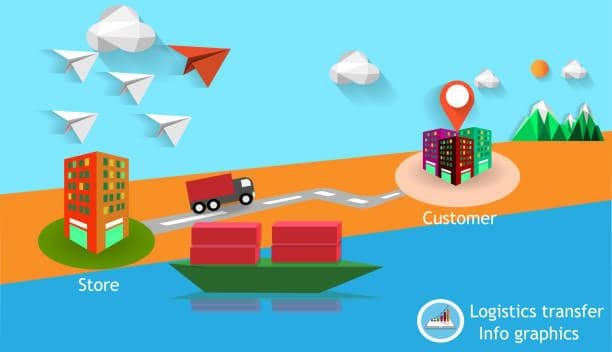
The FOB Destination reverses the game–a seller is fully responsible until goods are delivered to a buyer at the point mentioned in the address. The shipment is basically babysat by the seller during the transportation, where the seller retains liability.
Ownership & Liability
- Transfer Point: At the dock/warehouse of the buyer.
- Risk Bearer: Before delivery, all transit risks are owned by the Seller.
- Insurance: Seller secures and covers detailed coverage.
- Claims: Seller deals with any shipping-related disputes and claims.
Accounting Effects
This establishes an alternative fiscal time:
- Inventory is only registered when received.
- The seller is not allowed to record a sale before delivery.
- Sellers are not recognized as revenues.
- Buyers are able to manage their cash flows better.
Costs
Sellers typically cover:
- All freight to the destination.
- Export paperwork and charges.
- Transit insurance
- The possible storage expenses due to delays.
- The possibility of a complete loss of transportation.
Side-by-Side Comparison
| Feature | FOB Shipping Point | FOB Destination |
| Liability | Buyer at the ship origin | Seller until delivery |
| Ownership Transfer | At the shipping point | At the buyer’s receiving location |
| Accounting Timing | On shipment | On delivery |
| Who Pays Shipping | Buyer (after origin) | Seller (until delivery) |
| Insurance Responsibility | Buyer arranges | Seller provides |
| Risk Level for Buyer | Higher | Lower |
| Pricing | Typically lower base price | Higher base price (includes shipping) |
| Cash Flow Impact | Buyer pays sooner | Buyer pays later |
Special Variations & Trade Terms
Variations in the basic FOB terms are important and result in fine-tuning responsibility and costs:
FOB Shipping Point, Freight Prepaid
Goods in transit are owned by the buyer, but the are pays shipping by the seller until the goods are transferred to the buyer. This assists purchasers who do not wish to take care of logistics, including transportation costs, but have the advantages of ownership.
FOB Shipping Point, Freight Prepaid & Charged Back
The seller will incur initial costs related to shipping and charge the buyer separately. Usually observed in cases where sellers may have lower shipping costs, but buyers would prefer to have control of ownership.
FOB Destination, Freight Collect
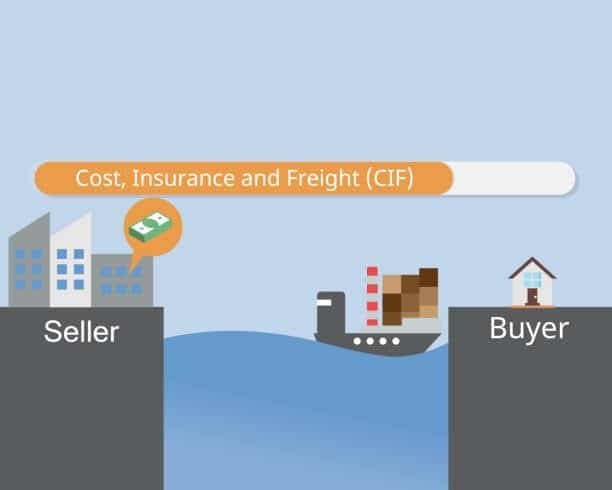
This is where the buyer incurs freight expenses, and the seller is not given out-of-pocket liability until delivery. Applicable where the buyers desire to use specific carriers, yet they desire protection from the sellers.
FOB Destination, Freight Collect and Allowed
The seller gives prices that comprise estimated freight, and the buyer makes payment to the carrier. The final invoice varies depending on the true shipping costs of the seller.
Other Related Incoterms: EXW (Ex Works), FCA (Free Carrier), DES (Delivered Ex Ship), and DDP (Delivered Duty Paid) contain higher degrees of responsibility transfer.
Real-World Examples
Example 1: FOB Shipping Point Scenario
TechCorp has to place an order with Shanghai to acquire manufacturing equipment. On the terms of FOB Shipping Point:
- Shipment of equipment out of Shanghai port – TechCorp owns it.
- Storm damage to the container ship – insurance of TechCorp covers losses.
- TechCorp accounts for the inventory at the time it is shipped.
- This day supplier makes a sale of $100,000.
- All the customs clearance and inland delivery are done by TechCorp.y
Example 2: FOB Destination Scenario
Same equipment order, under FOB Destination terms:
- The equipment is shipped from Shanghai to TechCorp in Texas.
- Damage by storms – Insurance by Supplier is to replace such damage.
- TechCorp records inventory only in the cases when equipment is received in good condition.
- No sale can be booked by the supplier till delivery is confirmed.
- The supplier manages the transport, delivery, and any transport issues.
Why It Matters — The Bottom Line
The decision to use shipping terms such as FOB Shipping Point or FOB Destination is not simply a matter of paperwork; it is a business decision that impacts:
Risk Management: FOB Destination insures against the disaster of transportation to buyers, and FOB Shipping Point offers buyers control of the logistics and shipping method.
Cost & Pricing Strategies: FOB Shipping Point usually implies that quoted prices are lower, but the total costs paid, including insurance costs, are greater for the buyers. FOB Destination incorporates the cost of shipping the item, but it might be a more costly option in general.
Accounting & Revenue: FOB terms have a direct influence on the recording of the sales and on the quarterly results, cash flow projections, and inventory values.
Supply Chain Control: FOB Shipping Point allows buyers to select carriers and shipping modes, whereas FOB Destination leaves logistics to sellers who might offer superior rates or relationships.
Explain Like I’m Five
What if you and your friend are playing Pokémon cards in a different town?
FOB Shipping Point: means that you give your friend the card at your house, and it is his or hers. They worry that they will lose or ruin it on the way home.
FOB Destination: You put the card in your pocket and walk to your friend’s house. Only when you leave it with them will it be theirs.
Frequently Asked Questions
Q: Does FOB mean free shipping? A: Not exactly. Under FOB Destination, the seller determines the shipping cost and timing of ownership transfer; however, the free cost of shipping is usually included in the product price.
Q: Is FOB Destination always better for buyers? A: Not necessarily. Although FOB Destination minimizes the buyer risk, the key differences are that sellers tend to mark the base prices higher to incur the shipping costs and liability. The FOB shipping point can provide cost reductions in total costs to experienced importers.
Q: Who pays for shipping under FOB Shipping Point? A: The buyer will pay all the freight charges between the shipping point and the destination, including ocean transport, inland transportation, customs charges, and delivery to the facility.
Q: When does ownership officially transfer? A: Under FOB Shipping Point, ownership transfers at the ship’s rail when it is at the port of origin. Under FOB Destination, the transfer takes place where goods are shipped and received at the point of destination, which is the place where the buyer is.
Q: What happens if goods are damaged in transit? A: Under FOB Shipping Point, insurance claims and replacement are filed by the buyer. On FOB Destination, the seller takes care of all the claims of damages and must supply the seller with replacement products to complete the contract.
Conclusion
Knowing FOB terms, which are a component of international commercial terms, is not only concerned with logistics, but it is also concerned with the preservation of your business and the reduction of expenditures. Whether you choose FOB Shipping Point because it allows you to gain more control and possibly more affordable options or FOB Destination because it allows you to assume less risk and achieve simpler operations, make sure that your choice is in accordance with the risk-taking of your company, the cash-flow requirements, and the capabilities that you have.