
Is free storage really cheaper?
For fast-moving inventory with strong turnover, free storage can genuinely lower costs. Yet when inventory sits longer than expected, the same “free” offer often drives up the total fulfillment expense through higher handling fees, embedded shipping margins, or strict volume commitments. Many sellers assume “free storage” removes warehouse cost entirely. In reality, storage expense is never truly zero — it is either billed directly or absorbed indirectly within other operational fees.
Free storage is not automatically cheaper — Its real value depends on inventory turnover speed and understanding the overall fulfillment structure.
This guide breaks down the mechanics of both models so ecommerce founders, Shopify and Amazon FBA sellers, inventory managers, and brands sourcing from China can evaluate offers with clear margin visibility.
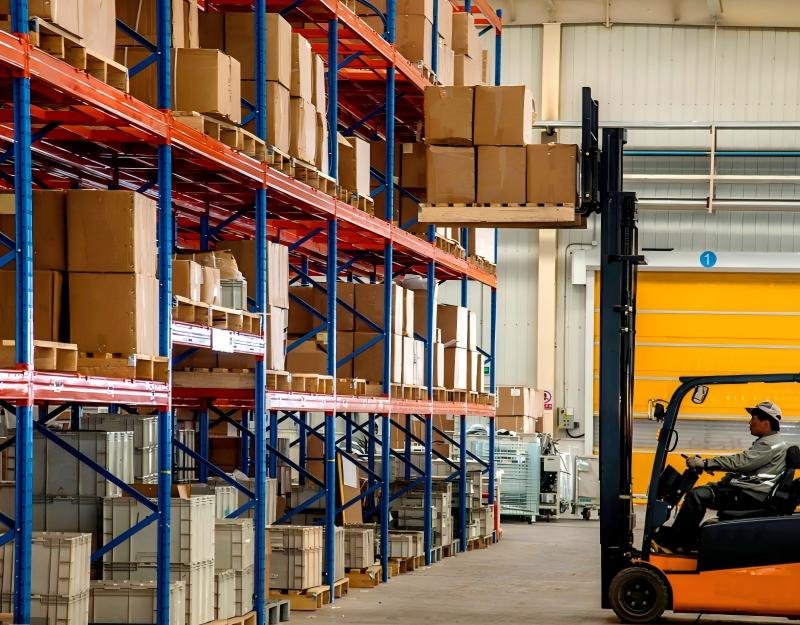
How Free Storage Models Typically Work
Free storage models in 3PL contracts are structured to reward speed and volume rather than to eliminate cost. Providers design them with clear boundaries so the warehouse can maintain efficient space utilization.
Most common arrangements include a limited free storage period, typically 30 days from the date goods are received and inspected. After that window, daily or monthly charges apply to any remaining stock.
Some providers offer free warehouse storage 3PL only when sellers meet a minimum monthly order threshold — for example, 800–1,500 orders. Falling below the threshold converts the entire month’s storage to paid.
Other contracts grant conditional free storage in exchange for higher per-order handling fees or a minimum spend on pick-and-pack services. A smaller group of China fulfillment partners exclude long-term or slow-moving SKUs from free storage altogether, applying charges immediately after the initial grace period.
| Free Storage Model | Typical Conditions | Risk Factor |
| 30-Day Free | Applies to all new inbound inventory | Turnover dependent |
| Volume-Based Free | Requires minimum monthly orders | Order fluctuation |
| Conditional Free | Higher handling fees or minimum spend | Cost redistribution |
In free storage China fulfillment, the goal is clear: move goods quickly so the provider’s space turns over efficiently. When that does not happen, the economics shift.
Understanding the 30-Day Grace Period in Practice
The 30-day window sounds generous, but inbound processing, quality inspection, and labeling often consume the first 3–7 days. Sellers with 45-day lead times from factory to warehouse can easily lose half the free period before sales even begin.
How Paid Storage Models Work
Paid storage models prioritize predictability and scalability over promotional periods. Providers charge based on actual space occupied, giving operations teams a transparent line item they can forecast month after month.
Common billing methods include monthly per-CBM pricing, where one cubic meter of warehouse space carries a fixed rate. Pallet-based pricing suits larger or palletized shipments, while bin or shelf storage works for small-parcel or multi-SKU inventories. Many warehouses also apply tiered storage rates that increase after 30, 60, or 90 days to discourage long-term holding.
| Storage Type | Billing Method | Predictability |
| CBM-Based | Volume per month | High |
| Pallet-Based | Per pallet per month | Moderate |
| Tiered Rate | Increases over time | Variable |
Understanding warehouse storage cost per CBM helps brands compare quotes apples-to-apples. Because the rate is directly tied to space used, slow-moving items become visibly expensive, prompting faster liquidation or better demand planning.
Tiered Rates and Their Impact on Margin
Tiered structures are especially relevant for seasonal or trend-driven products. A SKU that sells well in month one but slows in month three suddenly carries a higher storage cost, forcing clear profitability decisions.
The Hidden Cost of “Free” Storage
Free storage may result in hidden fees in ecommerce fulfillment including higher pick & pack fees, elevated shipping margins, mandatory minimum volumes, reduced flexibility, and steep penalties once the free period ends.
The mechanism is simple: providers must cover their fixed warehouse costs. When they waive the storage line item, they recover that revenue somewhere else in the pricing stack.
| Cost Component | Free Storage Model | Paid Storage Model |
| Storage | $0 (limited period) | $X (transparent) |
| Pick & Pack | Higher | Standard |
| Shipping Margin | Often embedded | Transparent |
| Flexibility | Lower | Higher |
This redistribution logic explains why two seemingly similar quotes can produce very different landed costs per order. Experience across hundreds of China-sourced brands shows that the lowest storage line item rarely delivers the lowest total fulfillment cost.
Inventory Turnover: The Deciding Factor
Storage efficiency ultimately depends on inventory turnover rate.
Inventory Turnover Rate = Monthly Sales ÷ Average Inventory
A rate of 4.0 means the entire stock turns over every 7–8 days. A rate of 1.0 means stock sits for a full month on average.
Fast-moving products (turnover > 3.0) benefit most from free storage because they exit the warehouse well before any charges apply. Medium-turnover items (1.5–3.0) require careful modeling of handling fees versus direct storage cost. Slow-moving products (below 1.0) almost always favor paid storage models because long-term storage fees 3PL can accumulate rapidly and erode margin.
| Turnover Speed | Best Storage Model |
| High (≥ 3.0) | Free storage beneficial |
| Medium (1.5–3.0) | Depends on fee structure |
| Slow (< 1.5) | Paid storage usually safer |
Calculating inventory turnover ecommerce on a per-SKU basis, rather than at the account level, reveals which items drive hidden costs.
Real Example: Comparing True Storage Cost Per Order
Consider a mid-sized Shopify brand selling 1,000 orders per month, all fulfilled from a China 3PL partner.
Scenario A – Free Storage Offer
- Storage: $0 for first 30 days
- Handling fee: $0.50 higher per order
- Extra cost: 1,000 orders × $0.50 = $500 per month
Scenario B – Paid Storage Model
- Storage: $400 per month (based on actual CBM occupied)
- Handling fee: standard rate
- Total extra cost: $400 per month
At 1,000 orders, the paid model saves $100 monthly. If order volume drops to 600, the free model’s extra handling cost falls to $300, making it cheaper. Above 800 orders, the paid model consistently wins.
This simple math — storage cost per unit = total storage fees ÷ units sold — along with a complete fulfillment cost breakdown, should be run for every 3PL storage pricing model under consideration. The break-even point changes with every shift in turnover or order volume.

When Free Storage Makes Sense
Free storage delivers clear advantages in these situations:
- High-volume sellers moving 1,000+ orders monthly
- Fast inventory turnover with consistent sell-through
- Stable monthly sales and predictable demand
- Limited SKU complexity (under 200 active SKUs)
- Products with short shelf life or trend-driven demand
In these cases, the 30-day free window aligns perfectly with rapid movement, and any modest increase in handling fees is offset by zero storage line items.
When Paid Storage Is the Better Choice
Paid storage protects margin more effectively when:
- Products are seasonal, such as fashion brands with seasonal inventory, or have uncertain sales velocity
- Inventory includes a wide SKU assortment with varying turnover
- Margin-sensitive items where every dollar counts
- Businesses require maximum flexibility to adjust inbound quantities
- Long-term storage fees 3PL would otherwise create unpredictable spikes
Here, the transparent 3PL storage pricing model allows precise forecasting and removes the risk of sudden penalty charges.
How to Evaluate Storage Offers from 3PL Providers
Before signing any agreement, run this neutral checklist:
- Is storage truly free or limited to a specific period?
- Are handling or pick-and-pack fees adjusted upward to offset the free storage?
- Are there minimum order or spend requirements?
- What happens to inventory after 30, 60, or 90 days?
- Are long-term storage penalties applied automatically?
- Is any shipping margin embedded in the rate card?
Request a full cost-per-order simulation based on your actual historical turnover data and comprehensive logistics planning.The most experienced China fulfillment partners willingly provide these models without pressure.
Conclusion — Storage Cost Is a Structure Decision, Not a Marketing Label
Free storage is not always cheaper. Its benefit hinges entirely on inventory velocity, operational flexibility, and the overall fulfillment structure. Fee redistribution remains common across the industry, which is why 3PL pricing transparency and cost modeling are the only reliable ways to protect margin.
Sellers who evaluate storage offers holistically — rather than chasing the lowest single line item — consistently achieve more predictable cash flow and sustainable scaling. Focus on the total landed cost per order, calculate turnover regularly, and choose the model that aligns with your actual inventory behavior. That disciplined approach turns storage from a marketing label into a controllable lever for profitability.