In the current fast-changing environment of e-commerce, it is important to comprehend the differences between various kinds of logistic facilities so as to be able to conduct business with success. Fulfillment centers and distribution centers (warehouses) are two terms confused, however, serving very different purposes. Both are significant but equal elements of Modern supply chains; however work to different purposes, abilities, and customer attention.
A fulfillment center is an industry-specific facility created to support direct customer order fulfillment, devoting its efforts to an expedient use of agility and reliability in confirming individual orders online. These centers are well-tailored to picking single products, personalized packing, and the ability to ship to the final consumers.

A distribution center (or warehouse) acts as a strategic point that enables manufacturers and suppliers to maximize bulk shipments and the wider distribution of the supply chain. These warehouses specialize in taking high volumes of merchandise and redistributing that back to retailers, wholesalers, or other spots in the distribution channel.
3 Key Differences Between Fulfillment Centers and Distribution Centers
1. Purpose and Primary Function
The basic feature is an essential variation in their primary purpose and the nature of orders they process.
Fulfillment Centers’ definition is that it is a facility set up to receive, pick, and pack individual orders of customers received online so that customers can be directly shipped. These facilities are best at handling a large quantity of small, diversified orders with turnaround times. They are specially designed to be used in the final step of the supply chain, where goods travel between the warehouse and the customer’s doorstep. Emphasis is on accuracy, speed, and customer sat. And can manage returns, exchanges, and customer service calls.
Distribution Centers are focused on large-scale inventory and re-shipping products to retail stores, wholesalers, or warehouses (including fulfillment centers). They mainly act as ascent and descent links in the supply chain, where they are given huge consignments by the manufacturers, which they further distribute to different downstream stakeholders. They serve as supply chain strategic inventory locating positions and assist in optimizing transportation expenses and delivery rate within the greater supply chain.
2. Size and Scale Considerations
These facilities vary in their physical sizes and planning since they have various operational needs.
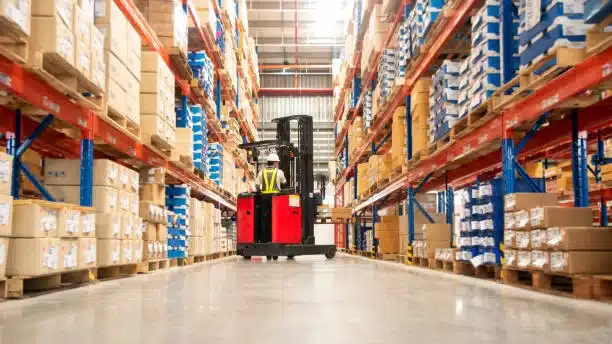
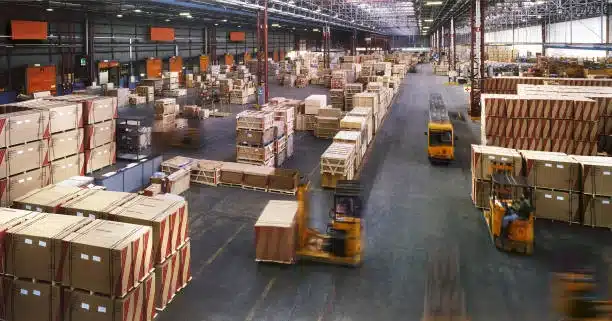
Distribution centers are usually large-scale operation centers that are meant to manage pallets, freight-level operations, and should be able to host forklifts and other heavy machinery. These plants can be hundreds of thousands of square feet, and such facilities can have high-bay storage, numerous loading docks, and plenty of floor space to support sorting and staging functions. The massiveness of their size means that they can cope with the enormous amounts of inventory which managed through the supply chains.
Fulfillment centers can be much smaller and more compact than distribution centers, and would be more likely to be much smaller depending on the volume of e-commerce orders received and products handled. They are designed with emphasis on ease of access and/or collection of single items, as well as efficiency, not bulk handling. The design of such a layout is aimed at the ability of human workers to traverse the storage locations rapidly with shorter distances to travel and more detailed division systems.

3. Capabilities and Equipment Infrastructure
Both the type of equipment and the functionality of the various facilities are made specific to the purpose of the facility.
Fulfillment centers Packing facilities in fulfillment centers include packing stations, automated labeling machines, handheld scanners to track inventory changes, and a wide range of packing materials of different sizes. Most contemporary fulfillment facilities also use robotics in moving the inventory, automated sortation mechanisms, and elaborate warehouse management systems (WMS), which streamlines picking routes and automates real-time inventory. The purpose of such facilities is usually to have special sections of gift wrapping, custom packaging, and branded inserts that add to the customer experience.
Distribution centers. Heavy-duty equipment, such as forklifts, pallet jacks, platform trucks, conveyor systems, and auto sorting equipment, is used in distribution centers for bulk handling. Others have special functions, including refrigeration of perishable products, cross-docking for quick transshipment, and large racking systems to achieve high-density storage. The machinery is set to transport a lot of products effectively, but also to pack each product carefully.
Frequently Asked Questions

What are the cons of using a fulfillment center?
Although fulfillment centers have numerous benefits, the business needs to be informed of shortcomings that might arise. The main issues are a lack of control over the fulfilment process since you are using systems and processes offered by a third-party provider. Also, fulfillment centers may pose possible increased expenses to the new sellers who would not have reached the order quantity to enjoy the economies of scale. The per-unit costs may also be higher than expected, and the new businesses may encounter huge setup fees, storage expenses, and other charges imposed as a service.
How do I know whether I need a distribution center or a fulfillment center?
The decision will depend on your model of business and clients. Bulk redistribution to other businesses or retailers, or wholesale customers, can be done within a distribution center and would be best suited to such needs. Select this option when you are either producing goods, importing goods to resell to other distributors, or managing B2B distribution. A fulfillment center is meant to pick, pack, and ship individual orders to final customers. This is the appropriate decision to make when it comes to the e-commerce business, the direct-to-consumer organizations, or a firm that delivers single orders to consumers.
Is a fulfillment center considered a warehouse?
Yes, technically, a fulfillment center is a warehouse, but it is a highly specialized one with a particular target for parsing and shipping of the customer orders. Traditional warehouses are primarily used to store their goods, but fulfillment centers are processing centers where storage and order-making activities are integrated with customer support services and frequently value-added services such as custom packaging and returns handling.
Additional Insights and Industry Context
Fulfillment Centers: The E-commerce Engine
Third-party logistics (3PL) providers are often in charge of modern fulfillment centers, which are specific to e-commerce activities. The facilities deploy advanced warehouse management systems (WMS) to handle real-time inventory management, create shipping labels, streamline pick paths, and process returns efficiently. In fact, now most value-added services, such as custom packaging, branded insertions, product bundling, and even light assembly, are offered at many fulfillment centers that no longer provide basic storage and shipping services.
The strategic benefit of a fulfillment center is that the time and cost of delivery could be reduced since they could put investment in places nearer to the population centers of customers, and hence save money and time because faster delivery would be possible. This geographic model of distribution has gained a bigger focus due to the increasing demand of customers to get their delivery within a shorter time.
Distribution Centers: Supply Chain Command Centers
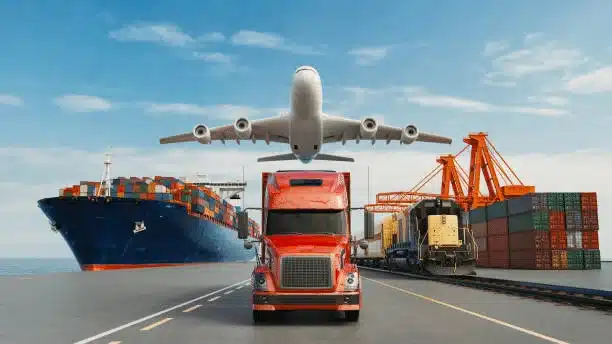
Distribution centers act as primary intersections within the intricate networks that are contrasted with a supply chain network; however, distribution centers are often located within the vicinities of heavily utilized transportation infrastructure, like a port, a rail terminal, or a major highway interchange. It is this strategic positioning that enables them to easily access goods produced by manufacturers and suppliers and distribute across many geographical regions.
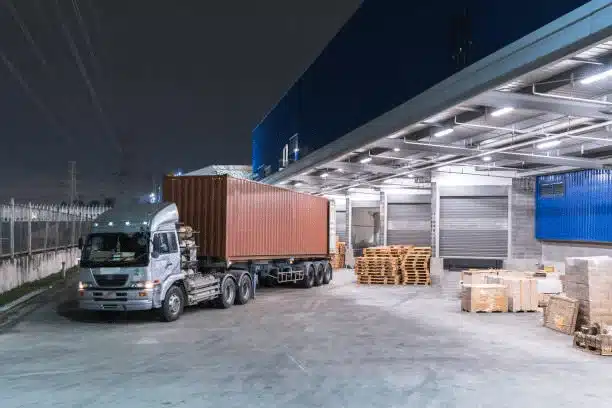
The facilities are planned for the storage, sorting, and transferring of goods in large quantities to other business organizations as opposed to individual consumers. They regularly act as inventory cushions, assisting in ironing out supply chain oscillations in the supply and demand. There is the provision of various values by many distribution facilities that include light manufacturing, product customization, or quality checks.
Comprehensive Comparison Overview
| Feature | Fulfillment Center | Distribution Center |
| Primary Purpose | Pick, pack & ship individual ecommerce orders | Receive and redistribute bulk inventory |
| Typical Size | Smaller, scaled to e-commerce order volume | Large-scale facilities for pallet-level handling |
| Key Equipment | Packing stations, handheld scanners, labeling machines | Forklifts, pallet jacks, platform trucks, cross-docking systems |
| Optimal Location | Near customer population centers | Near transportation hubs, ports, or major distribution networks |
| Primary Customers | End consumers (B2C) | Retailers, wholesalers, other distribution centers (B2B) |
| Order Characteristics | High volume, small individual orders | Lower volume, large bulk orders |
| Processing Speed | Optimized for same-day or next-day shipping | Focused on efficient bulk processing and staging |
| Value-Added Services | Custom packaging, branded inserts, gift wrapping | Cross-docking, light assembly, quality control |
Conclusion
It is a good idea to learn the main distinctions between a fulfillment center and a distribution center so that you can make a critical decision regarding your supply chain strategy. The direct-to-consumer fulfilment shape is stronger at performing direct-to-consumer activities than the distribution shape is, and direct-to-consumer centres deliver speed, accuracy, and customer-oriented services that the modern e-commerce business requires, in contrast with the distribution centres that give bulk handling and points of location that maximise the overall supply chain efficiency. Your decision on the type of facility to choose must coincide with your business model, customer base, and business objectives. Some of the most profitable companies, in fact, use both types of facilities within their supply chain system, taking advantage of the distribution centers to store and manage bulk inventory and the filling centers in order to process orders placed by customers to have a complete logistics business plan that will serve the most efficiency and maximize customer satisfaction.