In the present scenario of a competitive e-commerce world, it is necessary that companies make key decisions for the stock and order fulfillment process. Two known options, which are cited often, are the traditional warehouses and the fulfillment centers. Though the usage of the two terminologies can be considered as the same in many cases, they differ regarding the manner the stock is actually taken care of and the orders are going to be executed. It is necessary that companies comprehend the differences so that they can maximize their supply chain process and meet the fluctuating demands of consumers.

The selection of a warehouse or a fulfillment center largely affects operational efficiency, customer satisfaction, and overall profitability. This detailed guide is created with the purpose of providing core insights for both new projects looking for their initial storage solutions and established organizations that wish to improve their supply chain process, thus helping identify the most appropriate alternative for organizational requirements.
What is a Fulfillment Warehouse?
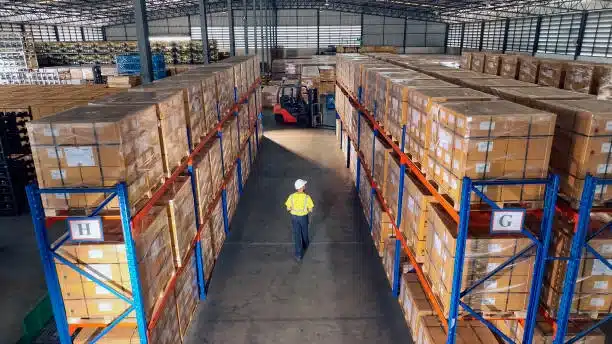
A fulfillment warehouse (see also fulfillment center) is not a stand-alone warehouse in the full range of operations. Not only does it carry the inventory, but it also enables full-fledged operations such as receiving, picking, packing, shipping, and returns.
You should consider a fulfillment center as an entire order processing ecosystem. As soon as a customer makes an order on your site, the fulfillment center gets down to work: the staff takes the goods out of the warehouse, packs them in accordance with your requirements, prepares shipping labels, and arranges carriers to transfer the goods to buyers. Processing of returns, inventories, and giving real-time reports on stock and order status are also carried out in many of the fulfillment centers.
The overall strategy will turn the fulfillment center into an operational partner, instead of only a storage facility. Contemporary fulfillment centers have been known to incorporate warehouse management systems, automated equipment that handles sorting of orders, and also include inventory tracking technologies that work towards precision and efficiency in their ordering.
Key Differences Between Warehouses and Fulfillment Centers
Long-term Storage vs. Short-term Inventory Turnover
The fundamental distinction regarding warehouses and fulfillment facilities is the means of managing the merchandise and the turn rates.
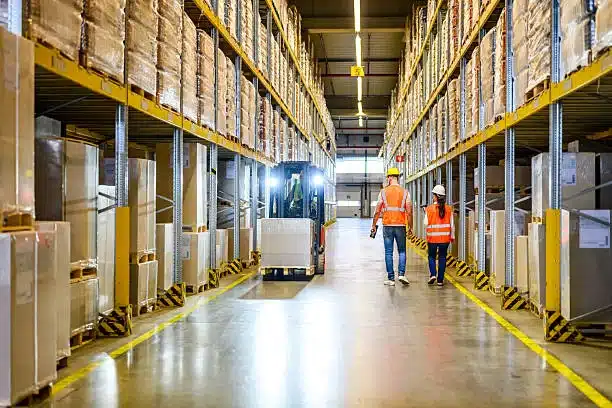
The typical warehouses are meant to accommodate long-term storage in which the inventory can remain in its position, which at times takes months or even years. All these facilities are proficient in the matter of storing large volumes of products safely and securely; therefore, they make them ideal warehouses in businesses that have seasonal inventory, inventory that requires storage in bulk, or products that have a long sales cycle. It is about the maximum amount of storage capacity and the steadiness of inventory.
Fulfillment centers, on the other hand, are optimized for fast turnover of stock. The stock typically cycles within days to weeks to help save on holding costs and more assuredly retain the latest incoming stock of that kind. This fast pace enables the fulfillment of the modern-day consumer order of fast delivery and aids an enterprise to maximize cash flow, with minimal capital invested in slow-selling goods.
Static vs. Active Operations
Another important difference lies in the intensity of operation of these two models.
Warehouse operations. – The scope of the warehouse operation can be said to be relatively insular in its totality, with experiences being more about the receipt of goods, storage of the same, and, in a case scenario, transfer or loss of goods to other facilities. Its process can be summarized as follows: The commodities come in, are recorded in the system, stacked in specific storage bins, and are stored until required. Their staff needs are minor, and the rhythm of operations is usually foreseeable and even.
Fulfillment centers – They are highly active operations where there are constant orders to be processed and associated with picking, packing, shipping, and complicated operations. The environment is dynamic, and orders are dynamically moving through different processing phases. Employees are cross-trained in various roles, such as inventory, quality control, among other roles, and the plant has a sense of urgency as it regards the delivery expectations of the customers.
Services & Capabilities
The sets of services are probably the most significant operational disparity between these two models.
Traditional warehouses – The traditional warehouses only offer storage space, where the seller is responsible for the fulfillment operation. You lease it, do your own inventory, and process the order. Even though this will give you total control over your operation volume, it will also take substantial internal resources and experience to handle.
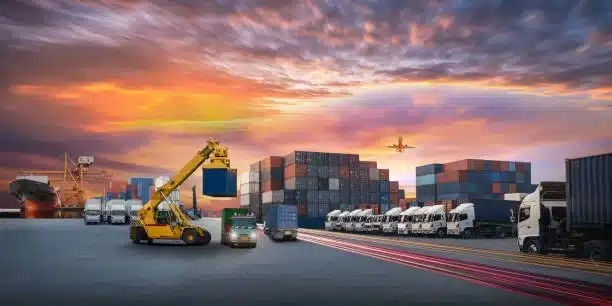
Fulfillment centers – Fulfillment facilities provide a full package of value-added services normally offered by a 3PL (Third Party logistics) provider. Such services may be inventory management, organising shipping and returns, customised packaging, labeling, commercial inserts, and real-time reporting. There is also the possibility of integration with e-commerce stores in many fulfillment centers, meaning that orders can easily move out of your web store and into the fulfillment center.
Summary Comparison
| Feature | Traditional Warehouse | Fulfillment Center (3PL-operated) |
| Main Purpose | Long-term storage | Fast, consumer-focused order fulfillment |
| Inventory Turnover | Slow—items may remain stored long-term | High—inventory moves quickly |
| Operational Flow | Limited activity (receive/store/transfer) | Continuous picking, packing, shipping |
| Service Offerings | Storage only | Full fulfillment: packaging, returns, etc. |
| Operator | Brand or warehouse leasing company | 3PL provider |
| Staff Requirements | Minimal, mainly for basic operations | Specialized teams for complex workflows |
| Technology Integration | Basic inventory tracking | Advanced WMS, API integrations, and real-time reporting |
| Cost Structure | Typically lower base costs | Higher per-unit costs, but includes comprehensive services |
Conclusion
Whether you adopt a traditional warehouse or a fulfillment center is actually down to your business structure and developmental stage, and what you consider important to do. Traditional warehouses are best suited to a business that needs long-term storage, large quantities of inventory, or that could self-perform fulfillment operations without the associated risks. Fulfillment Centers provided by reputable 3PL companies can provide complete solutions and can be a perfect choice for e-commerce companies that require prompt order processing, customer satisfaction, and future growth quantitatively. With these main points of difference, such as the rate of inventory rotation, the complexity of operations, the availability of services, and the price structure of a company in mind, businesses can now make better decisions that basically conform to their business strategies and the needs of their customers. Between the storage-centric model of traditional warehouses and the full offerings of a fulfillment center, the solution will help boost your business and streamline operational efficiency.