Introduction
The management of B2B fulfillment in China by global brands may seem a complicated process to many, but in the right hands, it is the secret of smooth international business. Imagine a developing eCommerce wholesaler who is dealing with supplier delays, inventory hiccups, and shipping challenges between continents. These problems end up in loss of revenue and customers without a clear process.
And that is where the realization of how B2B fulfillment functions in comes in. In its very nature, B2B fulfillment is the process, done in a systematic manner, of dealing with business-to-business orders, both in their sourcing and delivery to wholesale purchasers or retailers. It involves efficiency, scale, and reliability within a supply chain that can typically cut across several nations.
Here, you will discover how the process of fulfillment of B2B works step-by-step and it is adapted to fulfillment in China. We will discuss all the way back to the starting sourcing to the end-tracking and how this allows the brands to grow internationally without the hassles.
The Big Picture: What Makes B2B Fulfillment Different
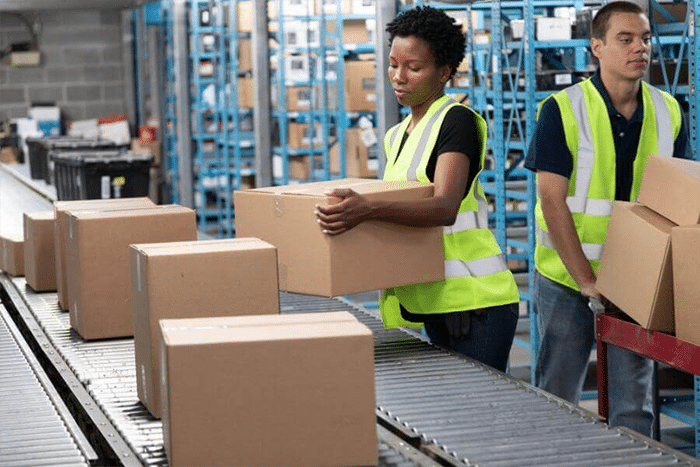
It would be well to mention what makes B2B fulfillment different to its B2C counterpart before getting into the specifics of it. In B2B, the order size is normally bigger, like in the form of pallets or containers as opposed to parcel. This translates to additional paperwork of the customs, custom labelling of branding and liaising with the wholesale customers who demand accuracy and consistency.
B2B fulfillment process implies the alignment of various participants of the process: manufacturers, warehouses, logistics providers, and end-buyers. It is not only about the transportation of goods but also about ensuring optimization of the whole B2B supply chain solutions to reduce the cost and increase the speed. As an example, B2C is more focused on the speed and the individual delivery to the consumer, whereas B2B is more based on the efficiency of bulk and long-term relationships.
The difference is particularly acute in China-based operations, where the accessibility to large manufacturing centers enables to scale at the cost-effective level. Companies that use 3PL fulfilment in China are able to manage these complicated workflows that may be difficult to manage in a B2C set up and provides smooth flow between the production and the global distribution channels.
Step-by-Step Process of B2B Fulfillment from China

The B2B fulfillment procedure follows a logical order with one step dependent on the previous one in order to achieve the precision and punctuality. This is the general way it operates, based on the actual application in the lively logistics environment in China.
Step 1 — Product Sourcing or Inventory Receiving
It all begins with the placement of the correct products. This can take the form of direct sourcing of products by the manufacturer or as a supply of inventory by shipping to a central warehouse in B2B fulfillment in China.
The suppliers are screened based on quality and reliability and coordination is done in terms of purchase orders, negotiations on lead time, and inbound logistics. In the case of brands, this process involves cross checking the details of shipments with those of manifests to prevent discrepancy. Its importance lies in the ensuring of supply chain integrity, particularly in case of different product lines as in the case of electronics or clothing.
BM Supply Chain, being one of the top suppliers, combines sourcing and fulfillment to enable clients access high-quality factory networks. This does not only make B2B logistics steps more simplified but it also minimizes risks such as counterfeit goods or delays.
Step 2 — Quality Inspection & Storage
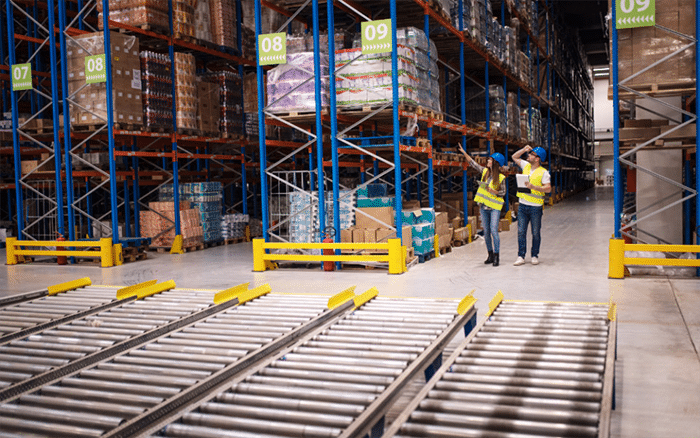
As soon as inventory is received, a strict inspection of quality comes into play to identify problems in time. This includes checking defects by visual means, random batch sampling and checking against standard (ex: ISO or client specifications).
Goods are approved and transferred to storage. Optimization of warehousing in terms of shelving and climatic control to maintain the product state. Efficient warehouse filling is important in China because space is very limited, consider barcode scanning and partitioning according to area to locate items faster.
One of the strengths of the offerings of such providers as BM Supply Chain is free warehousing, up to 30 days. This gets brands out of a tight spot financially enabling them to hoard inventory without incurring direct expenses. Their highly developed warehouse management systems involve warehouse management systems (WMS) that monitor everything in real time avoiding shortage or overstock.
Step 3 — Order Integration & Processing
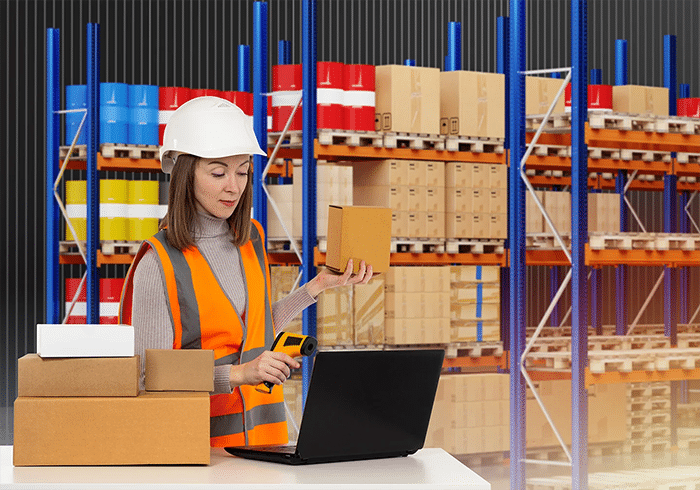
Inventory being in place, attention will now be on order integration. The system automatically processes a wholesale order when it is received by a retailer in Europe or a distributor in the US.
The step is based on digital technologies: APIs and plugins allow integrating the warehouse with eCommerce systems such as Shopify, WooCommerce, or Amazon or even corporate ERP. Orders are confirmed on availability of stock, prices and shipping, and any problems are identified immediately.
To manage large volumes without errors, the order fulfillment workflow in this case is focused on automation. Instant synchronization means that an order is immediately put in a queue to be processed, and the process of fulfilling an order in business to business becomes much more immediate than the one of a manual nature.
Step 4 — Pick, Pack & Ship
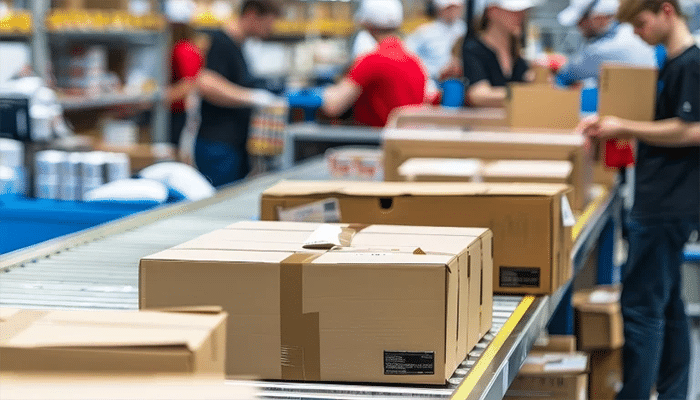
This is where the practical action is done. Warehouse workers or rather more robots (which are increasingly automated) select products on shelves according to order requirements. In the case of B2B, this can include the ability to pull large quantities of products.
The next step is packing, keeping the customization in mind: secure palletizing of large orders, protective packaging to avoid damage and services such as kitting (packaging products together) or custom labeling. When the pick and pack fulfillment is in China, details are observed in order to meet the international shipping regulations.
Orders are finally dispatched by placing shipping labels on them. Depending on cost, speed, and destination, be it the air freight where urgency is required or the sea where cost is the main factor, providers make selections of the carrier.
Step 5 — Global Shipping & Real-Time Tracking
The last leg is outbound logistical and delivery. China offers alternatives: small B2B parcels can be transported by express courier, massive shipments should be loaded on full-containers (FCL), and mid-sized ones should be delivered with the help of less-than-truck-loads (LTL).
The documentation in customs is done carefully- consider invoices, certificates of origin, and tariffs- to prevent delays at the crossing of the borders. Real-time tracking is offered on the way with visibility in the form of dashboards and reports to clients on departure status all the way to arrival.
BM Supply Chain is doing well here through their one-stop tracking query system, which is covering more than 100 countries. Such transparency of world delivery in China creates confidence and brands can maintain information at each stage to wholesale customers.
Technology’s Role in B2B Fulfillment
Technology is not a luxury, but the driving force of contemporary B2B fulfillment. Robotic picking systems minimize human mistakes, whereas API connections allow free data flow between the platforms of clients and the warehouse.
A strong WMS maintains inventory at real-time predicting the direction of demand to avoid stockouts. This tech ecosystem, which involves an AI-based route optimization, reduces delivery time and expenses in 3PL fulfillment in China.
The configuration of BM Supply Chain is a case in point: the free APIs and the ease of docking with the help of plugins and sophisticated analytics to analyze performance metrics. This will not only improve real-time inventory control, but also as the business expands, intricate operations become easy.
Benefits of a Streamlined B2B Fulfillment Process
The payoffs become obvious when the B2B fulfillment process is humming along on an efficient level. The workflows are optimized and Brands experience faster order turn-around, which frequently saves days of delivery.
Prices are lowered as well, lower storage charges through free warehousing, bulk shipping deals and minimized errors equates to more savings. In China warehouse fulfillment, this is increased by the closeness to manufacturers which reduces the cost of transport.
Reduced stockouts and the correct order enhances customer satisfaction, which leads to repeat business in the competitive wholesale markets. On the whole, it offers improved efforts of visibility of supply chains, which enables based-on-data decision-making.
In the case of global brands, the advantages of B2B fulfillment are scalability: deal with spikes in the season or with market growth without necessarily growing overhead.
Why Work with BM Supply Chain
The selection of a partner may or may not make you successful in fulfillment. BM Supply chain is an end-to-end services provider of sourcing to delivery, unique 3PL provider in China.
Their model comprises of 30 days of free warehousing to simplify the cash flow, smooth API and plugin connections to automated operations, and diversified value-added services such as assembly, custom labeling, labeling, and even one-piece dropshipping.
Being covered in more than 100 countries and being oriented on transparency – believe there are no hidden fees and it is tracked immediately – BM makes itself a trusted partner. They have assisted thousands of brands to overcome B2B complexities, relying on high-end supplier capabilities and custom solutions.
BM Supply Chain makes all the processes of your B2B fulfilment in China easier, whether it is wholesale orders or scaled eCommerce services.
Conclusion
Understanding the concept of B2B fulfillment is not merely a matter of logistics, but it is a matter of making the business open to efficient and global business operations to spur business growth. Since the sourcing and inspection up to shipping and tracking, every process is meant to make sure goods arrive to the clients at affordable costs.
In a world where supply chains are becoming more interdependent, this process will be mastered to enable brands to have a competitive advantage. BM Supply chain is most accessible due to its expertise, which combines technology, transparency, and customization.
Get in touch with BM Supply Chain and get your B2B fulfillment workflow streamlined, as well as operate faster, smarter and globally out of China.