The soaring international freight expenses are one of the largest challenges in the cutthroat ecommerce in cross-border settings that frequently consumes 20-30 percent of a brand profitability and compels the company to make difficult decisions between cost-effectiveness and customer service. It is not just about bargaining to get lower prices, but the key to a brand ensuring a success or barely making it in the international markets. China 3PLs are doing well at this aspect because they are able to optimize warehousing in areas close to manufacturing centers, combining shipments to be efficient, using DDP channels to anticipate duties, and making the whole supply chain lean to reduce unnecessary legs. China-based 3PLs do not save money in shipping due to being more affordable- but removes whole strata of inefficiency in their supply chain.
Why Shipping Costs Are a Major Challenge for Ecommerce Sellers
Rising Carrier Rates and Fuel Surcharges
Carrier charges have been on the increase and fuel surcharges are 1020 percent over base rates in the face of unstable energy prices. In case of global ecommerce shipping, it translates to a small package in Asia to the U.S. to leapfrog between $10 and 15 in one night, which puts sellers in a tight spot because they cannot transfer the costs to the price-sensitive consumers without losing sales.
Peak-Season Surcharges and Unpredictable Rates
Festivals such as Black Friday cause surcharges to 50 per cent and turn manageable budgets into anarchy. The unexpected happenings, such as think port strikes or geopolitical tensions actually add rates, turning ecommerce logistics into a guessing game which undermines trust and planning.
Multiple Legs of Transportation Increase Cost (Factory → Local Warehouse → International Warehouse → Customer)
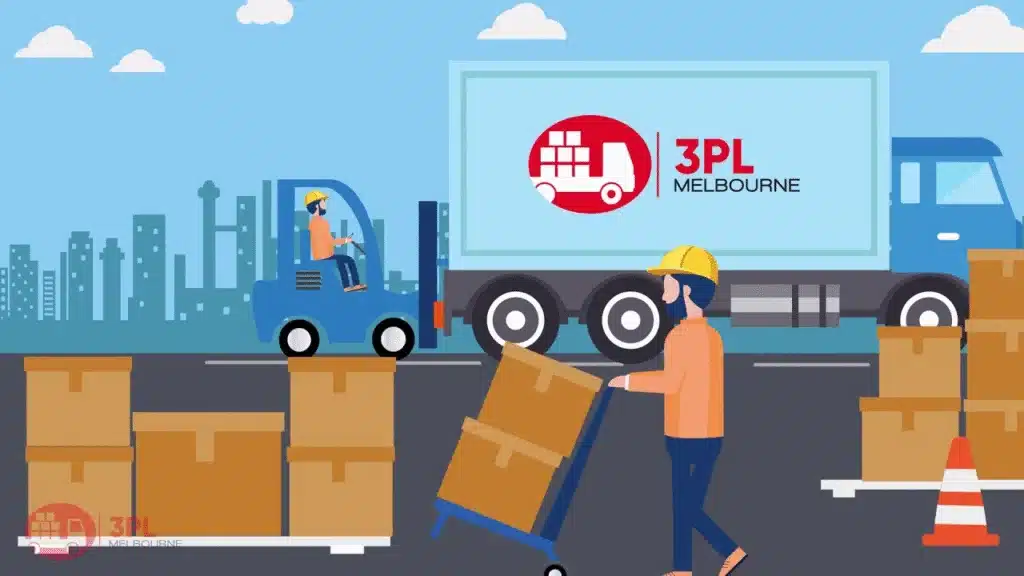
Distributed chains increase costs: products go to production facility to a regional branch (2-5/unit), globally (10-20), and even to the consumers (5-10). With every hop, handling, duties and risks are absorbed, and the international shipping costs have been increased by 30-50 percent due to scattered inventories.
Inventory Dispersion and Partial Shipments
Part shipments (sending half a shipment today and the rest tomorrow) are caused by scattered stock, which doubles fees and angers customers. This is not only inefficient but increases the cost as well as the rates of returns which further increases the blow to margins.
How Poor Logistics Planning Kills Margins
Sellers do not look far enough and either pay extra money to expedited express or fail to use bulk options and usually lose between 15 and 25 percent of their profits. I have witnessed brands in BM Supply Chain reversing this by centralizing the operations but overlooking it is slow death via a million surcharges.
The Strategic Advantage of China-Based 3PL for Cost Reduction
1. Fulfillment at the Supply Chain Source
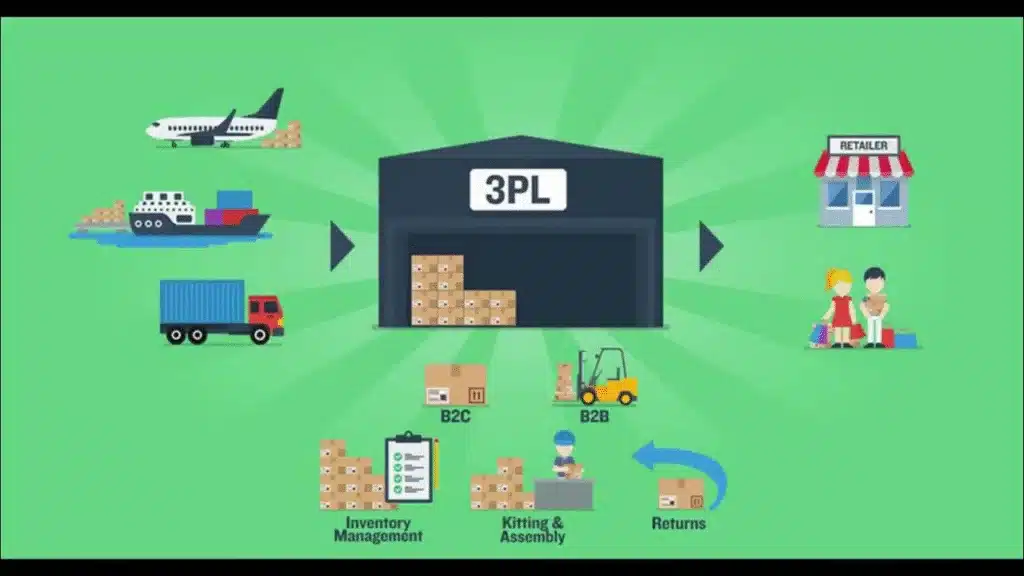
Positioning fulfillment in China implies that the goods are shipped to warehouses by the suppliers bypassing unproductive transits. It cuts upstream logistics expenses by 20-40 percent, since there is no need to ship interim- shipments between- there is factory-direct receiving where everything is located under one roof.
2. Warehouse & Labor Cost Advantage
The cost of China warehouse storage is 8-15 CBM/month, compared to 25-45 in the U.S./EU, and capital is available to spend on expansion. Inexpensive labor (30-50% lower) accommodates the pick-pack without skimping, lowering the costs of errors and reshipment which otherwise contribute to shipments of $2-5 per order.
3. Consolidation Before International Shipping
Using several items in one package, China 3PL reduces per-shipment costs, which is suitable in a multi-SKU store. This decreases total volume weight, reduces costs by 1-3unit and minimizes customs touches.
4. Bulk Shipping for Lower Rates
Integrated freight forwarding opens the DDP air and sea at large scale and economies which small sellers cannot independently achieve. Bulk-based discounts reduce prices by 15-30 percent, transforming fragmented transmits into cost-efficient batches.
Shipping Methods Offered by China 3PL and Their Cost Benefits
1. Postal Lines (Most Economical for Light Packages)
Postal services such as ePacket or China Post would be suitable when cargoes weight under 2kg, and will cost between 3-8 per package with a 10-20 days delivery option. Simple per-weight Cost structure: flat per-weight; best when dealing with clothing or accessories; optimum 0.1-1kg when speed is not a concern, saving 50 per cent to express.
2. Express Channels (Fast & Competitive vs Domestic Express)
These are delivered in 3-7 days with 1kg costing $15-30 through DHL or FedEx partnerships. Weight: dimensional; when moving electronics or time-sensitive products; 0.5-5kg sweet spot, 20-40 percent of the cost of the U.S.-based express, based on volume deals.
3. DDP Air Freight (Predictable Landed Cost)
DDP air has the following air rates; DDP air has rates in front, 4.50-8/kg on 10-100kg loads with transit of 5-10days. Can be anticipated and all-in costs; falls in the middle range such as gadgets; 5-50kg range or no surprises like non-DDP.
4. DDP Sea Freight (Best for Heavy or Bulk Shipments)
It costs more than 100kg bulk at $80-150/CBM or $1200-2800/20′ container that takes 20-40 days to arrive. Volume; goods of great weight such as furniture; 100kg and above optimal, and reduction per-unit to $0.40-1 to save colossal amounts.
5. Hybrid Lines (Fast but Affordable for Mid-Weight Packages)
It has a mixture of air/sea/postal and is between 5-15/kg with 7-15days. Hybrid charges are speed/price neutral; with mixed SKUs; 1-10kg, with 30 per cent discounts over express only.
6. Regional Solutions (EU IOSS Channels, UK VAT-Compliant Shipping)
IOSS EU takes care of source-based VAT ($10-25/kg incl. compliance); UK alternatives facilitate post-Brexit fluency. Inclusive of compliance; low-value goods; less than 5kg, reduction of duties whilst with regulation.
Realistic China 3PL Cost Examples (Use Realistic Ranges)
Example 1: 0.1–0.5kg Package to U.S.
Postal: $3-6 (ePacket, 10-20 days). Express: $15-25 (DHL, 3-5 days). Special line: $8-12 (hybrid, 7-12 days). To a seller of phone cases, postal is half the price of U.S. fulfillment which costs 10-15 to ship locally.
Example 2: 1–2kg Package to U.K.
DDP air: $10-20 (5-10 days, duties incl.). Vs. local U.K. fulfillment: $15-30 (2-3 days however with prior transatlantic costs). A beauty brand will save forty percent by consolidating in china to escape payment of two sets of duty.
Example 3: Large Volume SKU
Sea freight + local postal: 0.40-1/unit 500kg of apparel (30 days total). Prices reduce 30-60% over air; a furniture retailer at BM Supply Chain reduced costs per item by half, increasing the margin 25%.
Example 4: Consolidation Savings
Three 0.5kg shipments costing $15 each express will be consolidated into a single 1.5kg costing $25 total, which would save $20 or $1-3/unit. In the case of multi-item orders, this is added to 20 percent total it cuts in global ecommerce in China.
Example 5: China Storage vs U.S. Storage
China: $8-15/CBM/month for 10 CBM. U.S.: $25-45/CBM. A 3-month inventory gadget brand would save 510-1800 annually to relieve cash flow.
Operational Cost Savings Beyond Shipping
Reduced Handling Cost (Prep, Pick-Pack, Packaging)
China 3PL prep costs 0.50-2/order vs. $2.50-4 U.S. and efficient labor saves 15% in packaging waste.
Lower Return Handling Fees
Handling costs are reduced 2-4 per return, 10-20 fewer returns are dropped and profits are saved.
Fewer Errors → Fewer Refunds
High-level WMS offers a 99 percent accuracy rate, which eliminates costs of reshipping of 5-10 dollars per error.
FBA Replenishment Cost Savings
Amazon source-prep saves 20-30% of freight to FBA.
Labor + Warehouse + Admin Cost Elimination
Outsourcing removes internal teams ($15/hr+), making the sellers work towards expansion, and 3PL do administration through APIs.
Why China 3PL Enables Faster & Cheaper Global Scaling
No Need to Maintain Multiple Warehouses Globally
Locate in China to access the global market without incurring 10000+ monthly expenses of multi-location.
Centralized Inventory Lowers Forecasting Errors
Standard stock saves 15 percent on overstock and holding fees are minimized.
Automated Order Routing Through API
Smooth Shopify/WooCommerce/Amazon connectivity is the best path, but it saves 10-20% of the cost of logistics per-order.
Better Delivery Consistency for Cross-Border Orders
On-time rates of over 95% are guaranteed by predictable DDP and will not raise premium prices.
Ideal for Shopify / WooCommerce / Amazon FBM Sellers
The platforms are based on the APIs of China 3PL, which makes it possible to provide cheap 3PL to ecommerce sellers going cross-border.
When Should Sellers Choose China 3PL for Shipping Cost Reduction?
If Products Are Manufactured in China
The proximity of the source optimizes savings, which is suitable with 80 percent of global ecommerce items.
If Shipping Globally (Not Only One Country)
Consolidation is an advantage to multi-market sellers as opposed to domestic-oriented operations.
If Margins Are Tight
With shipping consuming 25%+ of revenue, China gets its efficiencies back 10-20.
If Needing Affordable Storage + Efficient Prep
It is a no-brainer when it comes to SKU-intensive brands, since low storage and prep are involved.
If Shipping Volume Is Growing
Scaling from 100 to 1000 orders? Exponential savings are obtained with bulk rates.
Potential Challenges (and How to Avoid Them)
Longer Shipping Time vs Domestic Shipping
10-20 days vs. 2-5; counteract with buffer stock or hybrid lines.
Customs Delays for Certain Regions
EU/UK regulations may be hiccuped; select IOSS-compliant 3PLs to clear without hitch.
Choosing Unreliable 3PL Providers
Reviews on Vet; at BM Supply Chain, we value SLAs as dependable.
Importance of SLAs & Tracking Integration
Demand 99% on time guarantee and API tracking to track proactively.
Inventory Forecasting to Avoid Stockouts
Predict with data; bad forecasting enhances delays–lots of regular audits are useful.
Conclusion: China 3PL Doesn’t Just Lower Cost — It Improves the Entire Supply Chain
China 3PL has core value of reducing costs, reducing process time, and increasing efficiency and combines a reduction of shipping costs with scalability and automation to create a powerhouse. Since we have worked with hundreds of sellers at BM Supply Chain, this would make logistics an advantage, instead of a liability. Assess your shipping volume, SKUs, and location of the supplier and then select a 3PL strategy- begin by having a cost audit to cut the real savings.