What is attracting most of the increasing DTC brands in 2026 to consider a move to China-based fulfillment? The growth bottlenecks of DTCs are usually related to logistics and fulfillment challenges like shipping delays that are completely unpredictable, warehousing costs that are rising, and mismatches in the inventories and not ad spend or product innovation per se. Completion is moving in 2026, the warehouses become China-based models, which are multi-channel direct shipping due to cost pressures and global flexibility requirements. The move allows manufacturers to use manufacturing proximity to take restocks fast and reduce overheads, making operations a drag instead of a burden. China fulfillment offers DTC brands the flexibility, cost savings, and scalability to grow to an international level without increasing its operations.
Why DTC Brands Face Fulfillment Bottlenecks
1. Rising Western warehouse costs
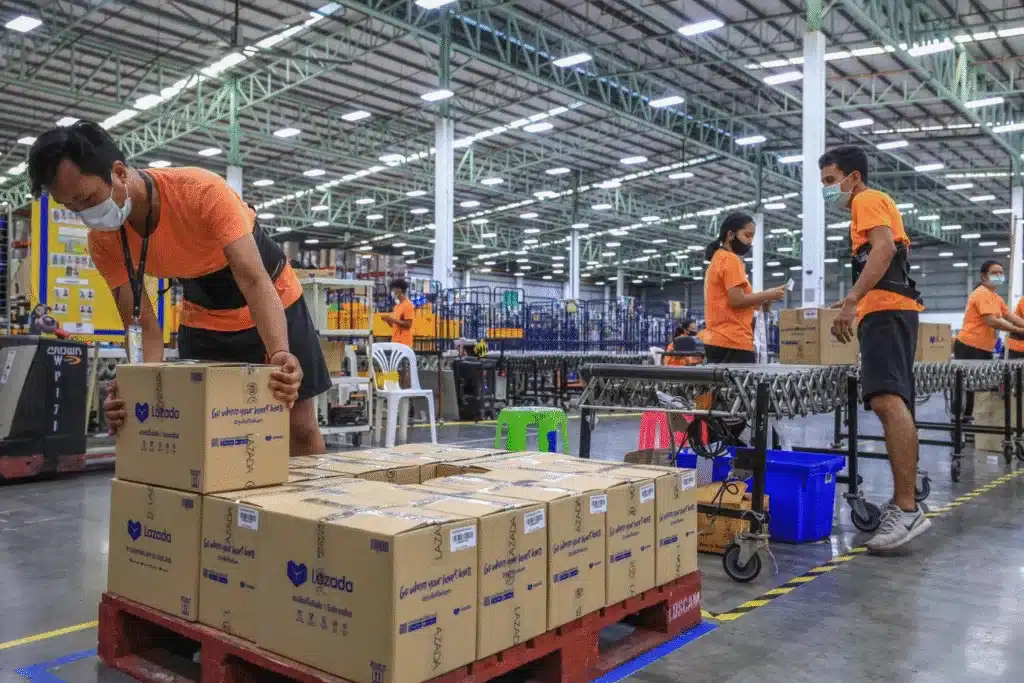
The US and European warehousing charges have also increased 15-25 percent per year, and the labor market has caused the hourly rates to be at $20-30, and returns processing at an increment of $5-10 per item. In the case of DTC brands with slim margins, these fixed costs are cannibalizing profits, so cutbacks on marketing or R&D are the only option actionable observation: review your existing 3PL every quarter to identify the sneaker-thief fees before they roll the growth.
2. Inventory risk is too high
DTC is successful with quick product development, product variants, and end-of-year packages, but unsold inventory occupies capital – sometimes 20-30% of budget in limbo. With rigid storage, brands risk committing to untested items, which will be written off; maintain lean SKUs by putting in place 5-10 tests each quarter to keep exposure.
3. Logistic volatility
Carrier surcharges are increased 20-40 times, postal delays are lasting 7-10 days, and the express charges are dependent on the fuel prices. This is enhanced by the DTC direct-to-consumer model, which means that missed deliveries are a sinkhole on reviewing; the only solution is to diversify carriers at the early stage of your plan.
4. High customer expectations
Servers expect shipment in 48 hours, 99% delivery in 1 hour, and complete tracking of deliveries – fail to achieve this, customers will lose 15-20 percent. In the case of DTC, that translates to the perfect operations; install real-time dashboards to track SLAs and eliminate loopholes in advance.
Why More DTC Brands Shift to China Fulfillment in 2026
1. Close to manufacturers → Faster restocking
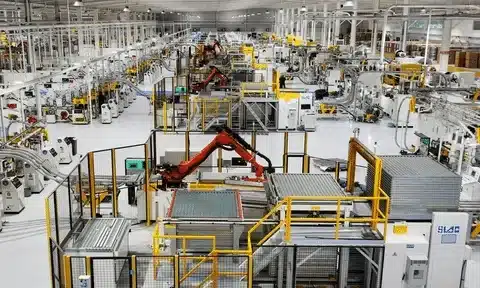
Having 70 percent of consumer products produced in China, the period of restocking reduces to 5-10 days, which is ideal in the virality of Tik Tok. DTC brands have the ability to trend-follow very quickly; local source and serve out of the same hub to reduce lead times by half.
2. Lower operating cost structure
China has warehousing that cost $0.10-0.40 monthly per cubic foot compared to $1-2 in the West, and labor costs of 5-8/hours makes it possible to have the 15-30 day free storage. This helps lean model of DTC-use the buffer to test without at the beginning hits and release cash to use in ads.
3. Access to multi-channel shipping options
There are special lines (between US and 8-15/kg), postal services, express services as well as DDP, but choices are numerous, less expensive and more diverse than hubs in the West. DTC gets competitive advantage in international delivery China; combine channels by order value to save 20-30%.
4. Flexible labor for viral spikes
TikTok explosions or summer vacations? Scalable workforce of China increases 2-3 times without overtime bonuses – essential in unpredictable demand of DTC. Arrange a flex staffing with your 3PL to respond to 500-5,000 orders jumps without problem.
5. Great for SKU testing & fast iteration
Expanding from 10 to 100 SKUs? The flex warehousing provides small batch holds without penalty, which is in line with growth strategy 2026 DTC, test aggressively, scale winner, pivot loser quickly.
How China Fulfillment Works for DTC Brands
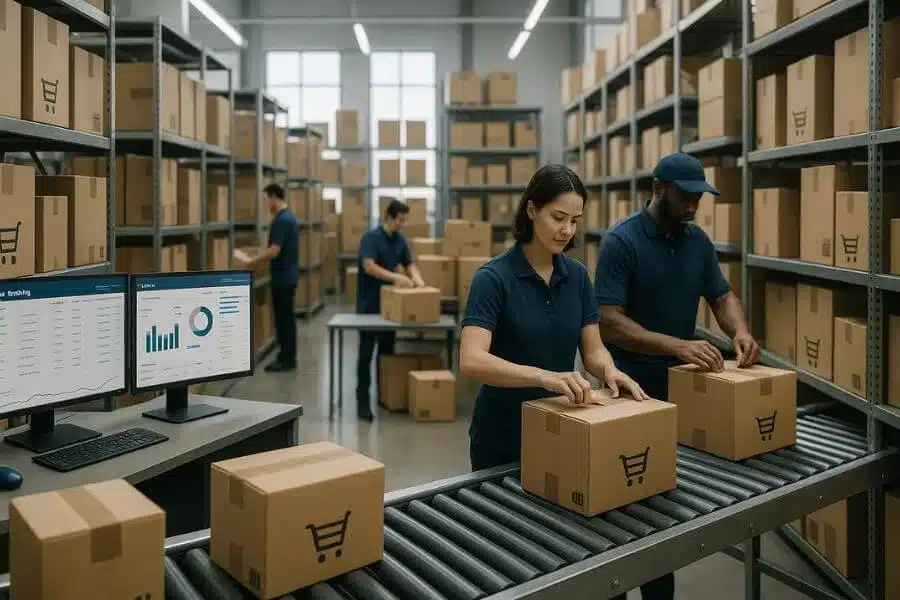
1. Inventory receiving & QC
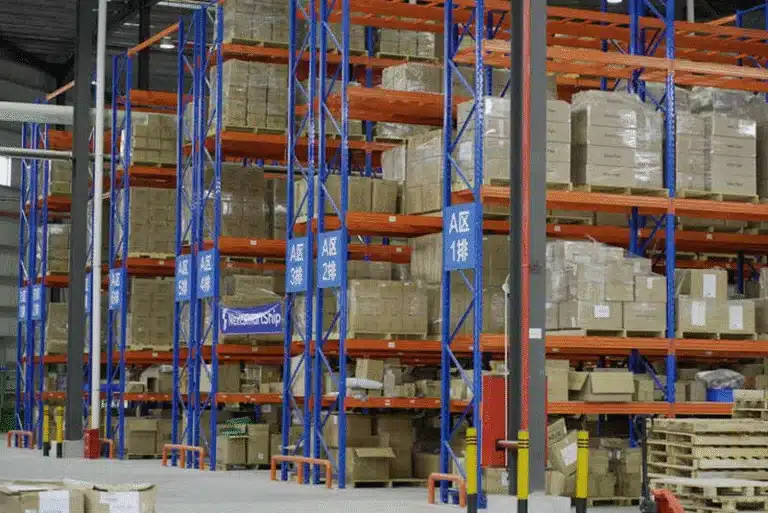
Being close to factories implies comprehensively QC inspection of intake; visual inspection, weight inspection and less than 1 percent defect levels. In the case of DTC, this pre-storage catches the problems; audits suppliers to keep 99% good inbound.
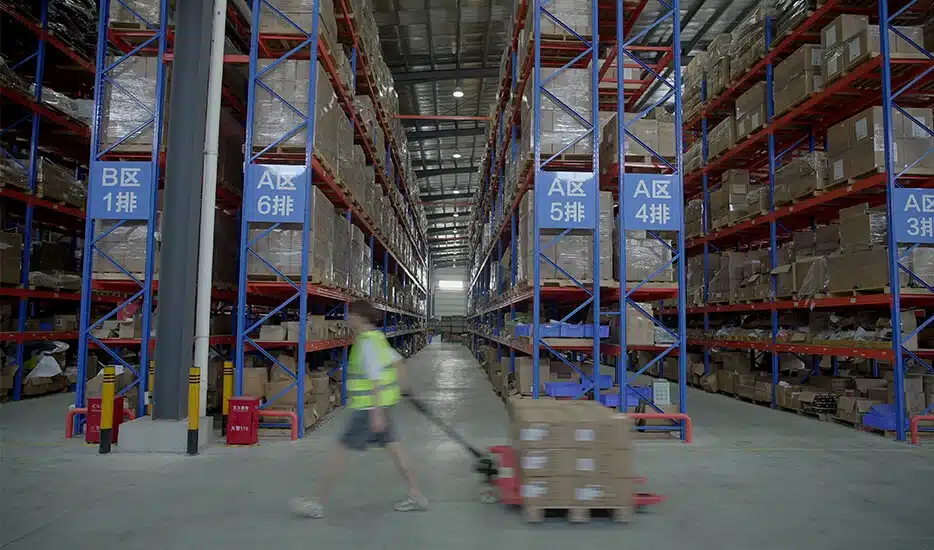
2. Smart storage & SKU organization
Best when the brand is heavy in SKUs, and bin/shelf systems are designed with variety in mind- WMS will automatically assign dynamically to reduce walks. This efficiency is an advantage to DTC; classify by speed to hasten high turn.
3. Multi-channel store integration
Shopify (custom orders), Amazon (FBM/FBA prep), Tik Tok (SLA compliance), Etsy (handmade subtleties), and Walmart (metric tracking) seamless APIs- combine operations to prevent silos.
4. Order processing automation
The orders are pulled with a real-time API sync and prioritized pick lists are created (urgent TikTok first). The processing is reduced to less than 24 hours; and the rules are established that apply to the peaks to maintain flow.
5. Pick & pack with custom packaging
Companies provide inserts, stickers and branded boxes, which are important in DTC unboxings. Picks done by scanning are more accurate; drop damages of fragile items is reduced by 15 by tailoring SOPs.
6. Global shipping strategies
Mix express (3-5 days, premium), postal ( economy, less than 2kg), special lines (balanced, 7-15 days), DDP air (duties paid, mid-tier), and DDP sea (20-40 days, bulk, tailored to market) -optimize DTC delivery.
7. Returns management
Lower processing cost to $1-3/unit compared to $5-10 west- refurb, clean, repack. DTC salvages 60-80 percent value; route takes back to China to do cost-effective repairs.
The Hidden Advantages of China Fulfillment
1. Lower MOQ → Lower financial risk
MOQs are reduced to 50-100 units, reducing the initial cash requirement of DTC- test markets with small commitment, only scale on a data basis.
2. Faster supply chain feedback loops
Production to QC to storage to ship End to end-shipping speed insight- Spot trends in 2-4 weeks versus month. DTC repeats the products; the data on log returns refines sourcing.
3. Easier kitting & bundling
Prepare DTC kits (beauty/skincare/jewelry) at minimal labor costs -$0.50-1 bundle. This increases AOV; design packages include high-margin add-ons.
4. Product improvement cycles faster
Feedback goes to QC/improvements/reproduction -Western loops are slower. DTC reduces this to 1-2 months; work with manufacturers in the facilities to make amendments.
5. Efficient returns reconstruction
China warehouses are good at repairs, cleaning and repacking – recovering 70-90% resale value. In the case of DTC, this will transform losses to assets; set up standards of top-profit categories such as apparel.
Cost Comparison: China vs Western Fulfillment
Storage cost
US/EU: $15-30/pallet every month, no free times. China: Free for the first 30 days, later pay 5-15/pallet- enormous in the variable of DTC.
Pick & Pack cost
US: $1.00–$3.00/item, labor-driven. China: 0.20-0.50/item-scale cheaply with increase in orders.
Shipping cost
China special lines are best at cross-border (20-40% cheaper than international hubs of US hubs); the Western local warehouses do not have this flex to global DTC.
Returns cost
China: $1-3/unit processing. West: $5-10- China fulfillment benefits shine in high-paying niches.
Real-World DTC Brand Case Studies
Case 1 — A beauty brand scaling from 100 → 1,500 orders/day
Problem: Tik Tok hits with viruses flooded the warehouse of the US, creating delays. Pull: Moved to China based 3PL due to flexible labor and custom package. Outcome: Turnaround time was accelerated (40 percent faster), when it reached 1,500/day with 98 percent right-time, and increased revenue 300 percent.
Case 2 — A fashion brand lowering cost by 40%
Issue: EU storage lapped 25 percent margins. Action: Transferred to China to have free 30 days holds and effective packing. Outcome: Costs were cut by 40% (saving of 10k/month), and SKU extension was made possible to 150.
Case 3 — A gadget brand expanding to 4 global markets
Issue: Local fulfillment was restrictive. Action: took US/EU/SEA/ME on the multi-channel shipping at China. Search: Brought 4 markets within 6 months, increasing orders 250% with 25% delivery reduction.
Challenges & How to Avoid Them
1. Time zone communication
Turnaround time of responses- appoint a special manager to provide 24/7 cover.
2. Compliance issues for special products
Limited objects such as batteries, pre-vet channels and certifications to prevent holds.
3. Slow-moving inventory
The accrual of aging stock includes fees – effect a forecasting and quarterly clearances.
4. Long delivery time for certain markets
Distant locations require 10-20 days – integrate with local caches when there is a pressing need.
Best Practices for DTC Brands Using China Fulfillment
1. Standardize SKU naming
Similar codes on APIs eliminate error in sync- audit monthly.
2. Use hybrid shipping channels
Combine DDP with duties, postal with economy – test every quarterly with DTC growth strategy 2026.
3. Build packaging SOPs
Attention to detail/inserts in order to be consistent/train 3PLs on the job.
4. Keep inventory lean through forecasting
AI tools forecast demand- 4-6x turnover to use the free storage.
5. Review fulfillment performance monthly
KPIs: on-time rate, error, cost/order-adjusted on the basis of data.
6. Gradually expand to multi-warehouse strategy
Launch China-centric, introduce satellites once 1000/day.
Conclusion: China Fulfillment Is a Growth Accelerator for DTC in 2026
China-based fulfillment gives DTC brands unprecedented cost savings, operational efficiency, scale, and global accessibility – to bottlenecks in inventory, shipping, and returns, it is going to address them directly. Get lean, go fast, and go global with China-based fulfillment: it is the most effective growth driver of DTC brands in 2026.