
Five years ago, I ordered 500 wireless earbuds from Alibaba and thought I had found the best shipping deal at $8 each. I got too excited and then got sticker shock when the supplier told me it would cost 1,200 to ship, which was almost twice what I had paid. The painful lessons taught me everything I should have known about the Alibaba shipping prices, like the total cost of shipping, before I placed my first order.
If you’ve ever wondered why Chinese suppliers’ shipping quotes can be so different, or if you’re trying to lower the cost of imports, you’re in the right place. This last resource shows you exactly how much it will cost to ship with Alibaba, the best ways to do it in different situations, and hacks and tips to save 30–50% on your shipping costs.
Why Shipping Fees Vary So Much—What Most Buyers Miss
The Hidden Complexity Behind Every Quote
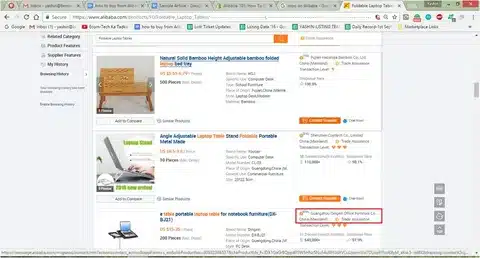
Most new Alibaba customers think that shipping is easy: you just pay the fee to have the items moved from one place to another. Shipping things is more complicated than it seems, and different factors will cause big price differences between vendors and methods.
Distance and Destination Customs Impact
The cost of shipping is highly dependent on your location and might vary significantly. The costs of traveling to major destinations such as Los Angeles, Hamburg, or Southampton are significantly lower than the costs of transportation to more remote places, which may need a number of different transit linkages. The burden of hidden costs is often imposed by countries that are complicated in the manner in which they normally apply it through the use of documentation, checks, and delays at the shipping port.
Weight vs. Volumetric Weight: The Costly Confusion
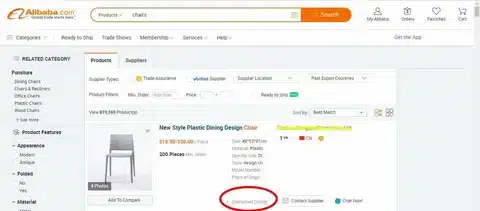
The amount paid per pound is not dependent on the actual weight of the item, but rather on the size of the box, which does not necessarily have the same ratio between volume and weight. This is something that is done by airlines and express carriers who employ dimensional weight pricing. It is possible that carrying a product that is light but large will end up being more expensive than carrying a product that is tiny but heavy.
Minimum Order Quantities and Shipping Economics
The shipping costs for little items are quite high. A single sample may cost you fifty dollars to express ship, while a thousand samples could cost you an additional two hundred dollars. The necessity of recognizing how the minimum order quantity (MOQ) influences the unit shipping-liabilities, which can result in increased shipping costs, is an essential component of effective importation.
Peak Season Surcharges Nobody Warns You About
The Chinese New Year (January-February), Golden Week (October), and the holiday seasons in the Western world all contribute to massive delays in the shipment of products and large amounts of overbooks. There is a possibility that the shipping prices would climb by fifty to one hundred percent, and the capacity will be severely limited during peak periods.
Hidden Supplier Fees That Kill Your Budget
The vast majority of providers do not initially charge for the processing charges, the handling charges, the package costs, the documentation fees, or the price for the paperwork. Should you ever find yourself in a relationship with a provider, you should insist on receiving a comprehensive cost explanation.
Complete Guide to Alibaba Shipping Methods
Regular Post: The Budget-Friendly Baseline
China Post Overview
China Post is the least expensive in case of the lightweight packages which is below 2kg, particularly for international shipping . Most routes have an average delivery of 15-45 days and the basic tracking can be done.
ePacket: Upgraded Postal Service
ePacket has enhanced tracking and faster delivery (7-15 days) as compared to traditional China Post. It is ideal in products whose mass is less than 2kg during transportation to major destinations like the US, UK, Canada and Australia.
Pros and Cons of Postal Methods
Advantages:
- Less expensive on low weight and small items.
- All the minimum order requirements.
- Adequate to sample orders and test.
- Little insurance cover.
Disadvantages of choosing different shipping methods :
- Very slow delivery times
- Poor visibility of tracking.
- Mass and size limit.
- Higher loss/damage rates
- Not set delivery dates..
When to Choose Postal Shipping
In situations when product samples are involved, accessories that weigh less than one hundred pounds, or when deciding the most effective shipping option with timeliness of delivery not being a major concern, postal methods should be utilized. Do not apply to deliveries that are time-sensitive or to products of value that are being shipped by a shipping firm.
Air Express: Premium Speed at Premium Prices
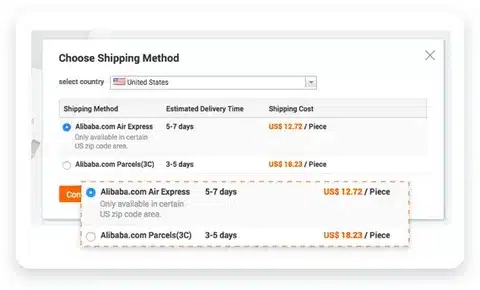
DHL Express: The Premium Choice
DHL provides an excellent level of customer service and the quickest delivery time (two to five days). Due to the fact that the price of express freight often falls between 15 and 25 kilograms, it is excellent for use in situations involving high value and urgent deliveries.
FedEx International: Reliable but Expensive
FedEx has a solid network in the US and Europe, and its deliveries are always on time. The price is the same, but it covers more ground in some areas than a trustworthy freight forwarder does.
UPS Worldwide Express: Business-Focused Service
UPS provides the best integration tools and commercial services for B2B shipments. Shipping takes 2 to 6 days, and shippers that place a lot of orders get reasonable shipping prices.
SF-Express: The Chinese Alternative
Its SF-Express prices are also good, and some of its foreign coverage is getting better. It has a lot of success in Asia and is getting more popular in the US.
Express Shipping Cost Breakdown
Express rates vary by carrier, destination and level of service:
- Document envelopes: $25-45
- 1kg package: $35-60
- 5kg shipment: $80-150
- 10kg shipment: $140-280
Best Use Cases for Express Shipping
Blue chip on samples, order urgency, high value small or where the deadline cannot be bargained by the customer. The high cost would be justified in case time is more imperative than money.
Air Freight: The Middle Ground Solution

Understanding Air Freight Basics
Air freight fills in the spaces between sluggish and fast maritime freight, which is quite expensive. It usually deals with deliveries exceeding 45 kg and takes 5 to 15 days for the items to cross customs and be delivered, depending on the route.
Air Freight Pricing Structure
The normal charge is 4 to 8 per kilogram, and the tiny cargo has the lowest prices. The ultimate price of base rates includes handling costs, security fees, and fuel surcharges.
Airport-to-Airport vs Door-to-Door
The Airport to Airport service is the cheapest, but you have to cross customs and pick up your things. Door to Door will feature these services, but they will be quite expensive.
Air Freight Documentation Requirements
For air freight, you could need trading invoices, packing lists, air waybills, and maybe even certificates of origin. There are no unnecessary costs from delays and extra customs fees because of missing paperwork.
When Air Freight Makes Sense
Choose air freight for a package that weighs between 50 and 500 kg if you need it to arrive faster than by sea but don’t want to pay for expedited shipping. It is useful for restocking supplies.
Sea Freight: Maximum Savings for Patient Importers

Ocean Shipping Overview
The average cost of sea freight per kilogram is between 0.30 and 0.80, depending on the route and the kind of service. Depending on where the package is going and coming from, it might take anywhere from 15 to 45 days.
FCL vs LCL: Understanding Container Options
Full Container Load (FCL):
- You rent out an entire container (20ft or 40ft).
- Cost-effective when transporting a large amount of products.
- Faster port processing
- Lower damage risk
Less than Container Load (LCL):
- Containers of other importers.
- Pay only for space used
- Small shipments.
- Additional manipulation contributes to the threat of destruction.
Major Shipping Routes and Costs
Average transportation time China to West Coast of United States– 12-18 days, $0.40-0.70/kg China to East Coast of the United States– 20-28 days, $0.50-0.85/kg China to Europe– 25-35 days, $0.45-0.75/kg China to Australia- 15-25 days, $0.40-0.80/kg.
Port Congestion and Seasonal Factors
Major ports are usually crowded especially during the high seasons. Plan and price in factor potential delays and demurrage charges.
Sea Freight Best Practices
Always book your space early in the season when there is a lot of demand. Choose a freight forwarder you know and trust, and always remember to add extra time to your delivery schedule.
Combined Shipping Methods: Smart Compromise Solutions
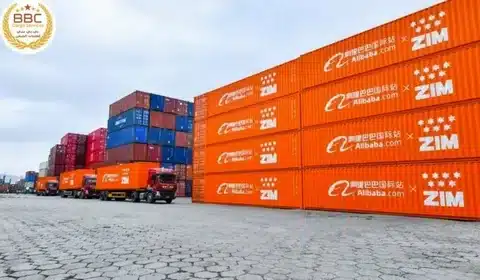
Air + UPS: Balanced Speed and Cost
This is a method where you incorporate air transportation in your country and UPS last mile delivery. The average prices for the shipping route are trading between 1.50-1.80 per kg and the shipping period is 8-15 days.
Sea + UPS: Economy with Convenience
An equivalent cost of 3.80-5.30 per kg is the sea transport to the destination seaport and UPS delivery with a cumulative transit time of 20-35 days.
Benefits of Combined Methods
Combined shipping provides the monitoring features, door to door delivery, custom clearance control and manageable prices on the mid-size shipments.
Choosing the Right Combination
Offer combined shipments 100-1000kg in those cases when you require door-to-door service from alibaba sellers and want to reduce alibaba shipping costs without incurring pure express prices.
Smart Shipping Method Selection Guide
Weight and Volume Considerations
Lightweight Items (Under 5kg)
When it comes to samples, accessories or small amounts, juxtapose China Post/ePacket and express. Take into consideration the time demands of factor delivery factors in your decision.
Medium Shipments (5-100kg)
This is the broadest selection that has the highest shipping options. Compare air delivery, integrated and LCL ocean based on your cost-saving requirements.
Heavy Shipments (Over 100kg)
FCL ocean freight is the most cost-effective, but air freight can also be used in cases where there is a limited delivery time and you are willing to pay high costs.
Destination-Specific Factors
Shipping to Major Markets
The shipping infrastructure of the US, UK, Germany and Australia is also excellent with competitive rates across all modes of shipping. Frequency of sails and flight plans.
Remote Destinations
Islands, inland destinations and new markets tend to require mixed methods of shipping or enormous final delivery fees.
Customs Complexity by Country
The steps of importing research destinations, quantity of duty and documents. Complicated delivery procedures can increase the delivery time by weeks.
Urgency vs Cost Trade-offs
Rush Orders
When you are in absolute need of goods, the only alternative that is left is to use express shipping because it is costly. Establish express shipping facilities with a complete relationship with the suppliers even before the occurrence of emergencies.
Standard Restocking
The high turnaround of inventory provides the option to plan using slow and less expensive means. Setting the skills of forecasting will avoid rush situations.
Seasonal Considerations
Deliveries on Chinese holidays, your local seasons and weather interruptions. Emergency transportation will be saved by proactive planning that is costly.
Complete Shipping Cost Breakdown

Base Transportation Costs
Ocean Freight Components
Basic ocean freight includes vessel space, fuel bunker and port to port. It amounts to 40-60 percent of total shipping costs along most of the routes.
Air Freight Elements
The air freight base rates are aircraft space, fuel surcharges, security fees and handling charges. Fuel charges fluctuate when the price of oil is increased and can be a percentage of the charge between 20-30.
Export Clearance and Documentation
Chinese Export Procedures
Export clearance, China, requires the commercial invoices, packing list, export license (on certain products) and customs declaration. It is normally shipped at a cost of approximately $50-150 professionally.
Certificate Requirements
Products which require a certificate of origin, inspection certificate or compliance documentation attract additional fee of between $100-500 depending on the complexity.
Freight Forwarder Fees
Service Charges Overview
Professional freight forwarders charge the service fee cost that encompasses cost of preparing the documentation, custom coordination and shipment coordination. The point is that the average cost is between 100-300 dollars per delivery.
Value-Added Services
There is also other forms of chargeable services like cargo insurance, warehouse storage, consolidation and special handling and these services may be very useful.
Insurance and Risk Protection
Cargo Insurance Basics
The marine cargo insurance usually covers the shipment valued at 0.2-0.5 per cent. and is intended to compensate loss or damage of the shipment during transit. Value it to good cargoes.
Self-Insurance Considerations
With big, frequent shippers, a self-insuring model would arise in which the shipper insures the funds rather than purchasing commercial coverage on an individual shipment.
Documentation and Processing Fees
Standard Documentation
Bill of lading, commercial invoices and packing lists are all standard requirements. Accuracy is facilitated by professional preparation and prevents the costly delays.
Special Documentation
Forms of hazardous goods, temperature controlled delivery documentation and consolidation forms require extra skills, and higher charges.
Destination Port Charges
Port Handling Fees
The ports of destination charge handling fee, terminal fee and documentation processing fee. They usually range in price 150-400 per container or 50 and 150 amongst LCLs.
Customs Bond Requirements
In the US, imports exceeding the worth of 2,500 dollars are secured by a customs bond of between 50-200 dollars depending on the valuation of the shipment. Other countries have also different needs with different costs.
Proven Cost-Saving Strategies
Working with Alibaba Agents and Consolidators
Benefits of Professional Agents
The brokers have a lot of expertise and can get better deals, deal with complicated paperwork, and provide you useful information about the market. They give big savings on large orders at the cost of their services.
Choosing the Right Agent
Select the agents with good supplier relations, clarity in price and experience record of success in your product lines and destination markets.
Shipment Consolidation Advantages
LCL Consolidation Benefits
Combining multiple orders within common container space will reduce the unit costs yet the delivery time will be decent. This works well especially when there are routine reorders.
Multi-Supplier Consolidation
The professional consolidators can combine orders with multiple suppliers in a single shipment that will save a significant amount of money in the total shipping expenses.
Quote Comparison Strategies
Multiple Carrier Comparison
Obtain the quotes of 3-5 various methods and carriers to understand the freight cost better . Variations in price of 30-50 percent are regular.
Hidden Fee Investigation
Get them to give you breakdowns that will give all the charges and surcharges, and any other fee. Non-specific handling charges or processing fees have many surprises in sight.
Freight Forwarder Selection
Experience and Specialization
Choose reliable freight forwarders, who possess some form of experience in your product category and destination market. The information provided by the experts does away with costly mistakes and time losses.
Route Efficiency
Good routing relations with forwarders they already have can potentially save the cost and time of transit by getting good connections and priority handling.
Negotiation Tactics
Volume Commitments
The commitment of delivery of specific quantities will enable to negotiate good rates with the suppliers and freight companies.
Long-term Relationships
Development of ties with quality service providers leads to improved rates, priority service and affordable terms of payment.
Quick Reference Shipping Comparison
Method Overview Table
| Shipping Method | Cost per kg | Delivery Time | Weight Limit | Best For |
| China Post | $3-8 | 15-45 days | 2kg max | Samples, accessories |
| ePacket | $5-12 | 7-15 days | 2kg max | Small orders |
| DHL Express | $15-25 | 2-5 days | No limit | Urgent shipments |
| Air Freight | $4-8 | 5-15 days | 45kg+ | Medium shipments |
| Sea Freight LCL | $0.50-1.00 | 20-40 days | 1+ cubic meter | Regular orders |
| Sea Freight FCL | $0.30-0.80 | 15-35 days | Full container | Large orders |
Cost Estimation Guidelines
Sample Order Budgeting
Sample Budget 50-150 on shipping the sample by express means. Think of this as a necessity market research and not an unwarranted cost
First Order Planning
Learning the process Plan low prices for shipping costs 2 -5 per kg for your initial large order with air freight or a combination of methods.
Regular Reordering
Optimise at sea at 0.50-1.00 per kg when you have certain trustworthy demand trends and when you can schedule the time to stock.
Essential Shipping Terms Explained
FOB (Free on Board) Terms
FOB Meaning and Implications
Under FOB, suppliers pay for everything until the products are loaded onto the ship at the point of departure. You take care of the costs of maritime freight, insurance, and getting to the destination.
FOB Advantages
FOB also provides you with control over freight modes, carriers, and insurance and frequently at reduced overall prices with your freight arrangements.
FOB Disadvantages
You take charge of shipping internationally, clearing at customs and coordinating the delivery, which would need additional expertise and time commitment.
CIF (Cost, Insurance, and Freight) Terms
CIF Coverage Scope
CIF terms imply that all the costs such as ocean freight and insurance are borne by suppliers up to the moment where goods reach your destination port. Final customs and delivery is all you do.
CIF Benefits
A freight forwarding company can make CIF both cost-effective and predictable, which is why it is suitable to new importers in search of turnkey shipping options.
CIF Potential Issues
The providers might raise the delivery costs or choose to employ slower, less expensive methods that don’t even meet your demands. Finding the right approach makes it harder to keep an eye on the quality of service during the delivery procedure.
EXW (Ex Works) Terms
EXW Responsibilities
Under EXW terms you pay all freight expenses in the factory of the supplier, including head-haul, export clearance and foreign shipping.
When EXW Makes Sense
EXW has the capability of offering the lowest prices of products but it must have in place detailed logistics expertise. It is appropriate when the importers are well experienced and have the shipping associations air or sea freight.
EXW Risk Factors
You take all shipping risks and responsibility over since the pickup point and the entire insurance coverage should be handled by trustworthy partners in the locality.
Additional Important Terms
DAP (Delivered at Place)
Shipping rules and risks are taken up by suppliers until goods are at your desired location without import duties and taxation.
DDP (Delivered Duty Paid)
The most inclusive terms are those in which the suppliers do everything including import duties, which is convenient but may be costly minimize alibaba shipping costs.
Common Shipping Questions Answered
“Is shipping ever free on Alibaba?”
It is never free to ship on Alibaba. Suppliers that promote free delivery incorporate prices in products when they post advertisements stating that it is free. Always ensure that you compare total costs inclusive of shipping to have accurate comparison of suppliers shipping companies.
“What’s the absolute cheapest shipping method?”
Truck ocean LCL or FCL is the cheapest per-kg rates, usually ranging between $0.30 and 0.80/kg. You have to take into consideration however, longer transit times and possible port delays shipping insurance.
“Why are air shipping rates so high?”
Air shipping is highly priced because it is fast, airplanes have limited cargo capacity, fuel charges, security and because it is given priority at the airports sea shipping.
“Can I combine orders from different suppliers?”
Yes, professional consolidation services can aggregate purchases made with different suppliers, through one shipment and it can often save total shipping expenses by 30-50.
“How do I avoid customs delays?”
Make sure to record the right documentation, classification of products, honest value statements and destination country requirements. Most of the delays are avoided by professional customs brokers.
“What insurance do I need?”
Cargo insurance is needed on valuable shipments as the marine cargo insurance protects against loss or damage during transit. The coverage is estimated at 0.2-0.5% shipment value.
“How do I track international shipments?”
Majority shipping methods have tracking numbers. Professional freight forwarders are available with better tracking visibility and the proactive communication of the shipment status.
“What happens if my goods are damaged?”
Claims of damage are possible with proper insurance and documentation. Thorough inspection of deliveries on receipt and reporting of inconveniences should always be used accompanied by photos and statements.
“Can I negotiate shipping rates?”
Yes, particularly when it is regular shipments or in large quantities. Establishing rapport with freight providers and entering into frequent business helps guarantee more favorable rates.
“How far in advance should I plan shipments?”
Arrange at least 45-60 days of ocean freight in the normal times, and 90+ days during peak times. Airfreight needs 2- 3 weeks prior notice.
Final Thoughts: Mastering Your Alibaba Shipping Strategy
Because of the shipping prices, it could appear to be scary at first; nevertheless, if you have the right understanding and technique, you will be able to save a significant amount of money without sacrificing the delivery insurance that Alibaba provides. It is important to note that shipping is not just an unavoidable occurrence, but also a strategic component of your sourcing performance that has a direct impact on the profitability of your courier services and the level of pleasure your customers feel with them.
Bear in mind that the solution that is the least expensive is not necessarily the sole adequate one. Take into consideration your entire cost of ownership, the costs associated with maintaining inventory, the expectations of your customers, and the consequences for your cash flow when selecting shipping alternatives. Establishing contracts with reliable suppliers and freighting firms, scheduling in order to avoid the costs associated with urgent orders, and including in the cost of shipping into the pricing of your items from the very beginning might be beneficial.
In order to evaluate your goods and suppliers, you should start with smaller test orders and speedier techniques. As your quantities expand, you should optimize your processes in order to achieve cost-efficiency. Your importing firm will benefit greatly from the expertise of shipping that you acquire, which will be a huge competitive advantage.
Are you already prepared to simplify your delivery plan? You have the option of posting your shipping experience in the comments section below, posing a particular question regarding your situation, or subscribing to our newsletter in order to read more extensive instructions for importing, as well as to receive a list of suggestions for reducing costs. There is a direct correlation between your ability to grasp these foundations and the success of your foreign sourcing endeavors, and we are here to support you along the whole process.