What makes real-time tracking and API integration the most effective weapons of enhancing ecommerce fulfillment efficiency by 2026? Transparency of orders and automation of systems are critical in that they directly affect customer confidence – the lack of transparency brings frustration and churn, and manual operation slows down warehouse processes and introduces error and delays. As multi-channel ecommerce became common on Shopify, Amazon, Tik Tok, Etsy, and Walmart, human syncing is just not able to match the volume and complexity, leading to stockouts, oversells, and low ratings. The essence of the solution to these bottlenecks is real-time logistics tracking and automated integration of API which allows the streamline of data flow, prevention of problems in time, and optimization of operations which do not increase the cost proportional to the scale. Live tracking and API connectivity transform fulfillment in ecommerce into a manual error-prone operation and make it a rapid, automated and customer-focused process.
The Role of Real-Time Tracking in Modern Ecommerce

1. Full visibility for customers & brands
End to end transparency reduces “Where is my order? inquiries reduced by 50-70, reducing customer support loads. Brands can also have increased control – by tracking shipments live, it becomes possible to identify bottlenecks at the earliest stage; in the case of DTC sellers using Shopify, it can lead to fewer escalations and more time on growth.
2. Reduces delivery uncertainty & dispute rates
Guesses and estimations create contentious situations, whereas instant updates through apps or emails create trust, with chargebacks reducing costs by 20-30. At BM Supply Chain, we have experienced this transparency which will increase satisfaction particularly in cross-border deliveries, where delays are inevitable.
3. Improves carrier accountability
Events at every node (pickup, transit, delivery, etc.) make carriers such as DHL or USPS responsible; anomaly will raise alerts to make some quick fixes, which will save 15 packages, and as a result, lost packages will be reduced. Automation of ecommerce tracking in this case makes sure that there is reliability without the need to check it all the time.
4. Enables proactive support
Arrival, delay, or exception notifications are automated and allow brands to intervene beforehand, such as an SMS that it delays because of weather, reducing the time to resolve 40 percent. This is an active or proactive effort towards multi-channel fulfillment automation which builds loyalty.
5. Essential for platforms with strict SLAs (like TikTok / Amazon)
The requirements of Tik Tok are 48-hours dispatch visibility, at Amazon ODR is under 1%- real time monitoring will guarantee compliance, and these platforms will not receive punishment that would increase visibility.
Why API Integration Is Critical for Fulfillment Automation

1. Automatic order sync
Orders pulled by APIs do not delay: Shopify (including webhooks), Amazon (SP-API), Tik Tok (including Seller Center), Etsy, or Walmart are immediately processed, which saves them several hours of fulfilment. Shopify Amazon TikTok API integration removes manual exports, which is important to high volume DTC.
2. Automatic inventory updates
Real-time pushes avoid overselling – stock deducts in channels at the same time creating stockouts that plague 20% of sellers. The sync inventory is crucial to the way API enhances delivery in unstable markets.
3. Automatic tracking number pushback
As soon as shipped, numbers automatically update in stores – 100% hands free, saves 60 on admin. Pushback workflow monitoring helps customers to view updates without brand intervention.
4. Centralized multi-channel management
Every platform is connected to a single dashboard – see Shopify orders and Amazon FBM – to streamline operations and reduce the amount of switch-time wasted. This consolidation has reduced management by half to the BM Supply Chain clients.
5. Reduces human error & labor cost
The automation eliminates manual entry mistakes (reduced by 80 percent), and manpower (cutting down the cost by 0.50-1 per order) allowing teams to work on value addition such as custom packing.
How Real-Time Tracking Works in a Fulfillment Center
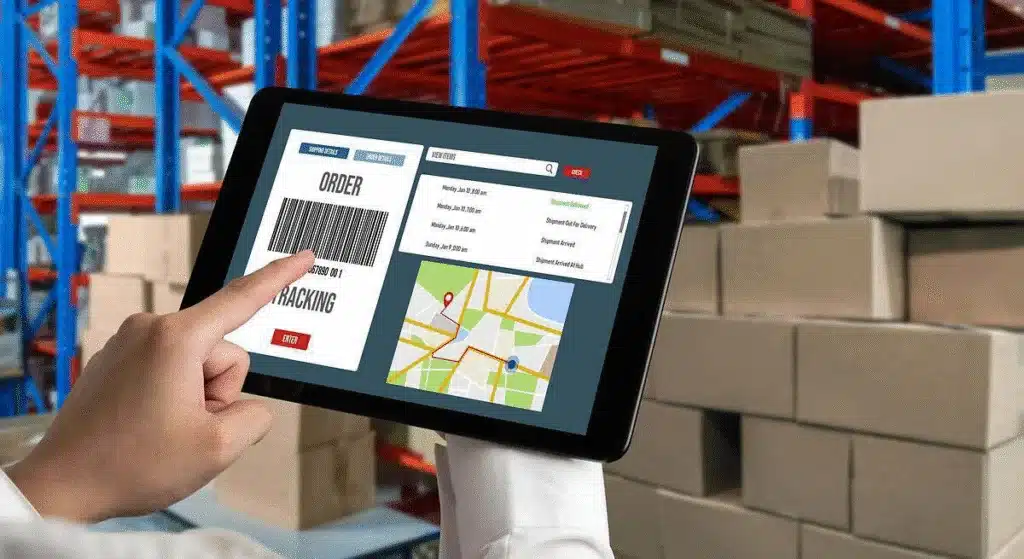
1. WMS scanning at each step
Inbound arrival, receiving, shelfing, packing, outbound- all the scans use handheld devices, which record data on WMS and are visible instantly. The QC process in this warehouse recognizes discrepancies in the initial stages and helps in the efficiency of the ecommerce fulfillment.
2. Tracking code generation
It is based on per-channel auto-generation of codes, such as postal (economy), express (premium), special line DDP (duty), specific to carrier APIs such as YunExpress or 4PX.
3. Carrier API connection
Connections to 4PX, YunExpress, Yanwen, USPS, DHL pull scan data, transit milestones are synchronized every 15-60 minutes, which made it possible to monitor the logistics in real-time.
4. Tracking data sync to stores
Information sends retroactively through APIs, Shopify recalculates contact centers, Amazon to Seller Central, improving CX and minimizing requests through self-service visibility.
How API Integration Works in Fulfillment
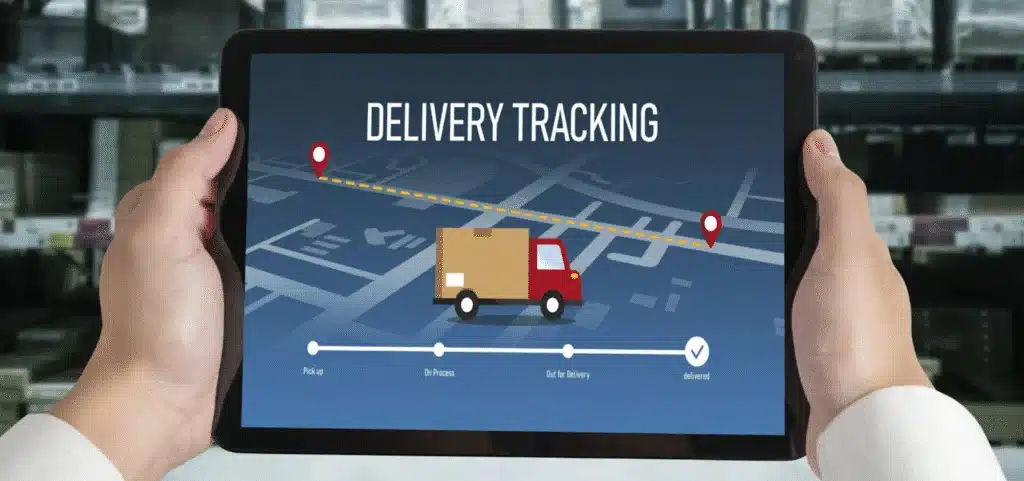
1. Store authentication & connection
Secure environments: Shopify OAuth to gain access, Amazon SP-API to provide tokens, Tik Tok/ Tik Tok Seller Center keys and Etsy OAuth2- once connected, the traffic will be two-way.
2. Order routing logic
APIs sorts: standard, pre-sale, priority, or exchanges- route to WMS queues with rules such as “Tik Tok SLAs first- first to multi-channel fulfillment automation.
3. Inventory sync rules
Periods differ, high-turn SKUs are real-time, standard 15-min, stable hourly, how API can enhance fulfillment can shine in avoiding 10-20% of loss in sales.
4. Tracking pushback workflow
Carrier updates triggered by warehouse scans, API to stores, and customers are informed of that – express takes less than 5 minutes in full chain.
5. Multi-channel SKU mapping
APIs Standardize variants (e.g. Shirt-Red-M across platforms) prevent mismatches, so have the expected syncs.
Benefits: How Tracking & API Integration Improve Fulfillment Efficiency

1. Faster order processing
12 hours manual 1-hour automated API pulls and WMS executes increase throughput by 300 percent in peaks.
2. Fewer errors in picking & packing
The API driven lists minimize the mismatch 70 percent- automation of the e-commerce tracking is to make sure that the picks match the orders.
3. Lower customer support tickets
Automated updates reduce logistics queries by 40-70%-teams are free to proactively provide services.
4. Improved delivery performance & SLA compliance
Real-time tracking is 98 percent on time, which protects Amazon/Tik Tok ratings.
5. Better data for forecasting & planning
Synchronized inventory tells procurement -overstock 15-25.
6. Supports viral spikes
TikTok surges? APIs are scalable in routing with no crash.
Real-World Case Studies

Case 1 — A TikTok viral accessory brand cutting support tickets by 65%
Issue: Viral orders exceeded manual tracking, surging enquires. Measures: API implemented in auto-sync and real-time pushbacks. Findings: Tickets reduced by 65, resolution time was reduced by half to 2 hours.
Case 2 — A Shopify skincare brand reducing order delay rate from 18% → 2%
Problem: Stock was unsynced leading to delays due to oversells. Measures: Real time inventory synchronization APIs. Findings: Turnaround time dropped to 2 per cent, and increased AOV by 15 per cent.
Case 3 — An Amazon + Walmart multi-channel brand improving accuracy to 99.8%
Issue: 5% incorrect shipments were caused by SKU errors. Measures: API mapping and automated routing. Findings: Accuracy was 99.8 which lowered returns by 25.
Common Mistakes Brands Make
1. Multiple platforms but no unified inventory system
Causes silos-mix early to prevent pandemonium.
2. Relying on manual tracking updates
Delays updates- change to APIs to push backs instantly.
3. Poor SKU naming leads to mismatches
Variants mix naming- get it straight at the start.
4. Not monitoring API errors
Invisible malfunctions accumulate–warn every week.
5. Using carriers without real-time data sync
Spotty tracking is a pain–vet to API.
Best Practices for Real-Time Tracking & API Integration
1. Standardize SKU naming across channels
Clean mapping prefixes: e.g. AMZ-Shirt-Red.
2. Use a unified WMS/OMS system
All API centralization, twice a month.
3. Ensure real-time or near-real-time syncing
Target the high-velocity SKUs under 15-min intervals.
4. Test carriers quarterly for tracking performance
Benchmark delays/accuracy- swap underperformers.
5. Use automation for routing rules
Priorities based on SLA- e.g. Tik Tok urgent queue.
6. Monitor API health & exceptions weekly
Dashboards identify downtime – fix within hours.
7. Provide tracking visibility at every step
Milestones Share via emails/apps- improve CX actively.
How to Choose a Fulfillment Partner Strong in API & Tracking
1. Native Shopify / Amazon / TikTok / Etsy / Walmart API support
Naked compatibility without hacks.
2. Real-time inventory sync capability
Less than 5-min pushes to be accurate.
3. Strong carrier API connections
Several alternatives such as DHL/YunExpress.
4. Automated tracking pushback
100% seamless to stores
5. Ability to scale during viral peaks
Surge flex servers/surge staff.
6. Transparent tech documentation
Easy set up as a result of clear APIs/SOPs.
Conclusion: Automation Is the New Competitive Advantage
The 2026 ecommerce brands core competency is real-time tracking + API automation, which will turn the operations into efficient, scalable systems. It maximizes the effectiveness of fulfillment to maximize CX to reduce costs and increase platform ratings. Want to scale 2026: Have to automate your fulfillment workflow with real-time tracking and API integration it is the quickest way to efficiency and customer trust.