
Introduction / Why This Matters
It can be easy to place an order for electronics, car parts, or specialty goods in Japan and think that it is a great deal until you start considering the full costs involved in importing products. Most consumers neglect the cost of customs duty and processing fees, and handling costs, which in many cases increase the total cost by 15-30 percent. This manual will cover all the big Japanese importations that include tariffs, customs duties, and even shipping expenses, and will demonstrate to you how to determine your total landed cost correctly.
By the end, you’ll know how to:
- Determine the rates of duty on your products.
- Calculate mandatory fees.
- Reduce costs using trade agreements.
- Limit delays and penalties caused by making some common mistakes.
Tariffs and Import Duties on Japanese Goods
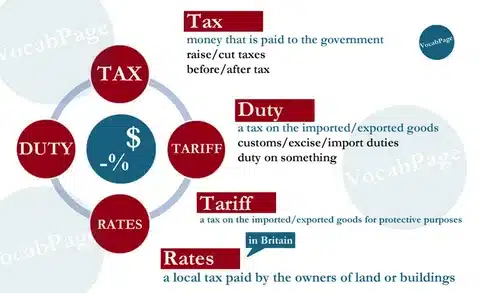
Tariffs (import taxes) are taxes imposed by the government on imports. The Japanese import rates are normally favorable and may range between 0-10 for customs duties, although in certain categories such as textiles, footwear, agricultural goods, and tobacco products, it may take 15-35.
- Examples of duty-free goods: electronics, industrial equipment, and automobile parts.
- Increased duty products: rice, beef, dairy, and textiles.
Your tariff rate and duty rate are calculated by the correct Harmonized Tariff Schedule (HTS) code. Any misclassification may lead to penalties or costs that are not exactly planned, so it is important to refer to a customs broker.
Remember that trade negotiations or economic partnership agreements and anti-dumping investigations (as it is often the case with steel, aluminum, and some electronics) might change the responsibilities.
Other Mandatory Fees (Beyond the Duty Itself)

Although your duty is 0, there are several U.S. Customs charges that you will incur:
- Merchandise Processing Fee (MPF): 0.3464 percent of shipment value (maximum 538.40, minimum 27.75). The fixed fees are less for informal entries, which are less than 2,500 (2.22-9.99).
- Dock Maintenance Fee (HMF): 1/8 of the value of cargo when shipped by sea.
- Customs Bonds: $50-150 to take out one bond; $400 -600 to cover continuously.
- Importer Security Filing (ISF): $25 to 75 filing fee; 5,000 fine against late filing (ocean cargo only).
- Brokerage Fees: $100 to $500 based on complexity.
There can be additional port fees like container storage fees, terminal handling fees, or inland transportation, which may also include a higher duty rate.
Transportation & Shipping Costs

The largest cost is usually shipping.
- Ocean Freight (FCL): This transportation type ranges between 1,500 and 4,000 in a 20-ft container; and 2,000 and 5,500 in a 40-ft container to ports on the West Coast. East Coast routes cost more.
- Less than Container Load (LCL): between $80 and 200 per cubic meter, which is ideal for small shipments.
- Air Freight: 3-8.50/kg, within 3-7days. Appropriate for high-value goods that are light.
- Small Packages: DHL, FedEx, and UPS process samples or e-commerce packages, typically, $30 to $400, based on weight.
As a rule, always budget extras, including shipping costs, port fees, in-land trucking, or inspection fees.
Ocean Freight vs. Air Freight: Cost Tradeoffs
Choosing between air and ocean depends on urgency and cargo type.
- Ocean Example: $2,000 shipping, 30–40 days.
- Air Example: $8,000 shipping, 5 days.
Items of high margin or that are time-sensitive (electronics, fashion, medical devices) can easily warrant air freight. Ocean shipping will be more suited to bulk/ heavy (full container load machinery, raw materials.
Trade Agreements, Exemptions & Special Cases

In 2020, the U.S.-Japan Trade Agreement (USJTA) reduced the duties on a wide range of industrial and agricultural goods. Products need to comply with the product rules of origin (made or substantially transformed in Japan) in order to be eligible to receive reduced tariffs.
- Favourable goods: machines, electronics, scientific instruments.
- More complicated cases: agriculture, in which quotas and higher tariffs can still take effect..
Benefits must be claimed by proper documentation (e.g., Certificate of Origin).
Anti-Dumping and Countervailing Duties
Additional obligations are imposed in case the U.S. identifies that Japanese firms are either dumping their products (selling at a lower price than the market value) or enjoying unfair subsidies.
These charges may increase normal duties by 20-200 percent. They are steel, ball bearings, and chemicals. Importers must also ensure that they verify the investigations being done before they make purchases.
How to Calculate Total Import Cost
The following is a 4-step approach to the estimation of landed cost:
- Find the HTS Code. Use the U.S. ITC database or contact a broker.
- Apply the Duty Rate. Multiply the CIF value (Cost + Insurance + Freight) by the duty %.
- Add Customs Fees. MPF, HMF, broker fees, bonds, and ISF were necessary.
- Include Shipping & Transport. Overseas freight + domestic expenses.
Example: Air transportation of semiconductor equipment importation (of 50000 dollars worth):
- Duty: 0% = $0.
- MPF: $188.44.
- Customs bond: $500.
- Broker: $150.
- Inland trucking: $300.
- Total landed cost: $55,538.44 (11.1% above product cost).
Tips & Strategies to Lower Your Import Costs
- U.S. Customs search tool HTS (hts.usitc.gov).
- CBP duty calculators.
- Freight forwarder calculators, freightos.
Never accept the HTS codes and duty rates blindly, and all the online calculators are as precise as the data typed in them.
Strategies to Reduce Import Costs
Clever planning can help the importers reduce the costs:
- Combine deliveries: The fewer and bigger the imports, the less paid on a unit basis.
- Optimize the type of entry: Shipments with less than 2,500 should be retained.
- Check on duty-free eligibility: Minor modifications on products can reclassify the HTS.
- Compare freight quotes: It is always advisable to make 3 detailed quotes.
- Select ports carefully: Do not use overstretched, expensive ports where there are better ones available.
- Employ seasoned brokers: Prejudice expensive errors and achieve superior freight rates through border protection.
- Discover duty drawback plans: Retain duties on re-export goods.
Common Mistakes & Pitfalls to Watch Out For
- Wrong assignment of goods– penalties or increased duties.
- Disregard unadvertised charges → delivery prices usually do not include premiums.
- Bypassing the customs bonds, the shipment is delayed.
- Applying old duty rates – this is never right, consult official sources.
- Non-compliance with ISF filing is a violation of up to $5,000.
- Lack of proper record-keeping → 5-year retention is obligatory.
- Suppose it comes with free shipping, including customs; it does not.
Frequently Asked Questions (FAQs)
Will I always pay duty if I buy something from Japan?
Not necessarily. The decision to pay duty is based on three broad factors, which include the nature of the product, the value of the product, and the reason for importation. Current tariff schedules include several products imported into Japan without duty, especially industrial equipment, electronic elements, and scientific instruments, and shipping times. The items of personal use with a de minimis value are allowed duty-free. But, as the duty rates are zero, you usually pay processing fees and other compulsory charges. A gift that is worth below 100 dollars and is sent between individuals is the only gift that can enter free of any charges.
What’s the de minimis value (duty-free threshold)?
Presently, the United States has a de minimis standard on most shipments of 800 dollars. This provides that individual packages with values of up to and below 800 can roll in without the formal mode of customs entry and payment of duties. This exemption is, however, per shipment and not per individual per day, and some prohibited items do not qualify irrespective of their value, preferential rate. Notably, however, the de minimis exemption merely foregoes the duties and formality of entry–it does not necessarily relieve you of informal handling charges, nor does it apply to commercial importation of agricultural products, but only to separate parcels. Companies that import goods to be resold under the de minimis exception may not be permitted to evade commercial importation procedures based on individual shipments of less than $800.
Does “free shipping” include customs or import charges?
Rarely. Even when it is free shipping or a deal with suppliers, it is virtually the cost of transportation of the product internationally between Japan and the United States. As the importer, it is your responsibility to cover the import duty and customs processing fees, as well as any taxes that may be imposed. Upon the delivery of goods in the United States, the carrier will reach out to you to collect such charges before the release of the shipment of imported goods. Always make the sellers explain what costs their free shipping includes, in particular, and make plans on how to cover the costs associated with imports, to avoid unpleasant surprises.
How long does customs clearance take?
The general customs clearance of normal imports into Japan usually takes 1-5 days of business days, but a majority of simple shipments are cleared in less than 24-48 hours. The time frame is determined by many factors: the completeness and accuracy of your paperwork, the workload and effectiveness of the port, the possibility of your goods being physically examined (it happens randomly or when Customs sees something wrong), and the complex nature of your products. Delays are up to 1-2 weeks or more when Customs needs further documentation, detects discrepancies and wants to investigate them, or conducts an intensive examination of your cargo. Agriculture products, food products, and goods subject to inspection by other agencies other than Customs (such as FDA, USDA, or FCC) tend to take more time to be cleared, as they are subject to more inspections purchase price.
What happens if my goods are held or delayed?
Goods can be held as a result of customs: incomplete documentation, queries regarding the product classification or valuation, suspicion of intellectual property offence, food safety issues, or randomness of random selection for a detailed inspection. In case of holds, your customs broker is informed as to why and asked to provide more information or to act. Act as quickly as possible and submit documents or clarifications requested. Meanwhile, the goods at the port incur storage costs (demurrage on containers, storage costs on loose cargo), which you are liable to in case of delays longer than the free time (03-07 days) limit. In the worst-case scenarios of suspected law violations, Customs may even confiscate goods completely, although this is unlikely to occur with the genuine commercial imports, which can merely have documentation problems.
Where do I pay these fees (at port, to the broker, etc.)?
The processes of payments depend on the type of fee and the service provider. Your customs broker normally pays the import duties and customs fees on your behalf and then bills you to reimburse it plus their service fees. Los Angeles International Airport pays customs duty. You do not normally pay Customs directly, unless you are clearing goods without a broker. Shipping and freight costs are paid to your freight forwarder or carrier based on your service contract- at times up front, at times upon delivery. Other carriers have the COD (collect on delivery) systems where they collect their fees as well as the customs duties and then release the goods to you international postal service. To ordinary importers, opening accounts with brokers and freight forwarders enables them to be billed on a consolidated basis on a monthly basis as opposed to paying transaction by transaction. Clearly define payment terms beforehand: what fees have to be paid in advance, which have to be paid after the services have been provided, and what types of payment are accepted local post office.
Conclusion
Import charges in Japan are a matter that should be approached with great care; however, with the tips in this guide, you can safely predict the cost of importing, and you can save the painful shocks that are so sudden to unsuspecting importers express shipping. Keep in mind that total landed cost does not only cover product and shipping for most goods but also import duties, processing of merchandise, harbors, brokerage, and all sorts of handling expenses that can easily increase your base product price by 15-40%. You should take time to categorize all your products correctly with the right HTS codes, do research on the available duty rates and benefits of trade agreements, get detailed all-in quotes of freight forwarders and customs brokers, and apply clever tricks such as consolidation of shipments and port selection to reduce costs. Keep abreast of trade policy developments, keep good records, and establish contacts with seasoned logisticians who could help steer you through any tricky situation. The process of importing might look intimidating at first, yet, with systematic planning and the correct partners, you will be able to develop efficient routines, which will allow you to comfortably source the products in Japan and keep your profit margins intact, not to mention that you will be complying with all regulations as well.